










25 Flower Bed Edging Ideas That Will Transform Your Outdoor Spaces
Why Flower Bed Edging Makes All the Difference
There’s something almost magical about a garden with a well-defined edge. When a lawn just kind of fades into a flower bed with no clear boundary, the whole yard can feel a little chaotic and unplanned — even if the plants themselves are gorgeous. Edging is that one detail that separates a thoughtfully put-together outdoor space from one that just sort of happened over time. It draws the eye, adds structure, and gives everything else in your garden something to exist within.
Beyond looks, edging does a lot of practical work that gardeners tend to forget about until they’re stuck dealing with the consequences of skipping it. A solid edge keeps grass from sneaking into your flower beds, which can save you hours of hand-weeding every season. It also holds mulch and soil in place so they’re not washing onto your pathways every time it rains. Just those two benefits alone make edging one of the smartest investments you can make in your garden.
The good news is there’s genuinely something out there for every taste, budget, and style. Whether you love the clean geometry of modern design, the cozy charm of a cottage garden, or the relaxed flow of a woodland-inspired space, there’s an edging option that fits. The ideas in this article cover a wide range of possibilities, each with its own personality and practical trade-offs worth knowing about.
Natural and Organic Edging Options
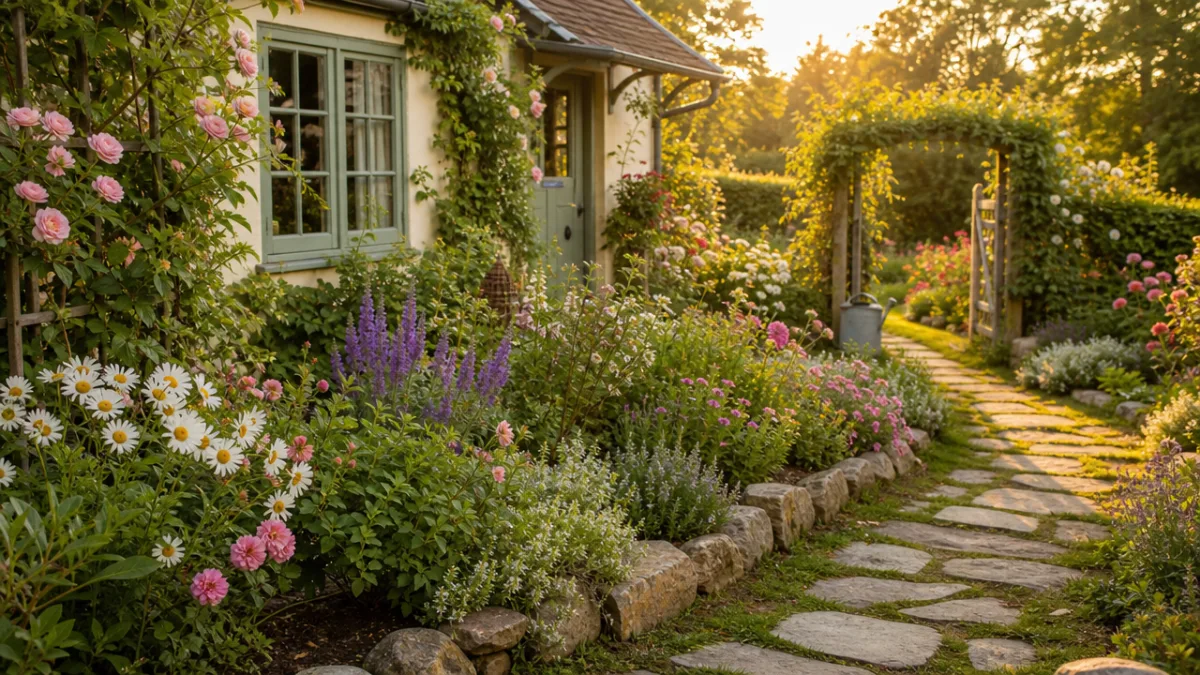
If you want your garden to feel like it grew naturally rather than was assembled from a catalog, organic edging materials are a great place to start. Wood, stone, and bamboo carry a kind of warmth and character that manufactured products just can’t replicate. A border of irregularly shaped fieldstones, for instance, looks like it’s always been part of the landscape — it sits quietly without demanding attention.
Log roll edging — those rows of short timber sections bound together — is one of the most accessible and affordable natural options you can find. It goes in easily with no special tools, and it blends beautifully with cottage-style plantings, veggie gardens, and naturalistic borders. Yes, it will eventually break down, but that slow decomposition can actually enrich the surrounding soil, and honestly, the weathered, moss-covered look it develops over the years can be even more appealing than the fresh material. Cedar and redwood versions last the longest, so they’re worth looking for.
Dry-stacked stone is another timeless choice that pays you back in decades of beauty and durability for the extra effort you put into installation. Using local stone ties your garden visually to the surrounding landscape and keeps costs down. Flat stones like slate, sandstone, and limestone stack cleanly and create nice horizontal lines, while rounded river rocks give you a softer, more organic feel. Either way, you can work with straight runs, gentle curves, or all kinds of irregular shapes — stone is surprisingly versatile.
Living edges are about as organic as it gets. Low-growing plants like thyme, ajuga, and dwarf mondo grass can be trained along the border of a flower bed to create a soft, seasonal boundary that actually changes throughout the year. It takes more maintenance than inert materials since you’ll need to trim and manage it to keep things defined, but the texture, color, and wildlife value it brings can’t be matched by anything you buy at a hardware store. Pollinator gardens especially love this approach, since the living edge itself becomes habitat and food for beneficial insects.
Modern and Contemporary Edging Styles
In contemporary garden design, edging has become a design feature in its own right rather than just something you do to keep the grass out. Clean lines, minimal fuss, and interesting material contrasts define the modern edging look. Steel, aluminum, and composite materials dominate this category — they offer a precision and sharpness that natural materials rarely achieve. When it’s done right, a thin band of weathering steel around a flower bed can look just as intentional and refined as any architectural detail on the house itself.
Cor-Ten steel, also called weathering steel, has become really fashionable in contemporary landscaping over the past decade, and it earns that popularity. It starts out as a bright metallic material and slowly develops a rich, layered rust patina that actually protects the metal underneath from further corrosion. The warm orange-brown tones of aged Cor-Ten look fantastic alongside ornamental grasses, bold tropical foliage, and architectural plants like agaves, creating a strong visual contrast that gives modern planting beds a real sense of authority.
Aluminum edging shares a lot of those visual qualities but weighs much less and doesn’t develop a patina — it just stays silver-grey, which is actually ideal if you want a very clean, almost invisible edge that lets your plants take center stage. Aluminum is also wonderfully flexible, bending smoothly around curves without any scoring or heating, which makes it one of the most DIY-friendly options out there for creating sweeping organic shapes in a contemporary garden.
Poured-in-place or precast concrete edging brings a permanent, sculptural quality to the modern garden that’s hard to match. Exposed aggregate finishes, board-formed textures, and pigmented colors mean concrete can be customized to fit a surprisingly wide range of design styles. The installation is more involved than pressing aluminum into the ground, but the result is essentially permanent — you’re not replacing or significantly maintaining it for many years. If you’re the type of person who likes to do a job once and do it properly, concrete is worth serious consideration.
Budget-Friendly and Creative DIY Edging Ideas
Some of the most charming flower bed edges you’ll ever come across weren’t made from expensive materials — they were made from things that might otherwise have been thrown away. The DIY edging tradition is full of clever repurposing, and it rewards creative thinking in a really satisfying way. An afternoon spent hunting down materials, prepping them, and installing a handmade edge can produce something not only beautiful but genuinely one-of-a-kind, with a personal story behind it that no store-bought product could ever have.
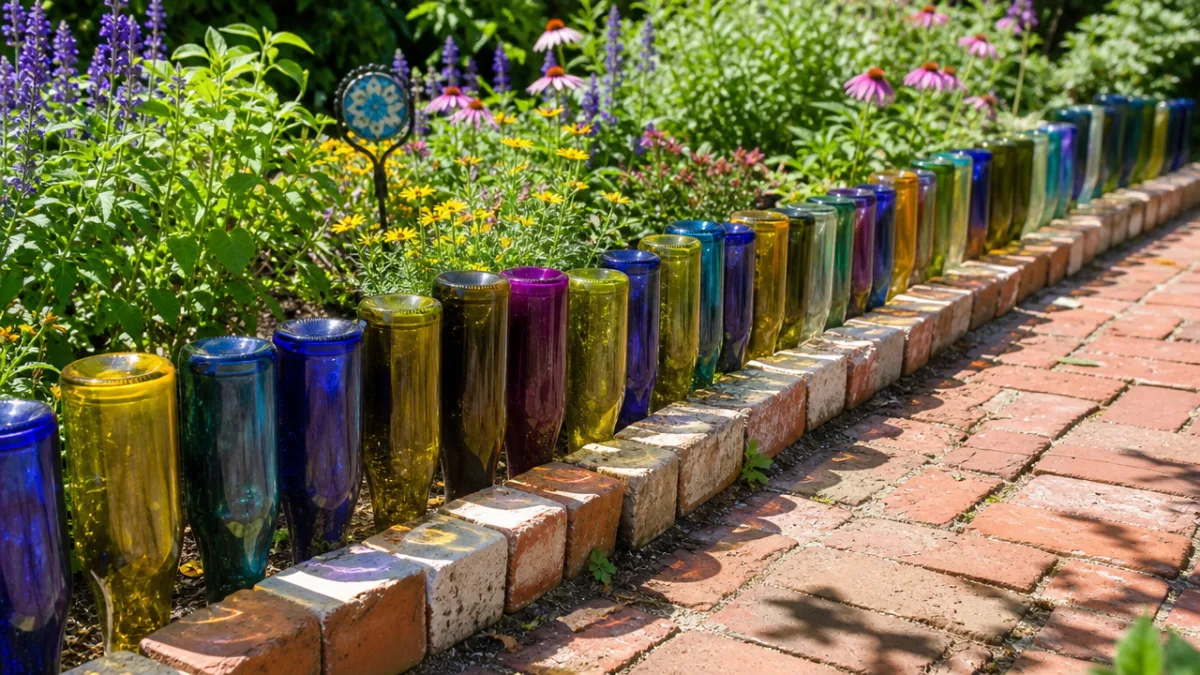
Wine bottles pressed neck-down into the soil create a surprisingly elegant edging with a lovely green or amber glow when sunlight hits them. The rounded bases form a scalloped pattern that suits cottage or bohemian garden styles particularly well. Collecting enough bottles takes a while, but once you get there you’ll have a genuine conversation piece that also does its practical job admirably, staying put through seasons of frost and rain. You can alternate brown, green, and clear bottles for extra visual interest, or stick to one color for a more restrained effect.
Salvaged bricks are a perennial favorite in the DIY edging world for good reason. They’re widely available from demolition sites, salvage yards, or leftover home projects, and they bring instant character and a sense of permanence to any garden. Lay them flat in a single course for a low, subtle edge, or stand them on end and angle them at 45 degrees for that classic Victorian soldier-course pattern that works in both formal and informal gardens. A mix of different aged bricks adds lots of character, while uniformly matched ones look cleaner and more disciplined.
Natural branches and twigs woven into a simple wattle edge is one of the oldest edging traditions in European garden history. You weave flexible young stems — traditionally hazel or willow — between upright stakes to create a low woven fence along the bed boundary. It’s more labor-intensive than most alternatives, no question, but the rustic beauty it produces is really extraordinary, and it suits herb gardens, cottage borders, and woodland-inspired plantings perfectly. Willow wattle in particular has a bonus: some of the cuttings may root on their own, giving you a living edge for almost no extra effort.
Other fun DIY ideas worth exploring include upturned terracotta pots buried to their rims, old roof tiles stood on end, copper pipe sections, smooth river pebbles set in concrete, and even thick rope strung between wooden pegs for a nautical vibe. What ties all of these together is that personality and intention matter far more than what you spent. A border that reflects real creative investment will always be more interesting than one that was just purchased off the shelf and stuck in the ground without a second thought.
Edging for Formal and Structured Garden Designs
Formal gardens have relied on crisp, definitive edging since the Renaissance, when European landscape architects first started imposing geometric order on the natural world with real ambition. In these settings, edging isn’t just a finishing touch — it’s a fundamental structural element that gives the entire design its character. The regularity and precision of formal edging communicates care and intentionality in a way that immediately sets a formal garden apart from any other style.
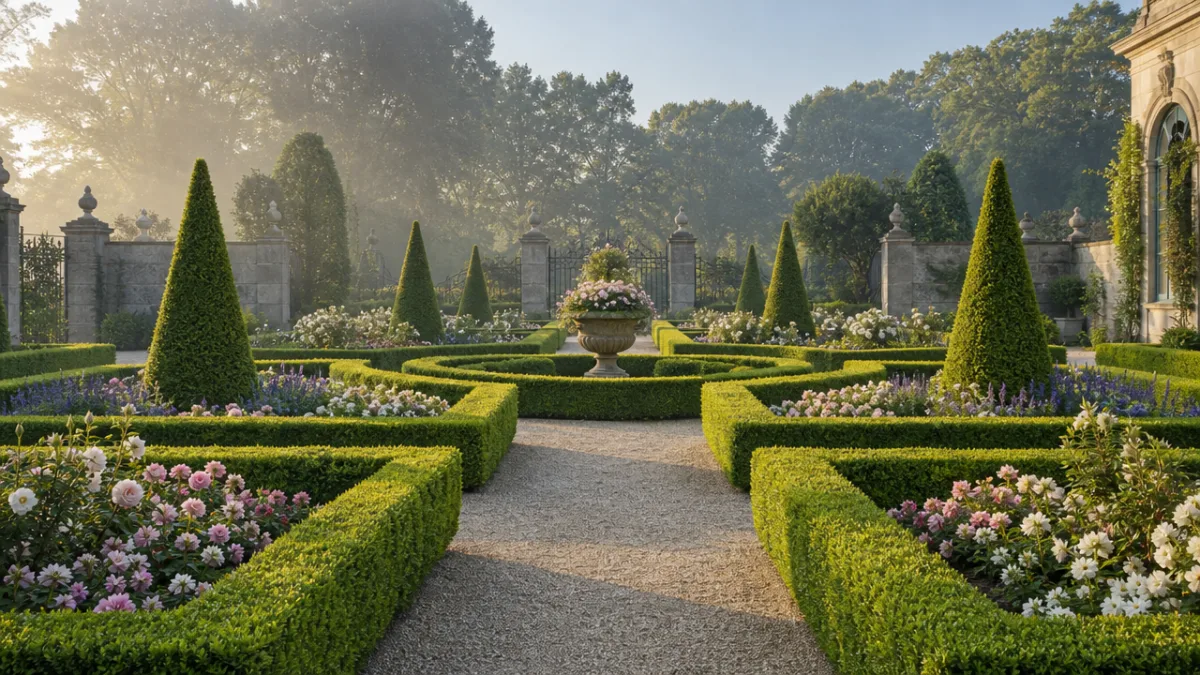
Boxwood hedging remains the gold standard for formal flower bed edging in traditional garden design. Low clipped hedges of Buxus sempervirens create dense, evergreen walls that define planting beds with architectural precision, and the fine texture and deep green color provide a neutral backdrop that lets flowering plants really shine through every season. Boxwood has had some struggles with blight and pests in certain regions in recent years, but alternatives like Japanese holly, dwarf inkberry, and Korean boxwood offer a very similar look with better disease resistance.
Wrought iron and steel edging with decorative details fits formal gardens really well when it echoes the period character of an older home or landscape. Repeating patterns of fleur-de-lis, arrow points, or simple curves create a rhythmic visual border that reinforces the symmetry formal design depends on. Genuine antique cast iron edging is rare and pricey, but reproduction options are widely available and look convincing at garden scale. Painted black, these borders are both practical and visually commanding — keeping mulch and grass in check while adding an unmistakably formal note.
Gravel paths bordered by neatly installed metal or stone edging create a wonderful sense of arrival and direction that’s really central to how formal gardens move visitors through the space. The contrast between pale, textured gravel and a dark, precise edge creates visual clarity that guides you through effortlessly. This combination works just as well in contemporary formal gardens as in traditional ones, making it one of the most versatile approaches in the formal edging playbook. One thing to keep in mind: level installation is critical here, because any variation in height becomes immediately obvious in these structured settings.
Choosing the Right Edging for Your Specific Garden
With so many good options out there, picking the right edging can actually feel a bit overwhelming. A structured approach helps a lot. Start by thinking about the overall style of your home and existing landscape, because edging that clashes with those established elements will always feel a little off, no matter how nice it is on its own. A sleek modern house generally calls for clean-lined contemporary edging, while a traditional cottage home invites softer, more textured natural materials.
Practical considerations deserve just as much weight as aesthetic ones. Be honest with yourself about how much ongoing maintenance you’re actually willing to commit to, since some edging types need very little attention while others require regular adjustment, cleaning, or replacement. Also think about the specific challenges of your site — soil type, freeze-thaw cycles, tree root pressure, drainage. An edging material that performs beautifully in mild, stable conditions can fail pretty quickly in a climate with harsh winters or heavy clay soil.
Budget is a real factor for most gardeners, and it’s worth thinking about the full lifecycle cost of your choice rather than just what you pay upfront. A cheap plastic edging that needs replacing every three years might actually cost you more in the long run than a durable steel or stone option that lasts indefinitely. If you’re working with a tight budget right now, focusing on one well-edged feature bed rather than trying to edge the entire property at once is a smart move — it lets quality win out over coverage.
Installation difficulty is another practical dimension that’s worth taking seriously. Some edging types — poured concrete, large fieldstone, woven wattle — require real physical effort and a bit of skill to pull off correctly. Others, like flexible aluminum edging and log rolls, can be installed by just about anyone in an afternoon with basic tools. If you’re new to edging or working against the clock, starting with something more forgiving will help you build confidence before you tackle the more demanding stuff in future seasons.
Finally, don’t underestimate how valuable it is to actually see edging materials out in real gardens before you commit. Visiting public gardens, browsing display beds at garden centers, or even just taking a slow drive through a well-maintained neighborhood can give you a genuine sense of how different materials look at garden scale, in different light, and alongside different plants. What looks great in a catalog photo can feel very different in an actual garden — and vice versa. Getting some real-world visual reference before you spend time and money is one of the best things you can do to make sure you end up with something you’ll genuinely love for years.








What do you think?
It is nice to know your opinion. Leave a comment.