










20 Christmas Crafts for Adults That Look Chic (Not Childish)
Why Adult Christmas Crafting Is Having a Major Moment
Something interesting is happening at kitchen tables and in craft studios all over the country: people are rediscovering the pleasure of making things by hand — and they’re not willing to give up their sense of style to do it. Holiday crafting for adults has genuinely taken off, and it’s not hard to see why. There’s a real hunger right now for things that feel authentic, for decorations that say something about the person who put them up rather than the big-box store they came from. When you make your own holiday pieces, you’re not just killing time or padding a savings account — you’re putting your own aesthetic into the season in a way that nothing off a shelf can replicate.
The old idea that crafting is somehow childish or unsophisticated? It’s basically gone at this point. Designers, stylists, and tastemakers have spent years proving that handmade holiday pieces can look right at home in a glossy magazine spread. A hand-poured soy candle sitting in a matte ceramic vessel, a wreath layered with dried botanicals and velvet ribbon, a set of gilded pinecone ornaments — these things can look just as refined as anything you’d find in a high-end boutique. The difference is that yours actually has a story behind it.
There’s also a growing body of research making the case that crafting is genuinely good for you. The focused, repetitive motion involved in many crafts — wrapping wire, folding paper, pressing dried flowers — puts your brain into something close to a meditative state, lowering cortisol and quieting the mental noise that tends to build up this time of year. Carving out an hour or two for intentional making during a season that can feel overwhelming isn’t just a hobby — it’s a legitimate form of self-care that also happens to leave you with something beautiful at the end. That combination is hard to argue with.
Choosing a Sophisticated Color Palette Before You Begin
Before you pick up a glue gun or crack open a jar of paint, the single most important decision you can make is settling on a color palette. This is genuinely the step that separates holiday crafts that look effortlessly chic from ones that feel a little chaotic, and it explains why some handmade decorations look considered and intentional while others just look busy. A cohesive palette is the visual thread that ties every individual piece together into something that feels like a collection rather than a pile of projects.
If you want a look that feels fresh and modern, it’s worth stepping away from the classic red-and-green combo and trying something less expected. Deep burgundy paired with antique brass and cream creates this wonderfully moody atmosphere that works beautifully in living spaces. Forest green with warm white and raw linen reads as earthy and organic in the best way. If you’re drawn to something cooler, dusty blue, silver-grey, and icy white have a Scandinavian restraint that photographs stunningly and holds up beautifully across the whole season.
Neutral palettes are especially worth considering because they’re incredibly versatile and they don’t date. Black, white, and gold is a combination that photographs well in basically any light and plays nicely with almost any interior. Natural tones — bleached wood, dried grass, cream beeswax, burnished copper — create real warmth without tipping into that overly commercial cheerfulness that can feel exhausting. Committing to your palette before you start means every supply purchase, every material choice, every finishing touch will build toward something cohesive instead of just adding to the pile.
Five Botanical and Natural Wreath Styles Worth Mastering
The wreath might be the most iconic Christmas decoration there is, and it’s also one of the most satisfying things you can make by hand. Unlike anything you’ll find in a store, a handmade wreath can be sized exactly right for your door, scaled to your entryway, and built entirely around the color story you’re already telling inside your home. Natural materials are particularly well-suited to this kind of crafting because they bring texture, scent, and an organic irregularity that manufactured decorations simply can’t fake.
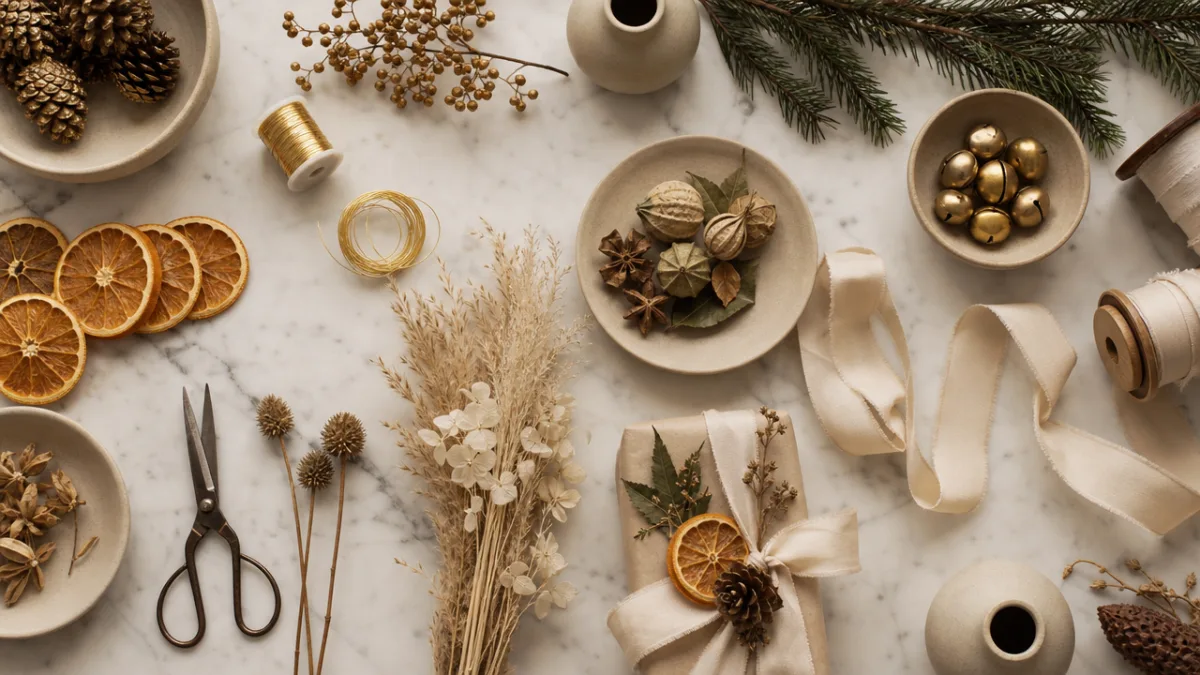
A dried botanical wreath on a grapevine or wire base is a great place to start if you’re new to this. Gather dried eucalyptus, preserved magnolia leaves, cotton stems, and a few varieties of dried grasses, then layer them in overlapping bundles secured with floral wire. The thing that makes a wreath look professional rather than homemade is depth — alternating materials of different scales, mixing fine and coarse textures, letting some elements extend outward at varying angles so it doesn’t lie flat. A single wide velvet ribbon in a deep tone finishes it off without overwhelming everything else.
If you’re ready to push the craft a bit further, here are some approaches that move into genuinely artful territory:
- Citrus and spice wreaths built from dried orange slices, cinnamon sticks, star anise, and cloves wired onto a foam base — these also fill your entryway with the most incredible warm, spiced fragrance for weeks on end.
- Minimalist twig wreaths made from bare birch or willow branches twisted into a loose circle and dressed with nothing more than a small cluster of dried seed pods and a length of raw linen twine.
- Preserved flower wreaths using glycerin-treated roses, peonies, or dahlias arranged in that dense, lush style that calls to mind Dutch Golden Age floral paintings.
- Feather and foliage wreaths that combine pheasant feathers, olive branches, and dusty miller in a sweeping asymmetrical arrangement — these feel genuinely fashion-forward in a way that’s hard to pin down.
- Moss and lichen wreaths built entirely from foraged or purchased natural materials in grey-green and amber tones, which honestly need no embellishment whatsoever.
How you hang and finish a wreath matters just as much as how you build it. A beautiful wreath dangling from a thin plastic hook loses half its impact instantly. Instead, try hanging it from a length of wide grosgrain or velvet ribbon in a complementary color, looped over a decorative nail or a brass hook. That visible stretch of ribbon becomes part of the composition — it adds softness and a little movement. If the wreath is going up indoors, tucking in a small cluster of dried herbs or adding a few drops of essential oil makes approaching your front door a genuinely sensory experience.
Candle-Making Techniques for a Warm Holiday Atmosphere
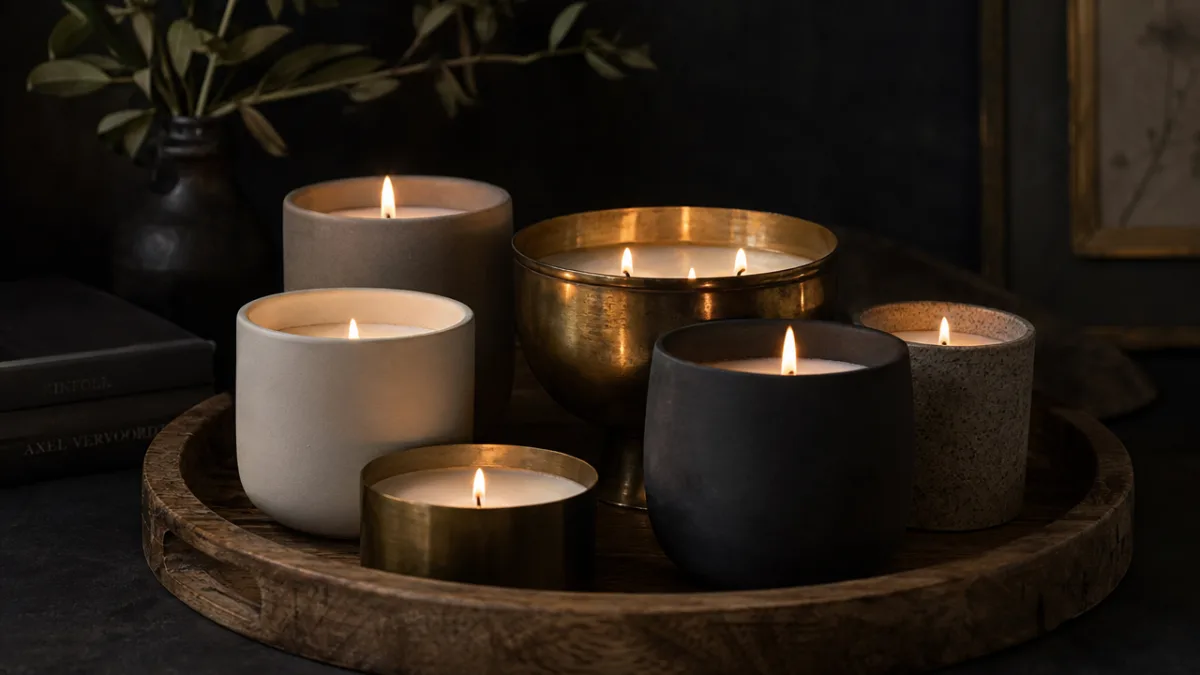
Hand-poured candles sit at this lovely intersection of craft and genuine luxury. A well-made candle is useful, it’s beautiful, and it creates a warmth that no battery-powered flickering LED can come close to. For holiday crafting specifically, candles give you so much creative room to work — you’re in control of the vessel, the wax, the scent, the color, the wick, all of it — which means you can make something that fits exactly within the aesthetic you’ve already established. And because candles get used up, they make exceptional gifts that feel extravagant without actually requiring a big budget.
Soy wax is what most adult crafters gravitate toward for container candles, and for good reason: it burns cleanly, holds fragrance really well, and has a matte, creamy finish that looks at home in almost any vessel. Beeswax is another excellent option, especially for tapers — it has a natural honey scent, a gorgeous golden color, and it burns longer than most alternatives. As for vessels, almost any heat-safe container is a candidate: vintage teacups, wide-mouthed jam jars, concrete pots, brass bowls, apothecary bottles. Each one gives the finished candle its own completely distinct personality.
Scent design is where candle-making gets genuinely creative and a little addictive. Rather than defaulting to generic holiday fragrances, try building something more layered and interesting using blended fragrance oils or pure essential oils. Black spruce, cedarwood, and a touch of frankincense creates an atmosphere that feels contemplative and almost ancient — nothing like standard Christmas candle. Clementine, cardamom, and white tea comes out bright and clean, perfect for a kitchen or bathroom. Amber, sandalwood, and vanilla brings real depth and warmth without crossing into cloying sweetness. Working out your own blends is honestly one of the most satisfying parts of the whole craft.
Paper Crafts That Look Anything But Elementary
Paper is probably the most underestimated material in adult crafting, and it’s almost entirely because of the associations — construction paper, school projects, that kind of thing. But in the hands of someone who’s making thoughtful choices, paper can produce decorations of real delicacy and precision. The key is what you’re working with. Handmade Japanese kozo paper, heavyweight watercolor stock, metallic foil sheets, marbled Italian bookbinding paper — these materials behave beautifully and look genuinely luxurious. The paper of memory has very little to do with what’s actually possible.
Moravian or Scandinavian paper stars are among the most technically satisfying paper projects an adult crafter can take on. They’re built from strips of paper woven into precise geometric patterns, and there’s a mathematical elegance to them that really rewards careful attention. In white or cream with a matte finish, they look like architectural ornaments. In gold foil, they become something genuinely glamorous. Hang a cluster of three different sizes in a window and watch how they catch light and shadow throughout the day — the effect is almost kinetic.
Other paper techniques that are well worth exploring include decoupage, where torn fragments of vintage sheet music, botanical illustrations, or antique maps get layered onto glass ornaments or wooden shapes to create objects that feel genuinely collectible. Quilling — the art of coiling thin strips of paper into intricate shapes — produces decorations of surprising intricacy that take on real three-dimensional quality when built up in relief. Origami in the more complex geometric styles creates modular ornaments and star shapes that look nothing like folded paper and everything like precision-cut architectural models. Paper, it turns out, has essentially no ceiling.
Gilding, Dyeing, and Finishing Techniques That Make Everything Look Expensive
The gap between a craft project that looks homemade and one that looks like it came from a design studio usually isn’t in the core construction — it’s in the finishing. Surface treatments like gilding, dyeing, waxing, and antiquing are what separate objects that look like they came out of a weekend workshop from ones that look genuinely artisan. These skills aren’t especially hard to pick up, but they do require patience, a willingness to practice on scraps before committing, and an understanding that restraint almost always beats excess.
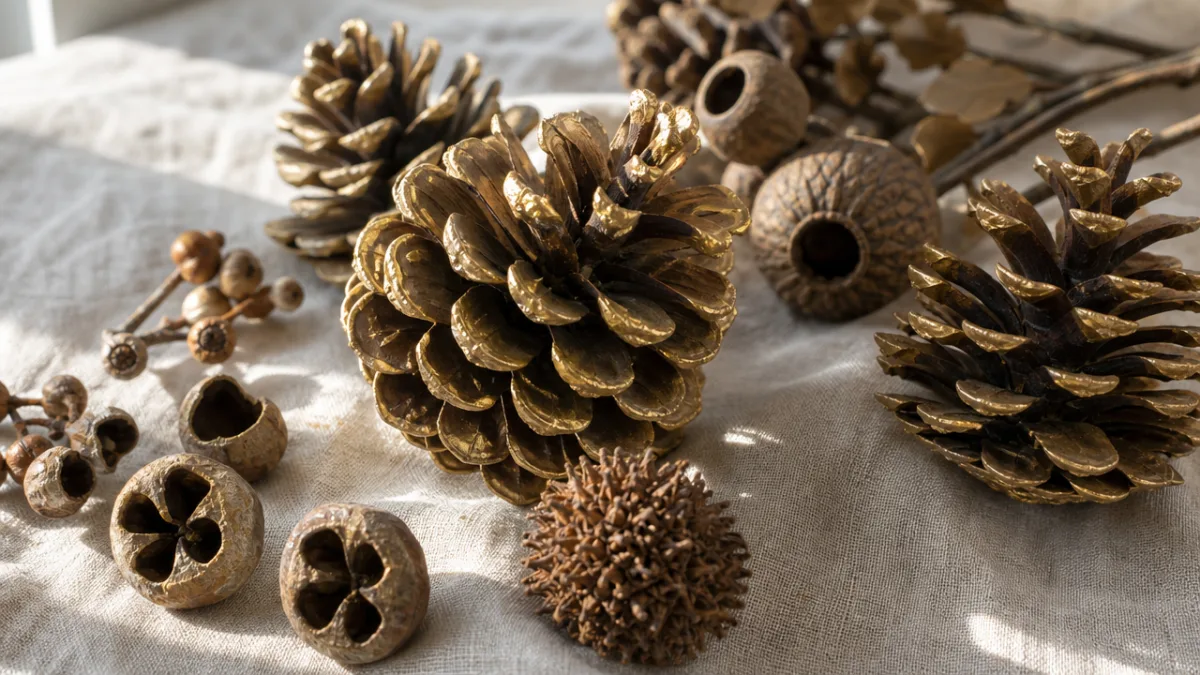
Gold and silver leaf gilding is one of the most transformative things you can do to a plain object. Apply it to pinecones, dried seed pods, ceramic ornaments, wooden shapes, or even fresh citrus fruit, and it immediately elevates what you’re working with into something that reads as genuinely luxurious. You’ll need sizing adhesive, a soft gilding brush, and the leaf itself — available in genuine gold or silver, or in much more affordable composition alternatives that honestly look nearly identical. Partial gilding, where you leaf only one side or surface of an object, often produces a more sophisticated result than covering the whole thing.
Natural dyeing opens up a whole world of color that’s both more sustainable and more beautiful than anything synthetic. Onion skins produce a rich amber-gold. Black beans give you a dusty slate blue. Avocado pits and skins create a dusty blush pink that feels remarkably current. Applied to linen ribbon, cotton fabric ornament covers, or natural fiber rope, these colors have an organic variation and depth that commercial dyes simply can’t touch. Paired with botanical embellishments and natural textures, naturally dyed materials create a holiday aesthetic that feels simultaneously ancient and entirely of this moment — rooted in tradition, but with a look that’s unmistakably now.
Building a Gift-Wrapping System That Doubles as Décor
Thoughtful gift wrapping is a craft form that doesn’t get nearly the attention it deserves, and the holidays are the perfect occasion to develop a real approach to it. When you work with a consistent set of materials, a limited palette, and a signature finishing element, the pile of gifts under your tree stops being a chaotic jumble and starts being a genuinely beautiful installation that contributes to the whole look of your space. The gifts themselves become decorative objects in the weeks before anyone tears into them.
The foundation of a wrapping system that actually works is choosing two or three papers that genuinely go together rather than grabbing whatever’s on sale. Kraft paper is the most versatile base you can use — it pairs well with forest green tissue, cream wrapping paper, sheet music pages, just about anything — and it gives you a cohesive look even when you’re varying the layers. Plain white paper becomes a canvas for rubber-stamped botanical prints, hand-lettered names, or a few strokes of watercolor. And if you want to skip paper entirely, fabric wrapping in the Japanese furoshiki tradition creates bundles that look genuinely beautiful and can be reused by whoever receives them.
Where a wrapping system becomes truly distinctive, though, is in the finishing details. Instead of synthetic ribbon and a stick-on bow, build a collection of natural and artisan embellishments that become a kind of recognizable signature. Fresh or dried herbs tucked under a length of baker’s twine, a dried orange slice wired to a sprig of rosemary, a hand-stamped wax seal, a tiny oil-painted ornament looped onto the tag, a cluster of dried rosebuds wired to velvet ribbon — any one of these tells the person receiving the gift that real care went into it, before they’ve even gotten to what’s inside. And that care, honestly, might be the most meaningful thing you can give someone.








What do you think?
It is nice to know your opinion. Leave a comment.