










20 Stunning Crochet Temperature Blanket Designs You’ll Love
What Is a Crochet Temperature Blanket?
A crochet temperature blanket is one of the most personal and meaningful projects a crafter can undertake over the course of an entire year. The concept is beautifully simple: you assign a color to each temperature range, then add one row or round to your blanket each day based on the recorded high or low temperature. By December 31st, you have a textile record of your year — a wearable, snuggly data visualization that tells the story of your seasons, your weather, and your life.
The project first gained widespread popularity in the mid-2010s, spreading rapidly through crochet communities online. What makes it so compelling is that no two temperature blankets will ever look exactly alike. Someone crocheting in Phoenix, Arizona will produce a dramatically different blanket than someone crafting in Anchorage, Alaska, even if they use the identical color key. The result is something deeply unique and locally rooted, a fiber arts project that literally maps where and how you lived during a specific year.
Temperature blankets are also wonderfully accessible for crocheters of all skill levels. A beginner can work simple single crochet rows and create something stunning, while an advanced crafter might incorporate textured stitches, gradient yarn, or complex colorwork. The daily commitment of adding one row keeps the project manageable and builds a satisfying rhythm that many makers find meditative and grounding. By the time winter rolls around again, you hold an entire year in your hands.
Choosing Your Color Palette
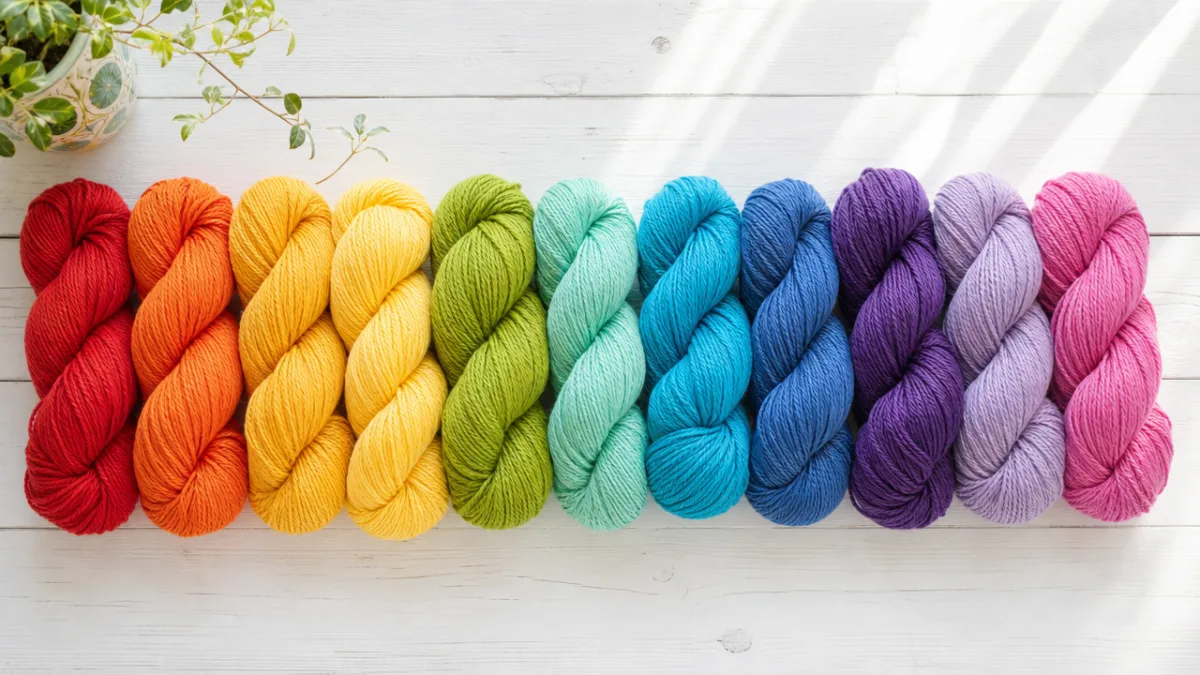
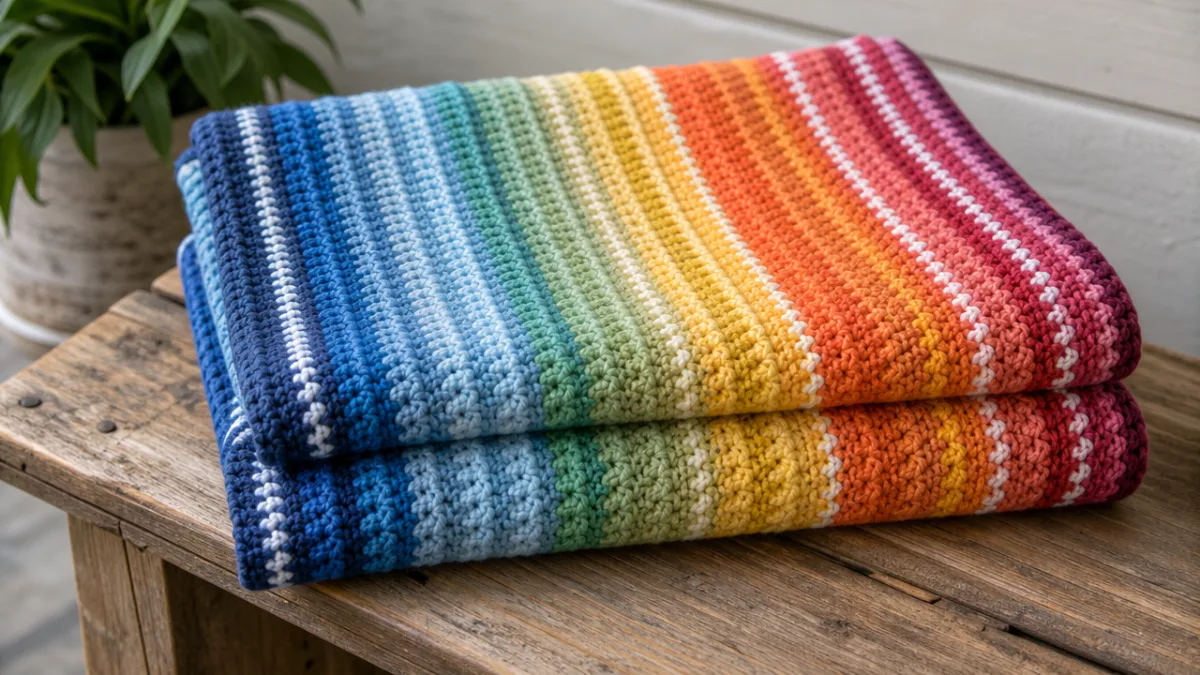
Selecting your color palette is arguably the most exciting and important decision in creating a temperature blanket. Most makers organize colors along a spectrum from cool to warm — deep blues and purples for freezing temperatures, transitioning through greens and yellows for mild weather, and bursting into oranges and reds for scorching summer days. This rainbow progression creates a visually cohesive blanket that intuitively communicates temperature shifts at a glance, making the data feel felt as much as seen.
Your palette doesn’t have to follow the traditional cool-to-warm rainbow, however. Many crafters have created breathtaking blankets using monochromatic schemes, assigning lighter and darker shades of a single color to different temperature bands. Others go for unexpected color stories — deep jewel tones, soft pastels, or even earthy neutrals — that prioritize aesthetic harmony over temperature logic. The key is choosing colors you’ll genuinely love living with, since this blanket will likely become a cherished household staple for years to come.
When planning your palette, it helps to first research your local climate data to understand the realistic temperature range you’re likely to encounter throughout the year. If you live in a region with mild winters, you may need fewer cold-color gradations and more variety in the middle-temperature range. Conversely, someone in a four-season climate might want seven to ten distinct color bands. Most crafters settle on between six and twelve colors, which provides enough visual interest without making yarn management overwhelming or expensive.
- Below 0°F / -18°C — Deep navy or charcoal for the coldest days
- 0–19°F / -18 to -7°C — Icy lavender or pale silver blue
- 20–29°F / -7 to -2°C — Medium periwinkle or cornflower blue
- 30–39°F / -1 to 4°C — Sky blue or soft teal
- 40–49°F / 4 to 9°C — Mint green or sage
- 50–59°F / 10 to 15°C — Bright green or lime
- 60–69°F / 15 to 21°C — Sunny yellow or gold
- 70–79°F / 21 to 26°C — Warm peach or soft orange
- 80–89°F / 27 to 32°C — Deep orange or coral
- 90°F+ / 32°C+ — Fiery red or magenta for the hottest days
Popular Stitch Patterns for Temperature Blankets
The stitch you choose will define the texture, drape, and overall look of your finished blanket. The most beginner-friendly option is the simple single crochet stitch worked in rows, which produces a dense, even fabric that shows color changes beautifully and lies flat without much blocking. Because you’re changing colors frequently — sometimes every day — a simple stitch means you can complete your daily row in just minutes, even on busy evenings when your crafting time is limited.
For those wanting more texture and visual interest, the half double crochet is a wonderful step up that still works quickly and handles color transitions smoothly. Many temperature blanket makers favor the granny square format, completing one square per day and later joining them into a patchwork blanket at year’s end. This approach adds an exciting element of assembly and design at the close of the project, and the finished piece has an heirloom quality that feels both classic and artful. Granny squares also offer the flexibility to rearrange squares by color before seaming, giving you creative control over the final composition.
More advanced makers have experimented with the C2C (corner to corner) technique, the shell stitch, the bobble stitch, and even interlocking crochet to add dimensional interest to their temperature records. Some crafters add a textured stitch on milestone days — birthdays, anniversaries, major holidays — creating tactile memory markers woven right into the fabric. Whatever stitch you choose, consistency is essential: switching techniques mid-year can affect gauge and make your blanket uneven, so commit to your choice before January first and stick with it all the way through.
Recommended Stitches by Skill Level
If you’re just beginning your crochet journey, starting with single crochet rows is the wisest path. The stitch is forgiving, easy to count, and produces a tight, beautiful fabric that photographs wonderfully. You’ll be able to focus your energy on maintaining consistent tension and enjoying the daily ritual rather than wrestling with a complicated stitch pattern. As you build confidence, you might add small embellishments — a picot edge, a simple border — but the body of the blanket can remain gloriously simple.
Intermediate crocheters often gravitate toward the modified moss stitch or linen stitch, both of which create a woven-looking fabric with elegant texture that elevates a temperature blanket from craft project to fiber art. The shell stitch is another popular intermediate choice, producing a scalloped wave pattern reminiscent of ocean ripples. These stitches take a bit longer per row but reward the extra time with a finished blanket that has genuine visual complexity and a luxurious hand feel that invites touching.
Advanced crocheters looking for a true challenge might consider a Tunisian crochet temperature blanket, worked with a long Tunisian hook for an almost woven, tapestry-like effect. Others have pushed the format further by combining tapestry crochet colorwork with their temperature data, embedding symbolic imagery or geometric patterns that interact with the temperature colors. These highly ambitious projects blur the line between functional textile and contemporary fiber art, and they command significant attention when shared in online crafting communities.
Yarn Selection and Quantity Planning
Choosing the right yarn for a year-long project is a decision that deserves careful thought, because you’ll be living with this yarn and this blanket for a very long time. Acrylic yarns are the most popular choice for temperature blankets, and with good reason: they’re affordable, widely available in hundreds of consistent colors, machine washable, and durable enough to withstand years of daily use. Brands like Lion Brand Pound of Love, Red Heart Super Saver, and Caron Simply Soft are perennial favorites in the temperature blanket community because of their reliable color consistency and extensive shade ranges.
Wool and wool-blend yarns offer a beautiful natural quality and warmth that many makers find more satisfying to work with day after day. The slight spring and elasticity of wool produces stitches with a pleasing uniformity, and the finished blanket has a cozy, rustic character that synthetic yarns can’t fully replicate. The trade-off is cost — wool is significantly more expensive than acrylic — and care requirements, since most wool blankets need to be hand-washed or dry-cleaned. For a large, frequently used blanket, the practicality of machine-washable acrylic is hard to beat, but for a blanket destined for display or occasional use, wool is a gorgeous indulgence.
Calculating how much yarn you’ll need requires a bit of planning, but the math is manageable. Most makers working with worsted weight yarn in standard row format use roughly 15 to 20 yards per row. Multiply that by 365 days, factor in your color distribution based on expected weather, and add a comfortable buffer of at least 15 percent for finishing, borders, and mistakes. A standard temperature blanket in worsted weight often consumes between 6,000 and 9,000 yards total across all colors, though lace-weight and bulky yarn projects will fall well outside that range in both directions.
- Choose your yarn weight first, as it determines hook size, row height, and total yardage needed.
- Research your local historical temperature data to estimate how many days will fall in each color band.
- Purchase at least one full skein of each color before the year begins so you’re never scrambling mid-project.
- Buy extra of your most-used colors — those in the middle temperature ranges — since you’ll burn through these fastest.
- Keep all your yarn in labeled bins or bags organized by color band for quick and easy daily access.
- Store a small yarn tracker app or spreadsheet to log each day’s temperature and color as you go.
Tracking Your Temperatures and Staying Consistent
One of the most common challenges temperature blanket makers face is staying consistent with their daily tracking throughout the entire year. Life gets busy, weeks slip by, and suddenly you realize you haven’t crocheted or recorded temperatures in ten days. The good news is that weather data is meticulously archived by services like Weather Underground, the National Weather Service, and apps like Weather.com, which allow you to go back and retrieve historical daily temperatures for nearly any location. Many experienced temperature blanket makers recommend checking in weekly rather than daily, catching up on any missed rows in a single relaxed session.
Deciding whether to use the daily high temperature, the daily low, or an average of both is a meaningful creative choice that will shape the character of your finished blanket. Using daily highs tends to produce warmer, more vibrant blankets, since afternoon temperatures push into the higher color bands more often. Daily lows skew cooler and can produce a quieter, more muted palette — lovely in its own right, particularly for makers in cold climates. Using an average creates the most balanced representation of each day, though the math adds a small extra step to your routine that can feel tedious over 365 days.
Many crafters develop small rituals around their temperature blanket tracking that help keep the project alive and meaningful throughout the year. Some crochet their daily row first thing in the morning while drinking coffee, treating it as a form of mindful meditation before the day begins. Others sit down each Sunday evening to record the week’s temperatures and work their rows in a single peaceful session. A few dedicated makers keep a journal alongside their blanket, jotting down a sentence or two about what made each day memorable — creating a dual record of weather and memory that makes the finished project even more emotionally resonant.
Apps and Tools to Help You Stay on Track
The crafting community has developed a wealth of digital tools to support temperature blanket makers through their year-long journey. Several free apps allow you to input your temperature key, log daily readings, and generate visual previews of what your blanket’s color progression will look like. These previews can be enormously motivating, especially in the middle of a grey, monotonous winter when your blanket’s color story feels like it’s going nowhere exciting. Seeing the projected summer explosion of warm colors just months away is often all you need to pick up your hook and keep going.
Spreadsheets remain a beloved low-tech option that many crafters prefer for their flexibility and customizability. A simple Google Sheet with color-coded cells — one cell per day, formatted with the corresponding yarn color — gives you an instant visual map of your year’s weather and lets you spot patterns and seasonal shifts at a glance. You can share these spreadsheets with fellow temperature blanket makers in online communities, compare weather patterns across different geographic locations, and even use the data to make decisions about your border design or finishing touches as the year draws to a close.
Online communities, particularly large Facebook groups and Reddit forums dedicated to crochet temperature blankets, offer an invaluable source of encouragement, troubleshooting help, and inspiration. Seeing thousands of makers sharing their weekly progress posts — from the sparse, cool-toned rows of January to the wild, colorful chaos of summer — creates a wonderful sense of collective experience and shared creative endeavor. Many makers credit these communities with keeping them motivated through the inevitable mid-year slumps, and the year-end reveal posts, where completed blankets are finally displayed in their full, magnificent entirety, are some of the most joyful and celebratory content in the fiber arts world.
Finishing, Borders, and Displaying Your Temperature Blanket
Reaching the final day of December and completing your last row is an extraordinary moment that many temperature blanket makers describe as genuinely emotional. After 365 days of daily or weekly work, the blanket you hold represents an entire year of your life recorded in fiber and color. The finishing stage — weaving in ends, adding a border, blocking if necessary — is both a practical necessity and a ceremonial closing of the year-long project. Take your time with it, savor it, and celebrate what you’ve created.
Weaving in ends is the most labor-intensive part of finishing a row-based temperature blanket, since color changes generate a tail at both the beginning and end of each new color introduction. Over 365 days with multiple color changes, this can add up to hundreds of ends that need to be carefully secured and hidden within the fabric. Many experienced makers recommend weaving in ends as you go — working each new tail in as you begin the following row — to avoid facing a daunting end-of-year task. Those who save all the ends for last often report spending multiple evenings on this step alone, but even that final weave-in session has its own satisfying, reflective quality.
Borders are where you can add your own artistic signature to the finished blanket and tie all those color bands together into a cohesive whole. A simple single crochet border in a neutral color — cream, grey, charcoal, or black — frames the blanket cleanly without competing with the temperature colors. More elaborate borders using shells, picots, or even a coordinating granny square trim can elevate the blanket into something truly spectacular. Some makers choose a border color that was particularly significant to their year — the color of the warmest day, their favorite week’s hue, or a tone that simply makes the whole piece sing — turning even the border into a meaningful narrative choice.
Sharing, Gifting, and Preserving Your Work
Many temperature blanket makers choose to keep their finished blanket as a personal treasure, a yearly ritual they repeat again and again so that over time they accumulate a collection of year-blankets that together tell the decade-long story of their life in a particular place. Others create temperature blankets as gifts — for newborns, recording the weather of a child’s first year of life, or for couples, documenting the twelve months of their first year of marriage. These gifted blankets carry an extraordinary emotional weight, combining the time and skill of handcraft with a layer of personal, environmental data that makes them utterly irreplaceable.
Photographing your temperature blanket well is worth the effort, both for your own records and for sharing in online communities where your work might inspire hundreds of future makers. Natural light is your best friend when photographing crochet: lay your blanket flat near a large window on an overcast day for soft, even illumination that shows color accurately without harsh shadows. Hanging the blanket vertically on a white wall and stepping back to capture the full length lets viewers appreciate the complete year’s color story in one glorious image. Close-up detail shots of stitch texture, color transitions, and border work round out a complete documentation of the project.
Whether you’re a first-time crocheter picking up a hook in January with a brand-new set of yarn skeins, or an experienced maker embarking on your fifth consecutive year of temperature blanket crafting, the project offers something rare in our fast-paced, instant-gratification culture: a reason to slow down, pay attention to the world around you, and make something beautiful from the simple passage of days. Every row is a day you lived. Every color is weather you felt on your skin. And every finished blanket is a soft, warm, utterly personal archive of a year that will never come again.








What do you think?
It is nice to know your opinion. Leave a comment.