










21 Beginner Sewing Projects You Can Finish Today
Why Sewing Is the Perfect Hobby to Start Right Now
Honestly, there’s never been a better time to pick up a needle and thread. Maybe you want to make thoughtful handmade gifts, save some money on home décor, or just find something calming to do with your hands in the evenings — whatever draws you to sewing, it’s a hobby that delivers. What makes it especially great for beginners is that you don’t have to wait months before you have something real to show for it. You can walk away from your very first project with something finished and usable, and that feeling is genuinely hard to beat.
The sewing community right now is also incredibly welcoming, which wasn’t always the case. Free patterns, YouTube tutorials, beginner-friendly websites, and supportive social media groups have made it easier than ever to find help when you’re stuck. You can look up basically any technique and find someone who has filmed a clear, step-by-step video of it. Experienced sewists genuinely enjoy helping newcomers, and that spirit of generosity makes the learning curve feel a lot less steep than it might have been for your mom or grandmother when they were starting out.
And beyond the practical side of things, sewing is just really good for you. Research has found that repetitive, focused hand activities can ease anxiety, sharpen concentration, and put you in something close to a meditative state. A lot of sewists describe their time at the machine as the most peaceful part of their day — the kind of quiet, absorbed focus where an hour passes and you barely noticed. There’s something deeply satisfying about making something with your own hands, and that satisfaction compounds the longer you stick with it.
Essential Tools and Materials Every Beginner Needs
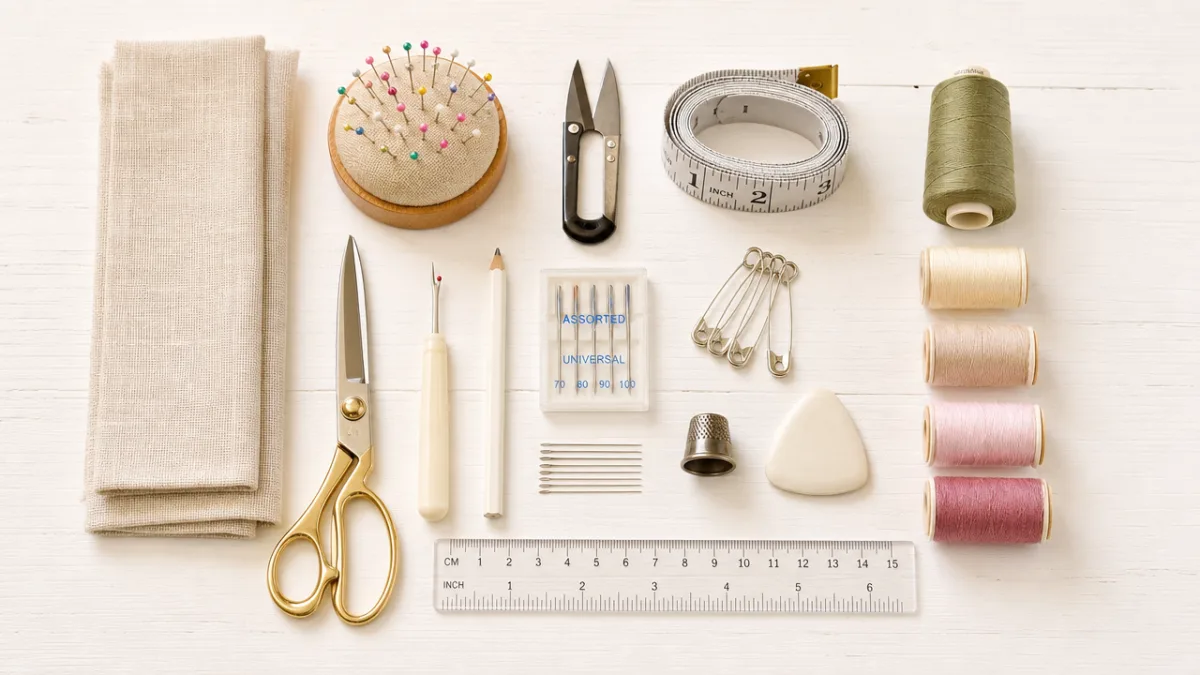
Before you jump into your first project, it’s worth taking a few minutes to get the right basics together. You really don’t need to spend a lot, but a handful of quality supplies will make the whole experience so much more enjoyable. The single most important thing? A sharp pair of fabric scissors. Dull blades are genuinely frustrating — they drag, they fray, and they make your cuts sloppy before you’ve even touched a machine. Get a dedicated pair used only for fabric and you’ll be amazed at the difference it makes every single time you use them.
For most beginners, an entry-level sewing machine is the best investment you can make early on. Brands like Brother, Singer, and Janome all make reliable, affordable machines that come with more than enough built-in stitches to keep you busy for months of projects. That said, plenty of the projects in this list can be done entirely by hand, so if you’re not ready to commit to a machine yet, a simple hand-sewing kit with assorted needles, good thread, and a thimble is a perfectly legitimate place to start.
A few other tools will save you a lot of headaches as you go. Straight pins or wonder clips keep your fabric pieces from sliding around while you sew. A seam ripper — that little hook-shaped tool — will quickly become your best friend, because every beginner unpicks stitches regularly and there’s absolutely no shame in it. A flexible measuring tape, some tailor’s chalk or an erasable fabric pen for marking your cuts, and an iron for pressing seams flat round out the essentials. Get these before your first project and you’ll be set up for a genuinely smooth experience.
- Sharp fabric scissors or a rotary cutter with a self-healing cutting mat
- An entry-level sewing machine or a complete hand-sewing needle kit
- Assorted thread in neutral colors (white, black, grey, and navy cover most projects)
- Straight pins or sewing clips for holding fabric in place
- A seam ripper for correcting inevitable mistakes
- Fabric marking tools such as tailor’s chalk or an erasable fabric pen
- A flexible measuring tape and a clear ruler
- An iron and ironing board for pressing seams
Quick and Easy Projects to Build Your Confidence
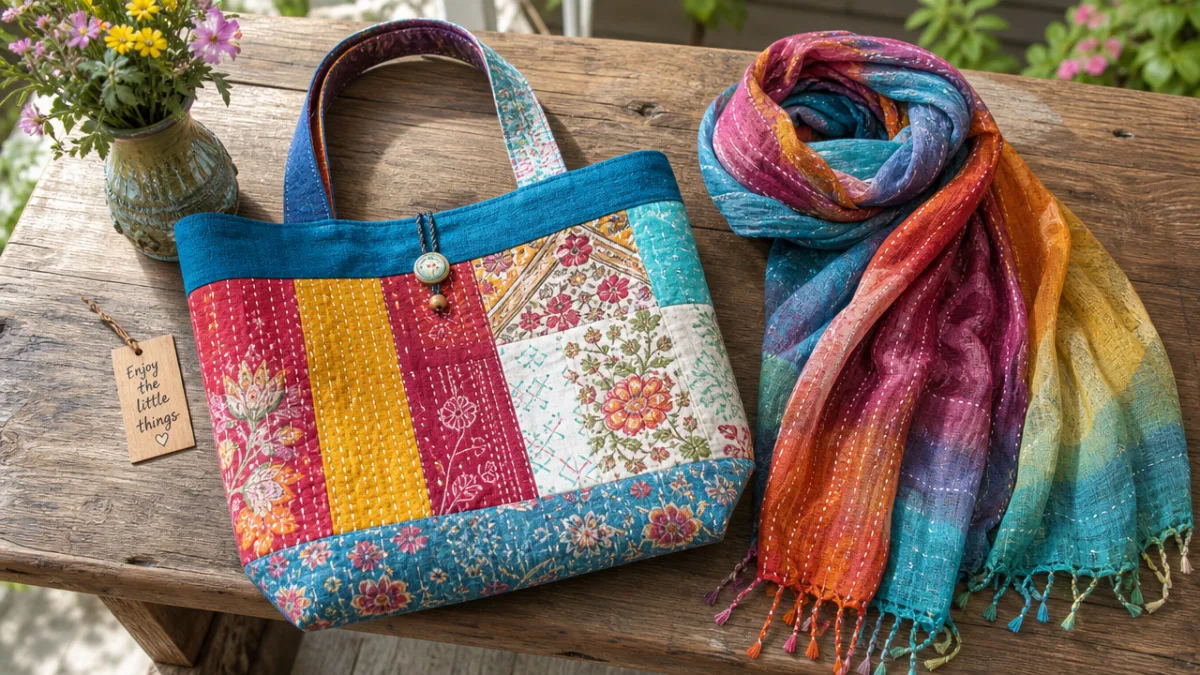
The best beginner sewing projects have a few things in common: straight lines, just a few pattern pieces, and a useful finished product waiting for you at the end. Tote bags check every one of those boxes, which is why they’re such a classic starting point. All you need is a sturdy rectangle of fabric and two handles, and you’re looking at a few straight seams and less than an hour of your time. You can use any fabric you love, and you end up with a reusable bag you made yourself — that little jolt of pride is exactly what keeps you coming back for the next project.
Fabric coasters and pot holders are another fantastic option, especially if you’re hand-sewing or working through a pile of small fabric scraps. They let you practice the core skills — cutting accurately, pinning layers together, sewing a straight seam around a simple shape — in a low-stakes setting. They also make lovely little gifts, and here’s the great thing: even if your stitching isn’t perfectly straight, a coaster still does its job beautifully. Forgiving projects like these are exactly what builds confidence.
Pillowcases are probably the most rewarding beginner project in terms of the payoff you get for the effort involved. One large rectangle of fabric, one smaller one, fold and sew with a simple envelope closure, and you’ve got something that genuinely transforms the look of a bedroom. No zipper needed, no complicated fitting — just fabric you love and a couple of straight seams. Most beginners finish their first pillowcase and immediately want to make three more, which is exactly the kind of snowball effect that turns a casual experiment into a real hobby.
Wearable Beginner Projects for Fashion-Forward Makers
Clothing can feel like a big leap when you’re just starting out, but there are plenty of wearable projects specifically designed to be beginner-friendly. Elastic-waist skirts are a perennial favorite for a reason — you’re working with just two or three pattern pieces, sewing mostly straight lines, and the elastic waistband is wonderfully forgiving if your measurements are slightly off. Pick a lightweight cotton or a fun printed fabric you’re excited about, and you can have a skirt you’ll actually wear ready in a single afternoon.
Infinity scarves and tube scarves are another brilliant entry point into wearable sewing. Essentially, you’re sewing a long rectangle of fabric into a loop and finishing the raw edges — that’s it. Jersey knit is a particularly popular choice because it doesn’t fray and has a natural stretch that makes it cozy and easy to work with. A lot of beginners are genuinely surprised by how polished a handmade scarf looks in a quality fabric. It becomes something you’re proud to wear out the door or wrap up as a gift.
Drawstring bags and pouches sit right at the intersection of accessory and practical item, which makes them endlessly appealing. A small drawstring bag in a beautiful fabric can be a jewelry pouch, a gym bag, a gift bag, a travel organizer — honestly, whatever you need it to be. The construction is beautifully simple: two rectangles sewn together with a channel at the top for the cord. And learning to make a clean drawstring channel is a skill that carries directly into future projects like pajama pants and hooded tops, so it’s time very well spent.
- Elastic-waist skirt in a fun cotton print fabric
- Infinity scarf in jersey knit or fleece
- Drawstring backpack or gym bag
- Simple headband or hair bow with a metal clip
- Adjustable face mask with filter pocket
- Wrap skirt with tie closure (no zipper needed)
- Slip-on house shoes or soft-soled slippers
Home Décor Projects That Transform Your Living Space
One of the most compelling reasons to learn to sew is what it does for your home — and your wallet. Custom curtain panels can cost a small fortune in stores, but once you can sew, you’re paying for fabric alone and getting exactly the color, pattern, and length you actually want. Basic unlined curtains are really just a large hemmed rectangle with a rod pocket at the top, which makes them a very achievable project once you’ve got a few beginner projects under your belt. The visual impact they have on a room is genuinely stunning for how straightforward they are to make.
Table runners are another home décor project you can realistically knock out in a single focused afternoon. At their simplest, a table runner is an elongated rectangle with finished edges — you can keep it plain or add a contrasting border or fringed ends if you want something a little more decorative. Making a matched set of a table runner and placemats in coordinating fabrics is a lovely way to practice your straight-line sewing and hemming while ending up with something that makes your dining space feel genuinely pulled together.
Fabric baskets and storage bins have become hugely popular in the crafting world, and once you make one you’ll understand why. They’re genuinely useful, they look great, and they’re more straightforward to build than they appear. The basic method involves cutting rectangles of fabric, adding interfacing for structure, and boxing the corners to create a flat bottom. Those boxed corners are the skill worth paying attention to here — once you’ve got the technique down, it opens up a whole range of future projects. And a fabric bin in a beautiful print looks like something from a boutique shop, not something you made on a Tuesday evening.
Tips for Staying Motivated and Building Your Skills Over Time
Every confident sewist you admire was once a complete beginner making crooked seams and reaching for the seam ripper more times than they’d like to admit. Keeping that in mind when you hit a frustrating patch really does help. Sewing progress isn’t always a straight line — some projects will click right away, others will push back in ways you didn’t expect. The trick is to treat every project as a learning experience instead of a test you can pass or fail. Even a finished item with some visible wobbles taught you something that carries forward, and that matters more than how perfect it looks.
One of the most underrated strategies for staying motivated is building a fabric stash you actually love. When your materials are beautiful and exciting to you, sitting down to work on them just feels different — more like a treat than a chore. Browse fabric stores, explore online shops, watch for sales. Most experienced sewists will tell you to choose fabric for projects you’re genuinely excited to use or wear, because that enthusiasm translates directly into more time at the machine, which is ultimately what builds the skill. Practicing on fabric that leaves you cold is the fastest route to losing steam.
Small, specific goals will take you much further than big, vague ones. Instead of “I want to learn to sew,” try “I’m going to finish one small project this week” or “I’m going to sew for thirty minutes three times this week.” Celebrating each finished item — even the simple ones — reinforces all the good feelings that keep you coming back. And if you can share your work with friends, family, or an online community, even better. The beginner sewing world is overwhelmingly encouraging, and having people who understand exactly what it took to finish that first tote bag or pillowcase can make all the difference when you’re deciding whether to keep going.
- Start every new technique on scrap fabric before cutting into your good materials
- Press seams with an iron after every step — it makes a dramatic difference in final appearance
- Read pattern instructions all the way through before you begin cutting any fabric
- Take photographs of your finished projects to see your progress over time
- Join online sewing groups or local guilds for encouragement and advice
- Keep a small sewing journal to note what worked, what did not, and what you want to try next
Choosing Your Next Project and Growing Beyond Beginner Level
Once you’ve worked through a handful of beginner projects, something interesting starts to happen — things that used to take real concentration begin to feel automatic. Sewing a straight seam, clipping curves, pressing seams open, finishing raw edges: these moves shift from conscious effort to comfortable habit. That’s your signal to start stretching a little. Zippered pouches are a great next step, for example — installing a zipper feels intimidating right up until you actually do it with a clear tutorial in front of you, and then it clicks into place and you wonder what the fuss was about.
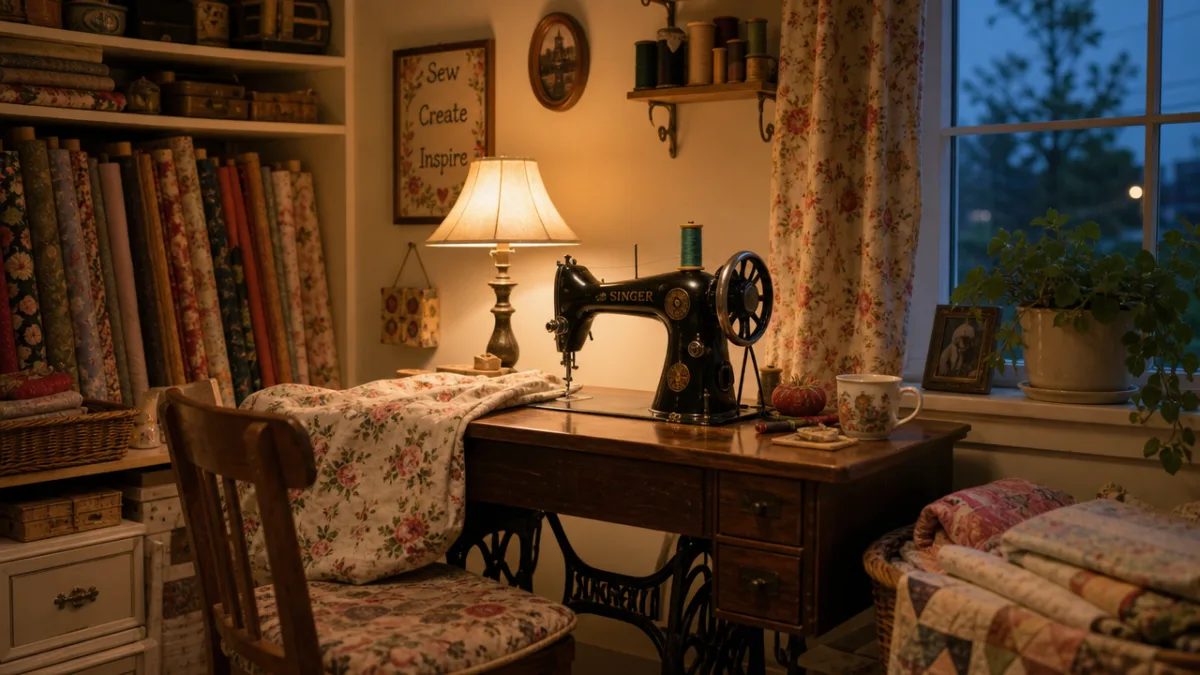
Quilting is where a lot of sewists naturally land once they’ve got basic construction down and want to do something more creative with it. Simple patchwork quilts — especially those built from squares or rectangles — build directly on the straight-line sewing skills you already have, while layering in color theory, layout design, and the satisfying puzzle of fitting pieces into a cohesive whole. Starting small is smart: a quilted table topper or a baby quilt walks you through the full process — piecing, basting, quilting, and binding — without locking you into a months-long commitment.
The journey from beginner to confident sewist is one of the most genuinely rewarding creative paths you can take. Every new skill you pick up opens another door — a well-fitted blouse, an heirloom quilt, a bag with professional-looking hardware, a birthday dress sewn with love for someone small. Sewing is a skill for life. It saves money, reduces waste, and fills your home and wardrobe with things that carry real meaning because you made them yourself. Start with one small project today, finish it, and let that feeling carry you forward into everything that comes next.








What do you think?
It is nice to know your opinion. Leave a comment.