










29+ Best Shade Plants for a Low-Light Home Office: Which Thrive with No Windows?
Why Shade Plants Are the Secret to a Thriving Home Office
You don’t need a sun-drenched room to have a beautiful, lively home office. Some of the most stunning and hard-working plants on the planet actually grew up in the shadowy understory of dense rainforests, where sunlight barely filters through the canopy above. Over millions of years, these plants learned to make do with very little light — which, as it turns out, is exactly the situation most of us are dealing with in our home offices.
And beyond just looking good, plants genuinely make you feel better at work. Research from the University of Exeter found that people working in offices with plants reported a 15% boost in productivity compared to those in bare, plant-free spaces. Add in the mood and stress benefits that come with greenery, and the case for office plants gets pretty hard to argue with. The trick is choosing species that can actually handle your lighting situation rather than slowly wilting in a corner.
One thing worth clearing up before we dive in: “low light” and “no light” aren’t the same thing. Very few plants can survive in a room with zero natural light, but plenty of them do just fine under overhead fluorescent or LED lighting for eight to twelve hours a day. That’s exactly what this article is focused on — plants that genuinely hold up in those conditions, so you can build a green, thriving workspace without constantly replacing casualties.
Top Shade Plants That Genuinely Thrive in Low-Light Conditions
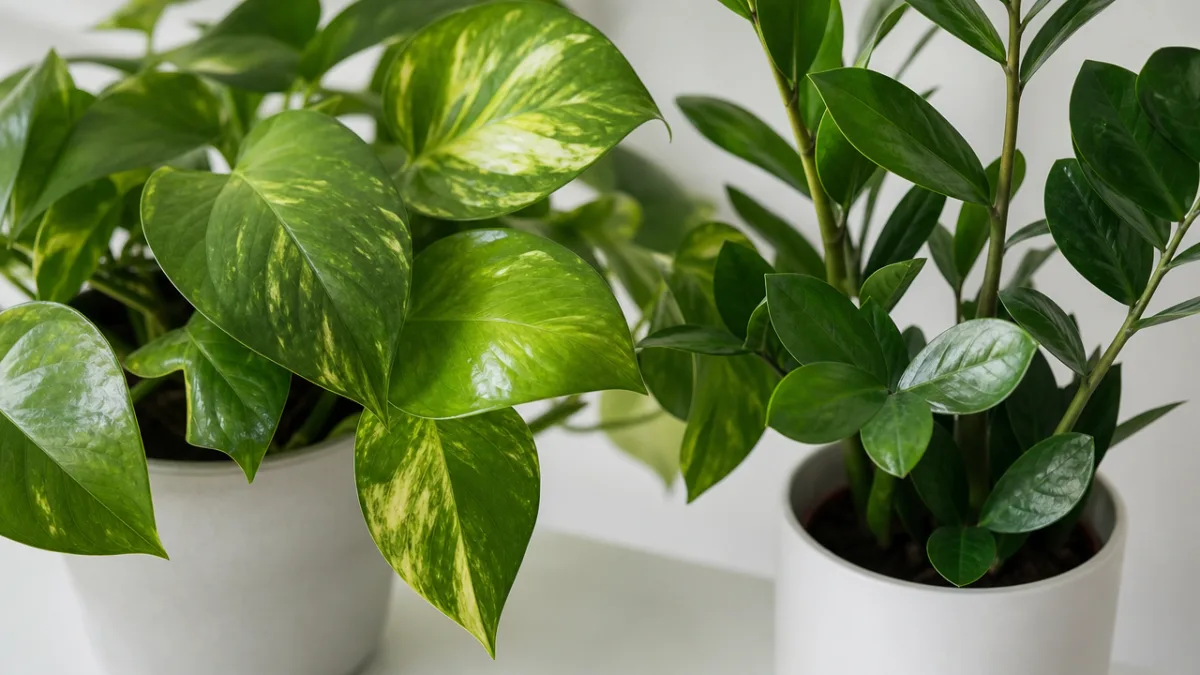
If there’s one plant that deserves the title of “king of low-light offices,” it’s the ZZ plant (Zamioculcas zamiifolia). Those thick, waxy leaves and chunky underground rhizomes are basically built-in water and nutrient storage tanks, meaning this plant can go weeks without any attention and still look immaculate. It handles fluorescent light alone with remarkable ease, which is why interior designers love putting it in corporate lobbies and windowless conference rooms. On a desk or a shelf, that deep, glossy green just looks polished and lush.
The cast iron plant (Aspidistra elatior) is another one that earns its name. This Victorian-era staple laughs at neglect, dust, temperature swings, and near-total darkness. Its long, arching leaves have a sculptural quality that works in both sleek modern offices and more traditional setups, and because it grows slowly, you won’t be scrambling to repot it every year. It’s genuinely one of the lowest-maintenance long-term investments you can make for your workspace.
Peace lilies, snake plants, pothos, heartleaf philodendrons, and Chinese evergreens round out the core group of reliable performers. Each one brings something a little different to the mix — different textures, colors, and growth habits — so you can layer them together and create something that looks genuinely lush and intentional, not just “a plant on a desk.” Many of them also appear on NASA’s air-purifying plant list, which is a nice bonus.
Here’s a quick reference list of top shade plants for a home office:
- ZZ Plant (Zamioculcas zamiifolia) – tolerates very low light, drought-resistant, nearly indestructible
- Snake Plant (Sansevieria trifasciata) – upright, architectural, excellent air purifier
- Pothos (Epipremnum aureum) – fast-growing, trailing or climbing, extremely adaptable
- Peace Lily (Spathiphyllum) – blooms in low light, removes benzene and formaldehyde
- Cast Iron Plant (Aspidistra elatior) – withstands near-total darkness, slow-growing
- Chinese Evergreen (Aglaonema) – stunning color variety, tolerates artificial light only
- Heartleaf Philodendron – lush, fast-growing, tolerates neglect and low light
- Dracaena marginata – tall and dramatic, perfect as a floor plant in dim corners
- Bird’s Nest Fern (Asplenium nidus) – unique texture, thrives in humidity and low light
- Lucky Bamboo – compact, symbolic, grows in water or soil under artificial light
How to Arrange Plants for Maximum Visual Impact in a Small Office
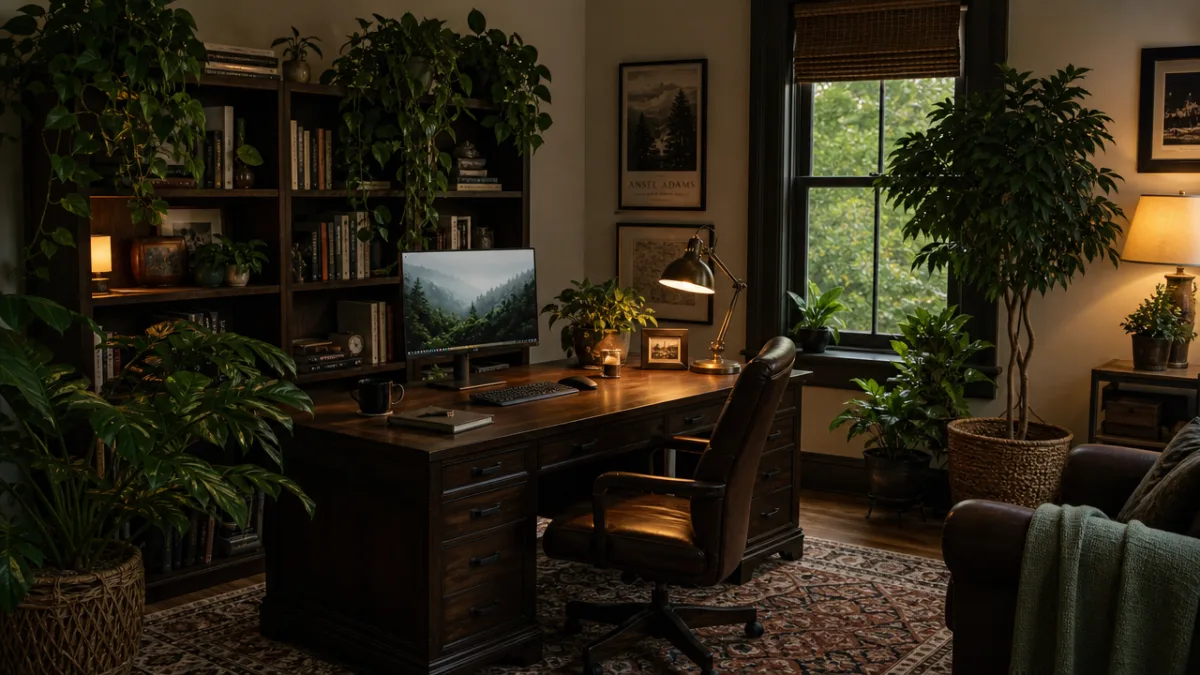
Getting your plant arrangement right is equal parts art and practicality. The goal is to create that feeling of natural abundance without cluttering your workspace or blocking things you actually need to see. The approach that works best is layering: tall floor plants like dracaena in the corners, medium-sized plants on side tables or filing cabinets at mid-height, and trailing or compact plants on your desk or in hanging planters on the wall. Done well, it creates a three-dimensional green environment that genuinely feels immersive rather than just decorative.
Color variation is your friend here too. Lots of low-light plants — Chinese evergreens, certain pothos cultivars, variegated snake plants — come with silver, yellow, lime green, or even pink and red markings. Mix those in alongside different leaf textures, like the broad smoothness of a peace lily next to the strappy blades of a snake plant and the delicate fronds of a fern, and you get a visual rhythm that a solid-green arrangement just can’t match. The containers matter too — terra cotta, concrete, ceramic, and woven baskets all create completely different moods in a space.
Don’t overlook the practical side of all this, though. Plants that are too tall or too “busy” in your direct line of vision can actually cause eye strain while you’re working, so keep anything on your desk low and unobtrusive. Make sure pots have proper drainage, or use cache pots with a layer of gravel at the bottom to protect against root rot — which is already a risk with low-light plants that tend to get overwatered. One underrated trick: grouping plants together slightly raises the ambient humidity, which ferns and peace lilies love, and makes your office feel noticeably more comfortable during dry winter months.
Caring for Shade Plants in a Home Office Environment
The number one mistake people make with low-light plants is watering them too much. Because these plants are photosynthesizing slowly in dim conditions, they absorb water at a much slower pace than sun-loving plants would. A good rule of thumb is to wait until the top inch or two of soil has dried out completely before watering again — and for real drought-tolerant types like ZZ plants and snake plants, you can let it dry even further. Sticking your finger or a wooden chopstick into the soil is genuinely more reliable than following a fixed watering schedule.
Go easy on fertilizer too. Low-light plants grow slowly, and pushing them with too much fertilizer leads to salt buildup in the soil, which causes leaf burn and root damage. A diluted liquid fertilizer — about half the recommended strength — once every six to eight weeks in spring and summer is plenty. Come fall and winter, most shade plants essentially stop growing, so you can skip fertilizing altogether. When it comes to slow-growing plants, less is almost always more.
Here’s one that often gets overlooked: dust. In a typical office, dust settles on leaf surfaces and can clog the tiny pores (stomata) that plants use to breathe and absorb moisture. Wiping leaves down with a damp cloth every few weeks keeps them looking their best and actually improves their health. For ferns and other plants with lots of small leaves, a gentle rinse in the sink or a light mist works better. Keeping plants clean also goes a long way toward preventing pest problems, since dust and debris are basically a welcome mat for spider mites and fungus gnats.
Here are key care tips organized by category:
- Watering: Always check soil moisture before watering; less is more in low light
- Fertilizing: Use diluted liquid fertilizer sparingly, only in the growing season
- Cleaning: Wipe leaves monthly to keep stomata clear and deter pests
- Repotting: Only repot when roots visibly crowd the container, typically every 2–3 years
- Pest control: Inspect plants weekly; treat early with neem oil or insecticidal soap
The Best Plants Specifically for Windowless or Near-Windowless Offices
A truly windowless office is a real challenge, but it’s absolutely workable. The most important thing in that situation is your artificial lighting — specifically the quality and how long it’s on each day. Standard overhead fluorescents, especially cool-white or daylight-spectrum bulbs in the 4000–6500 Kelvin range, actually produce enough light energy for the toughest low-light plants to survive and even put out modest new growth. If you’re open to investing in a dedicated grow light positioned near your plants, you can push things even further — pothos and peace lilies can put on a genuinely impressive show without a single ray of actual sunlight.
In a windowless setup, the three plants you can count on most are the ZZ plant, the cast iron plant, and the Chinese evergreen. These have been thriving under artificial light in commercial interiors for decades — there’s real track record here, not just optimism. A ZZ plant sitting under a standard office ceiling light, watered once every three weeks, can keep producing new stems and leaves indefinitely. Chinese evergreens are especially valuable in this situation because the genus comes in dozens of cultivars with dramatically different colorations, so you can build a varied, interesting plant collection around a single species you know will hold up.
Lucky bamboo is another solid windowless-office choice. Despite the name, it’s actually a species of Dracaena — not bamboo at all. It grows in water or minimal soil, needs nothing more than fresh water every couple of weeks and some ambient artificial light, and can stay healthy and attractive for years. Its associations with good luck and positive energy make it a popular pick for professional spaces, and its tidy, sculptural form fits the clean aesthetic most people want at their desk. Even a small arrangement of stalks in a glass vase adds a surprising amount of life to an otherwise utilitarian setup.
Consider these specifically windowless-office-approved plants:
- ZZ Plant – thrives under fluorescent light alone for years
- Chinese Evergreen (Aglaonema) – colorful, resilient, survives artificial light only
- Cast Iron Plant – the most darkness-tolerant plant available commercially
- Lucky Bamboo – no soil needed, minimal light requirement, long-lived
- Dracaena varieties – slow-growing, tolerant, dramatic vertical form
- Peace Lily – may not bloom without some light boost, but foliage stays lush
Air-Purifying Benefits and the Wellness Case for Office Plants
The case for office plants goes well beyond aesthetics. NASA’s Clean Air Study — originally designed to figure out how to keep air breathable in enclosed space stations — identified a long list of common houseplants that effectively remove volatile organic compounds like formaldehyde, benzene, trichloroethylene, and xylene from indoor air. What’s especially convenient for us is that many of the most effective air-purifying plants on that list are also excellent low-light performers. In a home office where air can stagnate thanks to furniture off-gassing, synthetic carpet fibers, and electronic equipment running all day, that’s a genuinely useful combination.
Peace lilies consistently rank near the top for air purification, tackling a wider range of VOCs than almost any other common houseplant. Snake plants have the unusual ability to convert carbon dioxide to oxygen even at night, making them particularly valuable in a room where you’re spending long hours breathing. Pothos and philodendrons are especially good at absorbing formaldehyde — which, frustratingly, off-gases from the particleboard furniture and synthetic carpets that tend to dominate budget home office setups. A healthy mix of these plants in your workspace delivers a real, measurable improvement in air quality over time.
Then there’s the psychological piece, which researchers call biophilia — essentially the idea that humans are wired to respond positively to living greenery because we evolved surrounded by it. Studies show that even the presence of plants can lower cortisol, reduce blood pressure, and improve focus and creative thinking. In a windowless or low-light office where you might already feel a bit cut off from the outside world, a thoughtfully arranged plant collection can genuinely shift how you feel throughout the day — less drained, more grounded, better able to push through long stretches of work.
When you add it all up, investing in a few good shade plants is one of the highest-return improvements you can make to a home office. The upfront cost is modest — the hardiest low-light species tend to be among the most affordable plants at garden centers and online nurseries — and the care demands are genuinely minimal once you know what you’re doing. What you get in return is a healthier, more beautiful, more human workspace that supports you rather than just surrounding you, no matter how little natural light your room has to offer.








What do you think?
It is nice to know your opinion. Leave a comment.