










Easy Crafts For Kids That Will Brighten Up Rainy Days
Why Rainy Days Are the Perfect Opportunity for Creative Play
There’s something kind of magical about a rainy day when the kids are home. The world outside goes grey and quiet, the windows steam up from the warmth inside, and suddenly the whole house feels like it’s just waiting to be turned into something. Instead of treating a rainy day like a problem to solve or a battle against boredom, you can flip the whole thing around — and honestly, some of the best afternoons we ever have with our kids happen when it’s pouring outside.
Child development experts will tell you that creative, hands-on play does a lot of good for kids — it builds fine motor skills, helps with focus and emotional regulation, and gives them a real sense of accomplishment. But you don’t need a study to know that when a child finishes making something with their own hands, even something small and a little wobbly, they light up. That feeling of “I made this” is genuinely powerful, and it’s something crafting delivers every single time.
The other great thing about rainy day crafts? You almost never need to run to the store. The best projects come together with stuff you already have — paper towel tubes, old magazines, dried pasta, a few buttons, some fabric scraps, and a trusty bottle of white glue. Go into it with a relaxed, let’s-just-see-what-happens attitude, and you’ll be amazed at what turns up in your junk drawer or recycling bin.
Setting Up a Craft Space That Invites Creativity
Before you jump into any specific project, it’s worth taking five minutes to set up a decent workspace. It doesn’t have to be fancy — a cleared kitchen table with an old plastic tablecloth or a few sheets of newspaper laid down works great. The real point is giving kids a space where they feel like it’s genuinely okay to make a mess, which actually makes them more focused and willing to take creative risks.
Lay your supplies out where kids can see them rather than stashing them in a bag. When children can actually look at what’s available, something clicks — they start coming up with their own ideas without you needing to guide every step. Pop scissors, tape, glue sticks, markers, and a mix of paper into small containers or trays in the middle of the table. If kids have to stop and ask for everything, it breaks the whole creative flow and starts to feel more like homework than fun.
Try throwing in a few unexpected or unusual materials alongside the usual stuff. Googly eyes, metallic pipe cleaners, a piece of bubble wrap, or a little pile of dried leaves or pebbles can completely change what a child thinks is possible. Novelty is genuinely exciting to kids, and that spark of curiosity is what drives the best craft sessions. Once the space is ready and the materials are out, things tend to take care of themselves pretty naturally.
Simple Paper Crafts That Require Almost Nothing
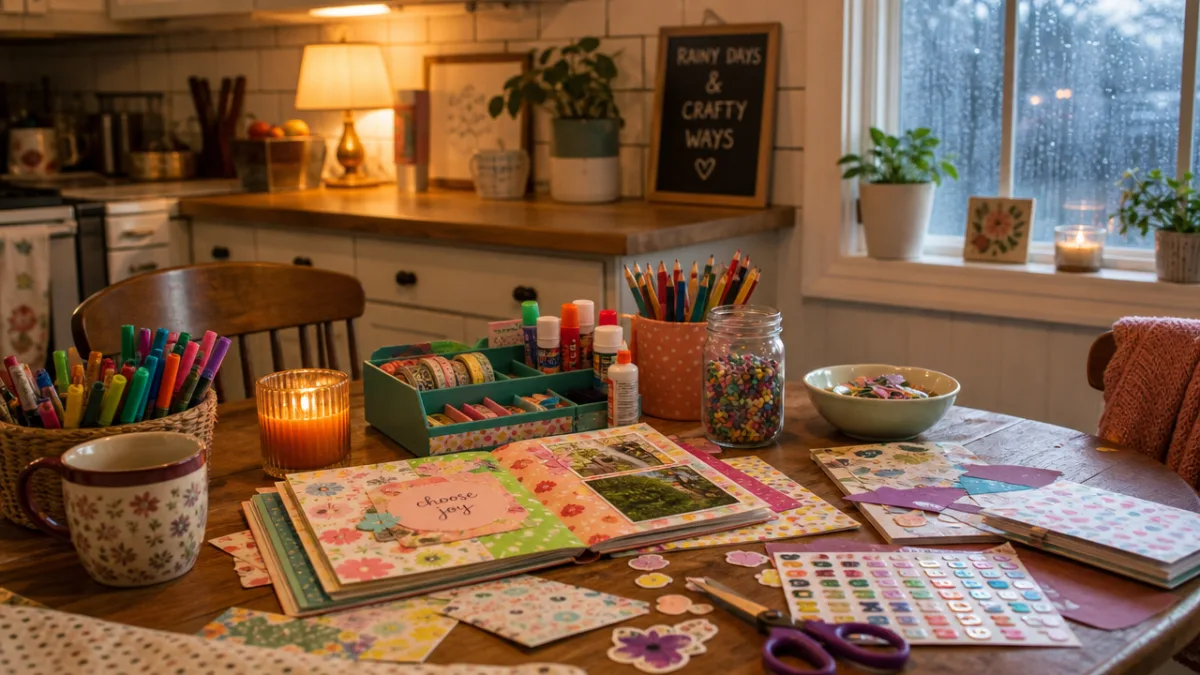
Paper crafts are honestly underrated. They need almost no supplies, the cleanup is easy, and the range of things you can make is pretty incredible across all ages. Origami is a great example — it’s a gentle, satisfying way for kids to practice following steps and thinking spatially. Young kids can do simple folds to make boats, hats, or little animals, while older kids can find more complex designs online or in a library book and really challenge themselves.
Paper collage is another fantastic option, especially for younger kids who aren’t quite ready for detailed cutting and folding. Tearing paper into shapes and layering them is every bit as creative as careful scissor work, and it often ends up looking more interesting anyway — better textures, more depth. Old magazines, junk mail, wrapping paper scraps, and colored tissue paper all work brilliantly. Let kids make scenes, portraits, abstract pieces, or even little illustrated stories spread across a few sheets.
For kids who like having a clear purpose to their project, handmade greeting cards and bookmarks are wonderful. There’s something really motivating about knowing the finished thing will actually go to someone — a grandparent, a teacher, a friend. You can introduce fun techniques like rubber stamping, simple stenciling, or a wash of watercolor to make each card feel a bit special. The mix of creativity and giving makes this kind of project particularly satisfying for kids.
Some paper craft ideas that tend to go over really well include:
- Paper plate masks and animal faces decorated with paint and cut paper features
- Accordion-folded paper fans, butterflies, and picture frames
- Newspaper hats, boats, and crowns that can be worn and played with right away
- Paper bag puppets that naturally lead into storytelling and little puppet shows
- Tissue paper suncatchers taped to windows to catch any light that manages to break through
Recycled Materials Crafts That Teach Sustainability
There’s something really wonderful about spending a rainy afternoon turning household junk into something cool. Recycled crafts teach kids a lesson that actually sticks — that things have more than one life, and that creativity means seeing potential where most people see garbage. Cardboard boxes become robots, rocket ships, and castles. Egg cartons become caterpillars, flower gardens, and paint palettes. Plastic bottles become bird feeders and terrariums. It’s genuinely exciting once kids start seeing it that way.
Toilet paper and paper towel tubes deserve their own moment here, because they might honestly be the most useful craft supply in your house — and you’re already making them. A single cardboard tube can become a telescope, a building block in a cardboard city, a puppet body, a kaleidoscope, or the trunk of a jungle elephant. If you start saving them a week or two ahead of a rainy day (or just keep a box somewhere the family can toss them in), you’ll have an impressive pile of raw material that costs absolutely nothing.
Tin cans, once you’ve made sure there are no sharp edges, become pencil holders, punched-hole lanterns that cast beautiful light patterns, or the walls of a tiny house. Old CDs make spectacular mosaic bases when kids stick small squares of colored paper or foil onto them. Even plastic bottle caps — collected gradually over time — become wheels for cardboard cars, eyes for creatures, paint stamps, and mosaic tiles. And the message running through all of it — that you can make something beautiful from what you’d normally throw out — is one that kids carry with them long after the craft session is over.
Painting and Drawing Activities for All Skill Levels
Painting and drawing are among the most satisfying things kids can do, partly because there’s no wrong answer. Even the youngest toddler gets something real out of making a mark on paper, and that basic pleasure honestly never goes away. On a rainy afternoon, setting out the paints and giving kids some open-ended time to play with color and texture is one of the most genuinely enriching things you can do — and it’s not complicated at all.
Beyond regular brushwork, there are so many alternative painting techniques worth trying that make the whole activity feel fresh and exciting. Bubble painting — mixing dish soap, water, and food coloring in a cup, blowing through a straw to make bubbles, then pressing paper onto the surface — produces these stunning abstract patterns that kids find absolutely magical. Marble painting means dropping paint-covered marbles into a shallow box with paper inside and tilting it to make swirling, unpredictable designs. Sponge painting, fork printing, and leaf printing are just as fun and work across a really wide age range.
Drawing can be as structured or as open-ended as your kids need it to be. Some children thrive with a prompt — draw your dream treehouse, illustrate your favorite scene from a book, invent a creature that’s never existed — while others do their best work when you just hand them some paper and step back. A great collaborative drawing game is where one person draws a head, folds the paper to hide it, passes it on for someone to draw the torso, and so on until you unfold the whole thing and see what you made together. It’s called Exquisite Corpse, and the results are reliably hilarious.
A few especially fun painting and drawing ideas worth trying:
- Watercolor resist art: Draw on paper with white crayon, then paint over it with watercolors to reveal the hidden design like magic.
- Salt painting: Paint a design with watercolors on wet paper, then sprinkle table salt over it while it’s still wet for a beautiful crystallized texture.
- Chalk pastel blending: Let older kids experiment with blending chalk pastels using their fingertips to build soft, gradient backgrounds for their drawings.
- Directed drawing tutorials: Follow a step-by-step drawing guide together to learn how to draw a specific animal, character, or object.
- Collaborative mural: Tape a long strip of paper to a wall or the floor and let everyone add to one big shared artwork with zero rules about style or subject.
Nature-Inspired Crafts That Connect Kids to the Outside World
Even when it’s raining hard, nature can find its way indoors through crafts that use natural materials or take the natural world as their inspiration. If you’ve been gathering pinecones, smooth stones, feathers, pressed flowers, or dried leaves on outdoor walks, a rainy day is the perfect time to finally put them to use. These materials have a warmth and tactile quality that plastic craft supplies just can’t match, and kids tend to slow down and really pay attention when they’re working with them.
Stone painting is one of the most reliably wonderful nature crafts for children of pretty much any age. Smooth river stones or garden pebbles make perfect little canvases for painting ladybugs, animals, geometric patterns, tiny words, or abstract designs. Seal them with a coat of Mod Podge or clear varnish and they become genuinely lovely objects — doorstops, garden decorations, bookends, or gifts people actually want to keep. Lots of families have turned stone painting into a long-running tradition, adding new stones after each outdoor outing and displaying them on a windowsill.
Pressed flower and leaf art brings the colors and shapes of the garden inside in a really beautiful way. Kids can arrange dried flowers and leaves on paper, card, or fabric to make botanical compositions that look genuinely striking when framed. No flower press? No problem — pressing materials between the pages of heavy books for a week or two works just as well. The whole practice of collecting, pressing, and arranging teaches kids to really look at the natural world and find beauty in small, easy-to-miss things. That habit of noticing sticks with them.
Weather-themed crafts are particularly fitting on a rainy day, and they help kids look at what’s happening outside their window differently. Making a paper or cardboard rainbow to hang up, crafting cloud mobiles from cotton wool and fishing wire, or building a simple rain gauge from a plastic bottle and a ruler are all projects that turn the rain from an inconvenience into something genuinely interesting. When kids make art about the weather they’re stuck inside watching, it shifts their whole relationship with it — from frustration to curiosity, and from boredom to the quiet satisfaction of finding inspiration in an ordinary moment.
Tips for Making Rainy Day Crafts a Regular Family Tradition
The craft sessions that really stick aren’t one-off events — they’re part of how your family does things. When kids can count on rainy days meaning craft time, they start to actually look forward to grey skies. That’s a genuinely meaningful thing to give a child: the early understanding that they have the tools and imagination to make something good out of whatever the day brings.
Keeping a dedicated craft box or basket stocked and ready makes it so much easier to actually do this. Build it gradually — pick up cheap supplies at the dollar store, save interesting packaging, set aside natural materials from walks, watch for art supply sales. It doesn’t need to be expensive or perfectly curated. It just needs enough variety that kids feel like they have real choices. Swap in a few new items every now and then to keep things feeling fresh and maintain that sense of “I wonder what I could make with this.”
Documenting the finished projects matters more than you might think. Photos on the fridge, a simple portfolio folder, a dedicated wall where new creations rotate in and get their moment — all of these send kids the message that what they made has real value and is worth remembering. Some families keep a craft journal where kids glue in photos of their projects alongside a few words about what they made and what it felt like. Those journals become something pretty special over the years — a real record of rainy afternoons that turned into something worth keeping.
And honestly, the single most important ingredient in any good rainy day craft session is you. You don’t need to be artistic. You don’t need to be crafty or particularly skilled. You just need to sit down at the table, pick up a piece of paper, and start. Kids are endlessly inspired by the adults in their lives being willing to play alongside them without worrying about how things turn out. The mess will clean up. The afternoon will pass. What stays — long after the glitter has been swept away and the paint has dried — is the memory of making something together on a grey, rainy day that somehow turned out to be one of the best days of the year.








What do you think?
It is nice to know your opinion. Leave a comment.