










“`html
Decorating Naturally: Bringing the Beauty of the Outdoors Into Your Home
There’s something about a home that feels connected to nature — something that just makes you exhale. In a world full of plastic furniture, glowing screens, and fast-everything, decorating with natural elements has started to feel less like a style choice and more like a genuine need. It’s not really a trend, either. It’s more of a mindset — a way of filling your space with textures, colors, and imperfections that actually exist in the world outside your windows. When your home is built around things that came from the earth, it starts to feel less like a place you live and more like a place you truly rest.
Natural decorating has deep roots — across cultures, across centuries. The Japanese idea of wabi-sabi finds real beauty in imperfection and the passage of time. Scandinavian hygge is all about warmth and simple, organic comfort. These aren’t niche philosophies; they’re reminders that a knot in a wooden table, the slightly uneven weave of a linen throw, or the lopsided shape of a river stone aren’t flaws. They’re what makes a home feel lived-in and real rather than staged and hollow.
This guide walks through how to actually bring natural decorating to life in your home — the materials you choose, the plants you grow, the colors on your walls, and the way light moves through your rooms. Whether you’re starting fresh or just trying to soften a space that’s started to feel a little too sterile, these ideas will help you build something that genuinely nourishes you rather than just looking good in a photo.
Understanding the Core Philosophy of Natural Decorating
At its heart, natural decorating is really about slowing down and being intentional. It asks you to think about where your things come from, how they were made, and what they actually add to your home — rather than just buying whatever’s on sale or whatever everyone else seems to have right now. The pieces you bring in should mean something, age well, and feel like they belong. It’s a more patient approach than most, but it pays off in a home that feels genuinely yours rather than assembled.
There’s also a built-in acceptance of change. Flowers fade, dried grasses shift color, wood develops a patina — and natural decorating leans into all of that rather than fighting it. A bunch of eucalyptus slowly dries and deepens in color. A raw wooden shelf gets richer with use. A handwoven basket softens and mellows over time. None of that is deterioration. It’s just your home aging honestly, the way real things do, rather than looking frozen in time like a showroom display.
There’s an ethical thread running through all of this, too. When you reach for reclaimed wood instead of particleboard, organic cotton instead of polyester, naturally dyed textiles instead of synthetics, you’re supporting more responsible supply chains and making choices that are genuinely better for the planet. Natural decorating and sustainable decorating aren’t exactly the same thing, but they overlap a lot. Prioritizing the real over the synthetic, the handmade over the mass-produced, and the durable over the disposable is good for your home and good for the world that provides everything in it.
Choosing Natural Materials for Furniture and Surfaces
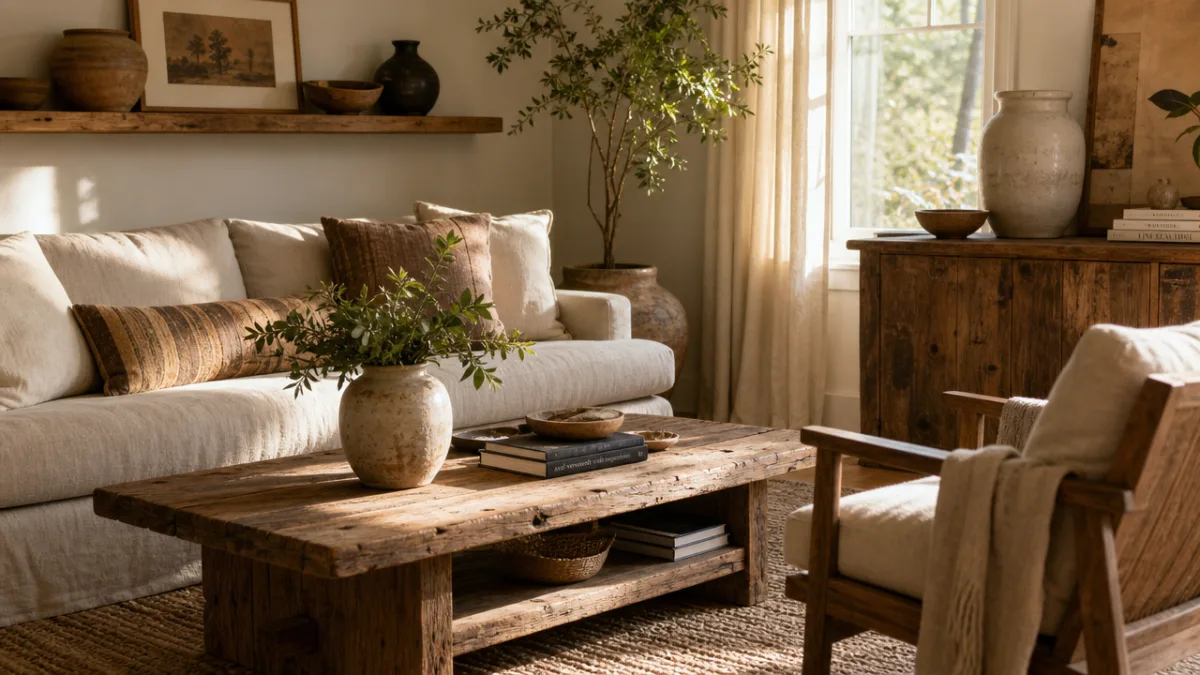
If there’s a single material that defines a naturally decorated home, it’s wood. From the warm, honeyed tones of pine to the deep, complex grain of walnut, wood brings a kind of warmth and rootedness that’s hard to replicate with anything else. When you’re shopping for wooden furniture, look for solid wood rather than veneer or particleboard — it’s not always easy to find, but the difference is immediately apparent. Reclaimed or FSC-certified options are worth seeking out. And because every piece of solid wood is unique, a good wooden table or shelf has its own personality in a way that a flat-pack alternative simply never will.
Stone and ceramic bring a different kind of presence — quieter and more geological. A marble countertop, a slate tile floor, a small collection of ceramic vessels on a windowsill. These materials reward close attention in a way that polished synthetic surfaces never do; the longer you look at natural stone or handmade pottery, the more variation, depth, and beauty you find in them. Raku-fired pottery is a particularly wonderful example — no two pieces share the same surface, which makes it almost a perfect symbol of what natural decorating is really about.
Then there are natural fiber textiles: linen, wool, cotton, jute, sisal, silk. These add a layer of tactile richness that synthetic fabrics genuinely can’t match. Linen in particular has become something of a signature material for this aesthetic — it wrinkles beautifully, gets softer with every wash, breathes well in warm weather, and comes in earthy, muted tones that work with almost any color scheme. Layering these textures together — a chunky wool throw draped over a linen sofa, a jute rug beneath a reclaimed oak coffee table — creates that sense of comfort and depth that feels genuinely luxurious without trying too hard.
Bringing Plants and Botanicals Into Your Space
A naturally decorated home without plants is missing something essential. Plants aren’t just decorative — they purify the air, regulate humidity, lower stress levels, and offer a constant, gentle reminder that there’s a living world outside. Choosing the right ones matters though. A plant that’s genuinely thriving in the right spot will always look more beautiful than one that’s struggling in the wrong light or getting watered too much or too little. Let your home’s actual conditions guide your choices as much as your aesthetic preferences do.
Large statement plants — a fiddle-leaf fig, a monstera, a tall olive tree, a structural snake plant — can anchor a room the way a good piece of art does. They draw the eye upward and give a space a sense of scale and life that’s hard to achieve any other way. Medium plants work beautifully grouped together on a plant stand, a windowsill, or a set of staggered shelves, creating little living vignettes that shift and change through the seasons. And trailing plants like pothos, string of pearls, or heartleaf philodendron add movement and softness — their vines cascading down bookshelves or hanging planters in a way that feels effortlessly relaxed.
Dried and preserved botanicals have also found a real place in natural interiors, and it’s easy to see why. Dried pampas grass, preserved eucalyptus, cotton stems, wheat, lavender, honesty pods — these bring organic texture and gentle movement to a room without the watering schedule. They’re especially lovely in lower-light spaces or in arrangements where you want something more sculptural and long-lasting. Display them in tall ceramic vases, hang them in bundles from hooks or rafters, or work them into wreaths and table arrangements that feel like a quiet celebration of the natural harvest.
Working With a Natural Color Palette
Color is one of the most powerful tools any decorator has, and in a naturally decorated home, the palette comes straight from the landscape. Think about the colors you actually encounter on a walk — through a forest, along a shoreline, across an open meadow. The creamy white of birch bark. The warm taupe of dry sand. The soft sage of wild herbs. The deep charcoal of wet slate. The warm rust of autumn leaves. The muted terracotta of sun-baked earth. These tones work together with a harmony that no artificially constructed palette can quite replicate, because they already exist in nature as neighbors.
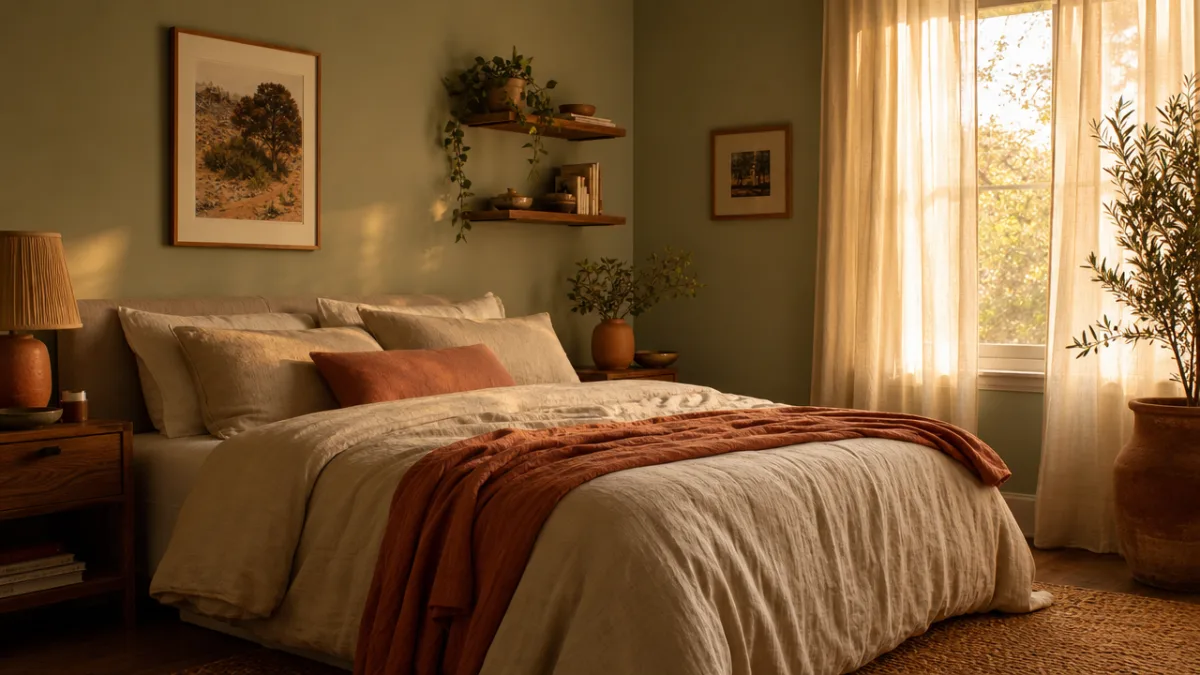
For walls, resist the pull of stark, cold whites. Instead, explore warm off-whites, creamy linens, and soft clay tones — colors that feel genuinely organic rather than clinical. These shades absorb and reflect light in ways that shift beautifully throughout the day, moving from warm gold in the morning to soft amber in the evening. They’re also incredibly forgiving as a backdrop: natural materials like wood, stone, linen, and ceramics can really shine against them rather than competing with something bold or high-contrast. The walls fade quietly into the background and let everything else do the talking.
Deeper accent colors — moss green, burnt sienna, indigo, midnight blue, earthy brown — can come in through textiles, ceramics, artwork, and smaller furniture pieces. A terracotta pot here, a deep green velvet cushion there, an indigo-dyed throw on the arm of a chair — these richer tones add depth and sophistication without disrupting the sense of calm that defines the whole aesthetic. The one thing to keep in mind is that even your boldest accent colors should still feel connected to the natural world, whether in their hue, their texture, or the material they’re made from.
Embracing Natural Light and Organic Arrangement
If there’s one thing that can transform a naturally decorated home more than anything else, it’s light — specifically natural light. It’s not just functional. It’s dynamic, directional, and deeply connected to how we feel. Rooms full of daylight feel alive; rooms starved of it feel flat and heavy no matter how beautifully they’re decorated. Before you do anything else in a space, pay attention to how light moves through it over the course of a day, and arrange your furniture to work with that movement rather than against it.
Window treatments should stay as light and unobtrusive as possible. Heavy lined drapes do a good job of insulating a room, but they also cut it off from the changing sky outside — and that connection matters. Loosely woven linen or cotton sheers are a much better fit here; they filter light gently without blocking it. Simple Roman shades in natural fabrics that you can raise entirely during the day work well too. And where privacy allows, leaving windows bare entirely is worth considering. Even a glimpse of sky, a rooftop, or a tree canopy framed by a window becomes a kind of living artwork in its own right.
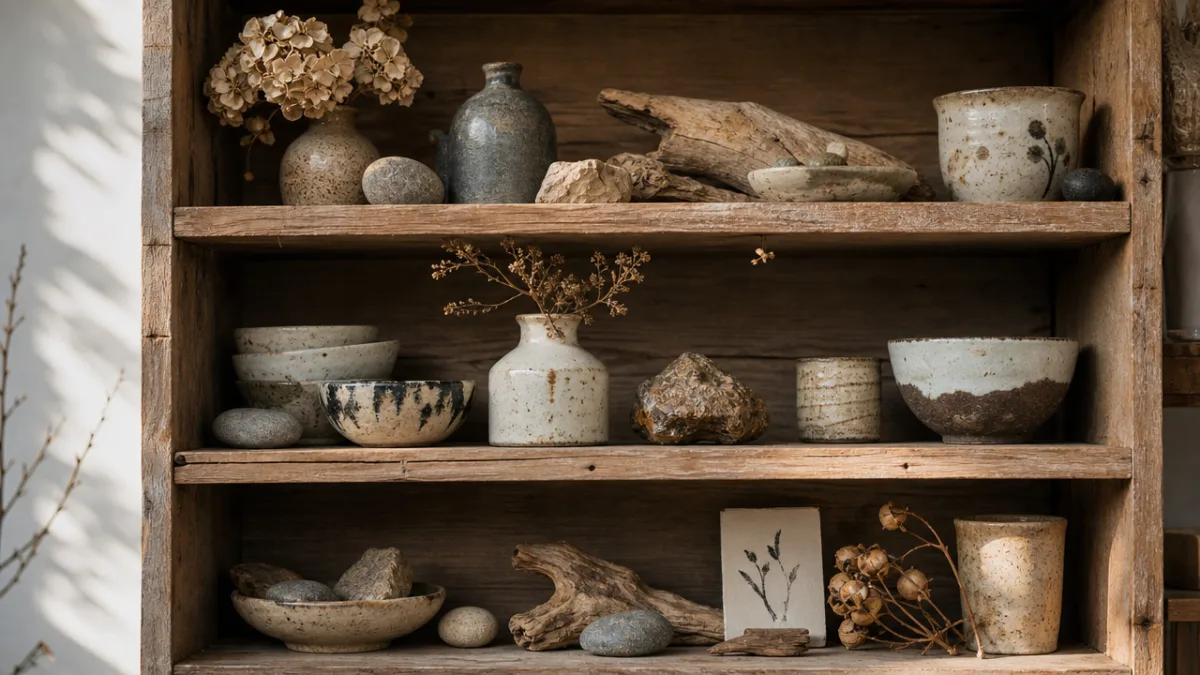
When it comes to arranging objects and furniture, let go of rigid symmetry. Nature doesn’t work in matching pairs, and neither should your shelves. Group things in odd numbers. Arrange books by height in organic, unstudied clusters. Put a single sculptural branch or piece of driftwood in a tall vase and let it be a focal point. Leave actual breathing room between objects — not everything needs to be filled in. This approach, sometimes called “considered restraint,” lets each piece be seen clearly and appreciated on its own terms, the way a single wildflower stands out far more vividly against open grassland than it ever could in a tightly packed bouquet.
Incorporating Found Objects and Handmade Treasures
Some of the most meaningful things in a naturally decorated home are the ones that cost nothing. A smooth stone picked up on a beach walk, a piece of sea glass found at low tide, a handful of pine cones from a forest floor, a striking feather, a fragment of weathered driftwood — these objects carry an authenticity that nothing you can buy can replicate. They’re not just decorative; they’re little markers of time spent paying attention to the world outside. Arranged on a windowsill, a mantelpiece, or a simple wooden tray, they tell you something real about the person who lives there.
Handmade objects carry a similar irreplaceable quality. A hand-thrown ceramic bowl, a hand-woven basket, a piece of jewelry forged from raw silver, a hand-printed linen cushion — all of these bear the mark of a human hand working with natural materials, and that shows. In a world increasingly dominated by machine precision and algorithmic design, the slight imperfections of handmade things feel genuinely reassuring. They’re a quiet reminder that beauty doesn’t require uniformity, that value and flawlessness aren’t the same thing, and that the relationship between maker, material, and object is worth honoring.
Visiting local craft markets, pottery studios, independent textile designers, and artisan shops is honestly one of the great pleasures of building a naturally decorated home. When you meet the people who made the things you’re bringing into your space, those objects carry more meaning — and you’re far more likely to actually care for them rather than replacing them the moment something shinier comes along. There’s a virtuous cycle in that: beautiful, considered objects get made, valued, and kept for a lifetime instead of manufactured in bulk and thrown out without a second thought. When you know the story behind something, it stops being just a thing and starts being a piece of your home’s story too.
Seasonal Decorating: Letting Nature Lead the Way
One of the genuinely joyful things about natural decorating is that it gives you permission — even encouragement — to change with the seasons. Instead of maintaining a static interior that looks exactly the same in January as it does in July, you can actually respond to the world outside. In spring, fresh branches of blossom, bunches of tulips and hyacinth, and lighter linen textiles in soft greens and pale pinks can breathe new life into a space that’s felt a bit heavy and closed-in through the winter. The ritual of making those swaps is part of the point — a small, intentional act of staying connected to the cycles that shaped human life long before central heating and electric light let us ignore them entirely.
Summer calls for an even lighter, more pared-back approach: bare wooden floors, loosely hung sheers billowing in warm breezes, leafy plants catching the long daylight hours, and a palette of sun-bleached whites, warm yellows, and ocean blues. Autumn is arguably the richest season for natural decorating — dried grasses, gourds, seed heads, mushrooms, fallen leaves in copper, amber, russet, and gold. These things can be gathered for almost nothing from hedgerows, woodlands, and markets, and arranged in ways that feel like a genuine celebration of the season’s extraordinary generosity before winter strips it all back again.
Winter in a naturally decorated home becomes an exercise in warmth and depth. Chunky wool throws, deeper earthy tones, candlelight flickering against stone and timber, sprigs of evergreen and holly — together these turn a home into a genuine refuge from the cold outside. Candles deserve a special mention here: beeswax candles in particular, with their warm golden glow and subtle honey scent, cast a quality of light that electricity simply can’t touch. Clustered on a mantelpiece or gathered at the center of a dinner table, they create an atmosphere of intimacy and warmth that feels, somehow, both timeless and deeply, essentially human.
“`








What do you think?
It is nice to know your opinion. Leave a comment.