










Craftivore: The Art of Conscious Crafting and Creative Consumption
What Is a Craftivore? Understanding the Movement
The word “craftivore” mashes together two ideas — craft and activism — into something that’s become a real identity for a growing community of makers. At its core, a craftivore is someone who takes handmade, artisan, and DIY culture seriously — not just as a fun hobby, but as a genuine lifestyle choice built around things like sustainability, community, and self-expression. The movement has been quietly gaining steam for the past decade or so, showing up in craft fairs, online groups, indie shops, and in the deeply personal act of making something with your own two hands.
At its heart, craftivism — the philosophical backbone behind the craftivore identity — asks us to really look at the relationship between creativity and social change. When you knit a banner, sew a quilt, or hand-stamp a protest sign, you’re fusing the quiet, meditative side of craft with the outward energy of activism. The craftivore takes that a step further by turning every creative act into a small statement: against fast fashion, against throwaway culture, against the faceless mass production that’s taken over so much of modern life. It’s not just about making things — it’s about making a point through making things.
The craftivore philosophy draws from a rich mix of feminist art history, folk traditions, and contemporary DIY culture. Figures like Betsy Greer, who’s widely credited with coining “craftivism” in the early 2000s, helped put into words something a lot of makers had already been feeling — that a needle, a loom, or even a glue gun can carry just as much meaning as any speech or protest sign. For the craftivore, every stitch is part of a larger conversation about the kind of world we actually want to live in.
The Philosophy Behind Conscious Crafting
Conscious crafting is about bringing real intentionality to every step of what you make — from the materials you pick up to the values baked into the finished piece. A craftivore doesn’t just grab whatever supplies are cheapest or most convenient; they stop to ask where those materials came from, who made them, what kind of environmental footprint they carry, and whether supporting that supply chain actually lines up with what they believe in. That kind of mindfulness turns crafting from a pastime into something that’s both personal and, in the best possible way, political.
One of the central ideas in conscious crafting is pushing back against what some critics call “craft capitalism” — the way handmade culture gets commercialized until all the meaning has been wrung out of it. When big retailers co-opt the look of handmade goods without any of the ethics behind them, the craftivore responds by choosing genuine artisans, small-batch producers, and local makers markets instead. Buying a hand-dyed skein of yarn from an independent dyer who sources responsibly isn’t just a purchase — it’s a vote for a more thoughtful kind of economy.
Conscious crafting also touches on the emotional and psychological side of making. Occupational therapists and positive psychologists have known for a while that creative work reduces stress, builds resilience, and gives people a real sense of accomplishment. For the craftivore, those personal benefits and the social ones are two sides of the same coin. When you slow down to embroider, knit, or hand-letter a card, you’re pushing back against the culture of constant hurry that drives so much modern anxiety. You’re choosing depth over speed, texture over polish, and something genuinely specific over something interchangeable.
Sustainability and the Craftivore Ethos
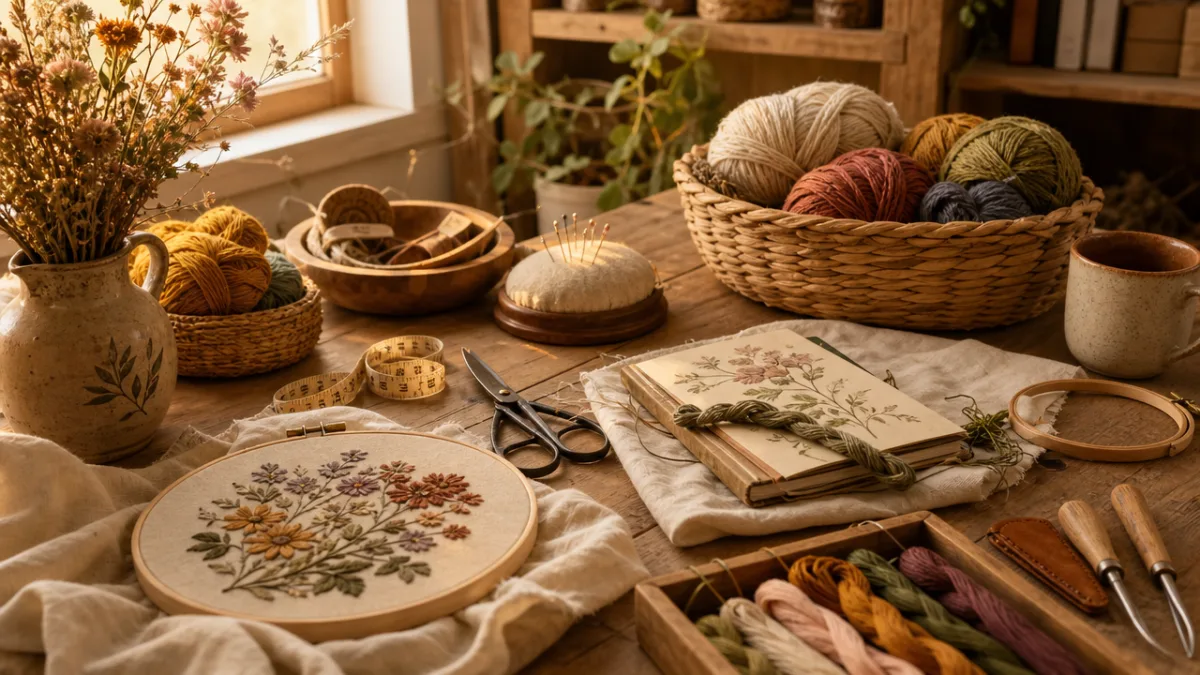
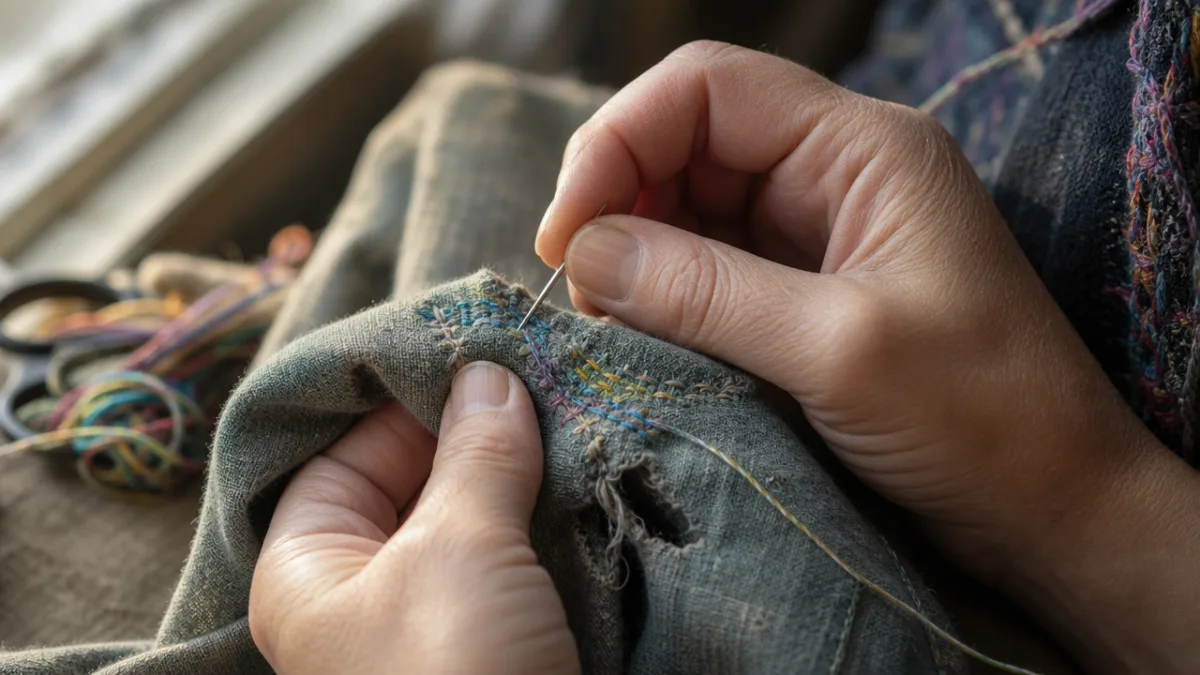
If there’s one place where the craftivore identity really comes into focus, it’s around sustainability. The fashion industry alone accounts for a staggering share of global pollution and textile waste, and craftivores respond to that by choosing to make, mend, and repurpose rather than toss and replace. Upcycling old clothes, repairing worn-out pieces, and reaching for natural or recycled materials are all hallmarks of how craftivores approach sustainability — treating every threadbare sweater as a canvas rather than something destined for the bin.
Slow fashion and craftivore values go hand in hand. The slow fashion movement encourages people to invest in fewer, better-made things built to last, and for the craftivore, making those things yourself is the ultimate version of that idea. A hand-knitted sweater that took forty hours to finish gets worn differently than something grabbed on impulse from a fast fashion site. It carries weight, memory, and intention. And when the elbows eventually wear thin, a craftivore doesn’t throw it out — they darn it, patch it, and honestly love it more for the wear.
But sustainability in the craftivore world goes well beyond fabric and fiber. It extends to the tools you use, the dyes you choose, the packaging you accept, and even the energy that goes into building community spaces where skills get shared. Lots of craftivores take part in clothing swaps, yarn exchanges, and communal sewing circles that cut down on waste while building the kind of local bonds that make neighborhoods genuinely resilient. These gatherings are small in scale but real in impact, knitting together — sometimes quite literally — communities of people who share a vision of a more circular, human-scale economy.
Key sustainability practices embraced by the craftivore community include the following approaches that can be woven into any maker’s routine regardless of skill level or budget:
- Choosing organic, recycled, or upcycled materials whenever possible to reduce environmental footprint.
- Mending and repairing items rather than discarding them at the first sign of wear.
- Supporting independent dyers, weavers, and suppliers who operate with transparency and ethical sourcing.
- Participating in or organizing local skill-sharing events, repair cafes, and community stitch-ins.
- Documenting and sharing sustainable techniques online to grow the movement’s reach and influence.
Craft as Social Commentary and Activism
Throughout history, craft has found ways to say things that formal political speech simply can’t. The quilts of Gee’s Bend, made by African American women in rural Alabama, told stories of hardship, resilience, and community that went far beyond their function as bedcovers. The AIDS Memorial Quilt brought a devastating and largely invisible epidemic into heartbreaking public view. Guerrilla knitting — yarn bombing — has turned public spaces into colorful, tactile protests against urban anonymity and the creeping privatization of shared life. The craftivore stands squarely in that tradition, knowing full well that soft materials can carry hard truths.
Today’s craftivores use their work to take on everything from reproductive rights and racial justice to climate change and mental health advocacy. Embroidered slogans stitched into delicate floral frames create a deliberate tension — something gentle holding something urgent — that makes people stop, look, and actually think. That friction is completely intentional. Craft has long been dismissed as feminine, trivial, or domestic, and by putting it in the service of serious ideas, craftivores challenge the old hierarchies that have kept “high” art separated from “low” craft, the political from the personal, and the public from the private.
Part of what makes craft so powerful as a form of activism is how accessible it is. You don’t need a gallery, a publisher, or a platform to make your voice heard with a needle and thread. You can stitch a message on a quiet Tuesday night and carry it into a public square by Saturday morning. That democratization of creative expression is central to everything the craftivore stands for. Making isn’t a privilege reserved for the professionally trained or the naturally gifted — it’s something any human being can do, as long as they’re willing to learn, practice, and keep going.
Building Community Through Making
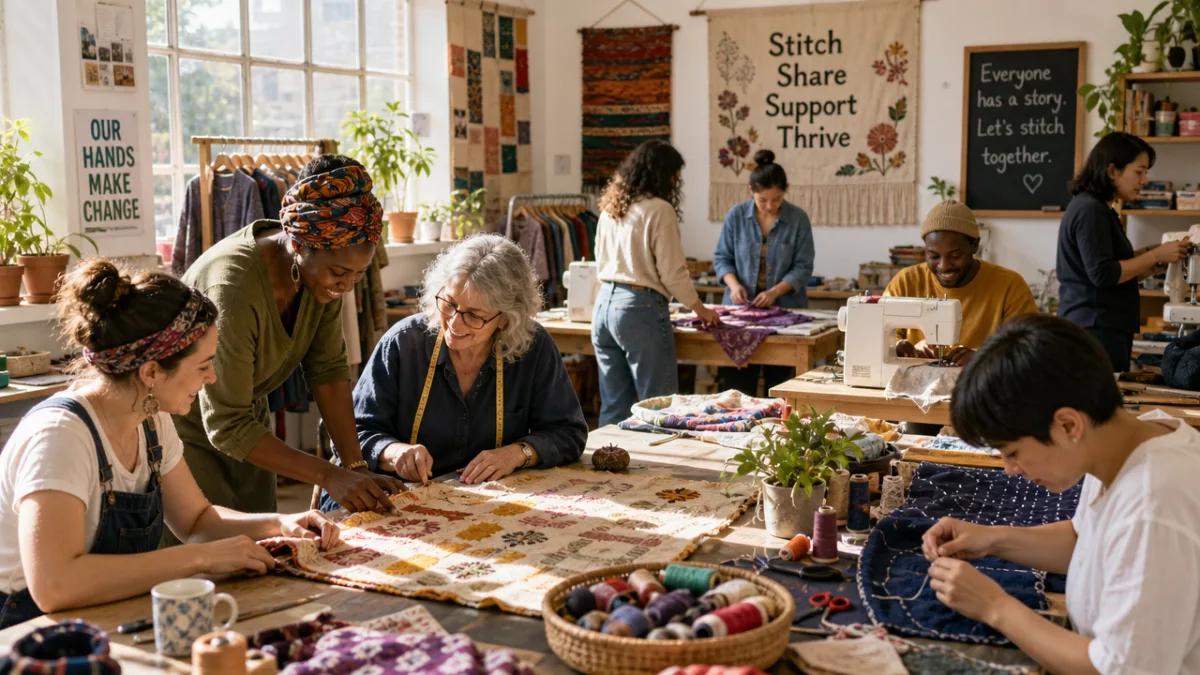
One of the most transformative things about living as a craftivore is the emphasis on community over competition. At a time when social media can turn creative work into a performance optimized purely for likes and engagement, the craftivore ethos is a call back to making as something shared and relational. Craft circles, stitch-and-bitch groups, knitting guilds, and maker collectives create spaces where people gather not to show off, but to learn from each other, get through creative blocks together, and celebrate the messy, imperfect, genuinely joyful process of making something.
These communities tend to be quietly radical in how inclusive they are. Many craft circles actively work to build welcoming spaces for people of all genders, backgrounds, abilities, and experience levels. There’s a real understanding that knowing how to make things — how to sew, knit, weave, or mend — is itself a form of power, and that sharing that knowledge freely is a genuinely generous act with real social weight. When a community comes together to teach skills that were once passed from generation to generation but have been lost to the convenience economy, they’re reclaiming something essential about human agency and self-sufficiency.
The growth of online craftivore communities has stretched that sense of connection way beyond geography. Platforms like Ravelry, Instagram, and TikTok have let makers share techniques, cheer each other’s finished objects, and rally around shared causes. A knitter in rural Scotland can find real kinship with an embroiderer in urban Brazil over their shared love of slow, intentional making. At their best, these digital communities mirror the values of their offline counterparts — generosity, curiosity, and a genuine delight in the texture of the handmade world.
Getting Started as a Craftivore: Practical Pathways
If the craftivore philosophy speaks to you, here’s the most important thing to know: there’s no right place to start. You don’t need to be an experienced maker, a committed activist, or someone with a perfectly sustainable lifestyle already in place. The craftivore path isn’t about purity — it’s about intention. Starting with just one change — choosing organic cotton thread for your next project, showing up at a local repair cafe, or learning a new skill from a YouTube tutorial by an independent creator — is genuinely enough. The journey builds on itself one stitch at a time.
A helpful way to think about it is through three overlapping commitments: making, mending, and meaning. Making is the creative act itself — learning to knit, sew, weave, print, or build whatever pulls at you. Mending is the commitment to caring for what already exists rather than defaulting to replacement — darning socks, patching jeans, regluing a beloved mug. And meaning is the reflective layer that ties the other two together — asking yourself why you make what you make, what your choices say about your values, and how your creative practice connects to the wider world.
Resources for beginners are genuinely plentiful and easier to find than ever. Local libraries often run maker programs, community colleges offer affordable craft classes, and independent yarn shops and fabric stores regularly host workshops that double as community hangouts. Online, free tutorials are everywhere — YouTube, dedicated craft education sites, you name it. As a rule, the craftivore community is remarkably generous with its knowledge, driven by the understanding that the more people who learn to make, mend, and think critically about what they consume, the better things get for everyone.
Some practical first steps to consider as you build your craftivore practice include the following starting points organized from the simplest to the more involved:
- Audit your existing craft supplies and commit to using what you already have before purchasing new materials.
- Choose one item in your home or wardrobe that needs repair and learn the skill required to fix it rather than replacing it.
- Seek out one local maker, dyer, or artisan to support financially instead of purchasing a comparable item from a mass retailer.
- Join or start a craft circle, either in person or online, focused on skill-sharing and community rather than competition.
- Research the supply chain behind one material you use regularly and explore more ethical alternatives where they exist.
- Create one piece of work — however small — that expresses something you care about beyond its aesthetic function.
The Future of the Craftivore Movement
As global conversations about sustainability, social justice, and the mental health toll of modern life keep intensifying, the craftivore movement looks set to grow in both visibility and influence. Younger generations in particular seem drawn to what it stands for — a hunger for authenticity in a world of algorithmic content, a desire for tangible skills in an increasingly abstract digital economy, and a need to feel like their everyday choices actually reflect what they believe in. Craft offers all of that, and the craftivore community offers the human connection that makes those choices feel sustainable over the long haul.
The future of craftivism might involve a deeper weaving-together with broader movements around climate justice, economic equity, and community resilience. Picture craft circles that double as mutual aid networks, textile cooperatives that pay fair wages to makers at every step of the supply chain, and school curricula that treat making and mending as core competencies alongside reading and math. These aren’t utopian fantasies — they’re extensions of things already happening in communities around the world, driven by people who’ve figured out that making something with care is never purely a private act.
When it comes down to it, what the craftivore movement offers is a reorientation of attention — a return to the particular, the textured, the slow, and the handmade in a world that pushes relentlessly toward the generic, the frictionless, and the instant. It’s an invitation to find meaning in the small, deliberate acts that add up, over time, to a life lived with intention. Whether you’re casting on your very first stitches, embroidering a message onto a tote bag, or mending a piece of clothing that’s been with you through years of your life — you’re part of something both ancient and urgently of this moment. You are, in the truest sense of the word, a craftivore.








What do you think?
It is nice to know your opinion. Leave a comment.