










Handmade Minimalist Soy Candles: Elevate Your Home Decor with Purpose and Beauty
The Art of Handmade Soy Candles
There’s something really satisfying about bringing a handmade object into your home — something that was made with actual care and intention by a real person. Handmade minimalist soy candles sit in a special corner of that world, where thoughtful design meets genuine craftsmanship. They’re nothing like the candles churned out by the thousands in a factory. Each one carries the subtle marks of the person who made it — small variations that quietly tell you someone poured real time and skill into this thing.
Soy wax itself is a pretty remarkable material that’s genuinely changed the candle-making world over the past few decades. It comes from soybean oil, which makes it renewable and biodegradable — and it burns cleaner and longer than traditional paraffin. When a maker chooses soy wax, they’re not just picking a medium. They’re making a statement about what they value: sustainability, natural materials, and the health of the people who’ll eventually light that candle in their living room. Less soot, fewer airborne nasties, better air quality overall. It’s a meaningful difference.
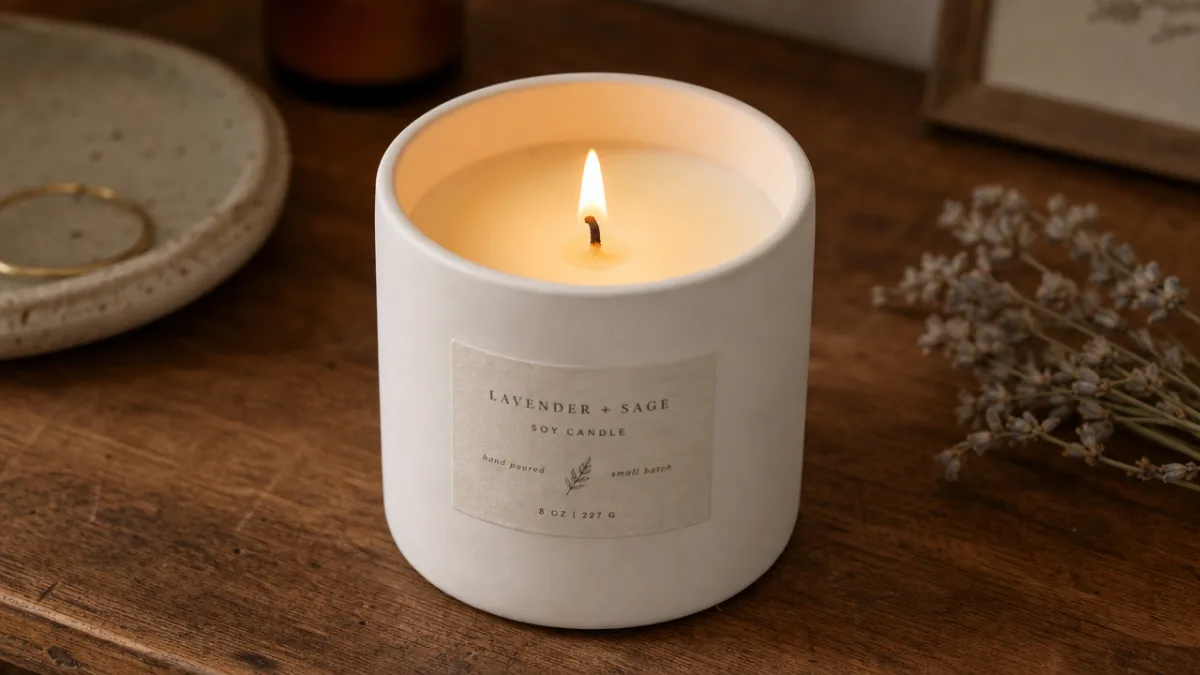
The minimalist design approach that goes into these candles is just as deliberate. Minimalism isn’t about emptiness — it’s about clarity. It’s about giving each element room to exist without competing for attention. A minimalist soy candle might be nothing more than a simple matte vessel, one carefully chosen scent, and clean, uncluttered labeling. And that restraint is actually what makes it so versatile. It can slip right into a Scandinavian-inspired living room or a warm, earthy bohemian space without demanding attention or clashing with anything already there.
Why Soy Wax Outperforms Conventional Alternatives
Once you understand what paraffin actually is, the comparison with soy wax gets pretty straightforward. Paraffin is a petroleum byproduct — a refined form of the same fossil fuels that go into your car. Burning it releases compounds like toluene and benzene, which are known carcinogens. If you light candles every day as part of your home atmosphere or wind-down routine, switching to soy wax is a genuinely meaningful upgrade for the air you’re breathing inside your own home.
Beyond the health side of things, soy wax also just performs better in everyday use. It has a lower melting point than paraffin, so it burns more slowly and evenly — meaning your candle lasts noticeably longer per ounce of wax. A lot of soy candle users find their candles burning 30 to 50 percent longer than comparable paraffin ones, which makes the slightly higher price tag actually pretty reasonable when you think about it in terms of cost per hour of burn time. The wax pool also spreads evenly across the surface, which helps prevent tunneling — that frustrating thing where a candle burns straight down the middle while perfectly good wax sits untouched around the edges.
Soy wax is also excellent at holding fragrance, producing what candle makers call a strong, consistent “scent throw” — basically how well the candle fills a room with its scent. So even a subtle, restrained fragrance profile can gently fill a medium-sized room without being overwhelming. Artisan makers love this quality because it lets them build layered fragrance blends that shift slightly as the candle burns, giving you a slightly different experience from the first light to the very last flicker.
- Soy wax comes from a renewable, plant-based source, making it a more environmentally responsible choice than petroleum-derived paraffin.
- It burns up to 50 percent longer than paraffin candles of the same size, so you get better long-term value for your money.
- Lower soot output means cleaner air in your home and less residue building up on your walls, ceilings, and furniture.
- If it spills, soy wax cleans up easily with soap and water — unlike paraffin, which needs solvents.
- It holds fragrance oils really well, giving you a rich, consistent scent throw from the first burn all the way to the last.
The Craft Behind Every Candle: How Artisans Work
Making a handmade soy candle is a lot more involved than most people realize when they pick one up in a shop or spot it online. The process starts well before any wax gets poured. Artisan makers spend real time sourcing their materials — finding the right soy wax blend, choosing wicks that are properly sized for their specific containers, and developing fragrance profiles using a thoughtful mix of essential oils and quality fragrance oils. Every single one of those decisions affects the finished product, and getting them right takes both knowledge and a fair amount of trial and error.
The actual pouring process requires precision and patience. Soy wax has to be melted to the right temperature — usually somewhere between 170 and 180 degrees Fahrenheit — before fragrance oils go in at their own specific temperature window, which ensures they actually bind with the wax rather than separating out. Then the wax gets poured into the vessels at yet another specific temperature to avoid problems like sinkholes, frosting (a natural white crystalline coating that looks a bit rough), or the wax pulling away from the container walls. Each batch then cures for at least 24 to 48 hours, and many makers let things sit for several days so the fragrance can fully settle into the wax for the best possible scent throw.
Wick selection and placement is probably the most technically demanding part of the whole process, and it’s where less experienced makers tend to run into trouble. A wick that’s too small leads to tunneling; one that’s too large produces too much soot, an unstable flame, and potentially dangerous heat levels. Makers have to test multiple wick sizes and types — cotton, wood, braided blends — for every unique combination of vessel diameter, wax type, and fragrance load. That testing can mean dozens of burn tests before a maker feels confident that a candle is safe, performs the way it should, and meets their standards aesthetically and aromatically.
Minimalist Design Philosophy in Home Decor
Minimalism as a design approach has roots in mid-twentieth century art movements, but it keeps finding new relevance in contemporary interiors — and not just because it’s trendy. At its heart, minimalist design is about intentionality. It’s about choosing objects because they genuinely serve a purpose or bring something real to a space, not just because they were there or they were cheap. A minimalist home isn’t bare for the sake of being bare; it’s carefully considered, with everything earning its place. In that context, a handmade soy candle becomes more than decoration — it becomes a deliberate choice that says something about who you are and what you care about.
The visual language of minimalist candles fits naturally with these broader design principles. Clean lines, neutral colors, natural materials, and a lack of unnecessary decoration are hallmarks of both minimalist interiors and the best handmade soy candles. A candle in a simple concrete vessel, or a frosted glass jar with quiet, understated labeling, doesn’t compete for your attention. Instead, it quietly contributes to the room — warmth from the flame, comfort from the scent, and a subtle visual interest that you feel more than you notice. That quiet quality is exactly what makes these objects so at home in a minimalist space.
There’s also something worth understanding about the difference between decoration and atmosphere when you start incorporating handmade soy candles into your home. A lot of people style their spaces by thinking almost entirely visually — colors, furniture, art. But atmosphere is something you experience with your whole body. The way a room smells, the quality of its light, the sounds it holds or softens — all of that shapes how you feel in the space. A minimalist soy candle works on the visual, olfactory, and even auditory level (the soft crackle of a wooden wick is genuinely lovely) all at once, which makes it one of the most efficient and elegant tools a home decorator has available.
- Choose candles in vessels that work with your existing colors and materials — concrete, glass, ceramic, and wood all bring different things to a space visually.
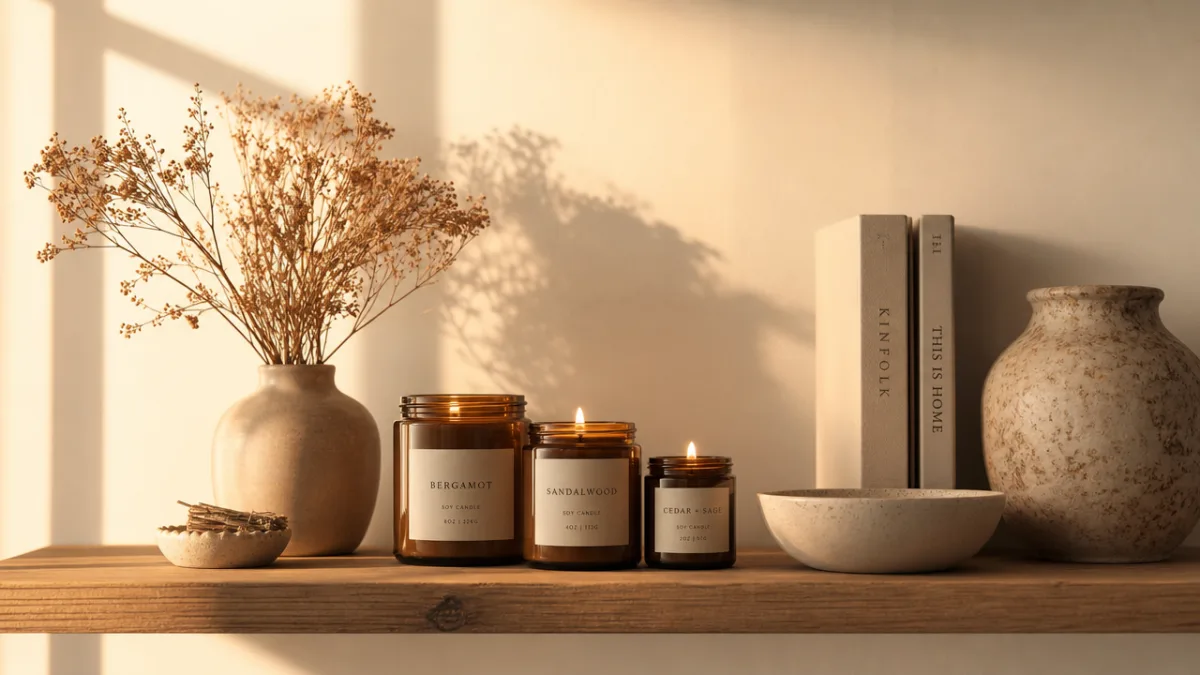
- Group candles in odd numbers for a display that feels balanced but not rigid, using varying heights to add some depth.
- Match fragrances to the purpose of each room — something calming like lavender or eucalyptus in the bedroom, warmer notes like vanilla or sandalwood in living areas, and something fresh and bright in the kitchen.
- Let candles be part of a styled vignette alongside natural elements like stones, dried botanicals, or a small plant.
- Swap out your candle collection with the seasons to keep your home’s scent feeling connected to what’s happening outside.
Fragrance as an Element of Wellness and Ritual
The connection between scent and how we feel is well documented in scientific research, but it’s also something humans have understood intuitively for thousands of years. From incense burned in ancient temples to today’s aromatherapy practices, we’ve long recognized that our sense of smell has a direct line to the limbic system — the part of the brain most tied to memory, emotion, and mood. It’s why a particular scent can throw you back to a specific moment in your life, or why certain herbs and flowers can genuinely shift your emotional state within minutes. When handmade soy candles are made with quality fragrance oils or pure essential oils, they become real tools for engaging intentionally with that sense.
A lot of people who love handmade soy candles aren’t just buying them as decor — they’re weaving them into daily rituals. Lighting a particular candle at the start of a work-from-home session can signal to your brain that it’s time to focus. Reaching for a softer, more relaxing scent in the evening helps your nervous system start winding down toward rest. These rituals might sound small, but neuroscience increasingly backs the idea that consistent, deliberate sensory cues — things you pair repeatedly with specific behaviors or times of day — can become powerful anchors for mood regulation, better focus, and even improved sleep over time.
And honestly, the act of choosing and buying a handmade soy candle is part of the experience for a lot of people. In a world full of fast, cheap, disposable things, picking something handmade is a small act of conscious consumption. It means slowing down enough to think about where something came from, who made it, and what it represents. Many artisan candle makers are small business owners running home studios, sourcing locally when they can, building their craft in the margins of busy lives. When you buy their work, you’re stepping into a chain of care and intentionality that runs from their hands through your home and into the quiet, comfortable moments the candle eventually gives you.
Choosing and Caring for Your Handmade Soy Candle
Picking the right handmade soy candle is a more personal decision than it might seem at first, and it’s worth taking a moment to think through a few things before you buy. Fragrance is the obvious one, but vessel size, wax opacity, wick type, and the maker’s overall aesthetic all matter too. A candle sitting front and center on your coffee table needs different qualities than one tucked into your bathroom as a private little luxury. Start with the visual context — what colors, textures, and materials are already in the room — and then think about what scent makes sense for the mood and activities that happen there most often.
Once you bring your candle home, a few simple habits will help it perform at its best and last as long as possible. The single most important thing is trimming your wick to about a quarter of an inch before every single burn. An untrimmed wick burns hotter and bigger than it’s supposed to, which means more soot, faster wax consumption, and a flame that can become genuinely unstable. A dedicated wick trimmer makes this quick and easy, and it’s a small investment that pays for itself fast if you burn candles regularly.
The first burn of any new candle deserves a little extra attention because it sets a “memory” in the wax that affects every burn after it. Let it go long enough for the entire surface to become liquid — what candle people call a full melt pool. Depending on the diameter of the vessel, that usually takes somewhere between two and four hours. If you blow it out before that happens, the wax remembers and will tunnel on every future burn, leaving a ring of untouched wax around the edges and cutting the candle’s life short. A little patience on that first burn genuinely pays off every time you light it afterward.
- Always trim the wick to about 6mm before lighting to prevent mushrooming, excess soot, and a flame that’s too large.
- Don’t burn a candle for more than four hours at a stretch, and let it cool completely before relighting.
- Keep candles away from drafts, which cause uneven burning and tend to push soot to one side of the vessel.
- Store unused candles somewhere cool and dark to keep both the fragrance and the wax in good shape over time.
- Stop burning when about half an inch of wax remains at the bottom — continuing past that point can cause the vessel to overheat.
- Once the candle is done, repurpose or recycle the vessel — a lot of glass and ceramic containers make great small planters, storage cups, or bathroom organizers.
Supporting independent artisan candle makers also means connecting with people who are genuinely invested in their craft and in making their customers happy. Many small-batch makers offer custom fragrance blending, personalized labeling for gifts, and seasonal collections that follow the rhythms of the year. Following your favorites on social media or signing up for their newsletters is a nice way to stay in the loop on new releases and learn more about the craft behind what you’re burning. A simple candle, it turns out, can be a real point of connection — between maker and buyer, between object and space, between the everyday and the quietly beautiful.








What do you think?
It is nice to know your opinion. Leave a comment.