










16+ Creative Small Corner Yard Waterfall Pond Ideas to Transform Your Outdoor Space
Why a Corner Yard Waterfall Pond Is the Perfect Backyard Feature
If you have always felt that the neglected corners of your yard were wasted potential, a waterfall pond might be exactly the transformation you have been searching for. Corner spaces are notoriously difficult to landscape because they feel awkward and disconnected from the rest of the garden. A thoughtfully designed waterfall pond, however, turns that awkward geometry into an asset, creating a focal point that draws the eye and anchors the entire outdoor space with a sense of intention and artistry.
Beyond aesthetics, a corner waterfall pond introduces the calming sound of flowing water into your everyday environment. Numerous studies have shown that the sound of water reduces cortisol levels and promotes relaxation, making your yard feel less like a maintenance obligation and more like a personal retreat. Whether you sit nearby with your morning coffee or host guests on a warm summer evening, the gentle cascade of water creates an atmosphere that is genuinely difficult to replicate with any other landscaping feature.
Corner ponds are also surprisingly practical from a construction standpoint. Because two sides of the corner are typically bordered by fencing or walls, you already have natural support structures for the waterfall’s rockwork or liner. This means less excavation, lower material costs, and a more stable final product. For homeowners working with modest budgets or compact yards, the corner placement is not just a stylistic choice — it is often the smartest logistical decision you can make.
Planning Your Small Corner Waterfall Pond: Key Considerations Before You Dig
Successful pond projects begin long before a single shovel breaks ground. The planning phase is where you define the scope, set realistic expectations, and avoid costly mistakes that would require expensive corrections later. Start by measuring your corner space carefully, noting not just the width and depth of the area but also the slope of the ground, the proximity of tree roots, and the location of underground utilities. Even a small miscalculation at this stage can result in a pond that floods your neighbor’s yard or undermines a fence post.
Sunlight exposure is another critical factor that many first-time pond builders overlook entirely. A corner that receives full sun for six or more hours a day will encourage algae growth and cause water temperatures to spike, which can be harmful to fish and plants. Conversely, a deeply shaded corner may limit your plant palette and make the pond feel gloomy rather than inviting. The ideal corner location receives a mix of morning sun and afternoon shade, which keeps water temperatures stable and creates beautiful dappled light effects on the water’s surface throughout the day.
Before committing to a design, consider the following essential pre-planning questions that will shape every decision you make going forward:
- Will the pond include fish, and if so, how deep must it be to protect them through winter?
- What is your realistic maintenance schedule, and how will that influence plant and pump choices?
- Do local building codes require a permit for ponds of a certain depth or surface area?
- How will you manage electrical supply for the pump and any lighting features?
- Is the corner area prone to runoff during heavy rain, which could flood or contaminate the pond?
Budget planning deserves its own focused attention during this phase. A small corner waterfall pond can be completed for as little as a few hundred dollars using a preformed liner and basic pump, or it can escalate to several thousand dollars with custom stonework, professional installation, and sophisticated filtration. Be honest with yourself about which category fits your current financial situation, and remember that a simpler pond built within budget will bring far more joy than an ambitious project left half-finished because the funds ran out.
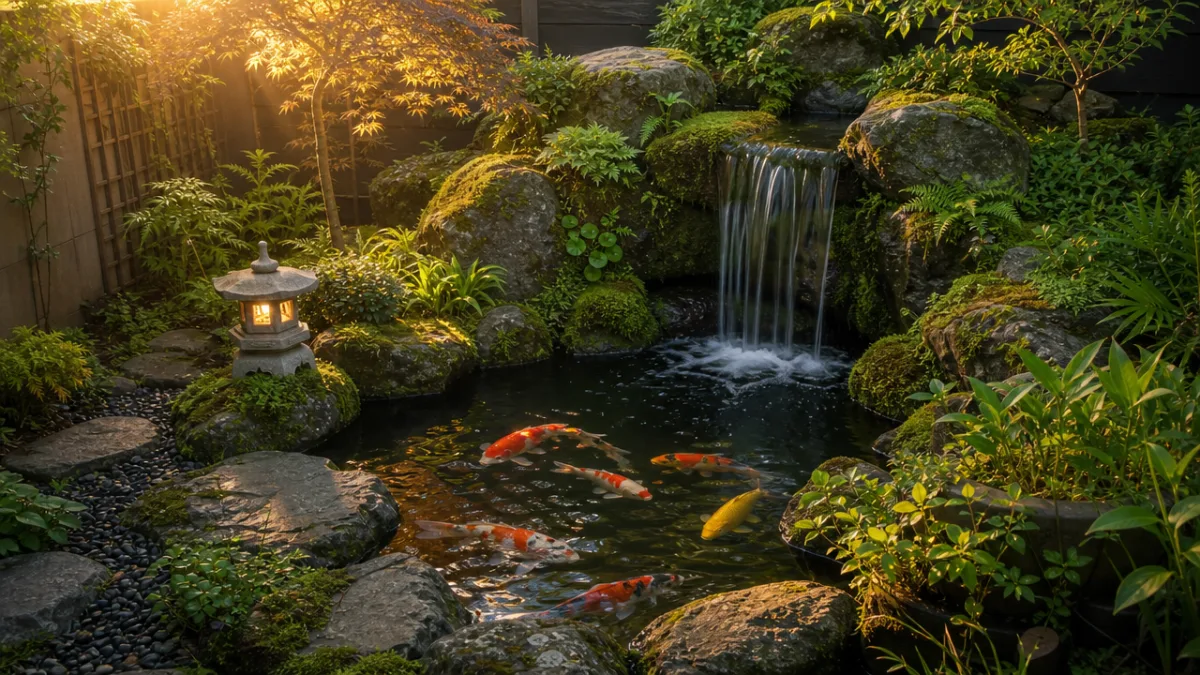
16 Creative Design Ideas for Small Corner Yard Waterfall Ponds
The creative possibilities for a corner waterfall pond are far broader than most homeowners initially imagine. Design inspiration can come from formal Japanese garden traditions, rustic countryside aesthetics, tropical resort styles, or sleek modern minimalism. The key is to choose a design language that complements your home’s existing architecture and the overall character of your outdoor space. A contemporary home with clean geometric lines might call for a rectangular pond with a single smooth-edged waterfall, while a cottage-style home would feel more natural paired with tumbling natural boulders and cottage plants like ferns and hostas.
Here are more than sixteen distinct creative approaches you can adapt to your own corner space, ranging from the very simple to the more elaborate:
- Stacked Slate Waterfall: Build a tiered wall of flat slate or shale stones in the corner, allowing water to spill from ledge to ledge before reaching the pond below. The natural variation in stone color creates beautiful visual texture.
- Bog Garden Integration: Surround the pond’s edges with a shallow bog area planted densely with moisture-loving plants like pitcher plants, irises, and cattails, creating a seamless transition between water and land.
- Bamboo Spout Feature: Channel water through a hollow bamboo pipe that arcs gracefully over the pond, offering a classic Japanese aesthetic that works beautifully in smaller spaces.
- Boulder Cascade: Stack large rounded river boulders in the corner and allow water to trickle naturally between them, mimicking the look of a mountain stream source.
- Reclaimed Wood Surround: Frame the pond with weathered railway sleepers or reclaimed timber for a rustic, farmhouse-inspired look that feels both warm and grounded.
- Formal Raised Pond: Build a raised, geometrically precise stone or brick-edged pond in the corner with a wall-mounted spout waterfall, ideal for formal gardens and patios.
- Mirror Pond with Minimal Waterfall: Use a very subtle trickle waterfall to maintain minimal water movement, prioritizing the reflective surface of the water to visually expand a small space.
- Fern Grotto Style: Build the waterfall into a semi-enclosed nook with overhanging plants creating a cave-like, atmospheric effect reminiscent of hidden woodland springs.
- Pebble Beach Edge: Replace traditional pond coping with a sloping pebble beach that leads into the water, giving the pond a natural shoreline appearance that also provides safe access for wildlife.
- Koi Pond Focal Point: Design the pond specifically to showcase colorful koi, with a clear filtration system, adequate depth, and minimal planting that keeps the fish visible and the design dramatic.
- Rain Chain Integration: Connect a decorative copper or brass rain chain from a downspout into the pond, combining functional drainage with a beautiful cascading water feature.
- Terraced Corner Waterfall: Build two or three distinct pond tiers descending from the corner, creating a multi-level water journey that adds tremendous visual interest even in a tight space.
- Night-Lit Pond: Incorporate underwater LED lighting and solar-powered spotlights into the waterfall rocks so the feature transforms into something magical after dark.
- Stepping Stone Path: Add large flat stepping stones across or beside the pond so visitors can interact physically with the water feature rather than simply viewing it from a distance.
- Zen Dry-to-Wet Garden: Combine a traditional dry gravel zen garden area beside the corner pond so the design bridges the gap between still and moving water aesthetics.
- Wildlife Habitat Pond: Design the pond specifically to attract frogs, dragonflies, and birds by including shallow edges, native aquatic plants, and a low, gentle waterfall that does not disturb wildlife.
- Container Pond Waterfall Cluster: For extremely small corners, cluster several large glazed ceramic or concrete containers of varying heights, connecting them with a simple pump system to create a cascading container waterfall effect.
Plant Selection for Corner Waterfall Ponds
Plants are what transform a corner waterfall pond from a construction project into a living, breathing garden feature. The right plant selection creates layers of texture, color, and movement that make the pond feel like a natural discovery rather than something installed on a weekend. For most temperate climates, the planting palette for a corner pond should include three distinct zones: fully submerged aquatic plants, marginal plants that thrive at the water’s edge, and terrestrial plants that frame the pond from the surrounding garden beds.
Water lilies are the classic centerpiece of any pond planting scheme, and for good reason. Their broad floating pads provide shade that reduces algae growth while creating the romantic surface texture that makes ponds so visually compelling. For small corner ponds, choose compact or dwarf varieties specifically bred for container and small-scale water gardening. Varieties like Nymphaea ‘Pygmaea Helvola’ or Nymphaea ‘Perry’s Baby Red’ deliver full lily impact without overwhelming a modest water surface.
Marginal plants play a particularly important role in corner waterfall ponds because they help to soften the transition between the hard edges of rocks and the water, making the pond look established and natural rather than recently installed. Some excellent choices for marginal planting include:
- Blue flag iris (Iris versicolor) for tall vertical interest and beautiful violet blooms in early summer
- Pickerel weed (Pontederia cordata) for its glossy heart-shaped leaves and long-blooming purple flower spikes
- Creeping jenny (Lysimachia nummularia) as a low-growing, cascading plant that softens rock edges beautifully
- Sweet flag (Acorus calamus) for its grass-like foliage and pleasant aromatic quality when brushed
- Horsetail reed (Equisetum hyemale) for bold, architectural vertical lines that contrast dramatically with rounded stones

Building Your Corner Waterfall Pond: A Step-by-Step Construction Overview
Understanding the basic construction sequence of a corner waterfall pond helps you communicate effectively with contractors, make informed decisions about DIY versus professional installation, and appreciate exactly what your investment is buying. The process follows a logical progression from groundwork to final planting, and each stage builds directly on the one before it. Rushing any step, particularly the excavation and liner installation phases, leads to structural problems that become exponentially more difficult and expensive to correct once the feature is complete.
Excavation is typically the most physically demanding part of the entire project. For a small corner pond, you will likely need to remove between one and three cubic yards of soil depending on your planned depth and surface area. If you are incorporating fish, aim for a minimum depth of 18 to 24 inches to protect them from temperature extremes and predators. During excavation, create shelved edges at different depths to accommodate marginal plants and to give wildlife safe entry and exit points. Remove any sharp rocks or roots from the excavated area before proceeding, as these can puncture pond liners over time through repeated freeze-thaw cycles.
Liner installation requires patience and attention to detail. For most small corner ponds, a flexible EPDM rubber liner offers the best combination of durability, affordability, and ease of installation. Measure your liner generously, adding at least 12 to 18 inches of overhang on every exposed edge. Smooth the liner carefully into the contours of your excavation, eliminating as many wrinkles as possible, since wrinkles beneath rockwork create stress points where leaks eventually develop. Once the liner is positioned, begin adding a small amount of water to help it conform to the pond’s shape before you commit to final rock placement.
The waterfall mechanism is the heart of the feature, and getting it right requires careful attention to the pump sizing, the plumbing connections, and the way water is introduced at the top of the waterfall. A pump that is too weak produces a disappointing trickle with no real visual or acoustic impact, while an oversized pump can empty the pond faster than evaporation and splash can be managed. As a general rule, aim for a pump that can turn over the entire pond volume once every one to two hours. The pump should be positioned at the deepest point of the pond, and its outlet tube should run up through or behind the rockwork to emerge cleanly at the waterfall’s source point.
Maintenance Tips to Keep Your Corner Pond Thriving Year-Round
A corner waterfall pond is not a zero-maintenance garden feature, but with a sensible routine, the time investment required to keep it looking its best is genuinely manageable for most homeowners. The majority of pond problems — algae blooms, pump failures, water quality issues, and declining plant health — stem from neglected maintenance rather than fundamental design flaws. Establishing a consistent seasonal routine in the first year will help you understand your specific pond’s rhythms and needs, making each subsequent year progressively easier to manage.
Spring is the most important maintenance season for corner ponds. As water temperatures rise above 50 degrees Fahrenheit, algae begins to bloom rapidly and the biological filter needs time to reestablish its bacterial colonies after winter dormancy. Early spring tasks include removing accumulated leaf debris from the pond bottom, dividing and repotting aquatic plants that have outgrown their containers, cleaning the pump and filter media, and testing water chemistry to ensure pH, ammonia, and nitrite levels are within safe ranges. Resist the urge to do a complete water change, as this removes beneficial bacteria and trace minerals that the pond ecosystem depends upon.
Autumn presents its own distinct set of challenges as falling leaves threaten to overwhelm even a well-maintained pond with decaying organic material. A pond net stretched over the corner area during October and November can dramatically reduce the leaf debris that sinks to the bottom and decomposes into toxic gases over winter. Cut back dying marginal plants before they collapse into the water, and if you keep fish, gradually reduce feeding as water temperatures drop, since fish metabolism slows dramatically in cold water and uneaten food quickly degrades water quality. In climates with hard freezes, a pond de-icer or small aerator kept running through winter prevents the surface from freezing completely solid, which is essential for the health of overwintering fish.

Budgeting and Return on Investment for a Corner Waterfall Pond
The financial dimension of installing a corner waterfall pond is something every homeowner should approach with clear eyes and realistic expectations. While it is entirely possible to build a charming small pond for a modest sum using budget-friendly materials and weekend labor, it is equally easy to watch costs escalate significantly when natural stone, professional installation, and sophisticated equipment enter the picture. Understanding where your money goes in a pond project helps you make smart trade-offs between the components that matter most to you and those where you can afford to economize without sacrificing the final result.
For a small corner pond measuring roughly six by eight feet with a basic waterfall feature, a realistic DIY budget breakdown might look something like this: liner and underlayment materials between $100 and $250 depending on quality grade, a submersible pump and basic filtration system between $80 and $300, decorative rocks and gravel between $150 and $500 depending on whether you source locally or purchase retail, aquatic plants between $50 and $150 for an initial planting scheme, and miscellaneous plumbing fittings, sealant, and tools adding another $50 to $100. Total DIY costs for a respectable small corner pond can therefore range from approximately $430 to $1,300, making it one of the more affordable significant landscaping upgrades available to homeowners.
From a property value perspective, a well-designed and properly maintained water feature consistently ranks among the landscaping additions that generate the strongest buyer interest during home sales. Real estate professionals frequently note that mature, established garden features like ponds and waterfall structures create emotional responses in prospective buyers that are difficult to quantify but genuinely influential in purchase decisions. While recouping 100 percent of a pond’s installation cost through increased resale value is not guaranteed, the combination of daily enjoyment during your occupancy and meaningful curb appeal at the time of sale makes a corner waterfall pond one of the most personally rewarding outdoor investments most homeowners will ever make.








What do you think?
It is nice to know your opinion. Leave a comment.