










Snow-in-Summer: The Ultimate Guide to Growing Cerastium tomentosum in a Waterwise Garden
Introduction to Snow-in-Summer
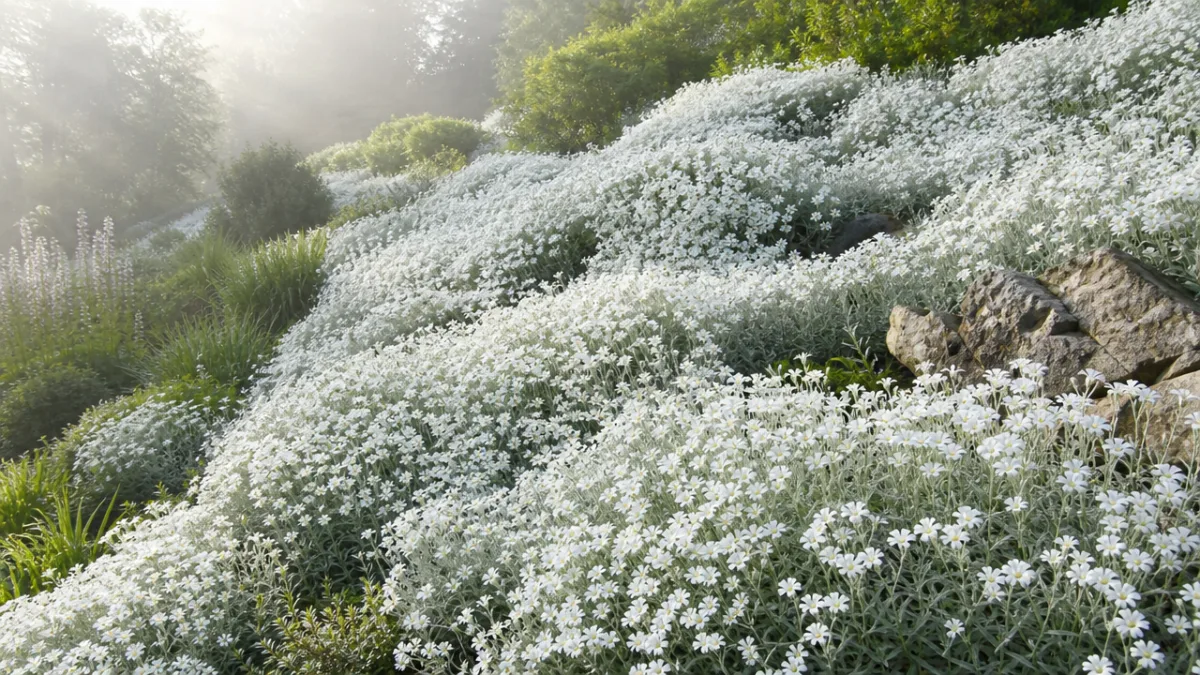
Snow-in-summer (Cerastium tomentosum) is one of those rare garden plants that manages to be both extraordinarily beautiful and remarkably practical. With its cascading mats of silvery-white foliage and its breathtaking blanket of tiny white star-shaped flowers, this low-growing perennial earns its evocative common name every time it blooms. The effect of a fully flowered planting truly does resemble a fresh dusting of summer snow, creating a visual spectacle that stops visitors in their tracks and leaves gardeners deeply satisfied with their planting choices.
Native to the mountainous regions of Italy and southeastern Europe, Snow-in-summer has adapted over millennia to thrive in conditions that would challenge many other ornamental plants. It evolved on rocky hillsides, steep slopes, and thin, nutrient-poor soils where rainfall is inconsistent and drainage is swift. This evolutionary heritage is precisely what makes it such an outstanding candidate for waterwise and drought-tolerant garden designs. Understanding where a plant comes from is the first step in understanding how to grow it well, and in this case, the story is one of resilience, elegance, and effortless beauty under difficult conditions.
For gardeners looking to reduce their water consumption without sacrificing visual appeal, Snow-in-summer is genuinely one of the most rewarding choices available. It delivers exceptional ornamental value — silvery foliage that looks attractive across multiple seasons, a spectacular spring to early summer flower display, and a ground-covering habit that suppresses weeds and stabilizes soil — while demanding very little in return. Whether you are designing a dedicated xeriscape, renovating a slope prone to erosion, or simply trying to create a lower-maintenance garden, this plant deserves serious consideration and a prominent place in your planting palette.
Plant Characteristics and Identification
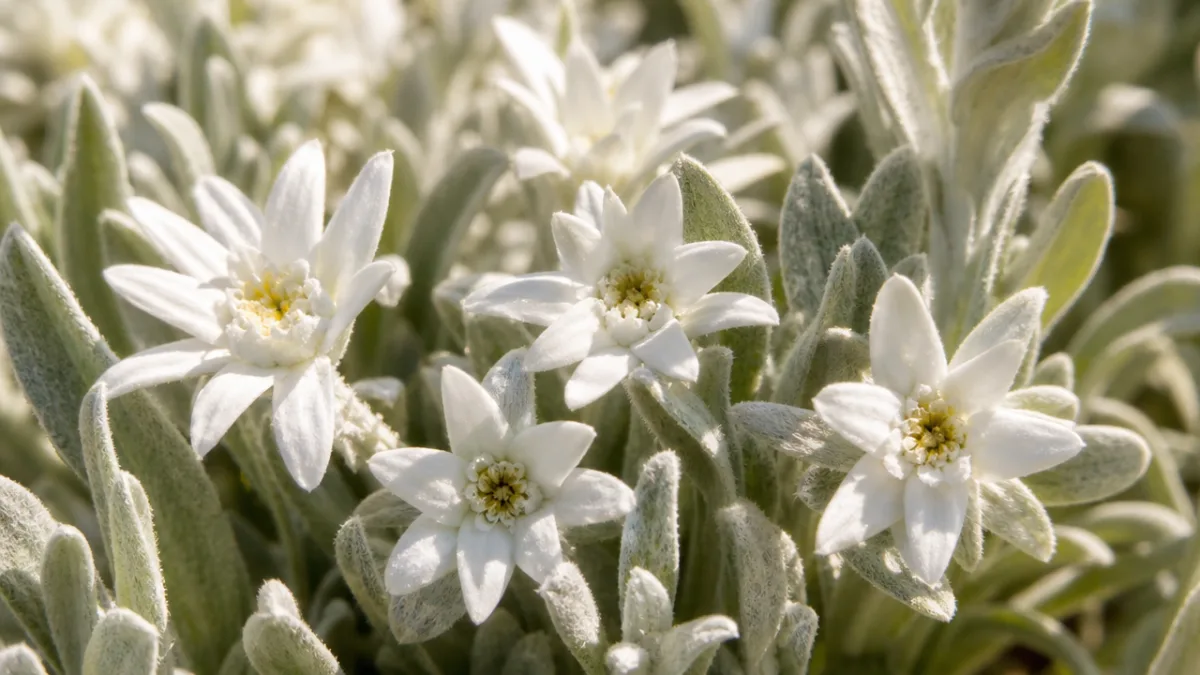
Cerastium tomentosum is a mat-forming perennial that spreads enthusiastically to create dense, low-growing carpets rarely exceeding 15 to 20 centimetres in height, though its spreading width can easily reach 60 centimetres or more over a few growing seasons. The name “tomentosum” refers directly to the plant’s most distinctive feature: its tomentose, or densely woolly, coating of fine white hairs that covers both the stems and the small, narrow leaves. This silvery-grey fuzz is not merely decorative — it plays a critical functional role in the plant’s drought tolerance by reflecting intense sunlight and reducing moisture loss from leaf surfaces.
The flowers of Snow-in-summer are small but produced in such extraordinary abundance that individual blooms become almost irrelevant to the overall effect. Each flower is white, five-petaled, and deeply notched at the tip of each petal, giving them a delicate, star-like appearance when viewed closely. They are borne on branching stems that rise above the foliage mat, typically from late spring through early summer, though exact timing varies with climate and elevation. In cooler climates or at higher altitudes, the bloom period may extend further into summer, while in warmer regions, flowering often begins earlier in spring.
Several cultivars are available to gardeners seeking specific characteristics. ‘Columnae’ is a more compact and less invasive selection that suits smaller gardens or tighter planting situations. ‘Silver Carpet’ is prized for its particularly dense, intensely silver foliage, making it an outstanding foliage plant even outside the flowering season. Standard Cerastium tomentosum, while sometimes described as potentially spreading aggressively, is simple to manage with annual trimming and is perfectly appropriate for the vast majority of garden settings where ground coverage is actually a desirable outcome rather than a problem.
Waterwise Gardening Principles and Why Snow-in-Summer Fits
Waterwise gardening, sometimes called water-smart or xeriscape gardening, is a design and horticultural philosophy built around selecting plants and structuring landscapes in ways that minimize the need for supplemental irrigation. The principles of waterwise gardening are becoming increasingly important as climate patterns shift globally, water costs rise, and environmental awareness grows among homeowners and landscapers alike. At its core, waterwise gardening is not about creating a barren or austere landscape — it is about making intelligent plant selections that allow for beautiful, thriving gardens without placing unsustainable demands on water resources.
Snow-in-summer aligns perfectly with waterwise principles for several compelling reasons. First and most fundamentally, it is genuinely drought-tolerant once established, capable of surviving and remaining attractive through extended dry periods that would devastate less adapted plants. Second, it thrives in poor to moderately fertile soils, meaning it does not require the nutrient-rich growing medium that many ornamentals demand. Third, its spreading, mat-forming habit means that a relatively small number of plants can quickly cover a large area of ground, reducing the bare soil that leads to moisture evaporation and weed competition — both of which increase gardening labour and resource consumption.
Incorporating Snow-in-summer into a waterwise garden plan is straightforward and flexible. It works beautifully as a ground cover on slopes where irrigation is difficult and erosion is a concern. It softens the edges of pathways and driveways without requiring frequent watering. It fills the gaps between drought-tolerant shrubs and ornamental grasses with a silvery sea of texture that ties the planting together visually. It cascades elegantly over retaining walls and raised beds, transforming hard landscaping elements into something alive and graceful. Few plants offer this combination of practicality and ornamental excellence for such minimal water investment.
Growing Conditions and Planting Guidelines
Getting Snow-in-summer established successfully depends on providing the right foundational conditions from the outset. Soil drainage is the single most important factor to get right. This plant is highly sensitive to waterlogged or consistently moist soils, and in poorly drained conditions, it will succumb to root rot and fungal diseases relatively quickly. If your garden has heavy clay soil, amendment with coarse grit, gravel, or sharp sand is strongly advisable before planting. Raised beds and sloped positions naturally provide the excellent drainage this plant requires and often need no modification at all.
Sunlight requirements are equally non-negotiable. Snow-in-summer is a full-sun plant that needs at minimum six hours of direct sunlight daily to perform at its best. In partial shade, growth becomes lax and sprawling, flowering is significantly reduced, and the plant loses much of the tight, compact habit and silvery intensity that make it so attractive. In deep shade, it will decline and eventually disappear. Choose the sunniest available position in your garden for best results, particularly on south or west-facing slopes and aspects where light is most intense and consistent throughout the day.
Planting is best undertaken in spring or autumn, avoiding the extremes of midsummer heat and winter frost. Space plants approximately 30 to 45 centimetres apart to allow them room to spread and form their characteristic mat. Water newly planted specimens regularly for the first four to six weeks to help them establish root systems, after which supplemental irrigation can be dramatically reduced or eliminated entirely in most climates. Adding a thin layer of gravel or grit mulch around plants at planting time improves drainage at the soil surface, reflects light onto foliage, and reduces the risk of crown rot — a particularly worthwhile step in cooler, damper climates.
Key requirements at a glance:
- Full sun, minimum 6 hours of direct sunlight daily
- Excellent drainage — avoid waterlogged or heavy clay soils without amendment
- Poor to moderately fertile soil — overly rich soils encourage lax, floppy growth
- Spacing of 30 to 45 centimetres between plants for ground cover purposes
- Grit or gravel mulch around the crown to prevent rot in wetter regions
- Regular watering for establishment, then minimal irrigation once settled
Maintenance, Pruning, and Long-Term Care
One of the most appealing aspects of Snow-in-summer from a practical gardening perspective is how little ongoing maintenance it genuinely requires once it has established itself in appropriate conditions. The plant is essentially self-sufficient in terms of watering, feeding, and general care for the majority of the year. The single most important maintenance task — and the one that makes the most significant difference to the plant’s long-term health, appearance, and manageability — is a firm trim immediately after the main flowering period ends in early to midsummer.
Post-flowering trimming serves multiple important purposes simultaneously. It prevents the plant from setting seed excessively and self-sowing more widely than desired — though it should be noted that Snow-in-summer seedlings are easy to remove and some gardeners welcome them as a means of expanding their planting at no cost. Trimming also encourages the plant to produce a flush of fresh, silvery new growth that looks attractive throughout the remainder of the growing season. Left untrimmed, Snow-in-summer can become somewhat straggly and open in its centre, losing the tight, lush habit that makes it most visually appealing. A confident cut back to approximately half the plant’s height addresses all of these issues in a matter of minutes.
Beyond the annual post-flowering trim, Snow-in-summer requires very little additional attention. Feeding is generally unnecessary and can be counterproductive — excess nitrogen in particular encourages overly lush, floppy growth at the expense of the compact, silvery habit and flowering performance that make this plant worthwhile. If plants begin to look thin or patchy in the centre after several years — a natural ageing process in many mat-forming perennials — they can be lifted, divided, and replanted in refreshed soil. This rejuvenation process is best carried out in spring and immediately transforms tired, ageing clumps into vigorous new ground-covering mats.
Landscape Uses and Garden Design Applications
The design versatility of Snow-in-summer is remarkable for such an unassuming plant. Its silvery foliage provides one of the most effective and beautiful contrasts available in the plant kingdom when paired with plants of deep green, dark purple, or rich burgundy colouring. Consider combining it with the purple-leaved forms of Salvia nemorosa, the dark foliage of Sedum ‘Purple Emperor’, or the deep green spikes of ornamental grasses such as Festuca glauca for contrast-rich combinations that are simultaneously waterwise and visually striking in ways that traditional high-maintenance plantings cannot easily match.
Slope stabilization is one of the most practically valuable applications for Snow-in-summer in contemporary garden design. Slopes present significant challenges in garden management — they are difficult to mow, prone to erosion during heavy rainfall, often receive uneven irrigation, and can be uncomfortable and even unsafe to tend manually. Snow-in-summer addresses all of these challenges elegantly. Its spreading root system binds the soil effectively, reducing erosion. Its dense surface coverage prevents the establishment of weeds. Its drought tolerance means it thrives without irrigation systems that are difficult to install or maintain on slopes. And its attractive appearance means that a practical problem is solved with a genuinely beautiful solution.
Wall and pathway edging applications represent another area where Snow-in-summer excels. When planted at the top of retaining walls, it cascades over the edge to create soft, flowing curtains of silver and white that soften the hardness of stone or brick in a way that few other plants achieve as effortlessly. Along pathway edges, it spills gently onto gravel or paving without becoming problematic, and its low height means it never obscures the path itself. In rock gardens, it fills gaps between boulders and paving stones beautifully, connecting elements that might otherwise look disjointed into a cohesive, naturalistic composition.
Effective companion plant pairings for Snow-in-summer include:
- Lavandula angustifolia (English Lavender) — complementary silver foliage and contrasting purple flowers
- Sedum spectabile (Stonecrop) — shared drought tolerance with contrasting fleshy texture and pink autumn flowers
- Festuca glauca (Blue Fescue) — fine grass texture complements spreading mats with silvery-blue tonal harmony
- Salvia nemorosa (Woodland Sage) — deep purple flower spikes create dramatic contrast with white blooms
- Thymus serpyllum (Creeping Thyme) — similar scale and habit with complementary flower colour options
- Armeria maritima (Sea Thrift) — contrasting rounded pink flowerheads above similar low-growing form

Pest, Disease, and Problem-Solving Guide
Snow-in-summer is notably resistant to the majority of pests and diseases that trouble many garden plants, and this resistance is directly linked to the growing conditions it prefers. When planted in full sun with excellent drainage — the conditions that suit it best — it rarely suffers from serious problems. The most significant issues encountered with this plant arise almost universally from growing conditions that are too wet, too shaded, or too fertile, rather than from specific pest or pathogen pressure that would affect the plant regardless of its situation.
Root rot caused by Pythium or Phytophthora species is the most serious disease risk, and it is directly caused by consistently wet or waterlogged soil conditions. Affected plants show yellowing foliage, wilting that does not improve with watering, and a general decline that eventually proves fatal if the underlying drainage problem is not resolved. The solution is to address drainage rather than to attempt fungicide treatment, which will be ineffective if roots remain in standing water. In cases where plants are showing early signs of rot, lifting and moving them to a better-drained position, with careful removal of affected roots, can sometimes save otherwise healthy specimens.
Powdery mildew can occasionally affect Snow-in-summer in hot, dry conditions where air circulation around foliage is poor — somewhat paradoxically, since the plant is drought-tolerant. This is usually an aesthetic rather than life-threatening problem, and the best remedy is ensuring plants have adequate spacing and are not crowded by neighbouring plants. Aphids occasionally target new soft growth in spring but rarely in numbers sufficient to cause significant damage, and natural predators typically bring populations under control without gardener intervention. Spider mites can become a problem during very hot, dry spells but are similarly self-limiting in most garden contexts.
Propagation Methods and Expanding Your Planting
Propagating Snow-in-summer is genuinely one of the most satisfying and economical aspects of working with this plant, because it offers multiple straightforward pathways to multiplying your stock at essentially no cost. Division is the simplest and most reliable method for the home gardener. Established clumps can be lifted in early spring or early autumn and separated into smaller sections, each with roots attached, which are then replanted immediately at their final positions or potted temporarily to grow on. Divisions establish quickly and often reach a flowering size within a single growing season.
Stem cuttings taken in early summer provide another reliable propagation route, and they are particularly useful for named cultivars that may not come true from seed. Select healthy non-flowering shoots approximately 5 to 8 centimetres long, remove the lower leaves, and insert them into a free-draining cutting compost mixed with perlite or grit. Place cuttings in a sheltered position out of direct intense sunlight and maintain moderate moisture until rooting occurs, typically within two to four weeks. Rooted cuttings can then be potted individually and grown on before planting out in their final positions once suitably established.
Seed propagation is also straightforward and can be used successfully with the standard species, though named cultivars and selected forms may show variation from seed. Sow seeds indoors in late winter or early spring in free-draining compost, barely covering them as they benefit from some light exposure during germination. Germination typically occurs within two to three weeks at temperatures of 18 to 21 degrees Celsius. Prick out seedlings into individual modules when large enough to handle and grow on in a frost-free greenhouse or cold frame before planting out after the last frost date has passed in your region. Self-sown seedlings also appear naturally around established plants and can be relocated to new positions with ease when small.
Snow-in-summer is truly one of the most rewarding plants a waterwise gardener can choose — generous in bloom, effortlessly beautiful in foliage, and genuinely forgiving of the kind of neglect that reflects a sensible, sustainable approach to garden management. It asks only for sun, sharp drainage, and an occasional firm trim, and in return it delivers seasons of silver beauty and clouds of white flowers that transform any landscape fortunate enough to host it.








What do you think?
It is nice to know your opinion. Leave a comment.