










Crochet Plush Bunnies: A Complete Guide to Creating Adorable Handmade Companions
The Timeless Appeal of Crochet Plush Bunnies
Few handmade creations capture hearts quite like a crochet plush bunny. These soft, lovable companions have been cherished by children and adults alike for generations, combining the warmth of handcrafted artistry with the universal charm of one of nature’s most beloved animals. Whether tucked into a nursery, displayed on a shelf, or given as a heartfelt gift, a crocheted bunny carries with it the time and love invested in every stitch, making it far more meaningful than any mass-produced toy could ever be.
The art of crocheting plush animals, known in the crafting world as amigurumi, has experienced a remarkable renaissance in recent years. What was once considered a niche hobby practiced by dedicated grandmothers has blossomed into a vibrant global community of makers, designers, and enthusiasts who share patterns, techniques, and finished creations across social media platforms and dedicated craft forums. Bunnies, with their simple silhouettes and endearing features, remain among the most popular subjects for plush crochet projects at every skill level.
Beyond their aesthetic appeal, crochet plush bunnies offer makers something deeply satisfying: the ability to customize every element of the finished piece. From the color of the yarn to the expression stitched onto the face, from the length of the ears to the texture of the stuffing, each creative decision results in a one-of-a-kind creation that reflects the maker’s personality and intention. This level of personalization transforms a simple craft project into a meaningful act of creation that resonates with both maker and recipient for years to come.
Why Bunnies Make the Perfect Crochet Subject
The bunny’s anatomy lends itself beautifully to the spherical and cylindrical shapes that crochet naturally produces. A crocheter working in the round can easily build up the rounded body, the elongated ears, and the small round head that give a plush bunny its characteristic silhouette. Unlike more complex animals, bunnies require relatively few separate pieces to assemble, making them an approachable project for beginners while still offering enough creative scope to satisfy experienced crafters looking for expressive detail work.
There is also something emotionally resonant about the bunny as a symbol. Across cultures and throughout history, rabbits have represented gentleness, luck, fertility, and new beginnings. A handmade bunny given to a newborn carries layers of meaning beyond its soft texture and cute appearance. Similarly, a bunny crocheted for Easter, a spring celebration, or simply as a gesture of affection taps into a rich tradition of gifting that feels both ancient and deeply personal. This symbolic weight elevates the humble crochet bunny from craft project to cherished keepsake.
The versatility of the plush bunny design also deserves recognition. A skilled crocheter can adapt a basic bunny pattern into dozens of variations by altering proportions, yarn weights, and decorative additions. Long-eared lop bunnies evoke a different mood entirely from upright-eared cottontails. A bunny dressed in a tiny crocheted sweater becomes a whimsical character, while a minimalist bunny worked in natural undyed wool becomes an elegant decorative object. The same foundational skills open doors to an almost limitless range of creative expression.
Essential Materials and Tools for Your Crochet Bunny Project
Selecting the right materials is the foundation of any successful crochet plush bunny project. The yarn you choose will determine not only the appearance of your finished bunny but also its texture, durability, and suitability for its intended recipient. For bunnies intended as children’s toys, safety and washability should be top priorities. Cotton and acrylic blends are popular choices because they hold their shape well, resist pilling, and can typically be machine washed, which is an essential quality for any toy that will see regular use in the hands of a child.
Yarn weight plays a significant role in determining the final size and density of your bunny. Worsted weight yarn, typically classified as a size 4 medium, is the most commonly recommended choice for amigurumi and plush projects. It works up quickly, produces a firm fabric when crocheted with a slightly smaller hook than the yarn label suggests, and comes in an enormous range of colors. Lighter weights such as DK or fingering yarn will produce smaller, more delicate bunnies, while bulky yarn creates larger, chunkier companions that are wonderfully cuddly but require more stuffing and longer construction time.
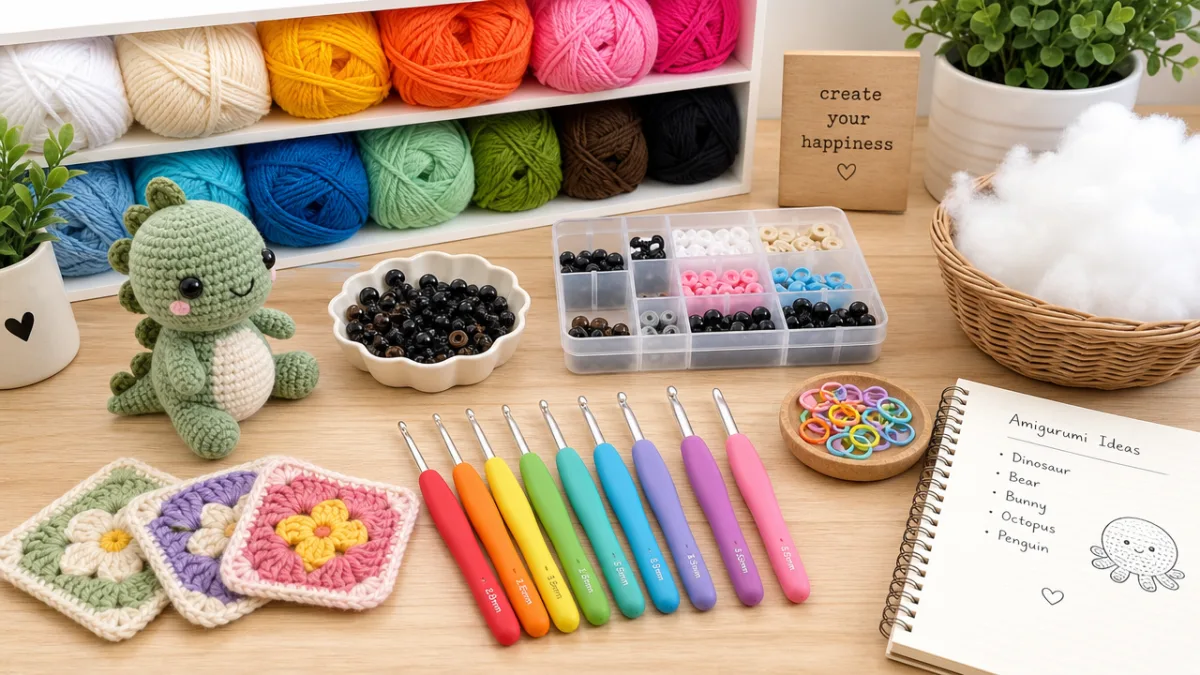
Beyond yarn, a well-prepared crafter will gather several other essential supplies before beginning. Polyester fiberfill is the standard stuffing choice, offering a consistent loft and maintaining its shape through washing and handling. Safety eyes, available in a range of sizes and colors from craft suppliers, give plush bunnies their characteristic bright, appealing gaze. Black embroidery floss is commonly used to stitch noses and mouths, adding expressive detail that brings the face to life. Stitch markers, tapestry needles, and scissors round out the basic toolkit that will serve you through this and countless future projects.
Choosing the Right Hook Size and Tension
One of the most important technical decisions in crochet plush construction is selecting the appropriate hook size relative to your yarn. The general principle for amigurumi is to work with a hook one or two sizes smaller than the yarn manufacturer recommends. This tighter gauge creates a denser fabric with smaller gaps between stitches, which prevents stuffing from showing through and helps the finished bunny maintain a clean, smooth appearance. A fabric that is too loose will allow the white or off-white stuffing to peek through, compromising the visual integrity of your work.
Tension consistency is equally important and is something that improves naturally with practice. New crocheters often find that their tension varies significantly as they work, resulting in uneven surfaces and misshapen pieces. Working slowly and deliberately, pausing to check your tension periodically, and being willing to rip back and redo sections that feel too tight or too loose will build good habits that pay dividends in the finished quality of your bunny. Many experienced makers recommend crocheting a small gauge swatch before beginning a project to confirm that their tension matches the pattern’s requirements.
It is also worth noting that different yarn fiber contents can behave very differently even at the same weight and with the same hook. Acrylic yarn tends to be more forgiving and consistent, making it ideal for beginners developing their tension control. Cotton yarn produces a crisper, stiffer fabric with less stretch, which some makers prefer for precise shaping but which others find more challenging to work with. Wool and wool blends offer beautiful stitch definition and natural elasticity but may require special care in washing. Experimenting with different fibers will expand your understanding of the materials and help you make informed choices for future projects.
Understanding Basic Crochet Stitches for Plush Construction
The construction of a crochet plush bunny relies on a relatively small vocabulary of stitches, most of which can be learned in a single dedicated practice session. The magic ring, also called a magic circle or adjustable ring, is the foundational technique for beginning most amigurumi pieces. It allows you to start crocheting in the round and then pull the center closed completely, eliminating the hole that would otherwise appear at the top of a head or the tip of an ear. Mastering the magic ring is arguably the single most important skill for plush crochet work.
From the magic ring, the vast majority of a plush bunny’s construction relies on just three operations: the single crochet stitch, the increase, and the decrease. Single crochet produces the dense, even fabric ideal for plush work. Increases, worked by making two single crochet stitches into the same stitch, allow the fabric to expand outward to form rounded shapes like the body and head. Decreases, typically worked as invisible decreases by inserting the hook through the front loops of two consecutive stitches, allow the fabric to taper and close, forming the bottom of the body or the rounded tip of an ear.
Working in continuous rounds, rather than joined rounds with a turning chain, is another hallmark of amigurumi construction. By working continuously without joining at the end of each round, you create a seamless spiral that forms perfectly rounded three-dimensional shapes. Using a stitch marker to track the beginning of each round is essential when working this way, as the spiral nature of the construction makes it easy to lose your place. Many makers develop a reliable system of moving their stitch marker at the end of each round and tracking their round count on a small notepad beside their work to stay organized throughout a project.
Assembly Techniques That Make the Difference
Even a perfectly crocheted set of body parts can result in a disappointing finished bunny if the assembly is rushed or imprecise. The way you attach ears, limbs, and other features to the main body has a significant impact on the character and personality of the finished piece. Before sewing anything permanently, take time to pin pieces in place and step back to assess the overall look of the bunny from multiple angles. Small adjustments in ear placement or limb position can dramatically alter the expression and energy of the figure.
The mattress stitch is the preferred joining technique for most plush crochet assembly. Worked with a tapestry needle and a length of yarn, it creates an invisible seam that allows joined pieces to look as though they grew naturally from the main body. When attaching ears, many experienced makers work from the inside of the ear down through the head and back up, creating a secure attachment point that resists the pulling and tugging that children inevitably subject their toys to. Stuffing limbs and ears to the right firmness before attaching them also contributes to a polished, professional appearance.
Facial feature placement deserves particular attention because the face is the first thing anyone notices about a plush animal and is largely responsible for conveying its personality. Safety eyes should be inserted and secured before the head is fully closed and stuffed, as accessing the back of the fabric becomes impossible once the piece is complete. The distance between the eyes, their height relative to the center of the face, and the position of the embroidered nose and mouth all interact to create an expression ranging from sleepy and serene to bright and alert. Many makers use pins to experiment with eye placement before committing to the permanent installation of safety backs.
Creative Variations and Personalization Ideas
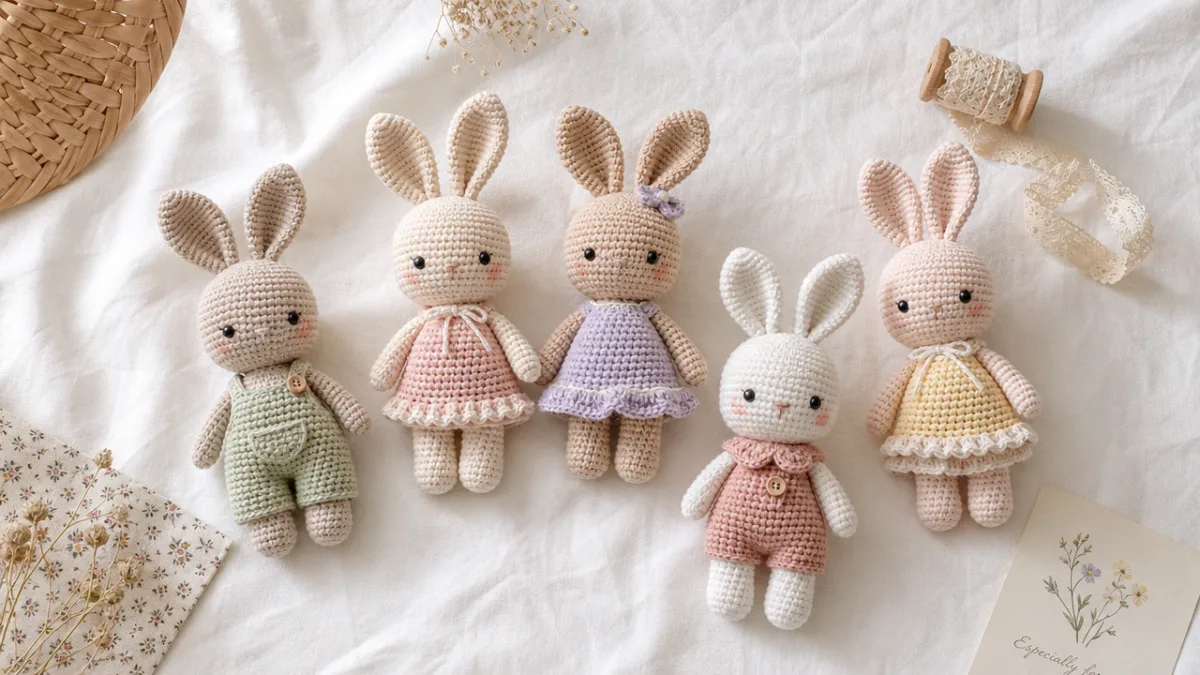
One of the greatest joys of making crochet plush bunnies is the virtually unlimited scope for creative personalization. Once you have mastered a basic bunny pattern, you possess the technical foundation to begin adapting and customizing your work in ways that make each finished bunny entirely unique. Color is the most immediate and accessible avenue for personalization. A bunny worked entirely in a single soft gray becomes a sophisticated minimalist object, while a bunny combining multiple colors in stripes, spots, or contrasting ear interiors becomes playful and lively. Gradient yarns and hand-dyed skeins can add visual complexity without requiring any additional color-changing technique.
Adding clothing and accessories to your crochet bunnies opens up an entirely new dimension of creative possibility. Tiny crocheted cardigans, miniature knitted scarves, and small fabric bows can transform a simple plush bunny into a fully realized character with a story and personality of its own. Many makers develop a signature style for their bunnies, consistently dressing them in particular color combinations or styles that become recognizable across their body of work. These dressed bunnies are particularly popular as handmade gifts because the clothing adds a layer of charm and effort that makes the recipient feel truly seen and appreciated.
Exploring different size scales is another rewarding avenue for creative variation. Tiny mini bunnies worked in fingering weight yarn on a 1.5mm hook can be completed in an evening and make delightful bag charms or ornaments. Life-size or oversized bunnies worked in bulky yarn become dramatic decorative objects or unusually cozy stuffed companions for older children and adults. Creating a family of bunnies at different scales, perhaps a large parent and several smaller offspring, results in a cohesive and charming display that tells a visual story without a single word.
Seasonal and Thematic Bunny Collections
The bunny’s strong associations with spring and renewal make it a natural subject for seasonal craft collections. Easter bunnies are among the most requested and widely made seasonal crochet projects, with makers around the world sharing new patterns and variations each spring. But the plush bunny need not be limited to a single season. Winter bunnies wearing crocheted hats and scarves, Halloween bunnies in tiny witch costumes, and holiday bunnies dressed in festive red and green become part of the seasonal decoration rotation in many crafty households, with each new iteration building on skills developed in previous versions.
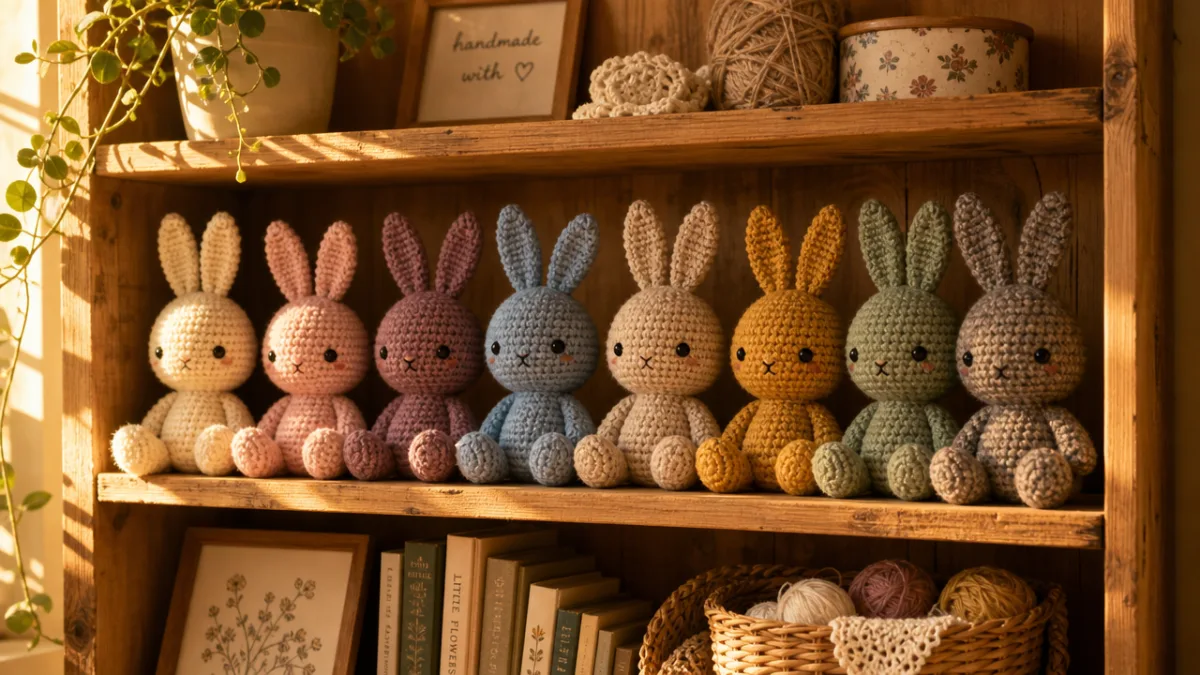
Thematic collections offer another organizing principle for makers who enjoy working in series. A woodland creatures collection might pair bunnies with foxes, hedgehogs, and deer, all worked in a consistent scale and style. A pastel rainbow collection might feature one bunny in each color of a carefully curated palette. A storybook-inspired collection might create bunnies representing beloved fictional rabbits from children’s literature, dressed in the distinctive outfits associated with their characters. These thematic frameworks give purpose and coherence to a body of work while continuously stretching the maker’s creative and technical skills.
Documenting and sharing your crochet bunny creations is itself a rewarding practice that connects you to the broader global community of fiber artists and makers. Photographing your finished bunnies in carefully considered settings, writing up your adaptations and improvisations as informal notes or full pattern write-ups, and sharing your work on platforms where other makers can see and respond to it creates a feedback loop of encouragement, inspiration, and skill-building. Many of today’s most celebrated amigurumi designers began by simply sharing photographs of their personal projects and discovered through community response that their work resonated with others.
Caring for Your Crochet Plush Bunnies
A crochet plush bunny intended for regular use, particularly by a child, must be constructed and cared for in ways that preserve its appearance and structural integrity over time. The first consideration is yarn selection at the construction stage: choosing machine-washable fibers from the outset dramatically simplifies ongoing care. Most acrylic and cotton yarns are machine washable on a gentle cycle, making them the practical choice for toys that will see frequent handling, outdoor adventures, and the inevitable encounters with food, dirt, and all the other hazards of a child’s daily life.
When washing is necessary, placing the bunny in a mesh laundry bag before putting it in the washing machine protects it from excessive agitation that could distort its shape or pull at seams. Cold water and a gentle cycle are recommended for most yarn types, with a mild detergent free of bleach or harsh chemicals. Avoid putting crochet plush toys in a tumble dryer if at all possible, as the heat can cause acrylic yarn to felt slightly and can stress the seams and safety eye attachments. Air drying flat on a clean towel, gently reshaping the bunny while it is still damp, will preserve its form and extend its life considerably.
For decorative bunnies that are displayed rather than actively played with, occasional gentle spot cleaning with a damp cloth and mild soap is usually sufficient to keep them looking fresh. Protecting displayed bunnies from direct sunlight will prevent the colors from fading over time, particularly for bunnies worked in saturated or deep colors that are more susceptible to UV degradation. Storing seasonal bunnies in breathable cotton bags rather than plastic containers during the off-season allows the fibers to breathe and prevents the musty odors that can develop when natural fibers are confined in airtight packaging for extended periods.
Repair and Restoration of Beloved Bunnies
Even the most carefully made and well-cared-for plush bunny will eventually show signs of wear if it is truly loved and used. Loose seams, worn stitches, and flattened stuffing are all repairable by a crocheter with basic skills and a few supplies on hand. Reattaching a limb that has worked loose from vigorous play requires only a tapestry needle, matching yarn, and a few minutes of careful work. Refreshing flattened stuffing by opening a small seam, adding fresh fiberfill, and closing the seam again can restore a tired bunny to something approaching its original plump and cheerful form.
More extensive repairs, such as replacing a lost safety eye or reconstructing a damaged ear, require slightly more skill but are entirely within the reach of any crocheter who made the original piece. Keeping a small amount of the original yarn used in each bunny is a wise practice that ensures a perfect color match when repairs become necessary months or years after the original construction. Many makers keep labeled scraps of yarn from each project in a small box or bag dedicated to repair supplies, along with spare safety eyes in various sizes and a few tapestry needles, creating a comprehensive repair kit that makes maintenance quick and straightforward.
There is something deeply meaningful about repairing a beloved handmade toy rather than replacing it. The act of caring for and restoring a crochet bunny communicates to the child or person who treasures it that the object is worth the time and attention required to maintain it, reinforcing the value of handmade things and the relationships they represent. A bunny that has been repaired multiple times, each repair a small story of continued love and care, becomes an heirloom in the truest sense: an object that carries the history of those who made it, repaired it, and kept it safe across the years.








What do you think?
It is nice to know your opinion. Leave a comment.