










Urban Outfitters: A Cultural Force in Fashion, Home, and Lifestyle
The Rise of Urban Outfitters: A Brand Built on Counterculture
Urban Outfitters has always occupied this interesting middle ground in retail — mainstream enough that almost everyone’s heard of it, but with just enough edge to feel like it’s not quite like everywhere else. It all started back in 1970, when Richard Hayne, Scott Belair, and Judy Wicks opened a small shop near the University of Pennsylvania in Philadelphia. Their idea was simple: give college students somewhere to find clothes and lifestyle stuff that actually felt different. That one little storefront eventually grew into one of the most recognizable youth retail brands on the planet, and along the way it genuinely changed how a whole generation thought about style, home decor, and what it means to express who you are through the things you own.
From the very beginning, Urban Outfitters was never just a clothing store. It positioned itself as something more like a cultural editor — handpicking merchandise that reflected a very specific kind of sensibility, one that mixed vintage influences with bohemian textures and a healthy irreverence toward fashion rules. The founders understood something important: their customers weren’t just buying a pair of jeans or a throw pillow. They were buying into a lifestyle, a set of values, and a feeling of belonging to a crowd that liked being a little outside the mainstream. That founding philosophy has never really gone away. You can see it in the products, the store designs, and the way the brand presents itself to the world even now.
Over the years, Urban Outfitters expanded pretty aggressively, eventually opening hundreds of stores across the US, Canada, Europe, and beyond. But what’s interesting is how each location was designed to feel more like a discovery than a straightforward shopping trip. You didn’t go to Urban Outfitters to efficiently grab what you needed — you went to wander, browse, and hopefully stumble across something you hadn’t been looking for. The brand leaned into that by setting up shop in genuinely cool spaces: old theaters, repurposed warehouses, historic buildings with real architectural character. It was retail as experience, and honestly, it was ahead of its time. A lot of brands are still trying to figure out what Urban Outfitters figured out decades ago.
Men’s and Women’s Fashion: Defining the Aesthetic Generation by Generation
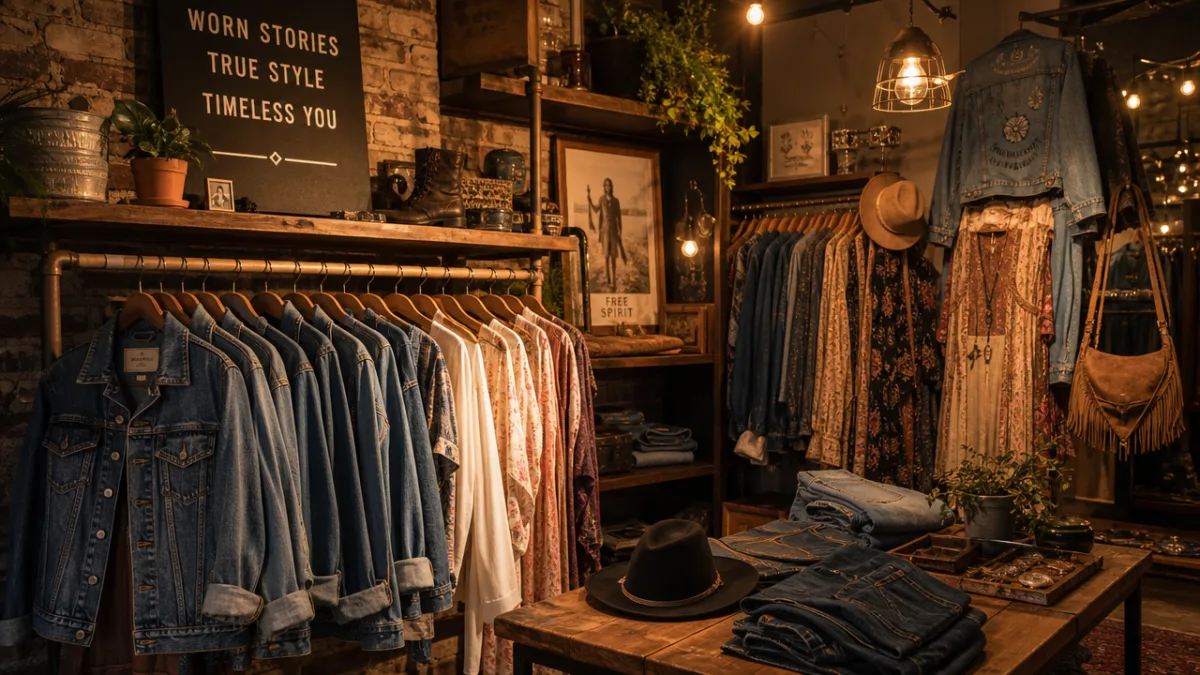
Clothing is obviously at the core of what Urban Outfitters does, and it’s served as a kind of style compass for young shoppers across several different generations now. The women’s line is especially broad — you’ll find flowy boho dresses sitting right next to vintage-inspired denim, sleek streetwear, and pieces you could actually wear out on a Friday night. One of the brand’s real talents has always been spotting where fashion is heading before it fully arrives, which means its customers often get to feel ahead of the trend without shelling out the kind of money that high fashion demands.
For women, browsing the catalog feels like a tour through everything happening in contemporary style at once. Lately that’s meant a heavy lean into Y2K revival — low-rise jeans, baby tees, micro-minis, chunky platforms, and all the beaded jewelry you can handle — running in parallel with cottagecore and prairie-influenced stuff like lace-trimmed maxi skirts, smocked bodices, and moody floral midi dresses. The fact that these aesthetics feel almost contradictory and yet both work within the same brand says a lot. Urban Outfitters has always been good at holding multiple style identities at once, which is a big part of why so many different kinds of shoppers feel at home there.
Men’s fashion at Urban Outfitters has gone through its own real evolution, tracking how younger guys have started approaching personal style with a lot more intention. Sure, the classic graphic tees and hoodies are still there — people love them — but the menswear section now stretches into tailored trousers, linen shirts, vintage-inspired outerwear, and elevated casual pieces that don’t fit neatly into “dressed up” or “dressed down.” The vibe is someone who cares about how they look without making it their whole personality — an outfit that says something about who you are while still feeling completely relaxed.
- Seasonal drops and limited editions keep the product mix fresh and encourage repeat visits from loyal shoppers eager to discover new arrivals.
- Collaborative collections with independent designers and artists infuse the catalog with fresh perspectives and maintain the brand’s credibility as a tastemaker.
- Inclusive sizing initiatives have gradually expanded the brand’s reach, making its distinctive aesthetic available to a wider range of body types and customers.
- Vintage and deadstock sourcing adds an element of uniqueness to the offering, with one-of-a-kind pieces that appeal to sustainability-conscious shoppers.
Homeware and Decor: Transforming Living Spaces with Personality
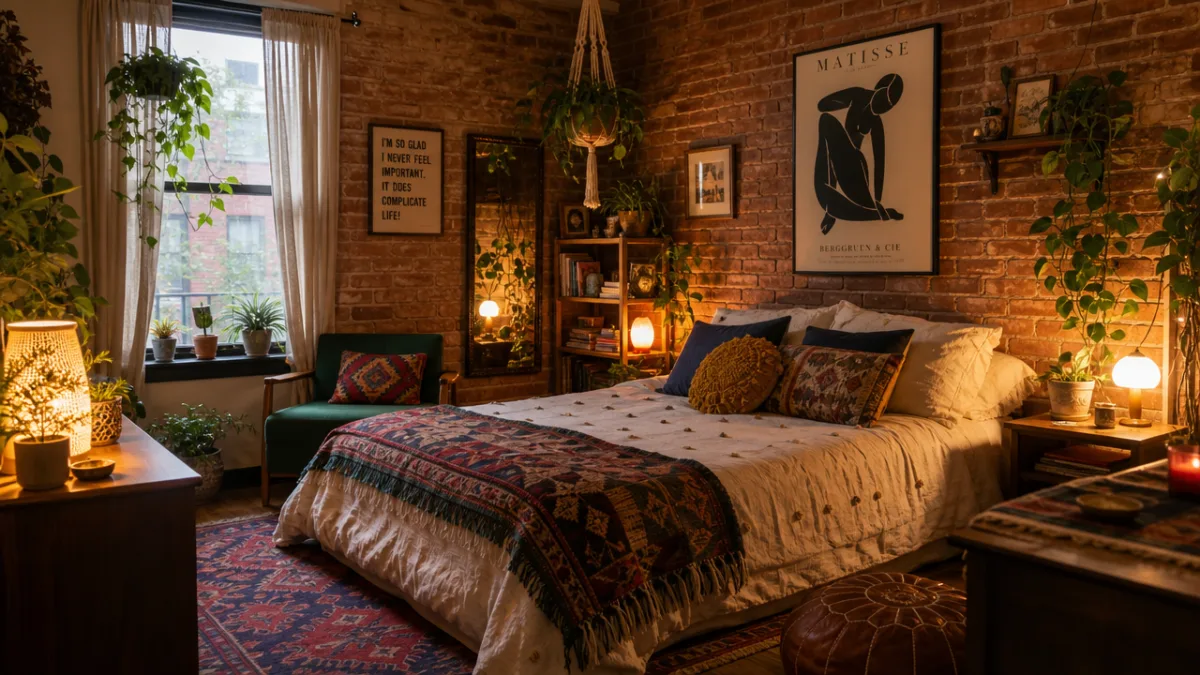
If clothing is the brand’s heartbeat, the home section might actually be its most powerful statement. Urban Outfitters Home has genuinely become a destination on its own terms — plenty of people who aren’t even shopping for clothes will find themselves deep in the bedding and decor aisles, looking for things to fill their apartment or dorm room with. The whole philosophy behind it is that your living space should look like you actually live there — layered, a little imperfect, full of things that mean something rather than things that just match.
The range is genuinely impressive. Bedding collections play with rich textures, unexpected color combinations, and prints that swing from abstract art-inspired patterns to full-on maximalist florals and moody darks. Throw blankets, cushions, and tapestries let you build out a whole aesthetic across a room, while furniture pieces — rattan accent chairs, velvet sofas, industrial-style shelving — give the space real structure without making it look like it came straight out of a showroom. The brand has a real knack for offering affordable takes on looks that would normally cost a lot more or require serious thrift-store patience to pull off.
Lighting is another strong suit. The selection of table lamps, string lights, neon signs, and decorative candles gives you a lot of ways to shape the mood of a room without a huge investment. And in a world where everyone’s at least a little aware of how their space looks on camera, that matters more than it used to. Urban Outfitters clearly gets this — the products feel designed to be both genuinely useful and visually compelling, which is harder to pull off than it sounds.
That same thoughtfulness carries over into ceramics, glassware, and kitchen accessories. A hand-thrown ceramic mug or a set of artisanal wine glasses from Urban Outfitters doesn’t just function as a mug or a glass — it carries a sense of intention that sets it apart from purely utilitarian housewares. Elevating the everyday, making the mundane feel a little more considered and meaningful, is really what the home section is all about. It’s why that part of the brand keeps growing in both size and cultural weight even as retail in general gets more competitive.
The Urban Outfitters Shopping Experience: Physical and Digital Worlds Converge
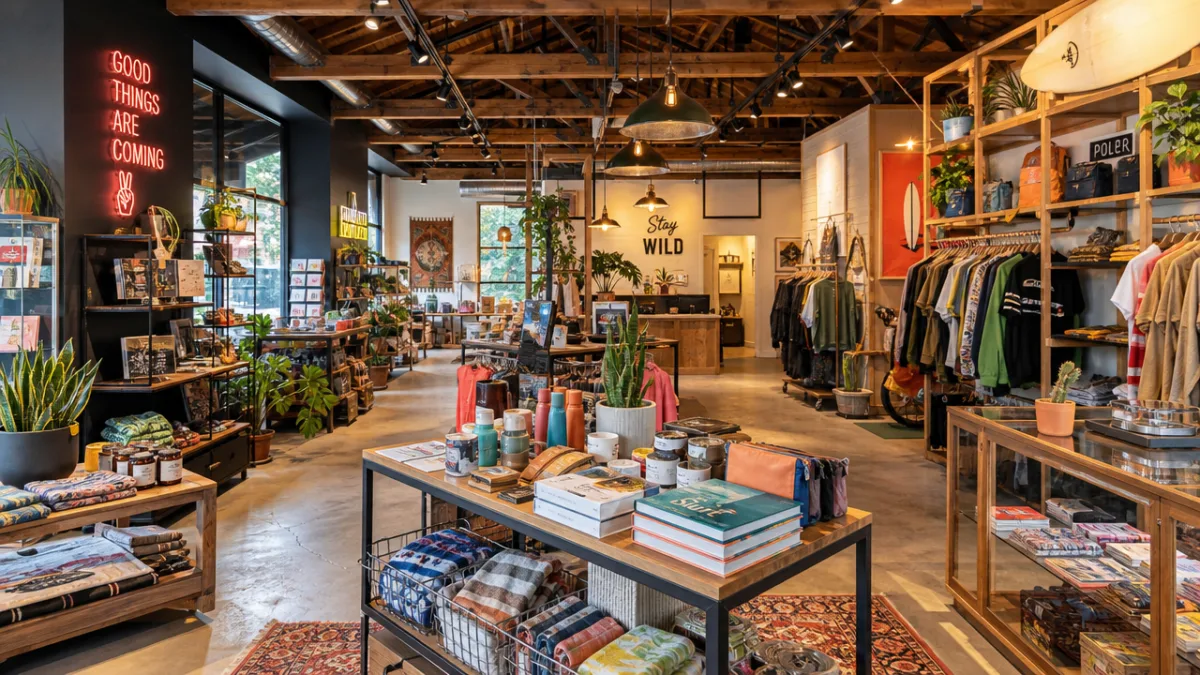
One of the things that’s always set Urban Outfitters apart is how much thought goes into the shopping experience itself, whether you’re in a store or scrolling through the app at midnight. The physical locations are genuinely famous among regulars for their immersive interiors — walking into an Urban Outfitters can feel less like a shopping trip and more like exploring a really well-curated vintage market or a gallery that happens to sell things. The layouts are deliberately non-linear, which sounds like a small detail but actually changes everything about how you move through the space. The music, the scent, the lighting — all of it is tuned to feel energetic and inviting at the same time.
The digital side has grown into a fully realized version of the brand’s identity rather than just an online catalog with prices. The website and app use editorial photography that puts products into real lifestyle contexts, so you’re not just looking at a dress on a white background — you’re seeing how it fits into a whole world. User-generated content, style guides, and curated collections give the experience real depth, and features like buy-online-pick-up-in-store and augmented reality tools for previewing home items in your own space help connect what happens online to what happens in the real world.
Urban Outfitters has also put serious work into building a community around the brand through social media, and it shows. The Instagram presence in particular does something a lot of brands fail at — it feels like an invitation into something rather than a sales pitch at you. Professional campaign imagery mixes with behind-the-scenes content and real customer styling, which creates a sense of participation that’s actually meaningful. In an era when people are deeply skeptical of brands that feel purely transactional, that kind of community-building is what keeps Urban Outfitters feeling culturally alive rather than just commercially active.
- In-store discovery zones featuring rotating local art, music listening stations, and pop-up collaborations create reasons to visit physical locations repeatedly.
- The UO Rewards loyalty program rewards consistent shoppers with points, exclusive offers, and early access to sales and new arrivals.
- Free People and Anthropologie synergy — sister brands under the URBN umbrella — gives the broader brand family a shared customer base with slightly different stylistic appeals.
- Sustainability initiatives, including the Urban Renewal vintage resale program, align the brand with values that matter deeply to its core demographic.
Sustainability and Ethics: Navigating Pressure and Progress
Any honest look at Urban Outfitters today has to deal with the sustainability and ethics questions that have become impossible to ignore, especially given who shops there. Younger consumers — millennials and Gen Z in particular, who make up a huge slice of Urban Outfitters’ customer base — have increasingly stopped separating their shopping choices from their values. Where was this made? Under what conditions? What did it cost the environment? These aren’t fringe questions anymore. They’re front and center, and brands like Urban Outfitters are under real pressure to have credible answers.
The brand has responded with a mix of specific programs and broader commitments. The standout is probably Urban Renewal, which sources, repairs, and resells vintage and deadstock clothing through dedicated sections of the store and website. It’s one of the most concrete things Urban Outfitters has done on the sustainability front — it keeps existing garments out of landfills, introduces genuinely one-of-a-kind pieces into the shopping mix, and speaks directly to shoppers who might otherwise stick entirely to secondhand platforms. The program has resonated and continues to grow as a real part of what the brand offers.
Beyond resale, Urban Outfitters has made commitments around organic cotton, recycled materials, more transparent supply chains, reduced packaging, and renewable energy in its operations. Critics — and it’s a fair point — have observed that this is incremental progress rather than fundamental change, and that building a business around fast-to-market trend cycles carries some inherent tensions with genuine environmental sustainability. Urban Outfitters has acknowledged this more openly in recent years, which is at least a step toward the kind of transparency its customers are asking for.
The ethics side of things also gets complicated when you look at the brand’s relationship with the creative community. Urban Outfitters has long drawn energy and credibility from independent artists, designers, photographers, and musicians, and at various points it’s faced real criticism over allegations of copying work from small creators. The responses to those situations have been mixed. At the same time, the brand has genuinely supported emerging creative talent through collaborations, artist spotlights, and platform opportunities that provide meaningful exposure. The dynamic between a large commercial brand and the independent creative culture it draws from is never going to be simple, and Urban Outfitters is a pretty perfect case study in why.
The Cultural Legacy and Future Trajectory of Urban Outfitters
It’s hard to overstate what Urban Outfitters has meant culturally over the past fifty-plus years. The brand has functioned like a running record of what young people care about aesthetically in any given era — from the grunge and bohemian energy of the ’90s through the indie sleaze of the early 2000s, the vintage romanticism of the Tumblr years, and now this current moment where nostalgia, sustainability, and digital self-presentation are all tangled up together. Tracing the history of what Urban Outfitters has sold is basically tracing the history of youth style and design culture. Not many brands have stayed this central to that conversation for this long without losing the plot entirely.
Looking ahead, the brand is facing a retail environment that’s more competitive than ever but also genuinely full of opportunity. The rise of secondhand platforms like Depop, Poshmark, and ThredUp — which count Urban Outfitters’ exact demographic among their most active users — is both a challenge and a signal. Urban Renewal proves the brand can participate authentically in the secondhand economy without abandoning its identity, and there’s real room to go deeper on that commitment in ways that would set Urban Outfitters apart from competitors who lack both its heritage and its curatorial credibility.
The ongoing investment in experiential retail and community building also sets the brand up well for what’s coming. Urban Outfitters has always understood that shopping, when it’s done right, is a social and cultural experience as much as a commercial transaction. That understanding will be a genuine asset as physical retail continues to evolve. Stores that only offer products will have a hard time justifying themselves; stores that offer identity, community, and something worth showing up for will earn loyalty that goes beyond price comparison.
At the deepest level, though, Urban Outfitters’ future comes down to whether it can keep the authenticity and creative tension that made it interesting in the first place — the feeling that the brand is actually engaged with culture rather than just extracting from it for commercial purposes. That’s a tricky balance to maintain at scale, inside the structure of a publicly traded company. But the brand has managed to thread that needle before, repeatedly, and the countercultural spirit at its core — however evolved and complicated it’s become — remains its most valuable asset heading into its second half-century.
- Expanding international markets in Europe and Asia represent significant growth opportunities for a brand whose aesthetic has proven to have genuinely global appeal.
- Technology integration, including AI-powered personalization and immersive digital shopping environments, will shape how Urban Outfitters engages the next generation of customers.
- Deepened sustainability commitments will be essential to maintaining credibility with a demographic that increasingly treats environmental and ethical standards as non-negotiable purchasing criteria.
- Creative collaborations with a new generation of independent designers, artists, and cultural figures will keep the brand’s aesthetic fresh and its cultural connections genuine.








What do you think?
It is nice to know your opinion. Leave a comment.