










Cucumber Trellis: Before & After Grow Wall — The Complete Guide to Vertical Cucumber Gardening
Why Cucumbers Thrive on a Trellis
Cucumbers are born climbers — it’s just what they do. In the wild, those tendrils are constantly reaching out for anything they can grab onto, pulling the vine upward toward the light. When you give them a trellis in your garden, you’re not forcing them to do something unnatural; you’re just giving them what they were already looking for. Work with that instinct and you’ll end up with a healthier, more productive plant that puts its energy into making fruit instead of flopping around on the ground.
Disease prevention alone is a huge reason to go vertical. When cucumber vines lie on the ground, their leaves sit in constant contact with damp soil — and that’s basically a welcome mat for fungal diseases like powdery mildew and downy mildew. Lift the whole plant up on a trellis and suddenly there’s airflow. Leaves dry out faster. The conditions that let disease take hold just aren’t there anymore. That one change means less time troubleshooting sick plants and more time actually picking cucumbers.
There’s also just the pure convenience factor. Ground-sprawling vines are a nightmare to harvest because fruit hides under layers of leaves and you don’t find it until it’s the size of a zucchini, gone bitter, or starting to rot. On a grow wall, every cucumber hangs right there where you can see it. Harvest checks take a couple of minutes instead of a frustrating excavation through the foliage. And as a bonus, cucumbers that hang freely grow straighter — no more weird bends and curves from resting on lumpy ground.
Before the Trellis: Understanding the Problem
If you’ve ever grown cucumbers without a trellis, you already know how fast things go sideways. One plant can send out vines six to ten feet long, and with nothing to climb, they just go wherever — across the soil, over your other vegetables, into the next bed over. What looks like a tidy little seedling in June turns into a knee-high jungle by July, and getting in there to find anything is genuinely not fun.
Yields take a real hit too. Without any support or pruning, plants pour energy into sprawling vines instead of fruit. The thick mat of leaves blocks sunlight from reaching lower parts of the plant, and all that trapped humidity becomes a perfect hangout for cucumber beetles, aphids, and spider mites. By the time you spot those pest populations, they’ve usually already done a decent amount of damage.
Watering is its own headache at ground level. You basically can’t water the root zone without soaking the foliage, and wet leaves in warm weather are basically an engraved invitation for disease. A lot of gardeners spend half the summer puzzling over yellowing leaves, spotted foliage, and weird-looking fruit before they realize it’s almost always tracing back to the same root cause: no support, poor airflow, and the messy cascade of problems that follow from both.
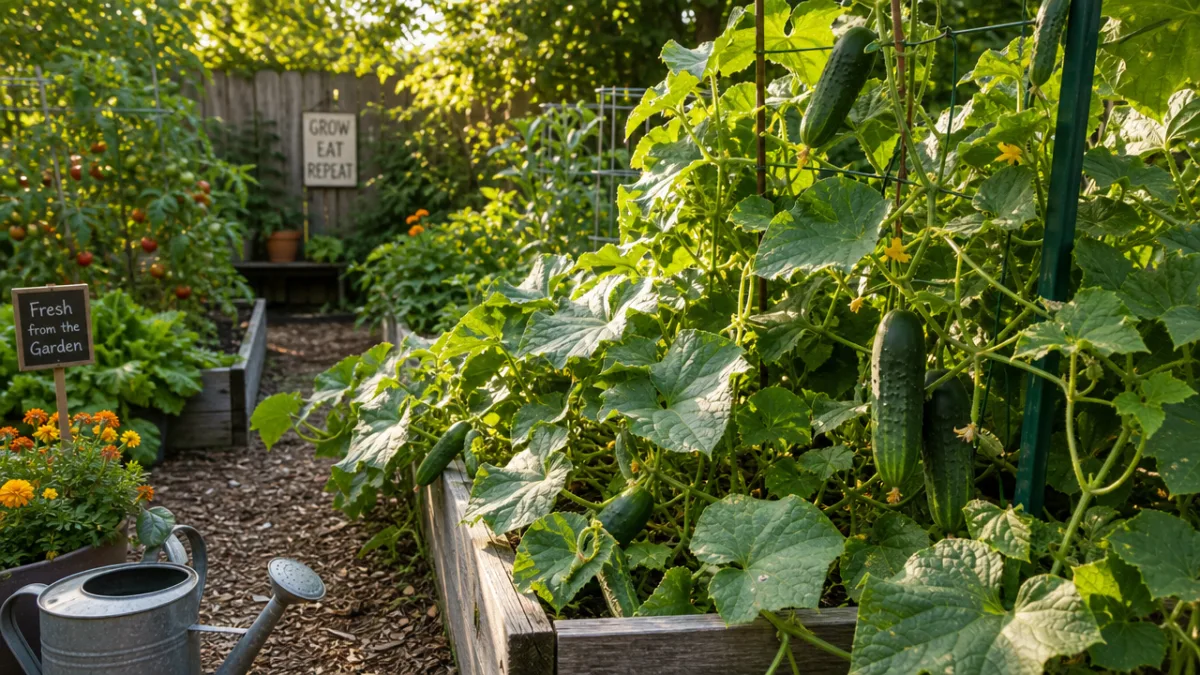
Choosing the Right Trellis for Your Grow Wall
There’s no shortage of trellis options out there, and honestly the best one just depends on your space, your budget, and how many plants you’re working with. The grow wall approach — training cucumbers up a large vertical panel — works great in a sprawling backyard garden and equally well in a tight urban setup. Whether you go with a simple A-frame, a flat panel tied to fence posts, or a cattle panel arch, the basics stay the same: it needs to be tall enough, sturdy enough, and have openings big enough for those tendrils to actually grab onto.
For a proper grow wall look, aim for a flat or slightly angled panel at least five to six feet tall. Materials are all over the map. Galvanized steel cattle panels are built like tanks — they hold up heavy vines without blinking and will last for decades. Bamboo and twine trellises cost almost nothing, they’re biodegradable, and you can size them however you want, which is why they’re so popular with gardeners who like to keep things natural. Welded wire fencing and garden netting are flexible enough to fit into awkward spaces and work especially well in narrow beds or along existing fences.
Whatever you build or buy, anchoring it properly is non-negotiable. A trellis that tips over when the vines get heavy will wreck your plants and waste all the work you put into training them. Drive your anchor posts at least twelve to eighteen inches into the ground, and reinforce horizontal spans wherever they stretch more than four feet between uprights. It’s the kind of thing that feels a little tedious to do at the start of the season, but you’ll be very glad you did it by August when the whole structure is loaded with vines.
- Cattle Panel Trellis: Extremely sturdy and long-lasting, ideal for heavy vining varieties and multi-season use.
- Bamboo and Twine Grid: Affordable and customizable, great for organic gardens and small-space growing.
- Welded Wire Fence Panel: Flexible and easy to shape, works well along existing fence lines or raised bed borders.
- Garden Netting on Posts: Lightweight and inexpensive, perfect for beginning gardeners and container setups.
- A-Frame Trellis: Self-supporting and portable, allows for double-sided growing and easy repositioning between seasons.
How to Train Cucumbers Up a Grow Wall
Training cucumbers up a trellis is pretty hands-on, especially during that stretch in early to midsummer when plants seem to grow inches overnight. The tendrils are actually pretty good at finding things to grab, but they need a nudge in the right direction fairly often — otherwise you’ll find vines looping back on themselves or reaching sideways into your neighbor’s tomatoes. Start guiding vines toward the trellis as soon as seedlings are big enough to reach it, usually within a couple of weeks of transplanting or not long after germination if you direct seeded.
The actual training routine is simple — it just needs to happen consistently. Every few days, walk down your grow wall and gently weave new growth through the trellis openings, or loosely tie it in place with soft garden ties, fabric strips, or plant clips. Skip the wire ties; they’ll cut into the stem as the plant grows. As the main vine works its way up, guide it straight while letting lateral shoots fan out sideways across the trellis face — that’s what gives you that full, lush coverage that makes the after transformation so satisfying to look at.
A little pruning goes a long way here too. Stripping off the lower leaves and any side shoots from the bottom foot or so of each vine keeps the base of the plant open and airy, which cuts down on disease and makes watering so much easier. Once the main vine reaches the top of the trellis, pinch off the growing tip to push energy into side shoots and fruit instead of more upward growth. It sounds counterintuitive, but that pinch at the top is often what kicks production into high gear right when you want it most.
- Install your trellis structure before transplanting or seeding to avoid disturbing roots later.
- Plant cucumber seedlings or seeds at the base of the trellis, spacing them twelve to eighteen inches apart.
- Begin guiding vines toward the trellis as soon as they are six to eight inches tall.
- Check vines every two to three days and redirect any growth straying away from the support structure.
- Remove lower leaves and suckers from the bottom foot of the plant to improve airflow.
- Pinch the main leader when it reaches the top of the trellis to encourage branching and fruit production.
- Harvest cucumbers frequently to keep the plant productive and prevent overbearing from slowing new fruit set.
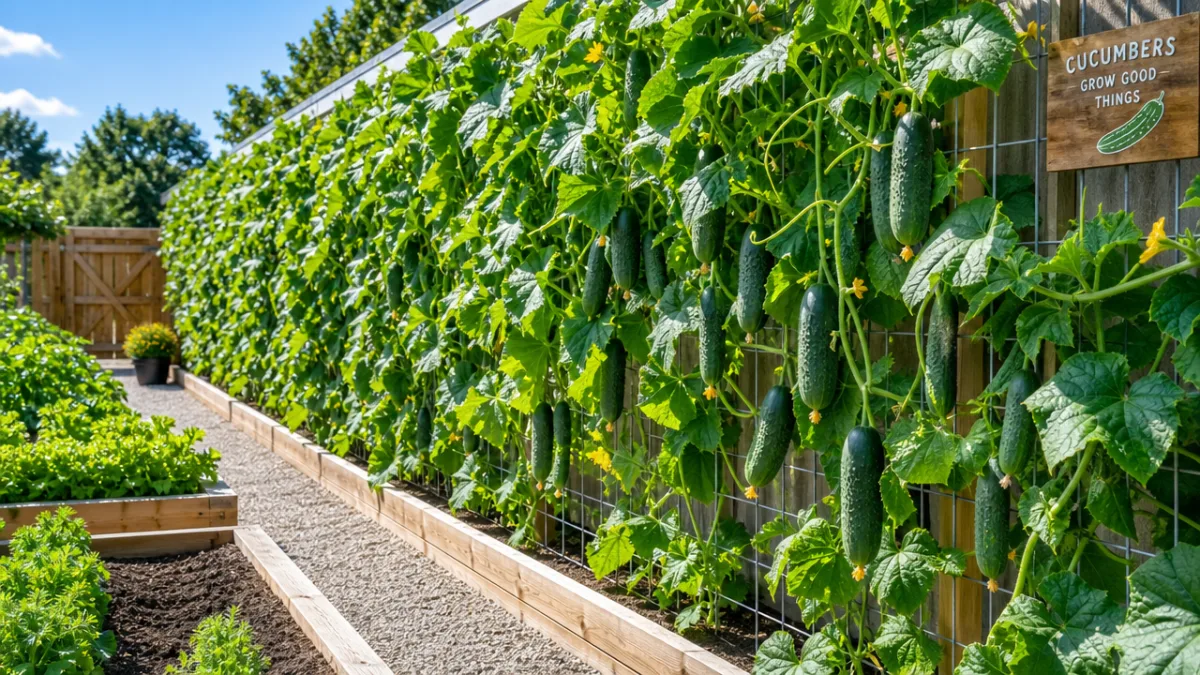
The After: Transformation Results You Can Expect
The difference between a messy, ground-level cucumber patch and a thriving vertical grow wall is hard to overstate — and most gardeners who’ve made the switch will tell you it’s one of the best things they’ve ever done in the garden. Within a few weeks of consistent training, that wall fills in with dense, upright foliage that looks completely intentional. The garden stops feeling chaotic and starts feeling like something you actually designed, and the practical results back up every bit of that satisfaction.
Bigger harvests are probably the most talked-about benefit. When cucumbers are hanging right in front of you and easy to grab, you pick them more often — and the more you pick, the more the plant produces. Plenty of gardeners report doubling or tripling their total cucumber yield just by going vertical, without changing anything else about how they garden. The cucumbers themselves also come out better: straighter, more uniform, and free of the soft spots and yellow patches that show up when fruit sits on wet ground.
Disease and pest pressure drop noticeably too. Better airflow means foliage dries out faster after rain or watering, and fungal diseases just can’t get the foothold they need. Gardeners who used to fight powdery mildew every single year or deal with persistent cucumber beetle damage often find that their trellised plants stay cleaner and more productive well into late summer — still putting out good fruit long after their untrellised neighbors have given up the ghost.
Maximizing Your Grow Wall: Tips for an Abundant Harvest
A good trellis gets you most of the way there, but squeezing the most out of your grow wall means paying attention to the basics too. Start with rich, well-draining soil that’s been worked with plenty of compost, and make sure your spot gets at least six to eight hours of sun a day — cucumbers really do need that. They’re heavy feeders, so mix a balanced granular fertilizer into the soil at planting time and follow that up with liquid feedings every couple of weeks once the season gets rolling. Think of it like keeping the tank full rather than waiting until the plant runs out of gas.
Watering needs a bit more thought with trellised plants because all that airflow — great for disease prevention — also means the soil dries out faster than it would in a mulched ground-level bed. Drip irrigation or soaker hoses are ideal here because they put water right at the roots without getting the leaves wet, which is exactly what you want. Layering the soil surface with straw, wood chips, or shredded leaves keeps moisture in longer, evens out soil temperature swings, and knocks back weeds without much ongoing effort.
Variety choice matters more than people sometimes realize. Stick with vining types rather than bush varieties — they’re the ones that actually want to climb. Marketmore, Straight Eight, and Spacemaster are all dependable open-pollinated picks that climb well and produce generously. If you want something a little more compact, there are modern hybrid varieties specifically bred for vertical growing that put out impressive yields on shorter vines and are genuinely easy to manage on a smaller grow wall.
- Water consistently: Cucumbers need even moisture to prevent bitterness and blossom end problems; aim for one to two inches per week.
- Feed regularly: Liquid fertilizer applications every two to three weeks support continuous fruit production throughout the season.
- Harvest daily: Picking cucumbers at peak size encourages the plant to set new fruit rather than diverting energy into maturing existing ones.
- Monitor for pests: Check the undersides of leaves regularly for aphid colonies, spider mites, and cucumber beetle egg masses.
- Protect pollinators: Avoid pesticide applications during flowering hours to preserve the bee activity that cucumber fruit set depends on.
Put all of that together — good soil, consistent water and feeding, smart variety selection, and the regular hands-on attention the grow wall needs — and you can realistically harvest cucumbers from early summer right up until the first frost. The before and after of a cucumber trellis isn’t just about how the garden looks, though that part is pretty great too. It’s a genuine shift in how productive, healthy, and enjoyable your cucumber growing experience is. Once you’ve had a season with a proper grow wall, going back to ground-level vines just isn’t something you’ll want to consider.








What do you think?
It is nice to know your opinion. Leave a comment.