










The Beauty of DIY Weave Furniture: Handmade Furniture Design Ideas
The Timeless Appeal of Woven Furniture
There’s something deeply satisfying about furniture you can tell was made by human hands. DIY weave furniture lives right at the crossroads of old-world craft and modern design, and it gives your home something mass-produced pieces just can’t — real warmth, texture, and personality. The way interlaced fibers play over a solid frame creates this sense of movement and depth that draws you in and practically begs to be touched.
Woven furniture has shown up in just about every culture throughout human history — from the reed chairs of ancient Egypt to the rattan and bamboo pieces that have been treasured across Asia for centuries. What’s remarkable isn’t just how long this tradition has lasted, but how well it adapts. Modern makers are breathing new life into it with reclaimed wood frames, sustainably sourced natural fibers, and fresh color palettes that feel completely current while still honoring techniques passed down through generations.
The DIY movement has put weave furniture in the hands of everyone from total beginners to seasoned craftspeople. Online communities, workshops, and tutorials have opened up knowledge that used to live exclusively in trade apprenticeships. These days, someone with a free weekend, a reasonable budget, and the willingness to learn can make a woven piece that would honestly look right at home in a high-end interior design spread.
Essential Materials and Tools for Getting Started
Before you pick up your first strand of cane or cord, getting familiar with your material options will make a real difference in your results. Natural materials are still the most popular choice for woven furniture projects. Rattan — which comes from a climbing palm native to tropical parts of Asia and Africa — is one of the most forgiving and widely available options out there. It gets flexible when you dampen it, which makes it perfect for beginners trying to navigate tight corners and curves on chair backs or headboards. Seagrass, rush, and paper cord each bring their own textures, durability, and look to the table, and they’re all worth experimenting with.
Synthetic materials have also earned a genuine place in the modern maker’s toolkit. Resin wicker and polyethylene weaving cord are especially well suited for outdoor furniture, where moisture and UV exposure would break down natural fibers pretty quickly. A lot of experienced makers like to mix the two — using a natural fiber for decorative interior panels while going with weather-resistant synthetics for structural seating. It’s the best of both worlds without having to sacrifice how things look or how long they last.
The good news about tools is that most weave furniture projects don’t require much. A sturdy awl for opening gaps in tight weaves, a bodkin needle for threading cord through finished sections, sharp scissors or a craft knife, and a spray bottle to keep natural fibers pliable are really all you need to get started. For building frames, basic woodworking tools do the job: a saw, drill, sandpaper in a few grits, and wood glue or screws depending on how you prefer to join things. A decent pair of needle-nose pliers is also worth having on hand for tucking and securing ends.
- Rattan core and peel: Versatile, beginner-friendly, and available in multiple widths for varied textures
- Seagrass and rush: Earthy tones and firm texture ideal for seat cushion weaving and basket-style bases
- Cotton macramé cord: Soft, available in many colors, excellent for bohemian-style chair backs and hanging pieces
- Paper cord: Durable, smooth finish, particularly popular for mid-century modern inspired designs
- Resin wicker: Weather-resistant choice perfect for outdoor dining chairs and lounge seating
Beyond the materials themselves, preparation really does matter. Soaking natural cane or rattan in warm water for fifteen to thirty minutes before you start working with it prevents cracking and lets it bend smoothly around frames. Working in a well-lit space on a flat, clean surface makes it much easier to keep consistent tension across your weave — and that tension is honestly one of the biggest things that separates a polished result from one that looks rushed. Taking a few extra minutes to set yourself up properly can completely change how much you enjoy the process.
Popular Weaving Patterns and Techniques
The pattern you choose will shape the character of your piece more than almost anything else. The classic over-under plain weave is where most beginners start, and for good reason — it produces a clean, grid-like surface that works beautifully on everything from seat panels to decorative headboards. Don’t let its simplicity fool you, though. A well-executed plain weave in quality natural cane has a real elegance that holds its own against much more elaborate patterns. The main technical challenge is keeping consistent tension, and honestly, that just comes with practice.
The hexagonal weave — sometimes called the open or Japanese weave — creates a honeycomb structure with serious visual impact. You work three sets of parallel strands at sixty-degree angles to each other, which requires more planning and patience than the plain weave. But the result is genuinely stunning: an open lattice that lets light pass through, making it especially beautiful in cabinet door inserts, room dividers, or lampshades where the play of light and shadow becomes part of the whole design.
Twill weaves introduce a diagonal direction to the surface by passing the working strand over two or more warp strands before going under. The result is a subtle, sophisticated movement across the surface that’s reminiscent of fine textile weaving. Macramé knotting techniques, while not traditional caning, have become hugely popular for chair backs and swing seats — blending weaving and knotting into hybrid designs that feel very much of the moment while still having a bohemian, handcrafted feel.
- Plain weave: Start with dampened strands, alternate over and under consistently, and secure ends beneath completed rows
- Diagonal twill: Offset each row by one strand to create the characteristic diagonal line across the surface
- Hexagonal open weave: Lay the first set of parallel stakes, then work two additional sets at precise angles before weaving through intersections
- Macramé square knot pattern: Mount cords on a dowel or frame rail and alternate the positions of knotting pairs with each row
- Danish cord seat weaving: Wrap cord around frame rails in one direction, then interlace perpendicular rows through the existing strands
Whatever pattern you land on, almost every experienced maker will tell you the same thing: do a sample on a small test frame before committing to your main project. It lets you figure out how much material you’ll need, dial in the right tension for your specific cord and frame, and work out any confusion about the pattern sequence before it matters. It’s a small investment of time and material that saves a lot of frustration later.
DIY Project Ideas: From Beginner to Advanced
One of the best things about weave furniture as a DIY pursuit is how naturally it scales with your skill level and ambition. A complete beginner can make something genuinely lovely over a single weekend, while an experienced maker can spend months on a single heirloom-quality chair. Starting smaller — woven plant pot holders, storage baskets, or replacing a worn stool seat — is a great way to build confidence and get a real feel for how the materials behave before you take on bigger structural projects.
Intermediate makers tend to find a woven headboard incredibly satisfying. You build or source a wooden frame, fill the interior panel with a weave pattern of your choice, and suddenly you have something with real visual presence in a bedroom. The project naturally introduces skills in frame construction and finishing, and painting or staining the frame before you start weaving means clean color choices without any risk of drips landing on your finished work.
When you’re ready to take on a full chair, dining chairs with woven seats and backs are genuinely achievable if you’ve already completed a few smaller projects. Restoring an antique chair with damaged caning is often more accessible than building from scratch — and there’s an added satisfaction in saving a piece that might otherwise end up in the bin. The bones of well-made antique furniture are frequently far better than anything you’d find at a comparable price today, which makes restoration a doubly worthwhile project.
The most ambitious DIY weave furniture projects involve building a full piece from raw lumber and raw fiber at the same time. A lounge chair with a steam-bent wooden frame and a continuous woven seat-to-back surface, for example, calls for solid competence in woodworking, steam bending, and advanced weaving. These projects reward makers who approach them methodically — breaking the work into stages and giving everything proper time to dry and cure between phases. The finished result is genuinely hard to tell apart from high-end artisan studio furniture that costs several thousand dollars.
Incorporating Woven Pieces Into Your Home’s Aesthetic
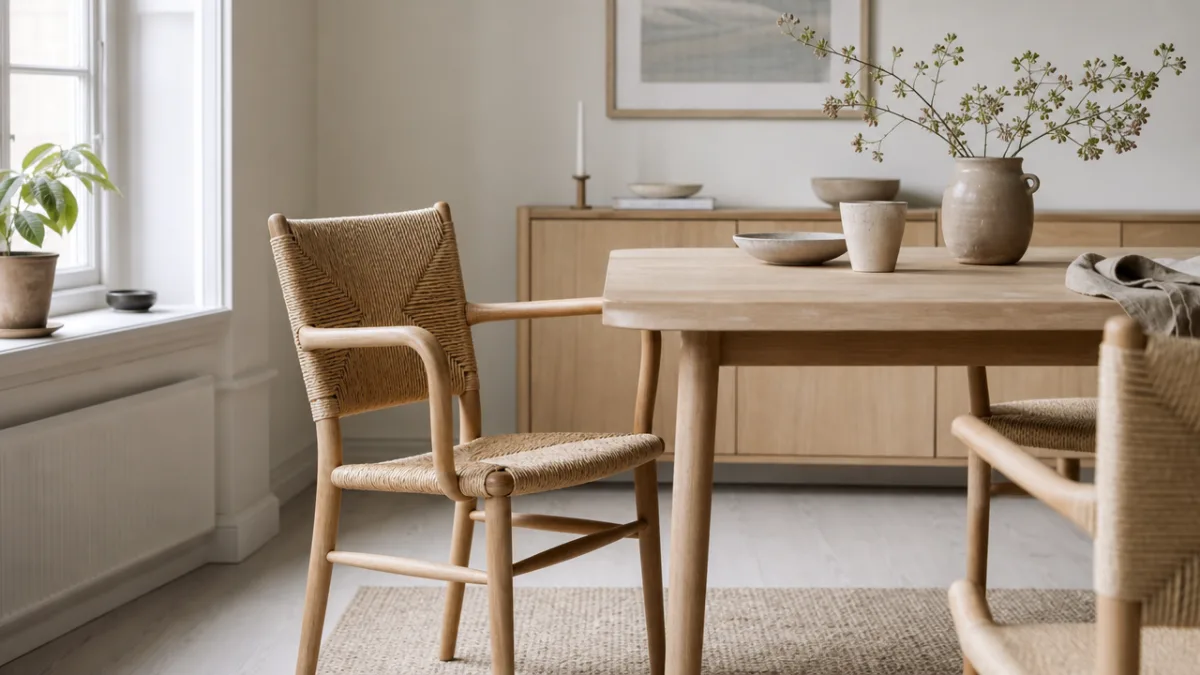
Woven furniture has a rare versatility — it plays well with an impressive range of interior styles. In a Scandinavian-inspired space built around pale woods, clean lines, and a restrained color palette, a woven seagrass chair brings organic warmth without upsetting the sense of calm. The natural tones of most woven materials blend easily with the linen, wool, and cotton textiles you typically find in those interiors, adding layered texture that feels considered rather than thrown together.
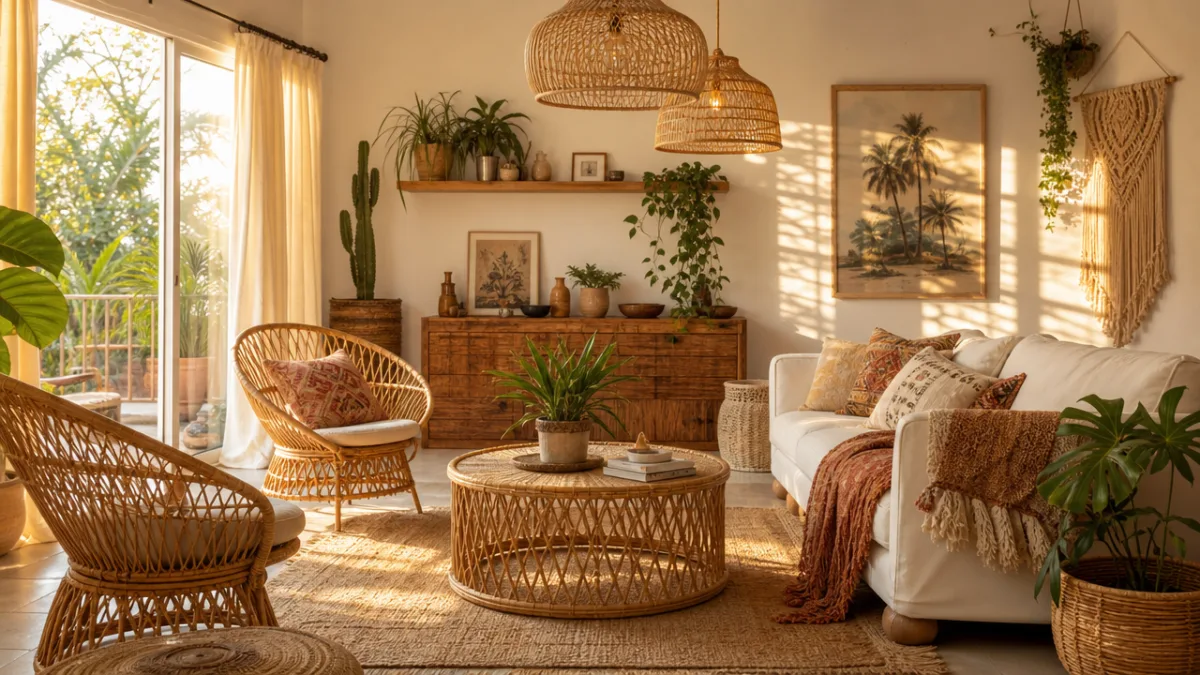
Bohemian and eclectic interiors embrace woven furniture wholeheartedly, using the rich texture of macramé chair backs and rattan frames as anchoring elements that let bolder colors and patterns do their thing around them. A deep indigo cushion in a woven rattan chair, paired with a patterned kilim rug and a few sprawling houseplants, creates exactly the kind of layered, lived-in feel that makes bohemian decorating work so well. In spaces like these, woven pieces rarely clash — their neutrality lets them act as visual bridges between more assertive elements.
Even strongly contemporary or minimalist interiors can benefit from a carefully chosen woven piece. A single handwoven pendant lamp above a concrete dining table softens the industrial edge without betraying the design ethos. A woven stool tucked under a floating console adds practical seating and a bit of textural interest without creating visual clutter. In minimalist spaces, the key is restraint — one or two well-chosen woven pieces make a stronger statement than a handful competing for attention.
- Scandinavian style: Choose natural, undyed fibers in seagrass or paper cord for a quietly sophisticated look
- Bohemian interiors: Layer macramé, rattan, and woven baskets freely alongside plants, textiles, and collected objects
- Coastal and tropical themes: Bamboo frames with natural wicker weaving reinforce an easy, resort-inspired atmosphere
- Mid-century modern rooms: Paper cord seat weaving on tapered walnut frames is an historically authentic and elegant choice
- Contemporary minimalism: A single sculptural woven piece in a restrained space provides warmth without visual noise
Care, Maintenance, and the Lasting Value of Handmade Weave Furniture
One of the most practical reasons to invest time in DIY weave furniture is how long well-maintained pieces actually last. Natural cane and rattan furniture, properly cared for, can go decades and often gets more beautiful with age — developing a warm patina that factory-made alternatives simply never achieve. The main thing to understand is how the material relates to moisture. Natural fibers benefit from occasional light misting to prevent brittleness in dry climates, but sitting in standing water leads to swelling, mold, and structural damage that’s tough to undo.
Cleaning woven furniture is pretty simple once you know the right approach. Dust and debris love to collect in the nooks of a weave pattern, so a soft brush or the brush attachment on your vacuum is your best tool for regular upkeep. For a deeper clean, a cloth barely dampened with a mild soap solution works well on most natural and synthetic weave materials. Just don’t soak it — let the piece dry fully in a well-ventilated spot away from direct heat, and give it a light coat of linseed oil or a specialized rattan oil once a year to keep natural fibers from drying out.
There’s also a bigger argument for handmade weave furniture that goes beyond the practical: sustainability and intentionality. In a world full of disposable furniture built to be replaced every few years, something you made yourself from ethically sourced natural materials represents a genuinely different kind of relationship with the things in your home. You know exactly what went into it, you put your own time and skill into making it, and you’re far more likely to repair it when it shows wear than to toss it. That shift in how we relate to our objects is arguably the quietest and most meaningful thing about the DIY weave furniture movement.
And repair, when the time comes, is a skill anyone can learn — one that extends a piece’s life almost indefinitely. A single broken strand in a woven chair seat can be replaced without dismantling everything around it, as long as you understand the pattern and have a little matching cord or cane tucked away. Many dedicated weavers keep project remnants specifically for that reason. Being able to fix your own furniture also means the small signs of wear that accumulate over the years become part of a piece’s story, not reasons to replace it — a philosophy that ties contemporary DIY culture back to centuries of craftsperson tradition.
Ultimately, the beauty of DIY weave furniture goes well beyond how it looks. It’s in the meditative rhythm of repetitive handwork, the quiet pride of making something functional, the warmth of natural materials in a lived-in space, and the satisfaction of knowing exactly where your furniture came from and how it was made. Whether you’re a first-time maker tackling a simple stool seat or an experienced craftsperson building out a full dining set, the world of woven furniture offers a deeply rewarding practice that connects you to one of the oldest and most enduring making traditions humans have ever had.








What do you think?
It is nice to know your opinion. Leave a comment.