










Sunlit Guitarist Bedroom Aesthetic: Creating the Ultimate Cozy Music Lover Room
The Magic of a Music-Inspired Bedroom
There is something undeniably special about walking into a room that tells a story through every detail — the worn pick resting on a nightstand, the soft glow of golden afternoon light falling across a guitar neck, the faint scent of aged wood and canvas. A guitarist’s bedroom is more than a place to sleep; it is a sanctuary where creativity breathes, where late-night melodies drift into dreams, and where the chaos of the outside world dissolves into chord progressions and quiet reflection. Designing this kind of space is an act of deep personal expression.
The sunlit guitarist aesthetic has captured the imagination of music lovers across social media precisely because it strikes a balance between warmth and authenticity. It does not feel curated for a catalog — it feels lived in, loved, and layered with meaning. Vintage band posters share wall space with handwritten lyrics. A beloved acoustic guitar leans against a sun-drenched wall. The whole room hums with the low, contented energy of a person who has found their creative home and settled into it completely.
Whether you are starting from scratch in a new space or slowly transforming a room you have occupied for years, building a guitarist bedroom aesthetic is about intention. Every object you choose carries weight. Every color, texture, and light source contributes to the overall mood. This guide will walk you through everything you need to know — from foundational color palettes and furniture choices to display ideas and acoustic considerations — to help you build the cozy, sunlit music room of your dreams.
Choosing the Right Color Palette and Lighting
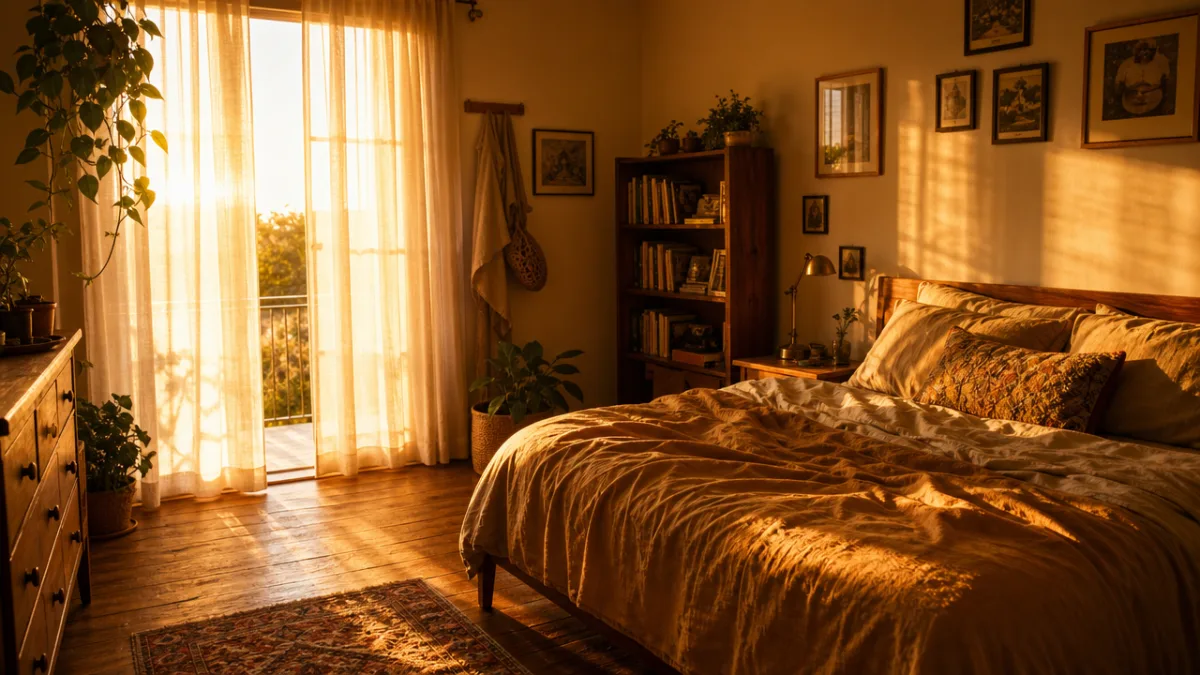
The sunlit aesthetic begins with color. Warm, earthy tones form the backbone of this style — think amber, terracotta, dusty rose, warm cream, and deep walnut brown. These colors mimic the natural warmth of afternoon sunlight streaming through a window, creating a sense of comfort that feels both timeless and intimate. When choosing wall colors, leaning toward muted, slightly desaturated versions of these warm tones will prevent the space from feeling overwhelming while still delivering that unmistakable golden-hour glow even on overcast days.
Lighting is the single most transformative element in any room, and in a guitarist’s bedroom it carries special significance. Natural light should be maximized wherever possible — choose sheer curtains or linen drapes in warm ivory or soft amber that filter sunlight rather than block it entirely. The way light interacts with the wood grain of your guitar, with the texture of a vintage rug, or with the paper of old concert posters creates a living, shifting aesthetic that no artificial lighting scheme can fully replicate. Position your main sitting or playing area near the best natural light source in the room.
For evening and ambient lighting, layering is key. Avoid the harshness of a single overhead light and instead build a system of warm-toned sources at different heights. String lights draped along a ceiling or window frame add a soft, dreamlike quality. Table lamps with Edison-style filament bulbs cast pools of amber light that feel deeply cozy. A salt lamp on a bookshelf or nightstand adds warmth with an organic, mineral glow. Together, these layered sources create an atmosphere that feels perfect for playing guitar quietly into the night, journal open beside you, cup of tea going cold because you got too lost in a riff.
Displaying Your Guitar as a Design Element
Your guitar is not just an instrument — in a music lover’s room, it is a centerpiece, a sculpture, and a statement of identity. Treating it as a display piece elevates both the aesthetic of the room and your relationship with playing. When a guitar hangs beautifully on a wall or rests in a dedicated stand bathed in soft light, you are more likely to pick it up, to noodle absentmindedly while thinking, to practice a new chord shape between other tasks. Accessibility and beauty working together make for both better design and better musicianship.
Wall-mounted guitar hangers come in a wide range of styles to suit different aesthetics. For the sunlit, vintage-leaning look, wooden or brass-finished hangers feel far more appropriate than sleek chrome or plastic options. Mounting a guitar on a warm-toned wood plank that itself hangs on the wall creates a gallery-style display that anchors an entire wall composition. If you own multiple guitars, an asymmetrical grouping of three at varying heights creates visual rhythm and turns your instrument collection into genuine wall art.
Consider the backdrop against which your guitar will be displayed. A textured plaster wall in a warm neutral, an exposed brick section, or even a large piece of fabric or tapestry hung behind the instrument creates depth and visual interest. Spotlighting a wall-mounted guitar with a small, directional warm-toned bulb creates drama and celebrates the natural beauty of the wood body and strings. Your guitar deserves to be seen as the beautiful object it is — and when it is displayed thoughtfully, it becomes the soul of the room’s entire visual story.
Beyond the instrument itself, consider building a small display cluster around it that tells a broader musical narrative. A few framed picks, a handwritten chord chart, a vintage capo, or a small photograph from a beloved concert tucked near the guitar creates a shrine-like grouping that feels personal and meaningful rather than generic. This kind of intentional clustering is what separates a well-designed room from a simply decorated one — the story it tells is specific, true, and uniquely yours.
Furniture and Textures That Set the Mood
Furniture in a sunlit guitarist’s bedroom should feel warm, slightly worn, and full of character. This is not the aesthetic of stark minimalism or high-gloss modern design — it belongs to the tradition of cozy maximalism, where every piece has a history or at least the appearance of one. Vintage wooden furniture in walnut, oak, or pine tones suits this space beautifully. Thrift stores, estate sales, and antique markets are your best friends here, offering pieces with genuine patina that no amount of new furniture can replicate. A scarred wooden writing desk, a mid-century dresser with mismatched knobs, a rocking chair with a faded cushion — these are the bones of the aesthetic.
Soft furnishings are where you layer in warmth and tactile comfort. The right rug can completely transform a room, and for this aesthetic, a vintage or vintage-style Persian or Kilim rug in warm reds, oranges, golds, and navy brings both color and culture to the floor. Layer a smaller textured rug or sheepskin over it near your playing area for extra coziness. Bedding should be soft and inviting — linen in warm natural tones, a chunky knit throw draped across the foot of the bed, and a collection of throw pillows in earthy colors and varied textures all contribute to the sense that this is a room that welcomes long, creative afternoons spent doing very little except playing and daydreaming.
Curtains, cushion covers, and wall hangings in natural materials like cotton, linen, jute, and wool reinforce the organic, handmade quality of the aesthetic. Macramé wall hangings add bohemian texture. A woven tapestry behind the bed serves as both headboard alternative and visual focal point. Even something as simple as replacing harsh plastic light switch covers with wooden ones makes the space feel more considered and intentional. Every surface is an opportunity to add warmth, and in a room built around the deeply human art of making music, warmth is always the goal.
Building a Personal Music Archive and Bookshelf Corner
A true music lover’s room contains more than just an instrument — it holds evidence of a life lived in pursuit of sound. Vinyl records, guitar magazines, biographies of legendary musicians, chord books dog-eared and annotated, handwritten set lists from shows played in tiny venues — these are the artifacts of a musical identity, and displaying them thoughtfully transforms your bedroom into a genuine reflection of who you are and what you love. A dedicated bookshelf or shelving unit becomes the brain of the room, the place where ideas, memories, and references are stored and celebrated.
Floating wooden shelves in a warm finish offer both practicality and aesthetic appeal. Arrange vinyl records vertically with a few covers displayed facing outward, propped against books or framed against small stands. Stack music books horizontally between vertical stacks for visual variety. Add small objects between sections — a vintage metronome, a ceramic mug holding pencils and picks, a small succulent, a photograph in a simple frame — to break up the rows and create breathing room in the composition. The goal is organized abundance: plenty to look at and explore, but never chaotic enough to feel stressful.
Consider dedicating one shelf specifically to your songwriting practice. A leather-bound journal or two, a cup of pencils, a small digital recorder or your phone in a wooden stand, and perhaps a printed lyric sheet from a song that changed your life — this writing station-within-a-display signals to your brain that this is a space where creativity is expected and welcomed. The physical act of surrounding yourself with creative tools and references makes you more likely to use them. Your environment is always sending you signals, and a room thoughtfully built around music will constantly invite you to play, write, and listen.
- Vinyl display ideas: Use a dedicated vinyl crate on the floor, floating shelves with covers facing out, or a repurposed wooden ladder leaning against the wall to store records at an angle.
- Songwriting corner essentials: A good notebook, a reliable pencil, a small clip-on tuner, a capo, and a few printed chord charts are all you need to make any corner feel like a proper creative workspace.
- Curated reading stack: Keep a rotating pile of music biographies, theory books, and music journalism on your nightstand to read before bed and absorb the language and stories of musicians you admire.
- Memorabilia display: Frame ticket stubs, setlists, or hand-stamped show flyers alongside photographs for a gallery wall section that doubles as a personal music history.
Acoustic Considerations and Practical Musician Needs
A bedroom designed for a musician should not only look beautiful — it should also sound good, or at minimum, not actively work against the experience of playing. Hard, parallel walls and reflective surfaces create a harsh, reverberant acoustic environment that makes guitar playing feel exposed and brittle. Soft furnishings — rugs, curtains, upholstered furniture, bookshelves filled with objects, wall tapestries — all absorb sound and create a warmer, more balanced acoustic character. Many of the aesthetic choices already described in this guide serve a dual purpose as natural acoustic treatment, which is a happy alignment of form and function.
Storage for musician essentials deserves specific planning. A guitar wall hanger keeps your instrument accessible without it taking up floor space, but you also need convenient homes for strings, picks, capos, tuners, cables, and small pedals if you play electric. A small wooden box or tray on the desk keeps the most-used accessories close at hand and organized without looking cluttered. Deeper storage for backup strings, extra cables, and guitar maintenance supplies can live in a drawer or small cabinet nearby. When your tools are easy to find and put away, you spend more time playing and less time frustrated.
If you record at home — even casually, with just a phone or a small USB microphone — think about positioning your playing spot somewhere that offers both good natural light for video and reasonable acoustic isolation from outside noise. A corner of the room with bookshelves on two walls, a rug below, and a tapestry above is a naturally better recording spot than the center of an empty room. Even without purpose-built acoustic foam, thoughtful furniture arrangement can make your casual home recordings sound noticeably warmer and more professional.
Personalizing with Art, Plants, and Found Objects
No sunlit guitarist’s room is complete without the layers of personal history and found beauty that make it unmistakably individual. The walls of a musician’s bedroom should be a visual autobiography — concert posters from shows that changed your life, album covers that represent particular seasons of growth, photographs of friends playing music together in kitchens and garages and dimly lit stages. These images do not need to match in style or size; a gallery wall that mixes framed prints with unframed posters, small photographs with large artwork, and landscape photos with typography creates a layered, energetic composition that feels genuinely lived-in.
Plants bring a softness and organic vitality to a space that no decorative object can replicate. In a sun-drenched room, plants also serve a practical function — they thrive, and a thriving plant adds a sense of life and health to the environment around it. Trailing pothos vines draping over a bookshelf, a small cactus collection on a sun-facing windowsill, or a large fiddle-leaf fig in the corner of the room all contribute different textures and energies. For a music lover’s space, there is something poetic about nurturing living things alongside the living art of music — both require attention, patience, and consistent care to flourish.
Finally, do not underestimate the power of found objects and small talismans in completing the atmosphere of your room. A smooth stone picked up on a beach where you once played guitar around a fire. A hand-painted mug from a local ceramicist. A matchbook from a venue where you saw a show that changed how you thought about music. A piece of driftwood on a shelf, a bundle of dried herbs hung from a curtain rod, a small vintage clock ticking quietly on a stack of books. These objects hold no monetary value but carry enormous weight in making a space feel like yours. The sunlit guitarist’s bedroom aesthetic is ultimately not about buying the right things — it is about surrounding yourself with evidence of a life devoted to beauty, creativity, and sound.








What do you think?
It is nice to know your opinion. Leave a comment.