










25 Organizing Tips and Dollar Store Organization Hacks to Transform Your Home
Why Organization Matters More Than You Think
Living in a cluttered space does more than just look messy — it quietly drains your energy, slows down your daily routines, and creates a low-grade stress that you might not even notice until it’s gone. Research in environmental psychology has shown pretty consistently that our surroundings have a real impact on our mood, focus, and sense of well-being. When your home is organized, you’re not just reclaiming physical space — you’re reclaiming mental space too.
The good news? Getting organized doesn’t have to mean spending a fortune or hiring a professional. With a few smart strategies and some surprisingly affordable tools, anyone can pull together a home that feels calm, functional, and intentional. The trick is taking it one step at a time rather than trying to tackle everything in a weekend — that path usually leads to burnout and a swift return to old habits.
Dollar stores and budget retailers have genuinely changed the organizing game. What used to mean a pricey trip to a specialty container store can now be done with a cartful of thoughtfully chosen finds for just a few dollars. Baskets, bins, drawer dividers, label holders, storage containers in every shape and size — they’re all sitting on those shelves, just waiting to be put to work in creative and surprisingly functional ways throughout your home.
The Art of Decluttering Before You Organize
One of the biggest mistakes people make when getting organized is buying storage solutions before they’ve actually decluttered. The result is beautifully organized chaos — neatly stored items you haven’t used in years and probably never will again. Real organization always starts with an honest look at what you own, going through your stuff category by category and genuinely asking yourself whether each item is actually earning its place in your life right now.
The classic four-category sort — keep, donate, sell, and trash — has stuck around because it works. Grabbing four bags or boxes and placing every item into one of those categories forces you to make actual decisions instead of letting things drift into a “maybe” pile that quietly becomes a permanent storage problem. Once you get through the process, you’ll almost always find you need way fewer bins and containers than you thought you did.
Decluttering also gives you a clear picture of what you’re actually working with. You can’t know how many drawer dividers you need for the kitchen junk drawer until you’ve pulled everything out, sorted it, and figured out what’s staying. This step saves money, keeps you from over-buying, and means the systems you set up will actually fit your life — not some optimistic guess about what you might someday own.
Dollar Store Hacks for the Kitchen and Pantry
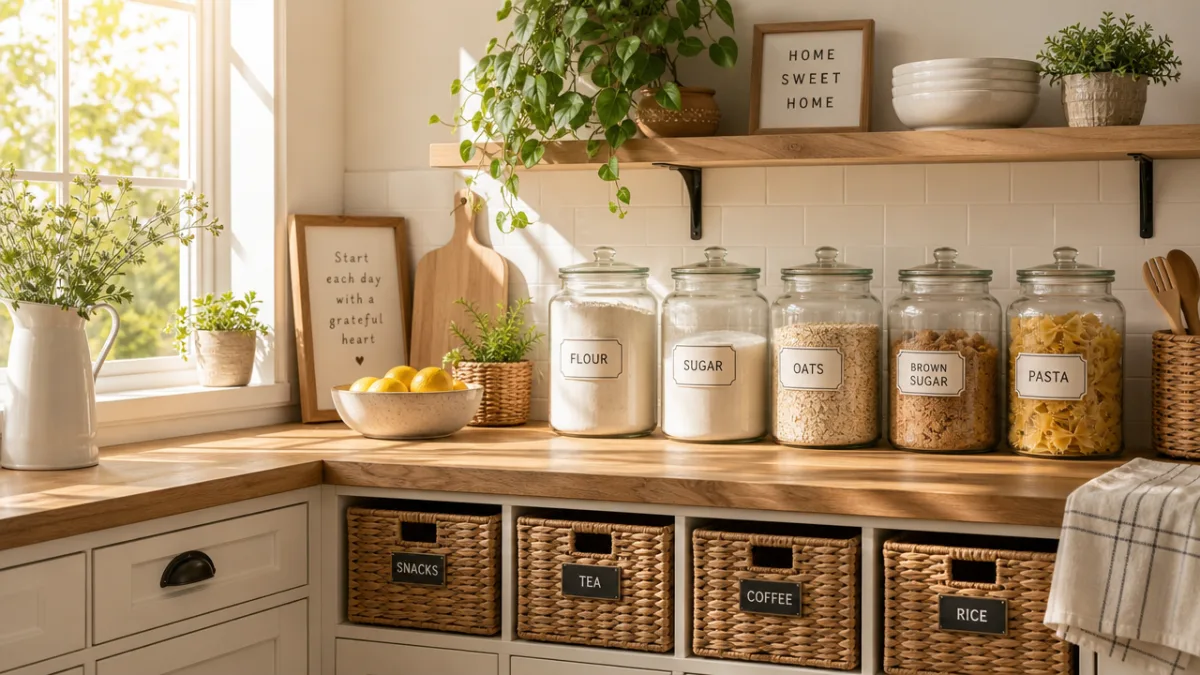
The kitchen and pantry are usually ground zero for household chaos, and they’re also where dollar store organizing tools really shine. Matching plastic bins or wire baskets can group pantry items by category — baking supplies in one spot, canned goods in another, snacks in their own zone, breakfast stuff all together. When everything has a designated home, grocery shopping and meal prep both get so much easier and honestly a little more enjoyable.
Lazy Susans — those spinning turntable trays — are a dollar store staple that punch way above their price point. Stick one in your pantry to corral cooking oils, vinegars, and condiments, or put one inside a cabinet to organize spices so you never have to dig through a pile of identical-looking bottles again. Another great hack is using an over-the-door shoe organizer on the inside of your pantry door to stash small packets, foil boxes, and all those little odds and ends that usually end up cluttering your shelves.
In the fridge, small clear bins create dedicated zones that make it easy to see exactly what you have at a glance — and they can seriously cut down on food waste. Here are some specific kitchen and pantry ideas you can pull off almost entirely with dollar store finds:
- Use magazine holders to store aluminum foil, plastic wrap, and parchment paper rolls vertically on pantry shelves — they take up way less space that way.
- Stack identical rectangular bins for a clean, uniform look that actually makes use of all that vertical shelf space.
- Hang a tension rod under the sink and hang spray bottles from their triggers — it frees up a surprising amount of cabinet floor space.
- Drop a simple plastic bin in the freezer to keep frozen proteins, vegetables, or breakfast items grouped and easy to find.
- Mount small bins on the inside of cabinet doors to store pot lids, cutting boards, or extra cleaning supplies.
Labels are really the thing that takes a pantry from “functional” to “actually great.” Dollar stores often carry label holders, chalkboard labels, or adhesive label sets that make it easy to mark exactly what goes where. When every person in the house can see at a glance where things belong — and where to put them back — your system basically runs itself instead of becoming something you have to constantly reset.
Bathroom Organization on a Budget
Bathrooms are a tricky organizing challenge. They’re usually small, they see a lot of daily traffic, and products somehow multiply in there at an alarming rate. Most households have way more beauty, grooming, and healthcare products tucked away than they realize, and the bathroom is often where that excess becomes most overwhelming. Starting with a good declutter — tossing expired products and duplicates — makes a bigger difference than any bin or basket ever could.
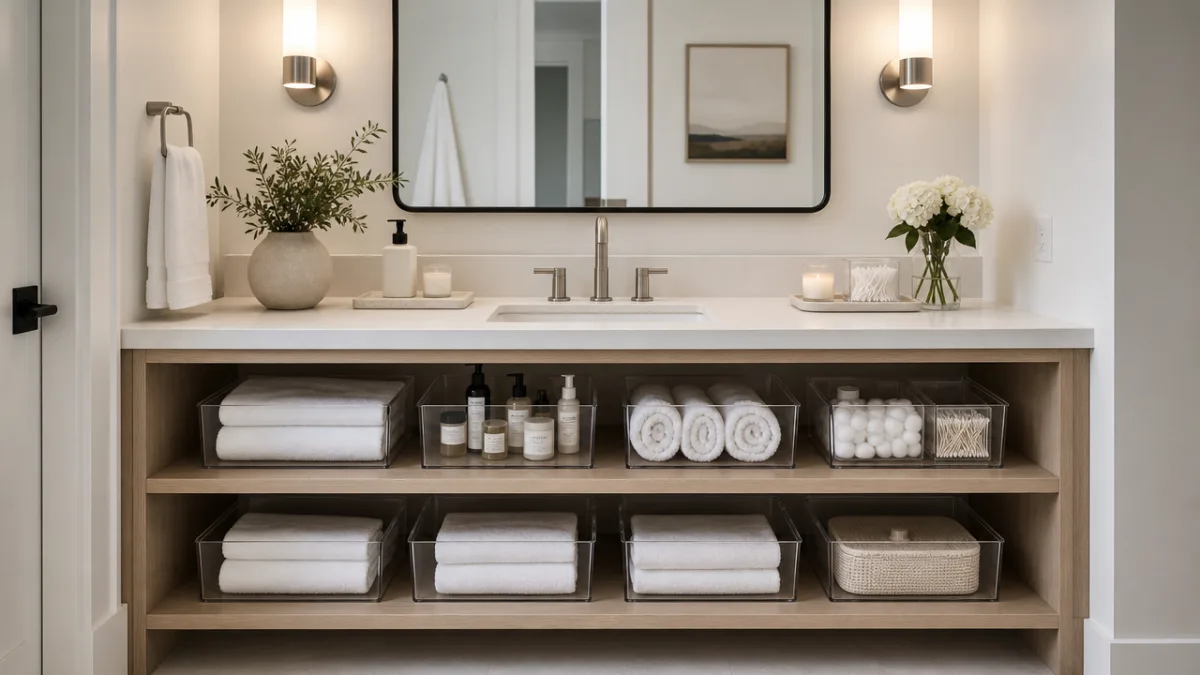
Dollar store bins, divided trays, and small baskets are practically made for bathroom drawers and shelves. A simple set of rectangular drawer dividers can turn a chaotic vanity drawer into a neat, organized system where every tool has its own spot. It helps to think in zones: daily-use items like your toothbrush, face wash, and skincare within easy reach; styling tools stored together; and backup or occasional-use products tucked away somewhere clearly labeled but out of the way.
Over-the-toilet shelving units — which you can often find at dollar stores or pick up cheaply elsewhere — are a game changer for small bathrooms because they use vertical space that’s almost always completely wasted. Add some dollar store bins on those shelves and suddenly you have a home for toilet paper, hand towels, extra soap, and more. A few adhesive hooks on the back of the bathroom door can hold robes, towels, or bags without requiring so much as a single hole in the wall.
Bedroom and Closet Transformation Tips
Your bedroom should feel like a retreat — somewhere that actually promotes rest and calm. But for a lot of people, it gradually becomes an overflow storage room, with piles of clothes, stray accessories, and random clutter eating away at the peaceful vibe that good sleep really needs. Getting the bedroom organized starts with being honest about what actually belongs in the room and what’s just found its way in over time, and then creating clear, accessible homes for the things that genuinely need to be there.
Closets are probably the most underused storage spaces in most homes, because the vertical potential almost never gets fully tapped. Adding a second hanging rod below a short row of jackets or blazers instantly doubles the hanging space in that section. Dollar store bins, baskets, and shelf dividers can turn chaotic closet shelves into neat, categorized zones that actually make sense. Clear stackable bins are especially handy for folded items, accessories, or seasonal clothing — you can see everything at a glance without digging through anything.
Under-bed storage is another resource most people don’t use nearly enough, and dollar store finds make it easy and affordable. Low-profile bins or rolling drawers can hold out-of-season clothing, extra bedding, shoes, or anything else that might otherwise be crowding the closet. Some of the most impactful bedroom organization ideas include:
- Nightstand tray: A small dollar store tray or bin corrals your bedside essentials — phone charger, reading glasses, lip balm, a book — and keeps the nightstand from becoming a cluttered surface.
- Drawer dividers: Inexpensive foam or plastic dividers keep folded clothes, socks, and undergarments neatly separated and easy to find without having to dig.
- Hooks for jewelry: A few small adhesive hooks inside a closet door create an instant jewelry display that keeps things visible and tangle-free.
- Shelf risers: These simple accessories create two levels of storage on a single closet shelf, essentially doubling what you can fit up there.
- Labeled bins for accessories: Sunglasses, hats, scarves, and belts each get their own clearly labeled bin, so mornings go a lot smoother.
Keeping the bedroom organized long-term really comes down to building a return habit into your daily routine. Every item that lives in the room needs a designated spot, and the habit of putting things back — even when you’re tired or rushing — is what actually separates organized spaces from ones that are always just a little bit chaotic. Starting with a simple, realistic system rather than a complex one makes that habit a whole lot easier to stick to.
Living Room and Entryway Organization Solutions
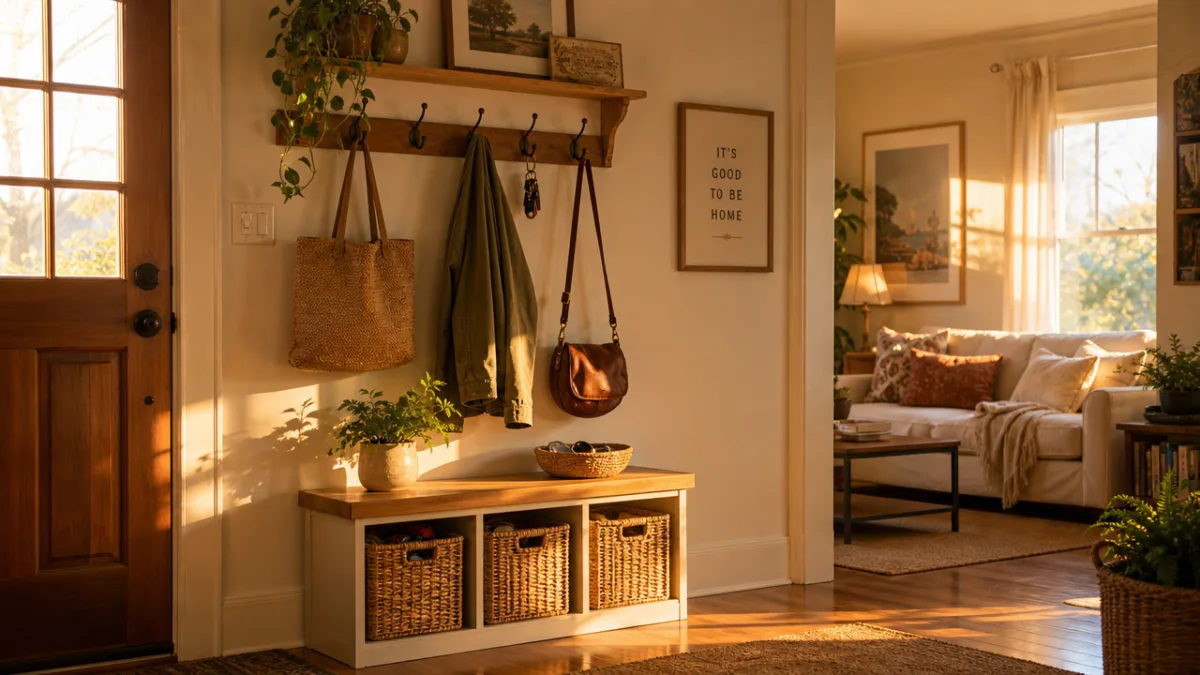
The living room and entryway are the spaces guests see first and that your family uses constantly throughout the day, which makes how they’re organized both highly visible and genuinely impactful. The entryway especially is a critical spot — it’s where the outside world meets your home, and it’s where bags, shoes, keys, mail, and miscellaneous stuff pile up fast if there’s no system in place. A few well-chosen dollar store items can turn that situation around in a single afternoon.
A small basket or bin near the door just for keys, wallets, sunglasses, and other daily carry items can eliminate the frantic morning search that so many households deal with on the regular. A separate bin for mail and papers that need attention keeps the counter from accumulating weeks of unopened envelopes and flyers. A simple shoe rack or a row of hooks — both easy to find at the dollar store — keeps footwear and outerwear from spreading across the floor and taking over the space.
In the living room, the challenge is usually keeping up with the remotes, chargers, books, throw blankets, and kids’ toys that naturally migrate to wherever people hang out. A stylish basket placed near the couch gives throw blankets and pillows a home that’s accessible but not in the way. A decorative tray on the coffee table rounds up remotes, chargers, and small items and creates visual order without any real effort. These small, intentional choices are what make the difference between a living room that feels chaotic and one that feels warm, comfortable, and like someone actually thought it through.
Sustaining Your Organization Systems for the Long Term
The most beautifully organized home will slide back into chaos within weeks if the systems you’ve set up don’t actually match the way you live. That’s why one of the most important organizing principles is designing systems around your real behavior, not an idealized version of it. If you know you always drop your bag on the chair near the front door, a hook on the wall next to that chair will serve you far better than telling yourself you should walk it all the way to the bedroom closet every time.
Regular maintenance is the other piece that makes organization stick. A weekly reset — fifteen to twenty minutes walking through each room and returning things to their homes — keeps the slow creep of disorder from ever building to the point where it feels overwhelming. A lot of people find that pairing this reset with something enjoyable, like a favorite podcast or a specific time on Sunday evening, turns it from a chore into a ritual that actually sets a nice tone for the week ahead.
And finally, give yourself permission to update your systems as life changes. A home with a newborn has completely different organizational needs than one with school-age kids, and both look nothing like an empty nester’s space. Your systems should reflect where you are right now, not some permanent standard you set years ago. Checking in once or twice a year, seeing what’s working and what isn’t, and adjusting accordingly will keep your home working for you through every phase of life. With the budget-friendly tools and creative hacks that dollar stores put within reach, a well-organized, truly functional home really is something anyone can have.








What do you think?
It is nice to know your opinion. Leave a comment.