










Modern Macrame and Fiber Art Wall Hangings: A Complete Guide to Contemporary Handmade Textile Decoration
The Renaissance of Fiber Art in Contemporary Interior Design
Over the past decade, macrame and fiber art wall hangings have experienced a remarkable resurgence in popularity, transitioning from a nostalgic craft associated with the 1970s into a sophisticated, highly sought-after form of contemporary interior decoration. Today’s designers, homeowners, and art collectors are embracing handmade textile pieces not merely as decorative accessories but as genuine works of art that bring warmth, texture, and an undeniable sense of human craftsmanship into modern living spaces. This revival reflects a broader cultural movement toward authenticity, sustainability, and the celebration of slow, intentional making in a world saturated with mass-produced goods.
What distinguishes modern macrame from its vintage predecessor is the remarkable evolution in technique, material selection, and aesthetic sensibility that contemporary artists bring to the craft. Where earlier generations favored chunky, heavily knotted pieces in earth tones, today’s fiber artists work with a sophisticated palette of natural and dyed wools, cotton ropes, linen threads, and even metallic fibers to create pieces that feel fresh, architectural, and entirely at home alongside minimalist Scandinavian furniture or bold, maximalist gallery walls. The vocabulary of knots has expanded dramatically, with artists inventing new combinations and structural approaches that push the boundaries of what textile art can express.
The emotional resonance of handmade fiber art cannot be overstated. When a skilled artisan spends hours carefully knotting, weaving, and finishing a wall hanging entirely by hand, that investment of time, attention, and creative energy becomes embedded in the object itself. Viewers and owners of these pieces often describe an immediate sense of connection and comfort that no printed artwork or mass-produced wall decor can replicate. This intangible quality — sometimes called the “hand” of a piece — is precisely what drives the growing market for contemporary macrame and weaving, and why collectors are increasingly willing to invest meaningfully in original textile art.
Understanding the Materials: Wool, Rope, and Natural Fibers
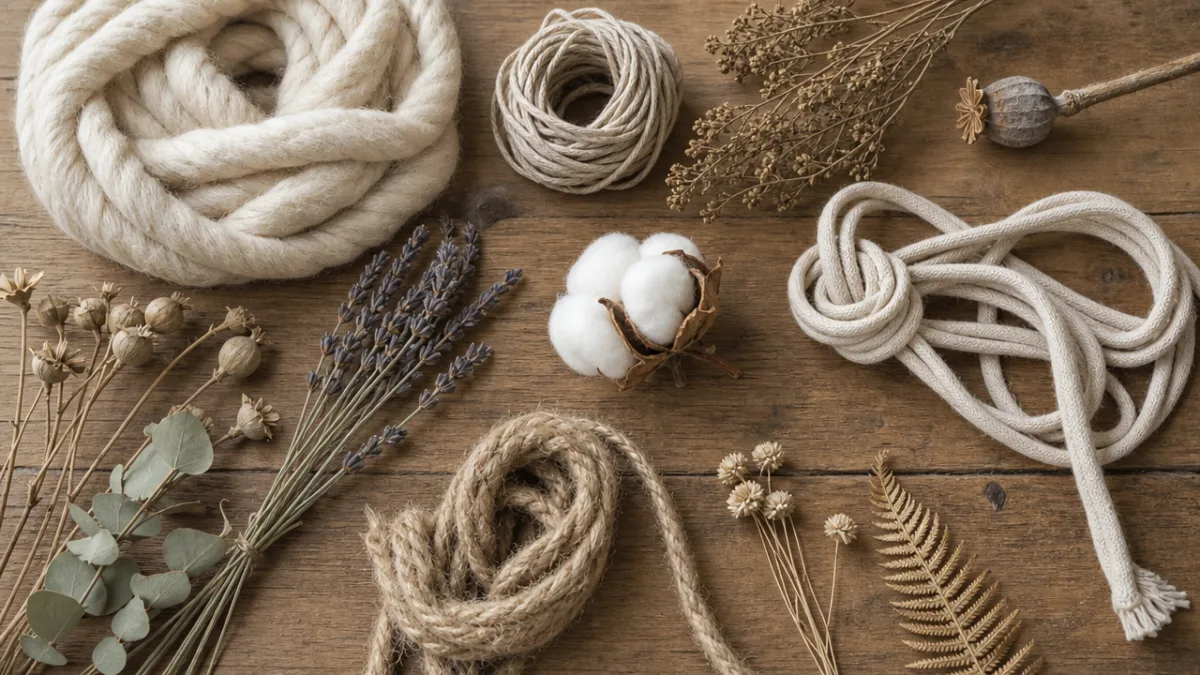
The choice of materials in modern fiber art is one of the most critical decisions an artist makes, as each fiber type carries distinct physical properties, aesthetic qualities, and expressive possibilities. Wool remains one of the most beloved materials among contemporary macrame artists and weavers for its extraordinary versatility, natural luster, and the way it responds to light across the day. High-quality wool rope and yarn can range from tightly spun, smooth cordage that creates clean, precise knotwork to loosely twisted singles that unravel into luxurious fringe, giving a single material the capacity to serve wildly different visual purposes within the same piece.
Cotton rope is another staple of the modern fiber art toolkit, prized for its crisp, matte finish and the ease with which it accepts natural dyes. Unlike wool, cotton rope maintains a certain structural rigidity that makes it ideal for pieces requiring clean geometric lines or precise, repeating knot patterns. Many contemporary artists deliberately combine cotton and wool within a single piece, exploiting the contrast between the crispness of cotton and the soft warmth of wool to create visual depth and tactile interest. The interplay between these two materials can suggest movement, shadow, and dimensionality in ways that a single-material piece often cannot achieve.
Beyond wool and cotton, the modern fiber artist’s palette has expanded to include an inspiring range of natural and specialty materials. Linen, jute, silk, alpaca, and even hand-spun or naturally dyed local wools have all found their way into contemporary wall hangings, each contributing unique textural and chromatic qualities. Many artists also incorporate found natural elements such as driftwood, branches, copper rings, ceramic beads, and dried botanicals to add structural interest and ground their textile work in the natural world. This openness to material experimentation is one of the hallmarks of the contemporary fiber art movement and contributes significantly to the extraordinary diversity of work being produced today.
- Merino wool: Exceptionally soft, fine texture ideal for delicate, high-detail work and smooth gradient dyeing
- Cotton macrame cord: Available in single-strand and three-ply varieties, excellent for geometric knotwork and clean fringe
- Chunky wool rope: Creates bold, sculptural texture and makes a dramatic visual statement even in small pieces
- Jute and natural twine: Earthy, rustic quality that grounds a piece and connects it to organic, botanical aesthetics
- Silk and metallic threads: Add luminosity and a sense of luxury, catching light in ways that more matte fibers cannot
Core Techniques: Knotting, Weaving, and Contemporary Methods
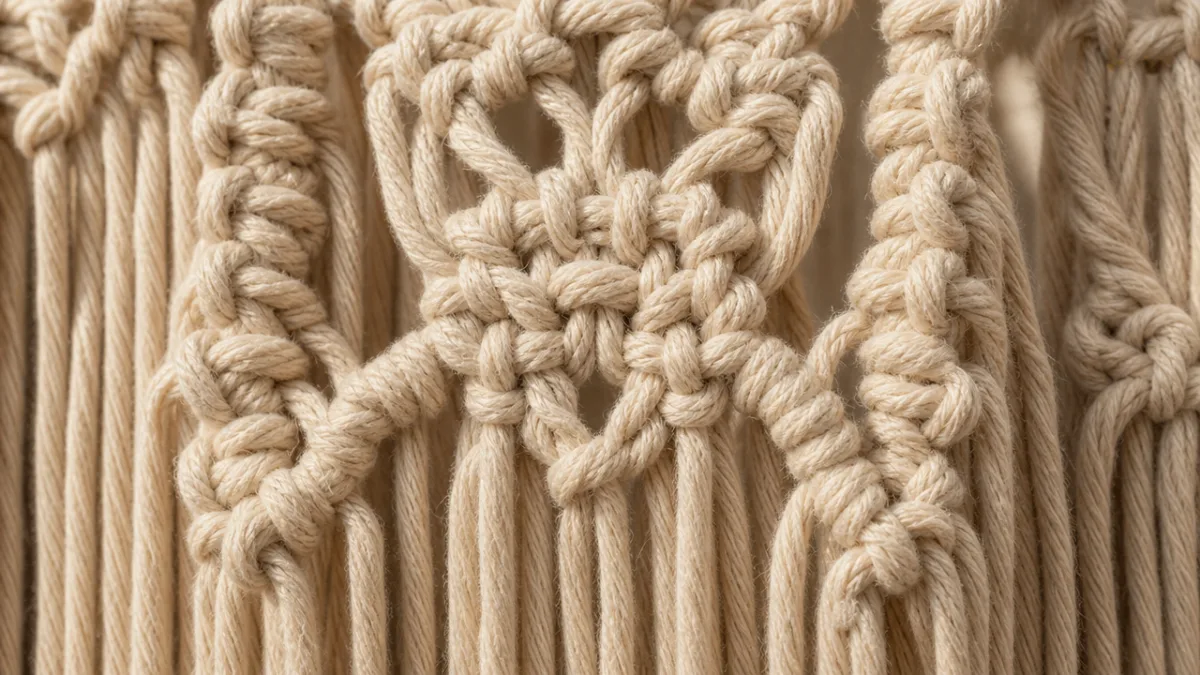
The technical foundation of macrame rests on a relatively small vocabulary of fundamental knots that, when combined with creativity and intention, can generate virtually unlimited visual complexity. The square knot and the half-hitch are the workhorses of macrame knotwork, forming the basis of countless patterns from delicate lacework to dense, sculptural relief surfaces. Learning to execute these basic knots with consistency and precision is the essential first step for any macrame artist, but mastery comes only through the development of an intuitive understanding of how tension, spacing, and sequence interact to produce different visual and textural outcomes.
Weaving, which is closely related to but technically distinct from macrame, involves interlacing horizontal weft threads through vertical warp threads stretched across a loom or frame. Contemporary fiber wall hangings frequently combine elements of both weaving and macrame, creating hybrid pieces where woven passages of color and texture alternate with flowing knotted or fringed sections. This integration of techniques allows artists to achieve effects that neither approach could accomplish independently, such as dense fields of woven color that suddenly dissolve into airy cascades of knotted fringe or delicate looping spirals. The loom itself has also become a site of formal experimentation, with artists working on unconventional frames made from branches, metal hoops, and custom-built structures.
Among the more technically demanding and visually striking contemporary approaches is the creation of three-dimensional relief surfaces within wall-mounted pieces. By carefully manipulating the tension of knots and the direction of working cords, skilled artists can cause sections of a piece to protrude from the wall surface, creating genuine sculptural depth that transforms the work from a flat decorative object into something closer to textile sculpture. This sculptural dimension is one of the key distinguishing features of serious contemporary fiber art and reflects the field’s ongoing dialogue with the broader world of studio craft and fine art. As more artists push in this direction, the boundary between wall hanging and sculptural installation continues to blur productively.
- Square knot sequences: The foundational building block of most macrame patterns, creating dense, structured surfaces
- Spiral half-hitches: Produce elegant twisted columns and flowing diagonal lines across a composition
- Lark’s head mounting: The standard technique for attaching working cords to a dowel or branch, establishing the piece’s foundation
- Gathering knots: Collect multiple cords into bundles, creating visual rhythm and structural emphasis at key points
- Plain weave passages: Interlaced sections that introduce color, texture contrast, and structural density to a composition
- Rya loops and pile: Create soft, shaggy texture that mimics the richness of a textile from a different cultural tradition
Designing for Your Space: Choosing the Right Wall Hanging
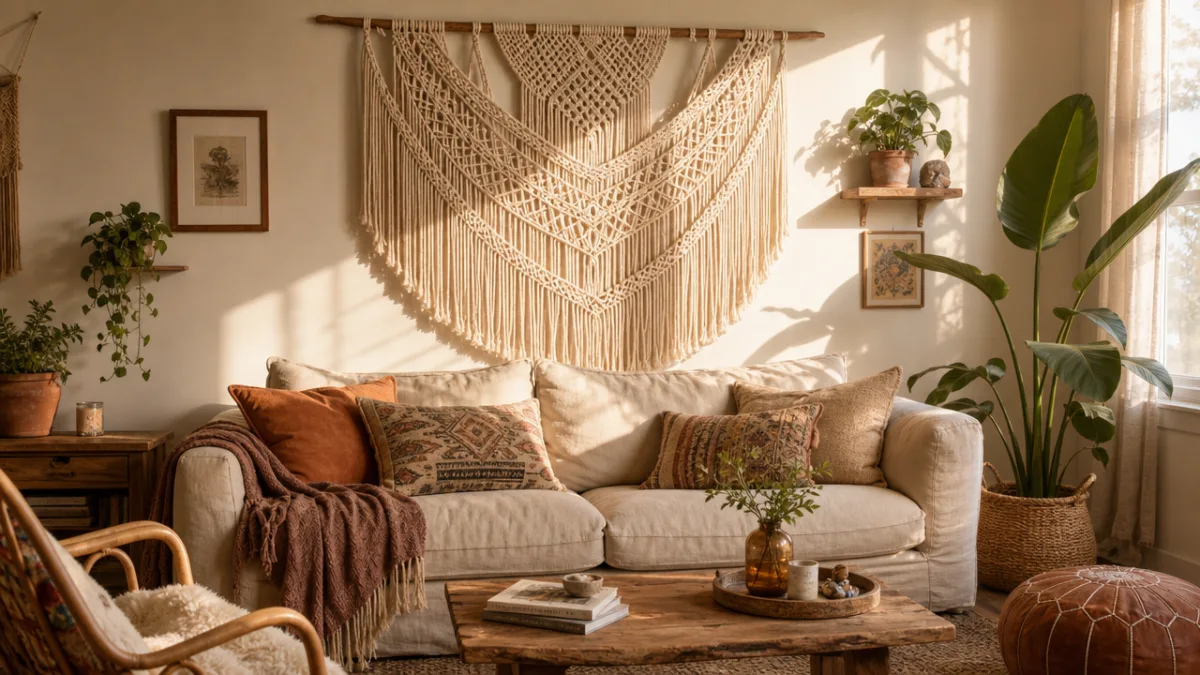
Selecting the right fiber art wall hanging for a specific interior space requires careful consideration of several interrelated factors, including the scale of the piece relative to the wall and surrounding furniture, the color palette and its relationship to existing textiles and finishes in the room, and the overall aesthetic mood or personality that the piece projects. A large-format macrame installation can serve as a powerful focal point in a living room or bedroom, anchoring a seating arrangement or commanding attention above a bed’s headboard. Conversely, a smaller, more intimate piece might work beautifully as part of a curated gallery wall arrangement or as a textural accent in a study, bathroom, or hallway.
The color relationships between a fiber art piece and its surrounding environment deserve particular attention, as the natural warmth of undyed wool and cotton reads very differently depending on the wall color against which it is displayed. Creamy natural fibers glow with particular beauty against warm white, blush, or sage walls, while the contrast of natural fiber against a deeply saturated or dark painted wall can create a dramatic, gallery-like presentation that elevates both the artwork and the architectural space. When choosing a piece with dyed fibers, it is worth spending time with paint samples and existing textiles in the room to ensure that the chromatic relationships feel intentional and harmonious rather than coincidental.
Practical installation considerations are also worth thinking through carefully before purchasing or commissioning a fiber art wall hanging. Most pieces are designed to hang from a wooden dowel, copper pipe, or natural branch, which should be anchored to the wall with sturdy hardware appropriate to the piece’s weight. Very large or particularly heavy pieces may require wall anchors, studs, or even professional installation to ensure both safety and the correct visual presentation. It is also worth considering the effects of natural light on the piece over time, as prolonged exposure to direct sunlight can fade both natural and dyed fibers, so positioning pieces in spaces with gentle, indirect light will help preserve their beauty and integrity across the years.
The Art of Gifting: Why Handmade Fiber Art Makes an Exceptional Present
A handmade macrame or fiber art wall hanging represents one of the most thoughtful and enduring gifts one person can give to another, combining aesthetic beauty, genuine craftsmanship, and a level of intentionality that mass-produced gifts simply cannot match. When you give someone a piece of handmade textile art, you are giving them an object that carries within it the hours of skilled work and creative decision-making of its maker, and that will likely outlast most other decorative items in their home by many decades. Unlike trend-dependent decor, well-made fiber art has a timeless quality that allows it to move gracefully between different interior styles as the recipient’s tastes and living situations evolve over time.
The gifting of handmade art also carries a meaningful symbolic dimension that resonates particularly strongly for life milestone occasions such as weddings, housewarmings, significant birthdays, and the arrival of a new home or baby. A custom-commissioned piece created specifically to reflect the recipient’s color preferences, aesthetic sensibilities, or a meaningful symbol or theme adds yet another layer of personal significance to an already meaningful gesture. Many contemporary fiber artists offer bespoke commission services precisely for this reason, working collaboratively with clients to develop pieces that feel deeply personal and uniquely connected to the recipient’s story. This collaborative process often becomes a meaningful experience in itself for the gift-giver, transforming the act of purchasing a gift into a creative adventure.
When selecting a fiber art piece as a gift, it is helpful to consider a few practical dimensions alongside the purely aesthetic. Pieces made with high-quality natural fibers such as merino wool, organic cotton, or hand-dyed linen will age beautifully and maintain their visual integrity far longer than those made with synthetic materials. It is also worth choosing a piece from an artist whose work you genuinely admire and whose creative vision feels coherent and developed, as this speaks to the long-term artistic value of the piece. Finally, ensuring that the piece arrives with care instructions and, where possible, a brief note from the artist about the materials and techniques used transforms the gift into a small collector’s object with both aesthetic and educational value.
Caring for and Preserving Your Fiber Art Investment
Proper care is essential to preserving the beauty and structural integrity of a handmade macrame or fiber art wall hanging across the years and decades. Unlike framed prints or canvas paintings, textile artworks are inherently susceptible to environmental factors including dust accumulation, humidity fluctuations, insect activity, and light exposure, all of which can degrade both the fibers themselves and any natural dyes used to color them. Fortunately, with a few simple, consistent care practices, a well-made fiber art piece can remain vibrant and beautiful for generations, becoming a genuine heirloom object that carries both aesthetic and sentimental value into the future.
Regular, gentle dusting is the single most important maintenance practice for fiber art wall hangings. Using a soft brush attachment on a vacuum cleaner set to low suction, or simply a clean, dry natural-bristle brush, gently work from the top of the piece downward to remove accumulated dust without disturbing the structural arrangement of the fibers. This should be done every few months in typical household environments, or more frequently in spaces prone to dust accumulation such as open-plan rooms near cooking areas or in homes with pets. For pieces with particularly delicate or loosely spun fibers, it may be preferable to use a handheld hair dryer on a cool, low-speed setting to gently blow dust free without any physical contact with the fibers themselves.
For deeper cleaning, the approach will depend on the specific fibers and construction of the piece, and when in doubt it is always worth consulting with the artist who made it. Many wool and cotton pieces can be carefully spot-cleaned with a small amount of gentle, fiber-safe detergent diluted in cool water, applied with a soft cloth and blotted rather than rubbed to avoid disturbing the fiber structure. Full immersion washing is generally not recommended for macrame pieces because the knotwork can shift unpredictably when saturated, potentially altering the drape and visual balance of the piece permanently. Storing fiber art flat or loosely rolled in clean cotton muslin when not displayed, away from light and moisture, will protect it during any periods when it is not on the wall, ensuring it remains as beautiful as the day it was made for years to come.
Building a Collection: Fiber Art as a Long-Term Aesthetic Practice
For those who find themselves drawn to the world of contemporary fiber art, the journey from admiring individual pieces to building a thoughtful collection is a genuinely rewarding long-term aesthetic practice that deepens over time. Collecting fiber art offers a uniquely intimate relationship with both the objects themselves and the artists who make them, as the handmade nature of each piece creates an inherent connection between maker and collector that is less common in other collecting fields. Many fiber art collectors describe a growing awareness of craft, material, and technique that fundamentally changes how they see and move through the physical world, sharpening their attention to texture, color, and the beauty of skilled human making in ways that extend well beyond their art collection.
A thoughtful fiber art collection need not be large or expensive to be meaningful and visually coherent. Even a focused collection of five to ten pieces, chosen with care for their material quality, artistic ambition, and aesthetic harmony with one another, can transform a living space and provide years of visual pleasure and intellectual engagement. Many serious collectors begin by identifying one or two artists whose work resonates deeply with them and following those artists’ development over time, acquiring pieces at different stages of their creative evolution. This approach builds both a personal relationship with specific artists and a collection that tells a coherent story about the development of individual creative voices within the broader field of contemporary fiber art.
Engaging actively with the fiber art community through studio visits, craft fairs, online maker markets, and social media platforms where artists share their work in progress is one of the most pleasurable ways to develop both your collection and your understanding of the field. Direct relationships with artists not only provide access to works before they become widely available but also offer the opportunity to commission custom pieces, participate in the creative process, and develop a nuanced understanding of what distinguishes truly exceptional work from merely competent craft. This depth of engagement transforms collecting from a passive consumer activity into an active, participatory relationship with living culture, and ensures that your collection continues to grow in both depth and personal significance with each passing year.








What do you think?
It is nice to know your opinion. Leave a comment.