










Ideas on How to Recycle Wine Bottles: Creative and Sustainable Projects for Every Home
Why Recycling Wine Bottles Matters More Than You Think
Think about how many wine bottles get opened every year — we’re talking billions worldwide. And while glass is technically recyclable, a surprising number of those bottles still wind up in landfills, where they can sit for up to a million years without breaking down. When you repurpose a bottle at home instead of tossing it in the recycling bin, you’re doing something a little more intentional — taking a hands-on role in cutting down waste rather than just hoping the system handles it for you.
There’s also something genuinely satisfying about upcycling a wine bottle — and it makes sense when you look at them closely. They’re already beautiful objects: rich emerald greens, deep ambers, clear crystal. The shape, the weight, that elegant curve — they practically beg to be turned into something. Once you start seeing an empty bottle as a raw material rather than trash, it opens up a whole new way of thinking about what’s already in your home.
And honestly? It saves real money. A lot of the things wine bottles can become — vases, lanterns, candle holders, herb planters — aren’t cheap when you buy them new. With a few basic tools and some simple techniques, you can make beautiful, one-of-a-kind pieces without spending much at all. The projects here run the range from totally beginner-friendly to a bit more involved, so no matter where you’re starting from, there’s something worth trying.
Transforming Wine Bottles into Stunning Home Décor
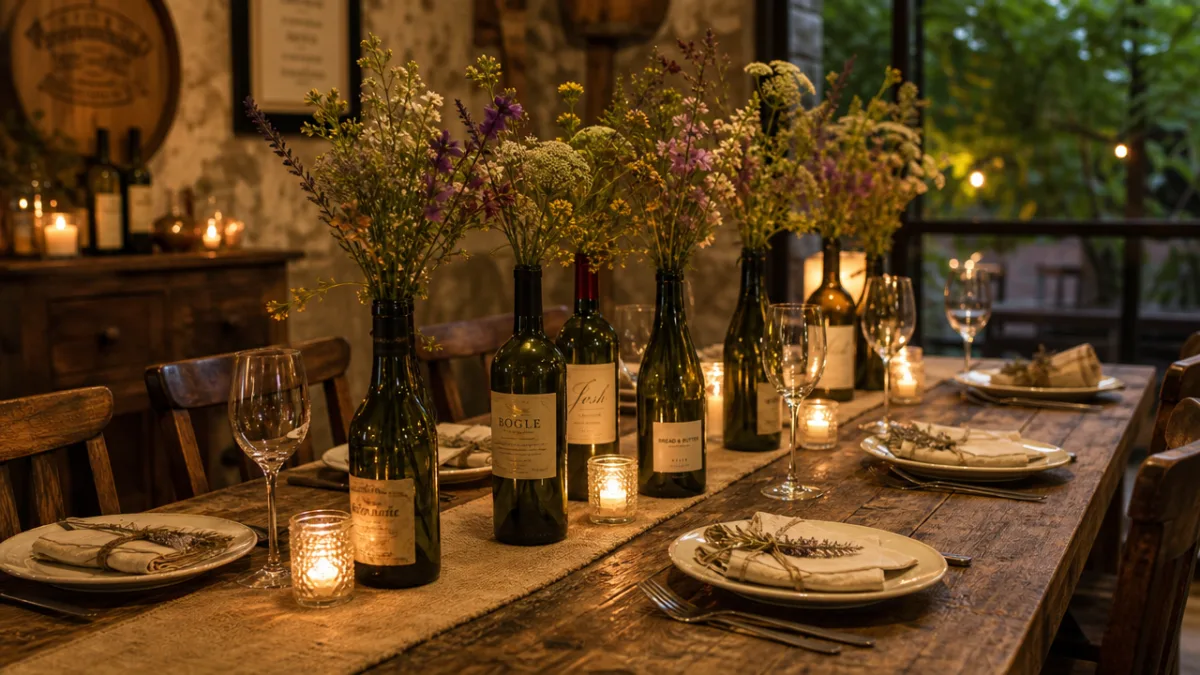
One of the easiest places to start is turning a wine bottle into a vase or centerpiece — and you don’t even need to cut anything. A clean, label-free bottle filled with fresh flowers, dried botanicals, or a few interesting branches can look genuinely lovely on a dining table or mantelpiece. Want something a little more polished? Wrap it in twine, brush on some chalk paint, or hit it with metallic spray paint to tie it into the rest of your space.
Candle holders and lanterns are another direction worth exploring. Carefully cut the bottom off a bottle and you’ve got a sleek glass chimney for a pillar candle. Or just drop a long taper candle into the neck of an intact bottle for an instant rustic candlestick — the kind that looks really at home at a dinner party or on a windowsill. Glass does something wonderful with candlelight, diffusing it into this warm amber glow that’s hard to get from anything you’d buy at a store.
If you’re up for something more involved, wine bottles can become mosaic bases, hand-painted art pieces, or etched glassware using craft store etching cream. Etching lets you add monograms, patterns, botanical designs, or meaningful quotes right onto the surface of the glass — and the results look surprisingly professional. These make genuinely thoughtful gifts: housewarming presents, wedding favors, birthday surprises for wine lovers. The kind of thing people actually keep.
Creative Wine Bottle Lighting Projects
Turning a wine bottle into a light is one of those projects that looks way more impressive than the effort required. Feed a string of battery-powered fairy lights through the neck, coil them inside, and the effect is genuinely magical — especially through deep green or cobalt blue glass, where the light scatters into something moody and jewel-toned. It’s perfect for a bedroom nightstand, a patio table, or festive holiday decor, and honestly it takes just a few minutes to put together.
For the more ambitious DIYers, wine bottles can become pendant lamp shades or chandelier fixtures. Cut the bases off a cluster of bottles, thread them onto a central lighting rig, and you’ve got a dramatic pendant light for a kitchen island or dining room — the kind of piece that genuinely stops people mid-conversation. This type of fixture regularly sells for hundreds of dollars at boutique home stores. With some basic electrical knowledge or a kit from a craft supplier, it’s completely doable at home.
Solar-powered lighting is another great option, especially if you have outdoor space to work with. Fill a bottle with water and a few drops of food coloring, cap it with a solar cork light (widely available at garden centers), and you’ve got a colorful garden lantern that charges itself during the day and glows at night. Stake them into garden beds, line them along a path, or hang them from tree branches. Seal them properly and they’re essentially weatherproof and maintenance-free — just set them out and enjoy.
Wine Bottles in the Garden: Functional and Beautiful Uses
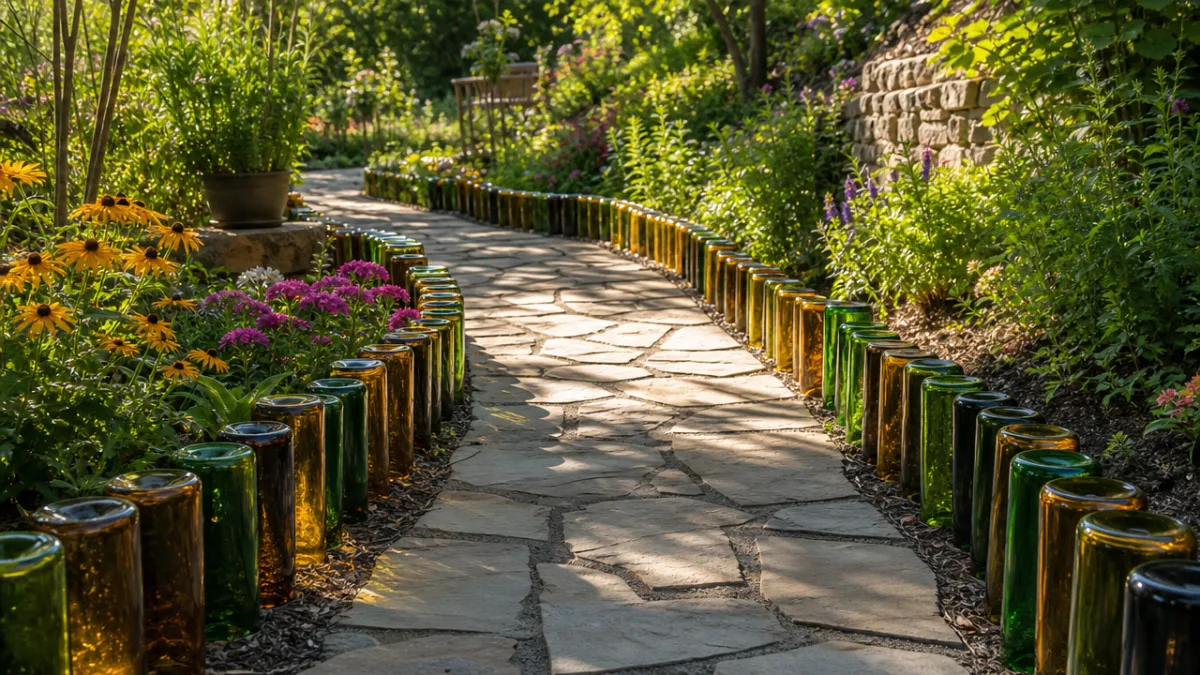
The garden might actually be where wine bottles shine the most — there are so many ways to use them, both practical and purely decorative. A classic move is using them as garden bed edging: bury the bottles neck-first in a line along the border of a bed or pathway, leaving just the rounded bottoms sticking up. Alternate green, amber, and clear glass for a playful pattern, or stick to one color for something cleaner and more contemporary. Either way, it’s a surprisingly durable and eye-catching border.
Wine bottles also make clever self-watering planters. Cut a bottle in half, invert the top portion into the base, and you’ve got a simple wicking system — water slowly drips from the upper reservoir into the soil below. It’s a great setup for herbs like basil, mint, and parsley that like consistent moisture but don’t always get daily attention. The soil sits in the upper section while the lower half acts as a reservoir you refill every few days, depending on the plant and the weather.
Then there are bottle trees — a folk art tradition with deep Southern roots that’s absolutely worth reviving. Slide empty wine bottles over the branches of a bare tree or a set of metal rods arranged in a tree shape, and you get this shimmering, clinking, colorful outdoor sculpture. Traditionally, they were thought to trap evil spirits, but these days people make them purely for the joy of it. Backlit by afternoon sun filtering through the glass, a well-made bottle tree is genuinely spectacular.
And here’s perhaps the simplest garden trick of all: fill a clean bottle with water, put your thumb over the opening, flip it upside down, and push the neck a few inches into the soil near a plant’s roots. As the surrounding soil dries, water seeps out slowly — a surprisingly effective slow-release irrigation system. It’s especially handy when you’re heading out of town or managing containers on a hot balcony. No tools, no cuts, no prep. Just a bottle and some water.
Wine Bottle Crafts for Gifts and Special Occasions
A repurposed wine bottle makes an unusually thoughtful gift — there’s a story built into it, and that sense of care comes through in a way that a mass-produced present just can’t replicate. For a birthday, try filling a painted bottle with homemade infused olive oil, flavored vinegar, or a batch of limoncello, then finishing it with a handwritten label and some ribbon. It looks artisan, it’s genuinely useful, and it costs a fraction of what you’d pay at a specialty food shop.
For weddings or anniversaries, wine bottles can become beautiful time capsule vessels. A couple writes letters to each other, rolls them up, and seals them inside a decorated bottle — sometimes with a small amount of wine — with the plan to open it on a future anniversary, often the fifth or tenth. It’s a deeply sentimental tradition that requires very little beyond a clean bottle, some craft supplies, and something meaningful to put inside. Wedding guests can contribute notes too, turning it into a lovely collaborative keepsake.
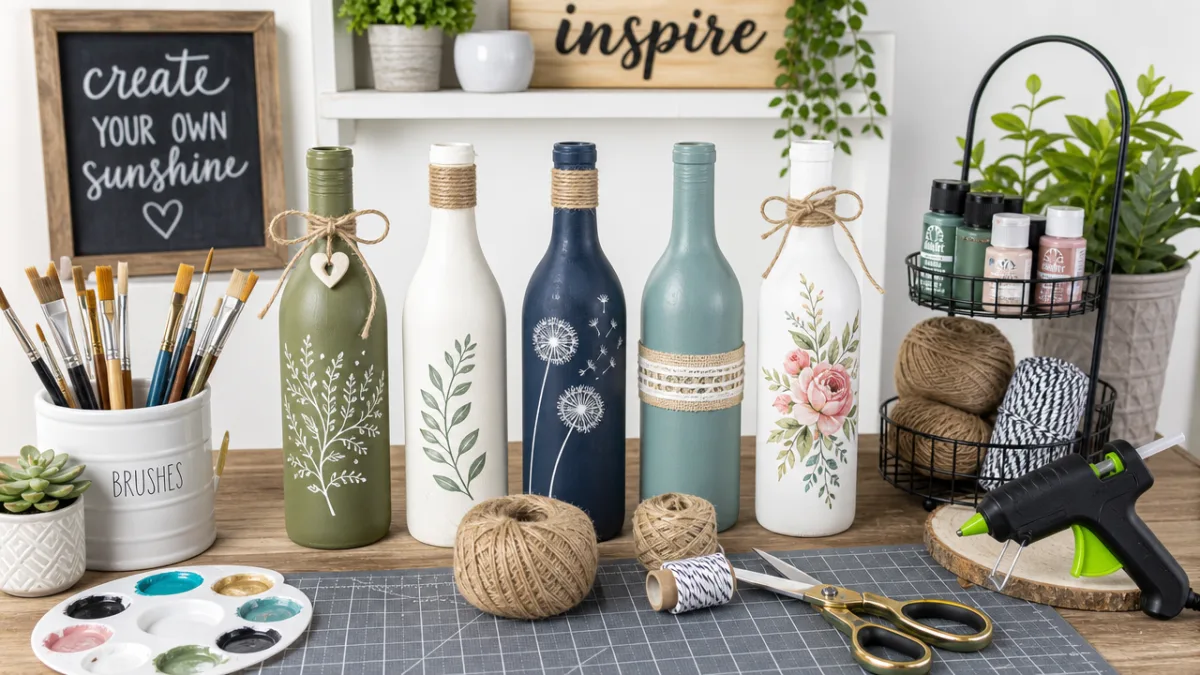
At the holidays, wine bottles are endlessly useful. Paint them with seasonal motifs — snowflakes, stars, holly, abstract color washes — and scatter them around the house as decorations. Use them as packaging for homemade sauces, spirits, or holiday treats, dressed up with wax seals, handmade tags, and natural twine. A set of three bottles in graduating sizes, painted in a coordinating seasonal palette, makes an affordable centerpiece that’s striking enough to bring out year after year.
Tips, Tools, and Safety for Wine Bottle Upcycling
Before you dive into any project, take a few minutes to prep your bottles properly. Wash and dry them thoroughly, and soak off labels with warm soapy water — a little cooking oil or nail polish remover helps with stubborn adhesive residue. A clean, label-free surface matters a lot for painting, etching, or any project where the finish will show. While you’re at it, check each bottle for chips or cracks. Even small flaws can cause unexpected shattering when you’re cutting glass or putting it through temperature changes.
If you need to cut a bottle, the most reliable method for home crafters is a dedicated glass bottle cutter — a simple scoring device that runs a clean line around the circumference. They cost under twenty dollars at most craft stores or online. After scoring, you alternate hot and cold water along the line to create thermal stress, which produces a clean break. Once cut, the edges need to be sanded down with wet/dry sandpaper, working through progressively finer grits until there are no sharp burrs left.
Safety is worth taking seriously with glass. Wear safety glasses whenever you’re cutting, drilling, or sanding — glass particles are no joke. Use heavy-duty gloves when handling freshly cut edges before they’ve been smoothed. For drilling drainage holes, use a diamond-tipped bit made specifically for glass, keep water running over the surface while you work to prevent overheating, and apply gentle, steady pressure. Most breakage and most injuries in glass upcycling happen when people rush. Slow down and it’s really quite manageable.
Here are some of the most useful tools and supplies to keep on hand for wine bottle upcycling projects:
- Glass bottle cutter or diamond-tipped scoring tool for clean, controlled cuts around the circumference
- Wet/dry sandpaper in grits from 80 to 400 for smoothing cut edges from coarse to fine
- Diamond-tipped drill bits in various sizes for drilling drainage or threading holes
- Glass etching cream and adhesive stencils for decorative surface designs and personalization
- Chalk paint and acrylic craft paint, which adhere well to glass without primer in most applications
- Natural twine, jute rope, and raffia for wrapping and adding texture to bottle exteriors
- Battery-powered fairy lights and solar cork lights for lighting projects requiring no hardwiring
- Safety glasses and heavy-duty work gloves for all cutting, drilling, and sanding steps
One last thing worth mentioning: these projects are genuinely fun to do with other people. A crafting evening with friends, a family project with older kids, a community workshop — a collection of bottles, some paint, and a few tools turns into a great shared experience pretty quickly. Lots of community centers, libraries, and local arts organizations run upcycling workshops for exactly this reason: they’re accessible, low-cost, and everyone goes home with something real. Share what you make on social media or Pinterest and you might inspire someone else to look at their empty bottles a little differently.








What do you think?
It is nice to know your opinion. Leave a comment.