










Handmade Vintage Teacup Candles: Where Antique Charm Meets Artisan Craft
The Art of Teacup Candle Making: A Revival of Forgotten Beauty
There is something deeply moving about holding a delicate vintage teacup in your hands and imagining the stories it might tell — the morning rituals it witnessed, the conversations it accompanied, the generations of hands that cradled its porcelain curves. When skilled artisans transform these storied vessels into handcrafted candles, they breathe new life into objects that might otherwise fade into obscurity, creating something that honors the past while filling the present with warmth, fragrance, and light. This beautiful marriage of preservation and creativity has given rise to one of the most beloved trends in artisan home décor.
Handmade vintage teacup candles are not simply novelty items or decorative curiosities. They represent a genuine craft tradition that demands patience, an eye for beauty, and a deep respect for materials both old and new. Each cup must be carefully sourced, evaluated for structural integrity, cleaned, and prepared before a single drop of wax ever touches its surface. The artisan’s relationship with each vessel begins long before the candle-making process does, often with hours spent searching through antique markets, estate sales, thrift shops, and private collections in search of pieces with just the right character and charm.
What makes these candles truly extraordinary is their irreproducibility. Because every vintage teacup is unique — shaped by different hands, fired in different kilns, decorated by different painters across different eras — no two teacup candles will ever be exactly alike. A floral Wedgwood cup will yield a completely different aesthetic experience from a gold-rimmed Art Deco demitasse or a whimsical transferware piece printed with pastoral English scenes. Collectors and candle lovers alike are drawn to this inherent singularity, knowing that what they hold is genuinely one of a kind.
Selecting the Perfect Vintage Vessel: A Curator’s Eye
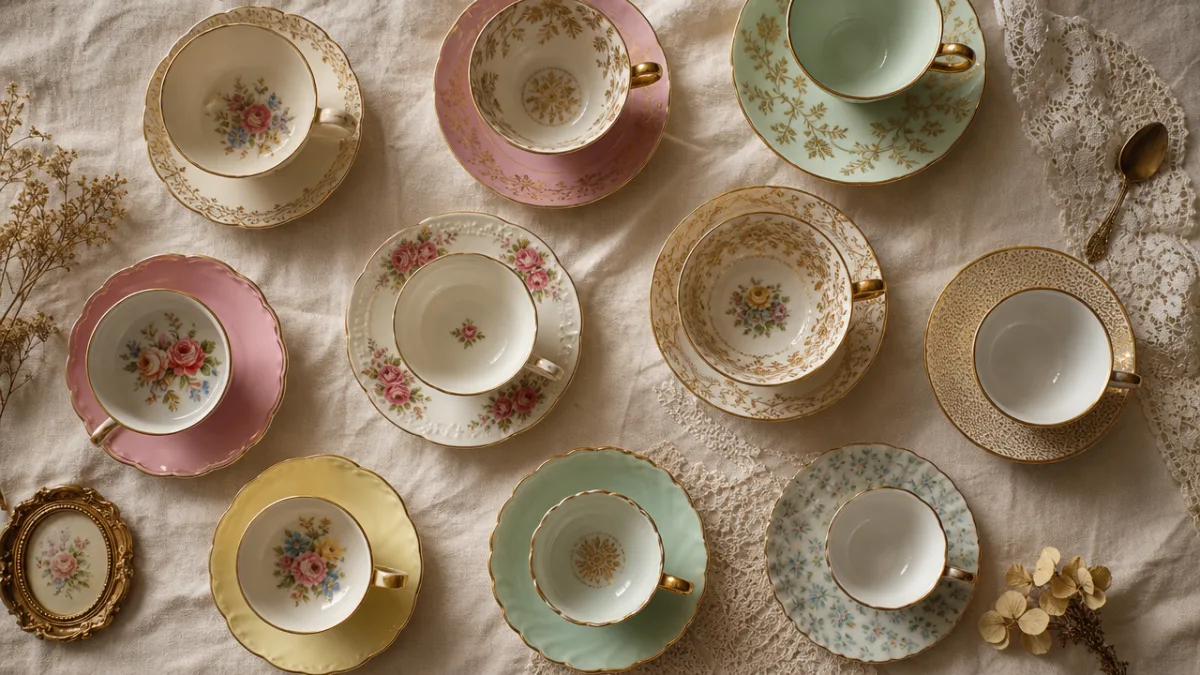
The selection process is arguably the most critical and time-intensive part of creating a teacup candle worthy of the name. Experienced artisans approach this stage with the discernment of a museum curator, examining each potential vessel not only for aesthetic appeal but for functional suitability. A beautiful cup with a hairline crack, for instance, may be visually stunning but structurally unsafe to use as a candle container, since the heat generated by a burning wick can cause even microscopic fractures to expand and compromise the piece. Safety and beauty must go hand in hand at every stage of the process.
The era and origin of each piece matter enormously to both maker and buyer. Victorian-era teacups, with their elaborate hand-painted florals and gilded rims, evoke one kind of romance entirely; mid-century modern cups in bold geometric patterns tell a completely different story. Some artisans specialize in particular periods or manufacturers — collecting nothing but Limoges porcelain, for example, or focusing exclusively on transferware from English potteries — while others embrace eclecticism, celebrating the rich diversity of ceramic traditions from around the world. Either approach can yield breathtaking results when executed with care and intentionality.
Beyond visual and historical considerations, artisans must also think practically about the interior dimensions of each cup. The diameter of the opening determines which wick sizes are appropriate; too narrow and the flame will struggle for oxygen, too wide and it may burn unevenly or dangerously. The depth of the cup affects burn time and how the fragrance develops as the wax pool gradually deepens. Cups with unusual shapes — slightly flared rims, tapered bases, or lipped edges — present particular challenges and opportunities that skilled makers have learned to navigate through experience and careful observation.
The Botanicals, Herbs, Spices, and Fruits: Nature’s Own Perfumery
One of the most enchanting aspects of artisan teacup candles is the thoughtful incorporation of natural botanicals, dried herbs, whole spices, and preserved fruits into both the wax itself and the decorative presentation of the finished piece. This practice draws on centuries of herbalist and apothecary tradition, when plants were understood not merely as sources of fragrance but as carriers of meaning, memory, and even healing properties. Lavender for calm, rosemary for remembrance, cinnamon for warmth and abundance — the language of botanicals runs deep in human culture, and the best artisan candlemakers understand and honor that language.
The selection of botanicals is never arbitrary. Each combination is deliberately composed to complement both the visual aesthetic of the chosen cup and the fragrance profile of the wax blend. A romantic floral teacup might be adorned with dried rose petals, tiny chamomile blossoms, and a sprig of lavender, while a more rustic, earthy vessel might feature star anise, dried orange slices, whole cloves, and sprigs of rosemary. The result is something that engages all the senses simultaneously — it is beautiful to look at, fragrant to smell, and tactile in its richness of texture and detail.
Artisans who work with botanicals must develop a sophisticated understanding of how different plant materials behave when they come into proximity with heat and wax. Some flowers retain their color and form beautifully; others char or discolor if placed too close to the wick. Certain herbs release additional fragrance as the candle burns, intensifying and evolving the scent experience in delightful and unexpected ways. Citrus peel and dried fruit slices can add stunning visual dimension to the surface of a candle while contributing their own subtle aromatic notes. Getting these details right requires extensive experimentation and a genuine love of the materials.
The specific botanicals commonly featured in this style of artisan candle include a rich and varied palette drawn from gardens, orchards, and spice routes across the globe. Among the most beloved choices are dried lavender buds, rose petals and rosebuds, chamomile flowers, calendula petals, star anise pods, cinnamon sticks and chips, whole cloves, cardamom pods, dried orange and lemon rounds, bay leaves, sprigs of rosemary and thyme, juniper berries, dried cranberries, and tiny dried strawberries. Each brings its own character to the composition, and the skill lies in combining them in proportions that feel balanced, intentional, and genuinely beautiful.
Wax Selection and Fragrance Development: The Science Within the Art
Behind every beautiful teacup candle lies a carefully considered set of technical decisions that determine how the candle performs — how cleanly it burns, how strongly it throws its fragrance, how evenly the wax pool develops over repeated use. Artisan candlemakers who take their craft seriously invest significant time in understanding the chemistry of different wax types and how they interact with fragrance oils, essential oils, dyes, and the botanical additives that give these candles their distinctive character. This knowledge separates a truly well-crafted candle from one that is merely pretty to look at.
The most popular wax choices among artisan makers working in the vintage teacup format include natural soy wax, beeswax, coconut wax, and various blends that combine the best properties of each. Soy wax, derived from hydrogenated soybean oil, is beloved for its clean burn, excellent fragrance throw, and sustainable sourcing. Beeswax offers a naturally warm, honey-like undertone and produces a beautiful glow when lit, but its higher melting point and cost make it a more specialized choice. Coconut wax is praised for its exceptionally creamy texture and superior scent throw, though it tends to be softer and more susceptible to temperature fluctuations during shipping and storage.
Fragrance development is where candlemaking becomes most personal and expressive. Some artisans work exclusively with pure essential oils, prizing their natural origins and therapeutic associations; others blend essential oils with high-quality fragrance oils to achieve complexity and longevity that pure essential oil blends sometimes struggle to maintain through the full burn life of a candle. The most compelling fragrance profiles for botanical teacup candles tend to be layered and nuanced — a base of warm amber or sandalwood supporting middle notes of spiced orange or cinnamon, lifted by top notes of lavender or bergamot. These compositions unfold gradually as the candle burns, rewarding attentiveness and creating a dynamic olfactory experience rather than a static one.
The Making Process: Steps of a Thoughtful Handcraft
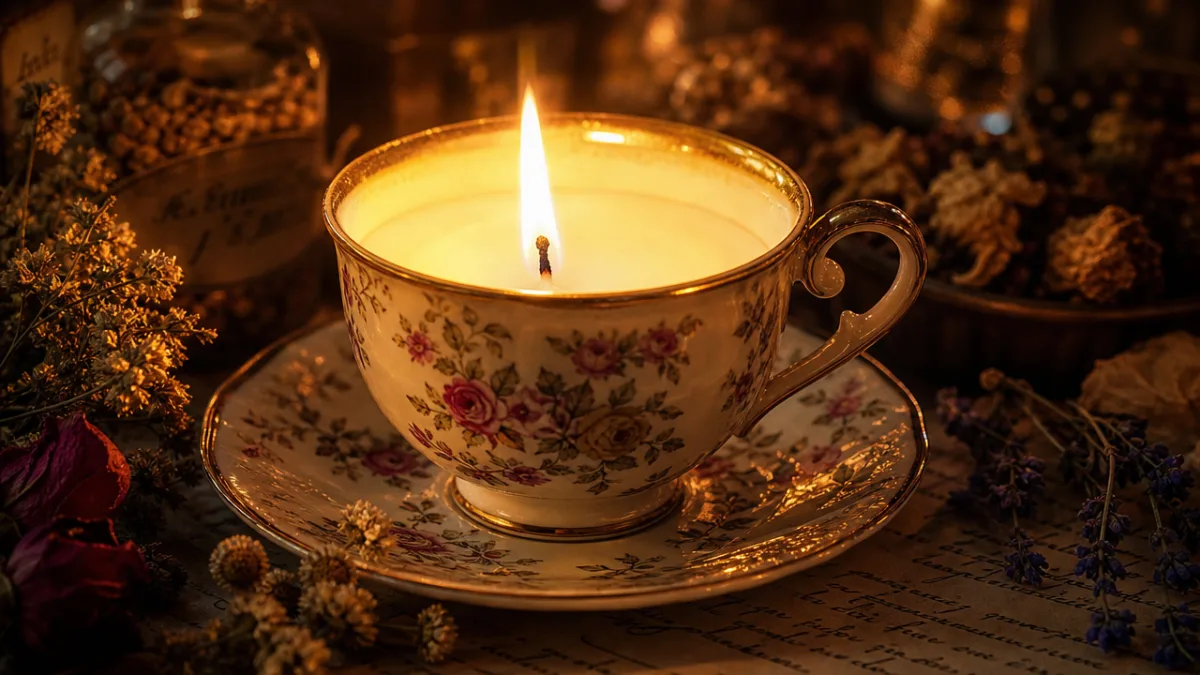
Understanding the steps involved in creating a high-quality vintage teacup candle gives buyers a deeper appreciation for the care and time invested in each piece. While every artisan develops their own methods and preferences over time, certain foundational steps remain consistent across the craft. The process is simultaneously meditative and demanding, requiring sustained attention to detail from the first moment of vessel selection through to the final decorative flourish of a well-placed botanical or a neatly tied ribbon around the saucer.
The general stages of the teacup candle making process typically unfold as follows. First, the artisan carefully cleans and prepares the vintage teacup, removing any dust, residue, or previous adhesive traces. Next, the appropriate wick is selected based on the cup’s diameter and depth, then centered and secured at the base of the interior using a wick sticker or a small amount of hot glue, with the wick held upright by a centering tool laid across the rim. The chosen wax blend is then gently melted in a double boiler to the precise temperature recommended for that particular wax type, typically between 160 and 185 degrees Fahrenheit for soy-based blends. Fragrance oils or essential oils are added at the correct temperature and stirred slowly and thoroughly to ensure full incorporation without introducing air bubbles. The scented wax is then poured into the prepared cup at the appropriate pouring temperature, and the candle is left undisturbed to cool slowly at room temperature — never in a refrigerator, which can cause the surface to crack or develop sinkholes. Once fully set, botanicals are arranged on the surface using a small amount of additional melted wax as adhesive, and the wick is trimmed to approximately a quarter inch above the wax surface.
Quality control is an ongoing part of the process rather than a single final step. Responsible artisans burn test every new wax and fragrance combination, monitoring how the wax pool develops, whether the flame height is safe and consistent, whether any mushrooming occurs on the wick, and how the fragrance projects into the room at various stages of the burn. These tests can take weeks to complete properly, since a candle must be evaluated through multiple burn sessions of appropriate length to assess its full performance over its entire life. Only after passing these tests does a particular combination of vessel, wax, fragrance, and wick earn its place in an artisan’s collection.
Caring for Your Vintage Teacup Candle: Making the Magic Last
A beautifully crafted vintage teacup candle deserves thoughtful care from the moment it enters your home. Unlike mass-produced container candles, which are designed for straightforward use and disposal, a teacup candle is a dual-purpose object — both a functional candle and an antique or vintage keepsake that can and should outlast the wax it contains. With proper care, the teacup itself becomes a lasting memento of a particular aesthetic sensibility, ready to be repurposed, refilled, or simply displayed long after the last flicker of the original candle has faded.
The first burn is the most important burn of a teacup candle’s life, and experienced users know to treat it with particular care. Candle wax has what makers call a “memory” — on the first burn, the wax pool must be allowed to reach the edges of the container before the candle is extinguished, or the wax will tend to tunnel downward through subsequent burns, leaving a ring of unmelted wax around the sides and dramatically shortening the candle’s usable life. For a teacup candle, this typically means allowing the first burn to continue for two to three hours, depending on the cup’s diameter. This patient approach rewards the owner with even, beautiful burns for the remainder of the candle’s life.
Once the wax is fully consumed, the teacup itself can be given a second life in any number of charming ways. A few practical and beautiful options for repurposing an emptied teacup candle vessel include using it as a small planter for a succulent or air plant, transforming it into a ring dish or jewelry holder for a dressing table, repurposing it as a decorative holder for small office supplies like paper clips or push pins, displaying it as a standalone decorative object on a shelf or windowsill, or even having it professionally refilled with new wax by the original artisan. Many makers actively encourage and support this last option, seeing it as a natural extension of their commitment to sustainability and the preservation of beautiful vintage objects. The life cycle of a truly well-loved teacup candle is one of ongoing reinvention — much like the teacup itself, which has already survived so many transformations before arriving in your hands.

Why These Candles Matter: Sustainability, Slow Living, and Soulful Objects
In a world increasingly dominated by fast fashion, mass production, and disposable goods, handmade vintage teacup candles stand as a quiet but meaningful act of resistance. Every teacup rescued from a thrift store shelf or antique market table is one fewer piece of history consigned to a landfill. Every candle poured by hand in small batches rather than manufactured by the thousands in a factory represents a choice to value quality, intentionality, and human skill over speed and convenience. These are not just candles; they are small, luminous arguments for a different way of consuming and relating to the objects in our lives.
The slow living philosophy that underlies this craft resonates deeply with a growing community of people who are consciously choosing to surround themselves with fewer, more meaningful objects rather than accumulating endless quantities of cheap and forgettable things. A vintage teacup candle invites you to slow down — to notice the particular blue of a Delft-patterned cup, to appreciate the warmth that pools in the curve of a gilded handle, to breathe in the complex fragrance of a botanically adorned wax blend as it mingles with the air of your home. These small moments of sensory awareness are increasingly understood as essential to human wellbeing, and artisan makers who craft these objects are, in their own way, offering a form of care.
Supporting independent artisan candlemakers who create pieces like these carries genuine economic and cultural significance beyond the simple pleasure of the purchase itself. When you buy from a small maker, you are sustaining a practice of craft that cannot easily be automated or replicated at scale — one that depends on the accumulated knowledge, aesthetic sensibility, and personal passion of an individual human being. You are also participating in a broader economy of care, one in which objects are made with the buyer’s enjoyment and wellbeing genuinely in mind rather than as an afterthought to profit margins and production targets. The best artisan teacup candles carry something of their maker’s personality and love within them, and that invisible quality is precisely what makes them irreplaceable.
If you are new to the world of artisan teacup candles and wondering where to begin, a few guiding principles will help you find pieces that are both beautiful and well-made. Look for makers who are transparent about their materials, including wax type, fragrance sources, and botanical origins. Seek out sellers who provide clear burn instructions and genuine customer support. Pay attention to the quality of the vessel selection — a maker who chooses teacups with real character and history demonstrates a depth of commitment to the craft that will be reflected in every other aspect of their work. And above all, trust your own aesthetic instincts: the teacup candle that calls to you from across a market table or a website gallery, the one whose colors and fragrance description seem to speak your language, is almost certainly the right one to bring home.








What do you think?
It is nice to know your opinion. Leave a comment.