










The Grand Revival: Fashion Trends Making a Stunning Comeback
Fashion has always operated in cycles, and right now we are witnessing one of the most exciting revivals in recent memory. Trends that your parents wore, that you may have spotted in dusty photo albums or vintage Hollywood films, are surging back onto runways, sidewalks, and social media feeds with remarkable force. The fashion world’s relationship with nostalgia is not simply sentimental — it is a sophisticated conversation between past and present, where designers reimagine beloved aesthetics through a contemporary lens.
What makes this particular moment in fashion so compelling is the sheer diversity of eras being drawn upon simultaneously. From the wide-leg trousers of the 1970s to the bold geometric prints of the 1980s and the slip dresses of the 1990s, today’s style landscape is a rich collage of decades gone by. Shoppers are no longer confined to a single aesthetic identity — they can mix and match influences freely, creating looks that feel both timeless and thoroughly modern at the same time.
Social media platforms, particularly Pinterest and TikTok, have acted as powerful accelerators for these revivals, connecting younger generations with vintage inspiration they might never have encountered otherwise. A single viral post can resurrect a forgotten silhouette overnight, turning thrift stores into treasure hunts and inspiring fast-fashion retailers to scramble and produce updated versions of classic pieces. The result is a fashion ecosystem that rewards curiosity, creativity, and a willingness to look backward in order to dress forward.
Why Nostalgia Drives Modern Style Choices
Psychologists and fashion historians alike have noted that nostalgia-driven dressing tends to surge during periods of cultural uncertainty or rapid change. When the world feels unpredictable, people gravitate toward the comfort of the familiar — the silhouettes, textures, and color palettes that carry an emotional warmth. Wearing something reminiscent of a cherished past era can function almost like a form of emotional armor, grounding the wearer in a sense of continuity and identity when everything else feels in flux.
For younger consumers who did not actually live through the decades they are currently romanticizing, the appeal is slightly different but equally powerful. Generation Z, for instance, has embraced 1990s and early 2000s fashion with genuine enthusiasm, drawn to an era they know primarily through film, television reruns, and the carefully curated archives of influencers. There is a certain freedom in loving an aesthetic without the baggage of having actually experienced it — the rough edges get smoothed away, leaving only what feels cool, interesting, and worth reviving.
Sustainability also plays a meaningful role in the nostalgia trend. As consumers become more conscious of fashion’s environmental impact, vintage and secondhand shopping have gained serious cultural cachet. Wearing retro-inspired pieces — whether genuine vintage finds or newly manufactured throwbacks — aligns with a broader desire to reject the disposability of fast fashion in favor of something that feels more considered and enduring. The past, in this sense, becomes not just stylistically appealing but ethically resonant as well.

Bell Bottoms, Wide Legs, and the Return of Seventies Silhouettes
Few trends have made as dramatic a reentrance as the wide-leg trouser and its more exuberant cousin, the bell bottom. Originally synonymous with the free-spirited culture of the 1970s — the era of disco, Woodstock, and liberation movements — these voluminous, floor-grazing silhouettes disappeared for decades beneath the tyranny of skinny jeans. Now they are back with extraordinary confidence, championed by celebrities, street style stars, and major fashion houses from Paris to Milan to New York.
What makes the wide-leg trouser so universally flattering and enduringly popular is its remarkable versatility. Dressed up with a structured blazer and block-heeled mules, it becomes an effortlessly chic office look. Paired with a cropped knit top and platform sneakers, it slides seamlessly into casual weekend territory. The silhouette creates a long, elegant line through the body while offering the kind of physical freedom that skinny styles simply cannot match — a combination that resonates powerfully with consumers who want fashion to feel as good as it looks.
Designers have updated the 1970s blueprint with contemporary fabrics and details that keep the look feeling fresh rather than costumey. You will find wide-leg trousers in technical fabrics alongside heritage tweeds, in bold animal prints as well as quiet neutrals, with raw hemlines and precise tailoring both represented. The breadth of interpretations available means that virtually anyone can find a wide-leg style that suits their body, their budget, and their personal aesthetic sensibility, making this one of the most democratic and accessible trends of the current fashion cycle.
How to Style Wide-Leg Trousers for Every Occasion
Mastering wide-leg trousers is partly a matter of proportion. Because the leg is so full and generous, the upper half of the outfit typically benefits from something more fitted — a tucked-in blouse, a slim-cut turtleneck, or a cropped jacket that hits at or above the natural waist. This balancing act creates the kind of visual harmony that makes an outfit look intentional rather than accidentally oversized. High-waisted styles are particularly effective because they visually elongate the leg and emphasize the waist in the most flattering way possible.
Footwear choices can make or break a wide-leg look, and this is where personal style really gets to shine. Heels — whether a strappy sandal, a pointed-toe pump, or a chunky platform — allow the trouser to skim the floor in the classic 1970s manner and add height beneath all that fabric. Flat footwear works beautifully too, but requires the trouser to be hemmed precisely to graze the top of the foot without dragging. Loafers, ballet flats, and structured ankle boots have all proven themselves wonderful companions for the wide-leg silhouette in its current revival.
Color and print choices further expand the range of moods achievable with this silhouette. Earthy tones like rust, mustard, chocolate brown, and olive feel authentically 1970s and are rich and warm for autumn and winter dressing. Crisp white and ecru wide-leg trousers bring a breezy, elegant energy to warmer months. Floral prints, particularly those with a slightly vintage graphic quality, honor the original spirit of the era while maintaining a sense of modernity that keeps the overall look from tipping into pure costume territory.

The Denim Revolution: Vintage Washes and Unexpected Cuts
Denim is perpetually in style, but the specific ways in which we wear it shift dramatically from decade to decade, and right now vintage-inspired denim is having an extraordinary moment. The clean, dark, ultra-skinny styles that dominated the 2000s and 2010s have given way to something far more textured and characterful — acid washes, distressed finishes, light stonewash effects, and medium-blue rinses that evoke the authentic aged quality of genuinely old jeans. The denim of the moment looks like it has lived a life, and that lived-in quality is precisely the point.
Cut diversity in denim has never been more exciting than it is today. Alongside the returning wide-leg and flare styles, barrel-leg jeans — wide through the hip and thigh before tapering slightly at the ankle — have become a major trend, offering a relaxed, generous silhouette with just enough structure to feel polished. Straight-leg styles reminiscent of 1980s and 1990s silhouettes are ubiquitous, often worn with a slightly high-rise waist that echoes the proportions beloved by that era’s most iconic dressers. Even the humble mom jean, once considered the antithesis of stylishness, has been fully rehabilitated.
Denim beyond the trouser is also flourishing in this revival moment. Denim jackets — particularly oversized, slightly boxy styles with visible stitching and contrast detail — are everywhere, often layered over floral dresses or matching denim pieces in full double-denim looks that would have felt risky just a few years ago. Denim skirts, both mini and midi length, have returned with particular force, frequently featuring front button plackets and raw-cut or frayed hemlines that add an artisanal, handcrafted quality to even the most straightforward outfit.
Building a Vintage Denim Wardrobe That Lasts
Investing in quality vintage-inspired denim is one of the wisest fashion decisions a consumer can make, precisely because this category of clothing genuinely improves with age and wear. Unlike trend-driven pieces that look dated within a season, a well-constructed pair of straight-leg jeans or a classic denim jacket will remain stylish and useful for years, even decades, with minimal care. When shopping for vintage-wash denim, look for construction details like reinforced seams, quality hardware on zippers and buttons, and a fabric weight that feels substantial rather than flimsy.
Thrift stores and vintage boutiques are genuinely excellent sources for authentic vintage denim, and the hunt itself has become a beloved ritual for many fashion enthusiasts. Finding a pair of Levi’s 501s from the early 1990s or a Lee denim jacket with its original hardware from the 1980s provides a satisfaction that no amount of newly manufactured product can replicate. The garments carry history in their fading and wear patterns, and that authenticity communicates something genuinely compelling about the wearer’s approach to style and consumption.
For those who prefer the convenience of new purchases, many contemporary denim brands now produce genuinely excellent vintage-inspired styles that use responsible manufacturing practices and quality materials. Brands focused on sustainability often use natural dyeing processes and organic cotton to create that desired aged look without the chemical-intensive washes historically used by the industry. This means shoppers can align their nostalgic aesthetic preferences with their ethical values, a combination that feels very much in the spirit of the current cultural moment.
Accessories Are Everything: The Return of Statement Pieces
If clothing represents the canvas of a vintage-inspired look, accessories are the brushstrokes that define its character and period authenticity. And right now, accessories are being approached with a boldness and exuberance that feels deeply liberating after years of minimalist restraint. Chunky gold chains, oversized hoop earrings, stacked bracelets, enormous sunglasses with tinted lenses, and structured handbags with prominent hardware are all having extraordinary moments, each drawing on the maximalist spirit of past decades when more was definitively more.
Bags deserve particular attention in any discussion of the current vintage revival. The structured top-handle bag — associated with the ladylike elegance of the 1960s and the power dressing of the 1980s — has returned to immense popularity, appearing everywhere from luxury fashion houses to high street retailers. Equally triumphant is the mini bag trend, which recalls both 1990s club culture and the tiny evening bags of earlier decades. Woven, beaded, and embroidered bags bring a handcrafted quality that aligns with both the vintage aesthetic and the growing appreciation for artisanal production methods.
Scarves, once considered the exclusive domain of grandmothers and flight attendants, have undergone a complete cultural rehabilitation. Worn tied around the head in a 1970s peasant-blouse manner, knotted at the neck in the manner of a 1950s starlet, draped over one shoulder in a 1990s supermodel style, or even tied onto a handbag as a decorative flourish, the silk or printed scarf has become one of the most versatile and beloved accessories of the current moment. Its appeal spans generations and aesthetics, making it a truly universal component of the vintage revival.
Key Vintage-Inspired Accessories to Add to Your Collection
Building a collection of vintage-inspired accessories requires thinking about impact per piece rather than accumulating volume. A single pair of genuinely spectacular earrings — perhaps oversized sculptural hoops or dramatic chandelier styles reminiscent of 1980s maximalism — can transform even the simplest contemporary outfit into something that feels considered and stylish. Similarly, one excellent structured bag in a classic color like camel, black, or burgundy will serve an enormous range of looks across multiple seasons without ever feeling tired or irrelevant.
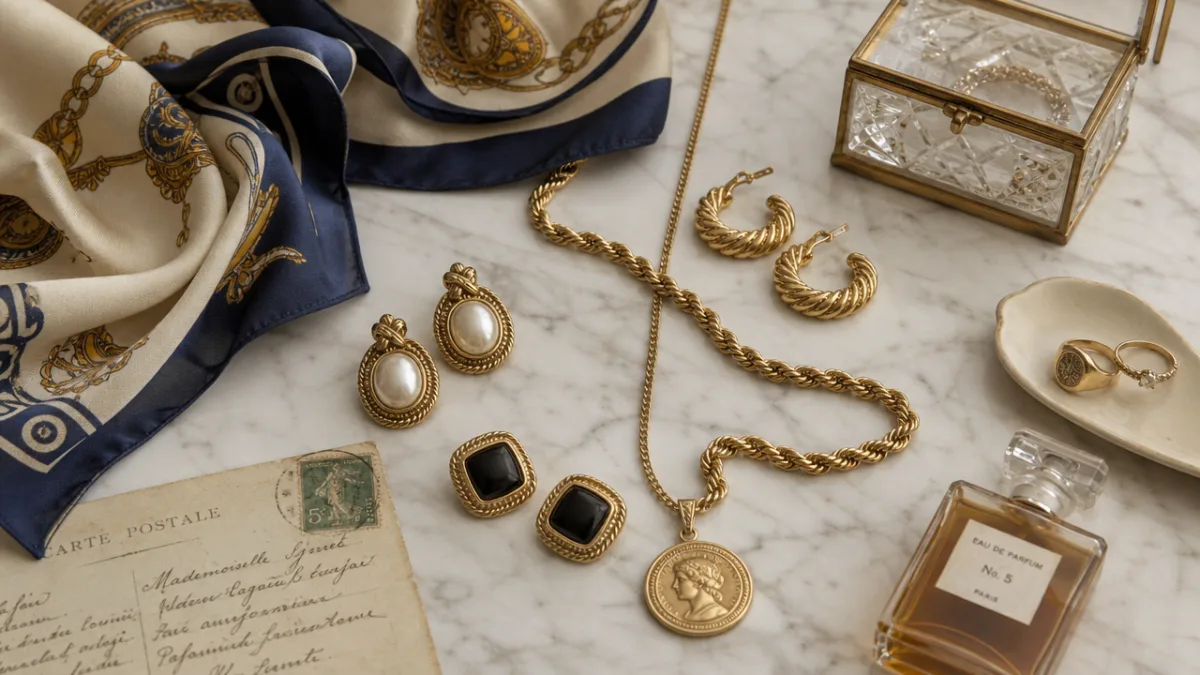
- Chunky gold chains: Whether worn as necklaces, belts, or bag straps, thick chain details reference both 1970s and 1990s aesthetics and add immediate visual weight and richness to any outfit.
- Tinted sunglasses: Oval, round, or shield-shaped frames with amber, green, or soft rose lenses carry an unmistakable retro quality while remaining wholly contemporary and practical.
- Silk headscarves: Versatile enough to be worn a dozen different ways, a beautiful printed silk scarf is one of the highest-value additions any style-conscious person can make to their accessories wardrobe.
- Platform shoes: Chunky platform boots and mules recall both 1970s and 1990s footwear trends and have the practical benefit of adding height without the discomfort of a traditional stiletto.
- Beaded and embroidered bags: These handcrafted pieces bring texture, color, and artisanal quality to any look while nodding to the decorative exuberance of multiple past decades.
Jewelry layering — the practice of wearing multiple necklaces, rings, or bracelets simultaneously to create a rich, eclectic effect — is another signature move of the current vintage revival. Inspired partly by the jewelry stacking of the 1970s bohemian movement and partly by the maximalist excess of 1980s power dressing, layered jewelry allows wearers to tell a complex visual story through pieces that may come from different eras, different cultural traditions, and different personal histories. The result feels less like following a trend and more like building a personal archive of meaningful objects.
Making Vintage Work for Your Personal Style Today
The most important thing to understand about the current vintage revival is that it is not about costume or faithful historical recreation — it is about selective borrowing, intelligent translation, and personal curation. The goal is never to look as though you stepped out of a time machine but rather to absorb the spirit and energy of a beloved era and integrate it with the reality of contemporary life. This means mixing vintage-inspired pieces freely with thoroughly modern ones, trusting your own instincts about what works, and releasing any anxiety about getting the period references exactly right.
Successful vintage-inspired dressing almost always involves at least one element of surprise or subversion. A perfectly tailored 1970s-style wide-leg trouser suit worn with fresh white sneakers rather than platform heels. A 1990s slip dress layered over a fitted long-sleeve top and styled with chunky loafers rather than barely-there sandals. A 1980s-inflected oversized blazer worn as a dress with opaque tights and ankle boots. These combinations honor the vintage reference while firmly situating the look in the present, creating something that feels genuinely new rather than simply borrowed from the past.
Shopping for vintage-inspired pieces requires a slightly different mindset than conventional fashion shopping. Rather than seeking out this season’s exact hero pieces from a particular retailer, the most rewarding approach is to develop a clear sense of which eras and silhouettes resonate most strongly with your natural aesthetic preferences, then hunt across multiple sources — thrift stores, vintage boutiques, contemporary brands with strong archival references, and online resale platforms — to assemble pieces that work together on your own terms. This approach takes more time than simply buying a complete look from a single brand, but the results are invariably more personal and more satisfying.
A Practical Guide to Starting Your Vintage Revival Journey
Beginning to incorporate vintage-inspired pieces into your wardrobe can feel overwhelming given the sheer range of eras and aesthetics currently represented in fashion, so it helps to start with a single reference point that genuinely excites you. Perhaps you have always loved the effortless cool of 1990s minimalism, or the bohemian romance of 1970s festival dressing, or the bold graphic power of 1980s color and pattern. Starting with genuine enthusiasm for a specific aesthetic ensures that the pieces you acquire will actually be worn and loved rather than sitting unworn because they never quite felt authentically like you.
From that initial point of inspiration, research broadly and look closely at original examples of the aesthetic — films, photographs, magazine archives, and museum collections all offer invaluable context for understanding how an era’s fashion actually looked and functioned in practice. This research will help you distinguish between the elements of a vintage aesthetic that feel genuinely compelling and those that are better left in the past, and it will give you a more nuanced vocabulary for identifying quality vintage-inspired pieces when you encounter them in the wild rather than simply reaching for the most obvious interpretation of a trend.
Finally, patience and discernment are the most valuable tools in any vintage-inspired wardrobe builder’s kit. Resist the pressure to assemble an entire look immediately, and instead allow your collection to grow organically as genuinely exceptional pieces present themselves. The most enviable vintage-inspired wardrobes are not built in a single shopping spree but accumulated over months and years of careful looking, considered buying, and honest self-editing. Each piece should earn its place by being something you would genuinely reach for again and again — something that makes you feel, as the best fashion always does, like a more complete and expressive version of yourself.








What do you think?
It is nice to know your opinion. Leave a comment.