










Creative Crochet Ideas: Borders, Amigurumi & Upcycled Fashion
The Timeless Art of Crochet: A Creative Renaissance
Crochet has experienced a remarkable resurgence in recent years, evolving from a craft associated with grandmothers and doilies into a vibrant, contemporary art form embraced by makers of all ages. Across social media platforms like Pinterest and Instagram, millions of enthusiasts share their projects daily, fueling a global community united by yarn, hooks, and imagination. What was once considered a niche hobby has become a full-blown creative movement, blending tradition with innovation in the most beautiful ways.
At the heart of this revival is the recognition that crochet is not just a hobby but a deeply meditative and expressive practice. The rhythmic motion of the hook, the soft texture of yarn passing through your fingers, and the gradual emergence of a pattern from a simple chain all contribute to a sensory experience that many practitioners describe as genuinely therapeutic. Studies have linked repetitive hand crafts to reduced anxiety, improved focus, and even lowered blood pressure, making crochet not only creatively fulfilling but also beneficial to mental health.
What makes crochet particularly special in the modern crafting landscape is its extraordinary versatility. Unlike knitting, which requires two needles and a specific method, crochet uses a single hook and allows for three-dimensional construction with relative ease. From delicate lace shawls to chunky blankets, from miniature stuffed animals to bold fashion statements, the range of what can be achieved with basic crochet techniques is almost limitless. This versatility is precisely why the craft continues to attract new enthusiasts while retaining passionate long-time practitioners.
Mastering Decorative Crochet Borders
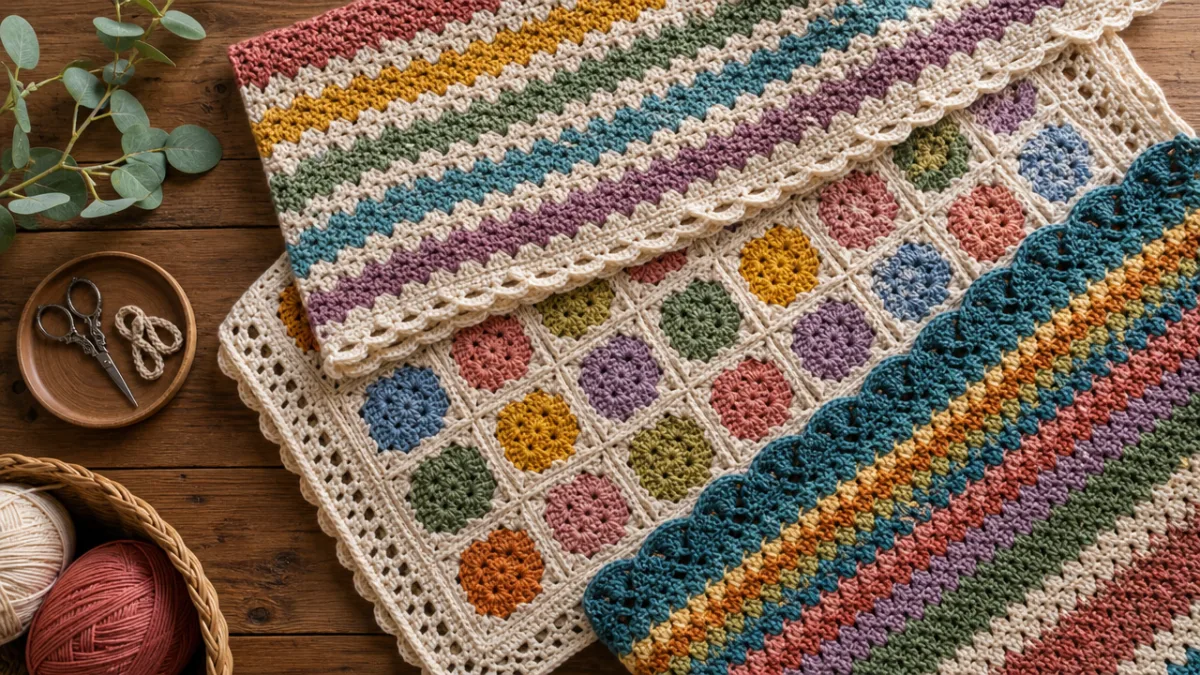
One of the most satisfying finishing touches a crocheter can add to any project is a well-chosen border. Whether you are completing a blanket, a garment, or a home décor piece, a decorative border transforms an ordinary edge into something polished, intentional, and visually striking. Borders serve both a practical and aesthetic purpose: they stabilize edges that might curl or stretch, and they add a layer of design complexity that elevates the entire piece. Even the simplest single crochet border can make a project look more professional and complete.
There is an astonishing variety of border styles available to crochet enthusiasts, ranging from the understated to the elaborately ornate. The classic shell border, formed by working multiple stitches into the same stitch or space, creates a lovely fan-like effect perfect for baby blankets and feminine shawls. The picot border, featuring small loops of chain stitches, adds a dainty, vintage quality that works beautifully on doilies and delicate accessories. For bolder, more modern aesthetics, spike stitch borders or crocodile stitch edging can create dramatic texture that commands attention.
Learning to add borders is also an excellent way for beginners to practice new stitches in a low-stakes context. Because borders are applied to a completed project, mistakes are easily unpicked and redone without losing significant work. This makes border practice an ideal experimental space where you can try shell clusters, bobble stitches, or even simple lace patterns without committing to an entire project. Many experienced crocheters keep a dedicated swatch specifically for testing border ideas before applying them to their finished pieces, a habit that saves time and yarn while encouraging creative exploration.
- Shell Border: Creates fan-shaped clusters, ideal for blankets and shawls, works best with smooth DK or worsted weight yarn.
- Picot Border: Delicate chain loops that add a vintage, feminine finish, perfect for baby items and lace accessories.
- Crab Stitch (Reverse Single Crochet): Worked backward for a twisted rope effect, excellent for sturdy, defined edges on bags and pot holders.
- Bobble Border: Puffy clusters that add playful dimension, particularly popular for children’s items and colorful throws.
- Crocodile Stitch Edging: Overlapping scales create a dramatic, textured finish suited to statement pieces and home décor.
Color selection plays an enormous role in how a border ultimately reads on a finished piece. A border in a contrasting color can define and frame a project with crisp clarity, while a tonal border in a similar hue creates a more subtle, harmonious look. Gradient borders, where you shift through two or three shades, add a sophisticated ombré effect that feels very current. Many designers recommend pulling a secondary color from within the body of the project for the border, creating a visual cohesion that makes the piece feel considered and intentional rather than assembled from separate parts.
The Enchanting World of Amigurumi
Amigurumi, the Japanese art of crocheting small stuffed creatures and characters, has captivated makers around the world with its combination of technical skill and whimsical storytelling. The word itself is a combination of the Japanese words ami, meaning knitted or crocheted, and nuigurumi, meaning stuffed doll. Originating in Japan during the mid-twentieth century, amigurumi became globally popular in the 2000s as craft blogs and online communities allowed patterns to travel across cultural and geographic boundaries with unprecedented speed. Today, amigurumi communities thrive on every major crafting platform.
The distinctive aesthetic of amigurumi is immediately recognizable: oversized heads relative to compact bodies, simplified facial features rendered with embroidery or safety eyes, and soft rounded forms that evoke a sense of childlike charm. This characteristic style is not merely decorative but deeply intentional. The exaggerated proportions and simplified features trigger the same neurological response as baby faces, activating an instinctive sense of affection and protectiveness in viewers. This is partly why amigurumi creatures are so universally appealing across age groups, cultures, and demographics, making them perennial favorites as handmade gifts.
From a technical standpoint, amigurumi is typically worked in the round using a magic ring start, creating seamless spirals rather than flat joined rounds. This technique produces a smooth, seamless surface ideal for stuffed forms. The standard tight tension used in amigurumi, often one hook size smaller than recommended for the yarn weight, ensures that the stuffing does not show through the stitches, maintaining a neat exterior. Most pieces are then assembled by sewing individual parts together with a tapestry needle and matching yarn, a process that requires patience but results in the satisfying emergence of a complete character.
Amigurumi patterns today cover an astonishing range of subjects. Classic animals like bears, bunnies, and cats remain perennially beloved, but contemporary designers push the boundaries of the form to create everything from miniature food items and household objects to intricate mythological creatures and pop culture characters. Some artisans specialize in hyperrealistic amigurumi that challenge the perception of what crochet can achieve, producing creatures with detailed fur textures, articulated limbs, and expressive faces that blur the line between handcraft and fine art. These pieces often command significant prices at craft fairs and on platforms like Etsy.
- Safety Eyes: Plastic eyes with locking backs that create an expressive, professional look; choose size carefully relative to head diameter.
- Polyfill Stuffing: Lightweight polyester stuffing that maintains shape without adding excessive weight; avoid overstuffing to preserve form.
- Tapestry Needle: Essential for sewing parts together and weaving in yarn ends neatly and securely.
- Stitch Markers: Invaluable for tracking the beginning of rounds and counting stitches accurately in continuous spiral construction.
- Wire Armature: For poseable figures, a bent wire skeleton inside the stuffed form allows limbs to be repositioned.

Upcycled Fashion: Crochet Meets Sustainability
One of the most exciting and socially conscious trends in modern crochet is the fusion of the craft with upcycling and sustainable fashion. As awareness of the fashion industry’s environmental impact grows, more makers are turning to crochet as a way to transform discarded textiles into wearable art. Old t-shirts cut into continuous strips become the base for crocheted rugs, bags, and even garments. Plastic bags, wire, and other unconventional materials are being worked with crochet hooks to create bold, statement pieces that challenge conventional notions of both fashion and craft.
Yarn itself is being reimagined through upcycling. Worn sweaters and old blankets can be unraveled and re-plied into new yarn for fresh projects, a practice known as frogging or reclaiming yarn. Thrift store wool garments, often available for very little cost, yield surprisingly beautiful yarn when carefully deconstructed and washed. Some crafters dye their reclaimed yarn using natural dyes made from food scraps and plant materials, adding another layer of sustainability and uniqueness to their work. The result is yarn with history, imperfection, and character that purchased skeins simply cannot replicate.
The aesthetic of upcycled crochet fashion tends to embrace the beauty of imperfection and the art of combination. Mismatched colors, varied textures, and visible repairs or reinventions become design features rather than flaws. This approach aligns closely with the Japanese philosophy of wabi-sabi, finding beauty in impermanence and imperfection, and with the slow fashion movement, which values quality, intentionality, and longevity over trend-driven consumption. A crocheted vest made from reclaimed wool carries not only a unique aesthetic but also a story, an ethical stance, and a human investment that mass-produced garments fundamentally cannot match.
Practical upcycled crochet fashion projects span a remarkable range of skill levels and materials. Beginners might start with t-shirt yarn crocheted into a simple tote bag, while intermediate makers might construct a patchwork cardigan from remnant yarns. Advanced practitioners have created full runway-worthy collections from reclaimed and unconventional materials, demonstrating that sustainability and high fashion are not mutually exclusive. Fashion schools around the world are now incorporating upcycled textile work into their curricula, recognizing that the future of fashion must grapple seriously with material waste and the lifecycle of garments.
Building Your Crochet Toolkit: Essential Supplies and Resources
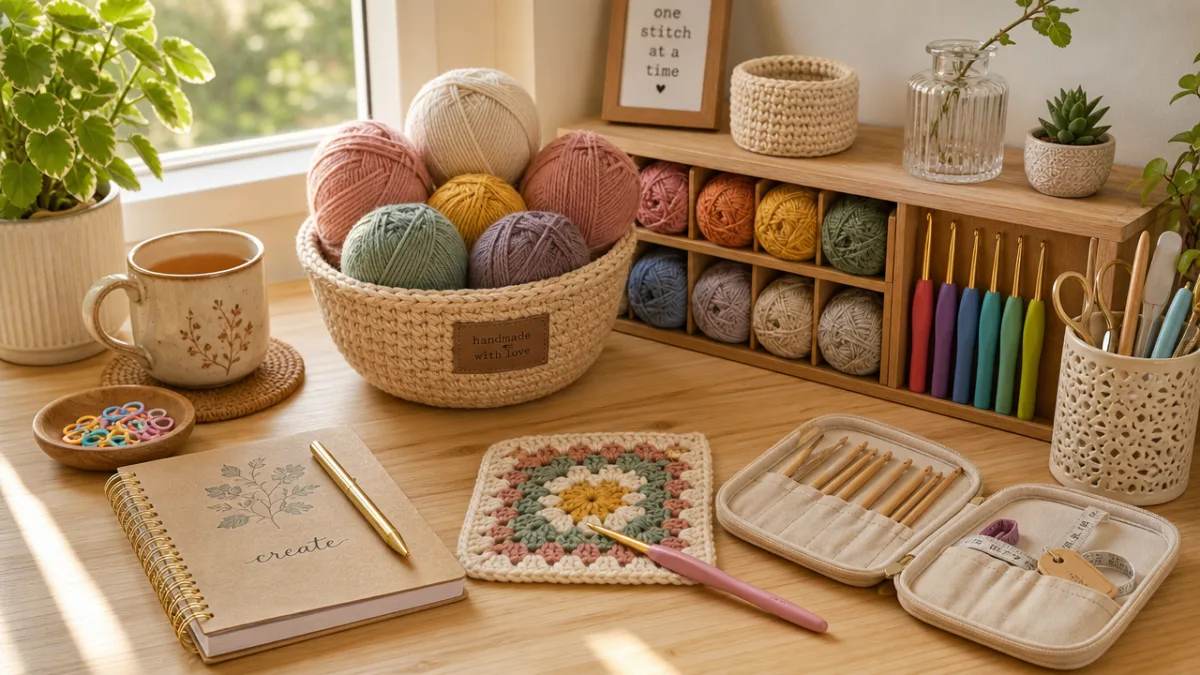
Whether you are a complete beginner picking up a hook for the first time or an experienced maker looking to refine your practice, having the right tools and resources makes an enormous difference in your enjoyment and success. Crochet requires relatively minimal investment compared to many hobbies, but thoughtful selection of materials can significantly improve your results. A quality hook that fits your hand comfortably, yarn appropriate to your project, and a few essential accessories are all you need to begin a craft practice that can last a lifetime and yield an incredible range of creative outcomes.
Hook selection is perhaps the most personal aspect of building a crochet toolkit. Hooks come in materials ranging from aluminum and plastic to bamboo, wood, and ergonomic rubber-handled varieties. Many crocheters with hand pain or repetitive strain issues find that ergonomic hooks with padded handles dramatically reduce discomfort during long sessions. Sizes range from tiny steel hooks less than a millimeter in diameter for thread crochet to enormous jumbo hooks for arm knitting-scale projects. A good beginner set typically covers sizes 3.5mm through 6mm, accommodating the most commonly used yarn weights for everyday projects.
Yarn selection opens up an almost overwhelming world of fiber, weight, texture, and color. For beginners, smooth, light-colored worsted weight yarn in an acrylic or wool blend offers the best visibility of stitches and ease of working. As your skills develop, exploring specialty fibers like cotton, linen, alpaca, silk, and bamboo each offer unique drape, texture, and care properties suited to specific project types. Understanding yarn weight systems, from lace to jumbo, and how they interact with hook size and stitch tension is a foundational skill that underpins all successful project planning in crochet.
- Ergonomic Hooks: Reduces hand fatigue during extended crafting sessions; available in sets or individually in a wide range of sizes.
- Stitch Markers: Locking style markers work best for crochet; use different colors to track multiple reference points simultaneously.
- Tapestry Needles: Blunt-tipped needles in various sizes for seaming pieces and weaving in yarn ends cleanly.
- Row Counter: Manual or digital counters help track pattern repeats without losing your place, especially important for complex designs.
- Blocking Mats and Pins: Essential for finishing lace and garment projects to correct dimensions and open up stitch patterns beautifully.
- Yarn Swift and Ball Winder: Transform hanks into center-pull cakes for tangle-free working, a genuine quality-of-life improvement for serious makers.
Growing Your Skills: From Beginner to Confident Maker
The learning curve in crochet is one of the craft’s most encouraging features: within a few hours of focused practice, a complete beginner can master the chain stitch and single crochet well enough to produce a recognizable, usable object. This immediate payoff is enormously motivating and helps explain why so many people who try crochet quickly become devoted to it. Unlike some crafts that require extensive preliminary skill-building before anything worthwhile can be produced, crochet rewards early persistence with tangible, functional, and even beautiful results that can be shared, gifted, or used from the very beginning of the learning journey.
Structured learning resources for crochet have never been more abundant or accessible. YouTube tutorials from skilled instructors provide free, high-quality visual guidance on everything from basic stitches to advanced colorwork techniques. Dedicated crochet apps offer pattern libraries, stitch dictionaries, and built-in row counters for a streamlined making experience. Community platforms like Ravelry allow makers to browse thousands of free and paid patterns, record their projects, track their yarn stash, and connect with groups organized around shared interests from amigurumi to Tunisian crochet. Local yarn stores and community centers frequently offer in-person classes where the tactile, immediate feedback of working alongside an experienced teacher can accelerate learning in ways that no screen tutorial fully replicates.
Setting achievable goals at each stage of development helps maintain motivation through the inevitable challenges of learning complex new patterns or techniques. Many experienced makers recommend a project-based learning approach: rather than drilling individual stitches in isolation, choose a simple but appealing finished object as your target and learn whichever techniques it requires in service of completing it. This approach keeps the work purposeful and the reward concrete. As each completed project builds confidence, subsequent choices can stretch skills incrementally, introducing new stitches, construction methods, and design decisions in a natural, progressive rhythm that keeps the craft continuously engaging and rewarding.
The crochet community itself is one of the craft’s greatest assets for growing makers. Online communities are notably welcoming, patient, and generous with knowledge, embodying the collaborative spirit that characterizes craft communities at their best. Sharing works-in-progress, asking for help with confusing pattern instructions, celebrating completed projects, and participating in community knit-alongs or crochet-alongs all contribute to a sense of belonging and shared purpose that extends well beyond the making of any individual object. For many practitioners, the community aspect of crochet is as valuable as the craft itself, providing connection, encouragement, and inspiration that sustains the practice across years and decades of making.








What do you think?
It is nice to know your opinion. Leave a comment.