










Innovative Home Theatre Room: A Complete Guide to Creating Your Ultimate Cinema Experience
The dream of having a dedicated home theatre room has never been more achievable than it is today. Advances in display technology, audio engineering, and interior design have converged to make it possible for homeowners to build genuinely cinematic experiences within their own four walls. Whether you are working with a spare basement, a dedicated room, or even a converted garage, the principles of great home theatre design remain consistent and surprisingly accessible to anyone willing to invest the time and thought required.
A truly innovative home theatre is not simply about purchasing the most expensive television or the loudest speakers. It is about creating a holistic environment where every element — from the seating arrangement to the acoustic treatment on the walls — works in harmony to deliver an immersive experience. This guide walks you through every major consideration, helping you make informed decisions that will serve you and your family for years to come.
Planning Your Space: The Foundation of a Great Home Theatre
Before purchasing a single piece of equipment, the most important step is thoroughly evaluating and planning your physical space. Room dimensions play an enormous role in determining what kind of system will work best, how sound will behave, and where viewing positions should be located. A room that is too small can feel claustrophobic and cause audio problems, while a room that is too large may require more powerful and expensive equipment to fill effectively. The ideal home theatre room typically falls somewhere between 12 by 15 feet and 20 by 30 feet, giving you enough space to work with without overwhelming the system.
Ceiling height is another factor that is frequently underestimated by first-time builders. A ceiling that is at least eight feet high is generally considered the minimum, while nine or ten feet opens up possibilities for overhead speaker channels, projection setups, and more dramatic interior design choices. Low ceilings not only limit the acoustic possibilities but can also affect the viewing angle for wall-mounted or projector-based displays. Spend time in your chosen room at different times of day, noting how sound behaves, how much ambient light enters, and where natural focal points seem to exist.
Room shape matters just as much as room size. Rectangular rooms are generally preferred for home theatres because they provide more predictable acoustic behavior compared to square rooms, which tend to produce problematic standing waves and bass buildup. If you are working with an irregularly shaped space, do not despair — acoustic treatment and clever design can address many of these challenges. Consulting with an acoustic specialist or using one of the many room analysis tools available online can give you a strong starting point before you begin any construction or installation work.
Finally, consider the practical logistics: electrical infrastructure, ventilation, and cable management. A home theatre runs a significant amount of equipment simultaneously, so having dedicated electrical circuits is not a luxury but a necessity for reliable, noise-free performance. Adequate ventilation keeps amplifiers and projectors running within safe temperature ranges, extending their lifespan considerably. Planning cable runs through walls and under flooring before finishing the room will save you enormous headaches later and result in a far cleaner, more professional-looking installation.
Display Technology: Choosing Between Projection and Large-Format Screens
The display is unquestionably the visual centerpiece of any home theatre, and the choice between a large-format flat panel television and a projector-and-screen combination is one that deserves serious consideration. Modern 4K OLED and QLED televisions offer breathtaking picture quality, with deep blacks, vivid colors, and high peak brightness that makes them excellent performers even in rooms with some ambient light. Screens ranging from 77 inches to well over 100 inches are now available at prices that would have been unthinkable a decade ago, making the large flat panel a genuinely compelling option for many home theatre enthusiasts.
Projectors, on the other hand, remain the choice for those seeking the most authentic cinematic experience at the largest screen sizes. A high-quality 4K laser projector paired with a 120-inch or larger screen creates a visual experience that no flat panel can currently match in terms of sheer scale and immersion. Modern laser projectors have addressed many of the traditional weaknesses of projection technology, including short lamp life, limited brightness in ambient light conditions, and color accuracy. Today’s flagship units from manufacturers like Sony, JVC, and Epson deliver stunning images with contrast ratios and color gamuts that rival professional cinema installations.
Screen selection is its own discipline when going the projection route. Gain, texture, viewing angle, and ambient light rejection are all variables that interact with your specific projector and room environment. A flat matte white screen remains the gold standard in light-controlled rooms, but acoustically transparent screens — which allow speakers to be placed directly behind the screen surface — represent a premium option that enables ideal speaker placement without compromising the visual field. Grey screens can help improve perceived contrast in rooms with some ambient light, though they come with tradeoffs in color accuracy that must be carefully managed.
Audio Systems: Engineering Immersive Surround Sound
If the display is the visual heart of a home theatre, the audio system is its soul. Many experienced home theatre enthusiasts will argue that exceptional sound has a greater impact on the perceived quality of the overall experience than even the best picture. Object-based audio formats like Dolby Atmos and DTS:X have transformed what is possible in a home environment, adding height channels to the traditional surround sound configuration and enabling sound designers to place audio objects anywhere in three-dimensional space around the listener. Building a system capable of decoding and reproducing these formats is now one of the primary goals of a serious home theatre build.
The foundation of a great Atmos system starts with a capable AV receiver or pre-amplifier processor. The receiver must support the latest audio codecs, offer enough amplification channels for your speaker configuration, and handle the signal processing required for room correction. Leading manufacturers in this space include Denon, Marantz, Yamaha, and Anthem, each offering models that range from mid-range value propositions to professional-grade statement pieces. Room correction technology built into many modern receivers — such as Audyssey, Dirac Live, and YPAO — automatically measures your room’s acoustic characteristics and applies digital equalization to compensate for problematic frequencies, significantly improving the accuracy of the final sound.
Speaker placement in an Atmos system follows specific guidelines established by Dolby and DTS, but the most common configurations for home use are 5.1.2 (five surround channels, one subwoofer, two height channels), 7.1.4 (seven surround channels, one subwoofer, four height channels), and even more elaborate arrangements for larger rooms. The front left, center, and right speakers carry the majority of dialogue and on-screen action, while surround and height channels handle ambience, environmental sounds, and dramatic effect passes. Height speakers can either be ceiling-mounted or use specially angled drivers that fire sound upward to reflect off the ceiling, with dedicated Atmos-enabled speakers available from virtually every major speaker manufacturer.
Subwoofers deserve special attention in any home theatre audio discussion. Low-frequency sound — the deep bass of an explosion, the rumble of a passing ship, the physical impact of a musical score — is responsible for a disproportionate amount of the visceral impact that makes cinema such an affecting art form. A well-chosen and properly positioned subwoofer, or ideally a pair of subwoofers for more even bass distribution throughout the room, can transform an already impressive system into something truly remarkable. Sealed subwoofer designs offer tighter, more accurate bass, while ported designs typically go deeper and play louder, making the choice partly a matter of personal preference and partly dependent on the room’s acoustic characteristics.
Acoustic Treatment: Taming the Room for Perfect Sound
Even the most expensive audio equipment in the world will sound mediocre in an acoustically untreated room. Sound waves bounce off hard surfaces, creating reflections that arrive at your ears slightly after the direct sound from your speakers, causing a smearing effect that reduces clarity, imaging, and the sense of space. Acoustic treatment is the process of managing these reflections using absorptive and diffusive materials strategically placed throughout the room to control how sound behaves. Far from being an afterthought, acoustic treatment should be planned from the very beginning of your home theatre project and integrated seamlessly into the overall interior design.
Absorption panels made from rigid fiberglass or mineral wool are the workhorses of acoustic treatment. Placed at the primary reflection points on the side walls, rear wall, and ceiling — the locations where sound from your speakers first bounces before reaching your ears — these panels dramatically reduce the strength of early reflections and create a tighter, more focused soundstage. The thickness of the panel determines which frequencies it can effectively absorb, with thicker panels addressing lower frequencies. Bass traps, which are thick corner-mounted absorbers, target the low-frequency buildup that commonly occurs in room corners and is responsible for much of the muddy, one-note bass character that plagues untreated rooms.
Diffusion is the complementary technique to absorption. Rather than absorbing sound energy, diffusive surfaces scatter reflections in multiple directions, reducing their intensity without deadening the room entirely. A room treated exclusively with absorption can feel uncomfortably dead and fatiguing to listen in over long periods, whereas a balanced combination of absorption and diffusion creates an environment that is acoustically controlled yet still natural and engaging. Diffuser panels come in a variety of designs, from the mathematically derived quadratic residue diffusers that are a staple of professional recording studios to decorative wood panel arrangements that can double as sophisticated interior design features.
Flooring choices also play a significant but often overlooked role in room acoustics. Hard flooring surfaces like hardwood, tile, or polished concrete are highly reflective and contribute to an overly live room character. Thick carpeting with a substantial underpad is the traditional choice for home theatres precisely because it provides a large surface area of absorption underfoot. For those committed to harder floor surfaces for aesthetic reasons, large area rugs in the listening and viewing area can provide meaningful acoustic benefit while still allowing design flexibility. The goal in all of these decisions is to work systematically toward a balanced reverberation time across the full frequency spectrum.
Seating and Interior Design: Comfort Meets Cinematic Atmosphere
The seating in a home theatre is where function and luxury intersect most visibly, and it deserves careful thought both in terms of ergonomics and placement. Dedicated home theatre seating ranges from purpose-built recliners with built-in cupholders and USB charging ports to custom sectionals and even luxurious individual power-recline chairs arranged in tiered rows. The critical consideration beyond comfort is ensuring that every seat has a proper sightline to the screen and that no seat is compromised by awkward speaker placement or structural columns. If you are planning a multi-row installation, a raised platform for the second row is essential for unobstructed viewing.
Viewing distance calculations should inform your seating placement before you install a single chair. The Society of Motion Picture and Television Engineers (SMPTE) recommends a minimum viewing angle of 30 degrees from the outermost seats to the full width of the screen, while THX-certified installations target a more immersive 40-degree angle from the center seat. For a 120-inch screen, this translates to a primary seating distance of roughly 10 to 13 feet. Sitting too close can make individual pixels visible on some display technologies and can cause eye strain, while sitting too far away diminishes the sense of immersion that makes a home theatre special in the first place.
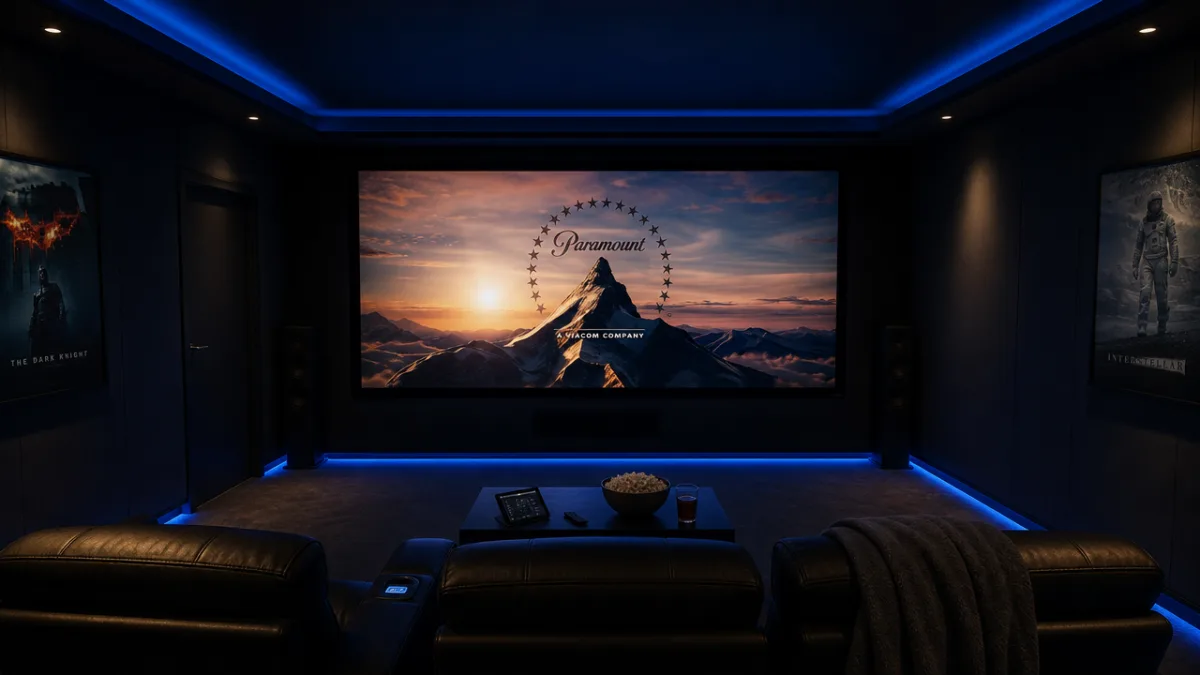
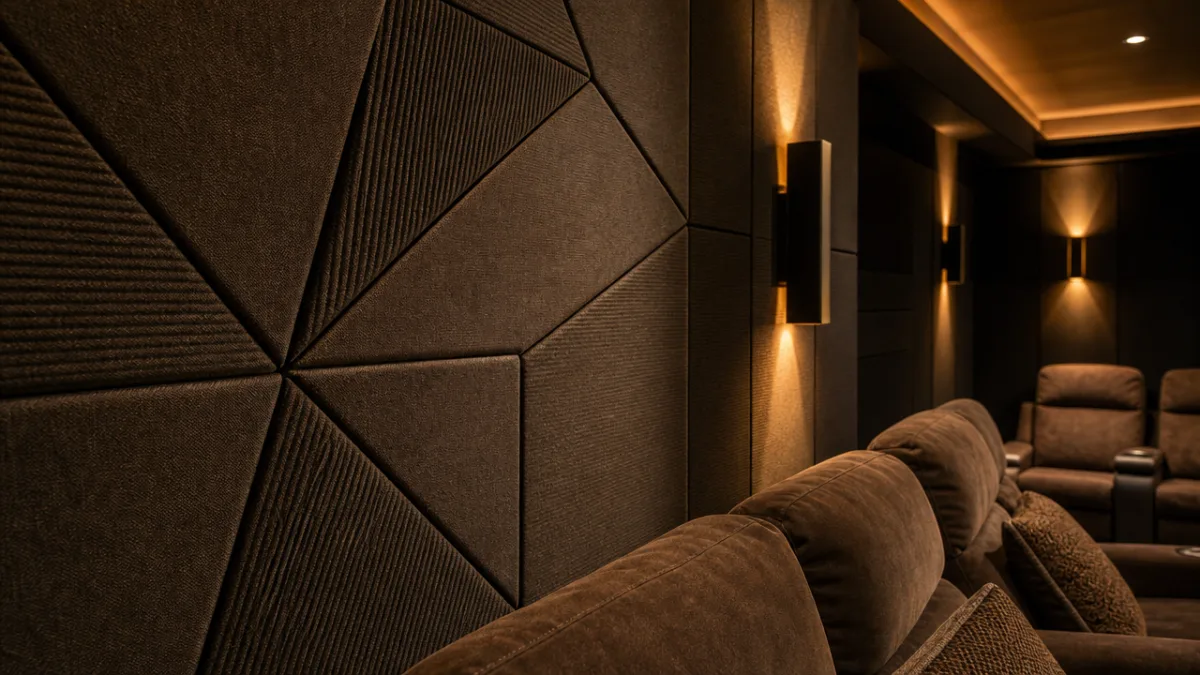
The interior design aesthetic of your home theatre sets the emotional tone for every viewing experience. Dark, light-absorbing wall colors — deep charcoals, navy blues, forest greens — are the traditional choice for theatres because they minimize distracting reflections from the screen and reinforce the sense of being in a darkened cinema. Acoustic fabric wall panels offer a practical and elegant solution that simultaneously addresses both treatment and decor. LED lighting systems with full color and dimming control allow you to create a wide range of atmospheres, from soft blue pre-show ambience to complete blackout for viewing, with programmable scene controls that can be activated with a single button press.
Ceiling design in a home theatre is an area where truly creative installations can make an unforgettable impression. Stretched fabric acoustic ceilings have become increasingly popular because they allow lighting, speakers, and projectors to be hidden behind a continuous, seamless surface that looks professionally finished and performs acoustically. Star ceiling installations using fiber optic cables create a breathtaking night-sky effect that transforms the room between screenings. Coffered ceiling designs allow integration of Atmos height speakers while adding architectural character. Whatever approach you choose, planning these elements from the beginning of the project rather than retrofitting them later will result in a far more cohesive and polished final result.
Smart Home Integration and Control Systems
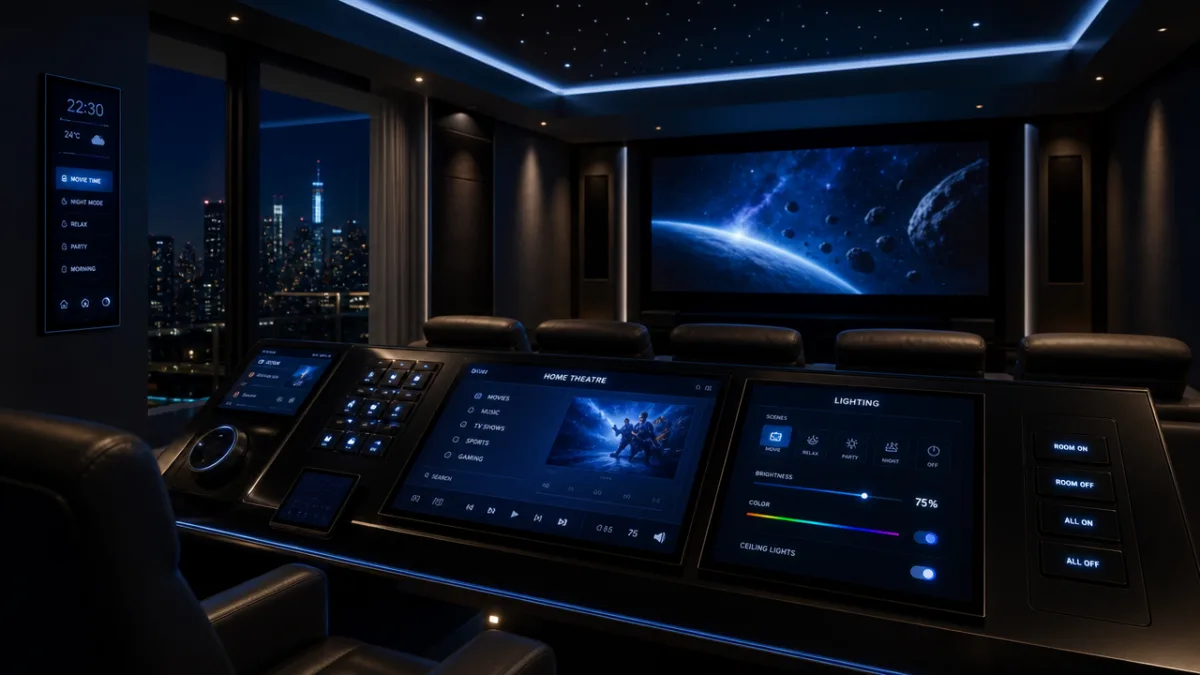
The most visually stunning and acoustically refined home theatre in the world will fail to deliver its full potential if it is difficult or frustrating to operate. Smart home integration transforms a collection of sophisticated individual components into a seamlessly unified system that responds to simple commands and automates the complex sequences of actions required to prepare the room for a screening. Dedicated control systems from companies like Control4, Savant, and Crestron represent the professional tier of home automation, offering reliability and customization depth that consumer-grade solutions cannot match, though they come with correspondingly professional price tags and typically require certified dealer installation.
For those seeking a more accessible entry point into integrated control, platforms like Apple HomeKit, Google Home, and Amazon Alexa have evolved considerably in their ability to coordinate complex multi-device scenes. A well-configured voice command — “Alexa, start movie night” — can simultaneously lower motorized blackout shades, dim the lighting to a preset level, switch the AV receiver to the correct input, power on the projector, and queue up your streaming service of choice. Universal remote systems from companies like Logitech (Harmony) and URC occupy a middle ground between simple consumer remotes and full professional control systems, offering macro programming and device compatibility that suits the needs of many enthusiasts.
Streaming and content delivery infrastructure deserves its own consideration within the smart theatre ecosystem. Dedicated media servers running software like Plex or Kodi can store and organize extensive local movie libraries in pristine quality, while dedicated 4K Blu-ray players remain the gold standard for the highest quality audio and video from physical media. Network infrastructure — meaning the router, switches, and Ethernet cabling throughout the room — should be planned for sufficient bandwidth to handle 4K HDR streaming without buffering or compression artifacts. A wired Ethernet connection to your primary streaming and playback devices is always preferable to Wi-Fi for reliability and consistent performance.
Future-proofing is a concept worth building into your control and integration plans from the start. Technology moves quickly in this space, and a system designed with open standards and upgrade paths will serve you far better than one built around proprietary solutions that may become obsolete. Specifying equipment with HDMI 2.1 ports, which support 8K resolution and the latest gaming features like variable refresh rate and auto low-latency mode, ensures your system remains current as display and content technology continue to advance. Similarly, leaving conduit runs and accessible cable pathways during construction means future upgrades and additions can be made without disruptive and expensive retrofitting work.
Lighting Design: Setting the Perfect Cinematic Mood
Lighting in a home theatre serves multiple purposes simultaneously: it must be completely controllable to achieve true darkness during viewing, it must provide safe and comfortable illumination during entry and exit, it must contribute to the overall aesthetic character of the space, and it must not introduce any ambient light spill onto the screen during playback. Achieving all of these goals requires a thoughtful, layered lighting design that uses the right fixture types in the right locations, all connected to a dimming system capable of smooth, flicker-free transitions across the full range from full brightness to complete darkness.
LED strip lighting has become one of the signature design elements of modern home theatres, used to create glowing outlines along steps, under seating platforms, behind screens, and along ceiling recesses. Bias lighting — a strip of light placed behind the display or screen — has the practical benefit of reducing eye strain during extended viewing sessions by softening the contrast between the bright screen and the dark surrounding room. When properly calibrated to a color temperature of D65 (6500 Kelvin) and appropriate brightness, bias lighting is also used by videophiles and colorists to create a reference viewing environment. Smart LED systems like Philips Hue or the integrated LED controllers built into many modern televisions can synchronize their output with screen content for a more immersive extended display effect.
Sconce lighting along side walls provides a warm, theatrical ambiance during pre-show gatherings and intermissions while consuming minimal wall space that might otherwise be used for acoustic treatment or seating. Recessed ceiling downlights on full dimming circuits offer general illumination when the room is being used for non-theatre purposes. Step lighting along tiered seating platforms is a safety essential, ensuring that guests can navigate safely in near-darkness without stumbling. The combination of these layers, controlled through a single scene-based system, allows the room to transition gracefully from a bright, social gathering space to an intimate, fully immersive cinema environment at the touch of a button.
Motorized blackout window treatments are an often-overlooked but critical component of the lighting control strategy. Even a small amount of uncontrolled ambient light from windows or door gaps can dramatically reduce the perceived contrast and color saturation of a projected or displayed image, particularly in daytime viewing scenarios. High-quality blackout roller shades or motorized drapery panels integrated into the room control system ensure that the lighting environment is always fully under your control regardless of the time of day or weather conditions outside. Proper light sealing around doors using commercial-grade door sweeps and seals completes the enclosure and ensures that the theatrical experience is never compromised by light intrusion from adjacent spaces.








What do you think?
It is nice to know your opinion. Leave a comment.