










Stunning DIY Yard Art Ideas to Transform Your Outdoor Space
Why DIY Yard Art Is Worth Your Time and Creativity
There’s something really special about stepping into your backyard and seeing art you actually made yourself. DIY yard art turns a plain outdoor space into a personal gallery that says something real about who you are — your taste, your personality, your creative side. And unlike the stuff you’d pick up at any big box store (that your neighbors probably have too), something handmade is completely your own. Every brushstroke, every carefully placed stone carries a little piece of your effort and your story.
On top of the creative satisfaction, making your own yard art is honestly one of the most cost-effective ways to boost your home’s curb appeal. A lot of the most eye-catching projects use repurposed or salvaged materials — old tires, broken ceramics, rusty metal scraps, fallen branches — things that would’ve otherwise ended up in a landfill. You’re giving discarded stuff a second life while keeping money in your pocket and waste out of the world. That’s a pretty good deal.
There’s also a real mental health upside to working on projects like these. Using your hands, figuring things out in three dimensions, watching something go from a pile of raw materials to a finished piece sitting in your garden — that sense of accomplishment is hard to match. Whether you knock out a simple mosaic stepping stone in a single afternoon or spend a few weekends building something more ambitious, the whole process rewards patience and a willingness to just try things and see what happens.
Mosaic and Ceramic Art for Gardens and Pathways
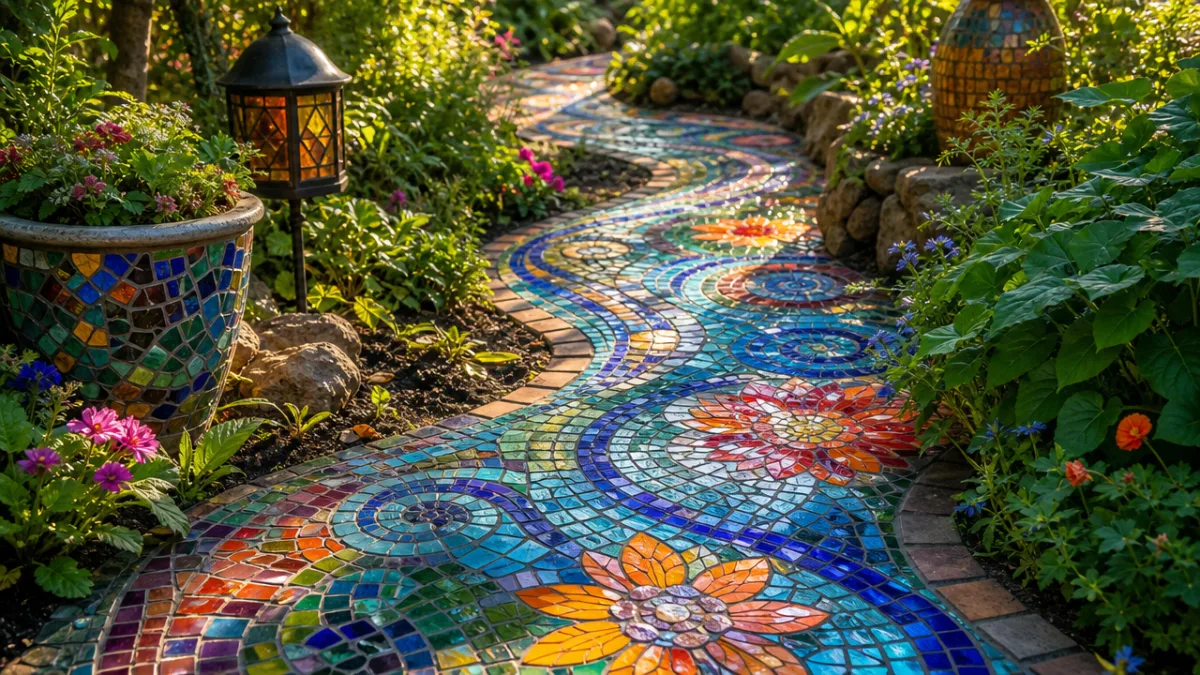
Mosaic yard art is one of the most approachable and visually rewarding projects you can take on, regardless of your skill level. The basic idea is simple: break ceramic tiles, old dishes, glass beads, or colorful stones into smaller pieces and arrange them into patterns or images on a solid surface — a stepping stone, a garden wall, a birdbath, or even a big decorative boulder. The result is a glittering, jewel-toned surface that plays with sunlight differently throughout the day, which gives it this dynamic, almost alive quality that you just don’t get from a store-bought decoration.
If you’re just getting started, mosaic stepping stones are the perfect entry point. You pour a flat concrete base using a simple mold, then press colorful glass or ceramic pieces into the wet surface before it sets. Designs can be as simple as a few geometric shapes or as detailed as a full floral motif or animal portrait — entirely up to you. These stones do double duty: they create a functional path through your garden while also acting as individual little works of art that invite people to slow down and actually look at where they’re walking.
If you’re ready to go bigger, a mosaic mural on an exterior garden wall or large fence panel can become the defining feature of your entire outdoor space. The good news is you can work in sections over time, so it doesn’t have to feel like an overwhelming commitment. Just make sure you’re using weather-resistant tile adhesive and grout made for outdoor use, and seal the finished surface to protect it from moisture and frost. A well-made mosaic wall ages beautifully — it becomes one of those things guests always remember and come back to admire, no matter the season.
Metal and Sculptural Yard Art for Bold Statements
Metal yard art holds a special place in the DIY world, mostly because it lasts forever and can take on an enormous range of forms. Welded steel sculptures, hammered copper wind spinners, old farm equipment reimagined as abstract art — all of it falls under the metal yard art umbrella, and each brings a distinctive character to a garden space, whether that’s something raw and industrial or refined and artisanal. And you don’t need to know how to weld to get started; pre-cut pieces, wire, and basic hand tools can get you surprisingly far.
Wind sculptures are especially popular because they add both movement and sound to a garden, which is a pretty rare combination in yard art. Basic designs involve cutting decorative shapes from thin sheet metal and mounting them on a central rod with a bearing or pivot pin so they can spin freely in the breeze. More complex versions layer multiple tiers of spinning elements, each moving at its own speed and direction, creating a hypnotic display that’s always slightly different. Copper, aluminum, and stainless steel are great choices here because they hold up against the elements and develop gorgeous patinas as they age.
For anyone willing to pick up a basic welding setup or take a beginner class, the possibilities really open up. You can build life-sized animal sculptures from rebar and sheet metal, create tall abstract forms that double as plant trellises, or weld together collections of old tools and hardware into whimsical garden figures with a lot of personality. Welded metal art tends to age in the best possible way outdoors — the rust tones and weathered textures that develop over time actually complement natural garden settings rather than clashing with them.
Upcycled and Repurposed Materials in Yard Art
The most creative yard art often doesn’t start at a craft store — it starts with a walk through your garage, basement, or a local salvage yard. Upcycled and repurposed yard art is a genuinely thriving community within the broader maker and gardening world, built around the idea that with enough imagination, almost anything can become something beautiful. Old bicycles, vintage suitcases, cracked terracotta pots, worn-out rubber boots — these things have all found new lives as charming garden decorations in the hands of people who knew how to see their potential.
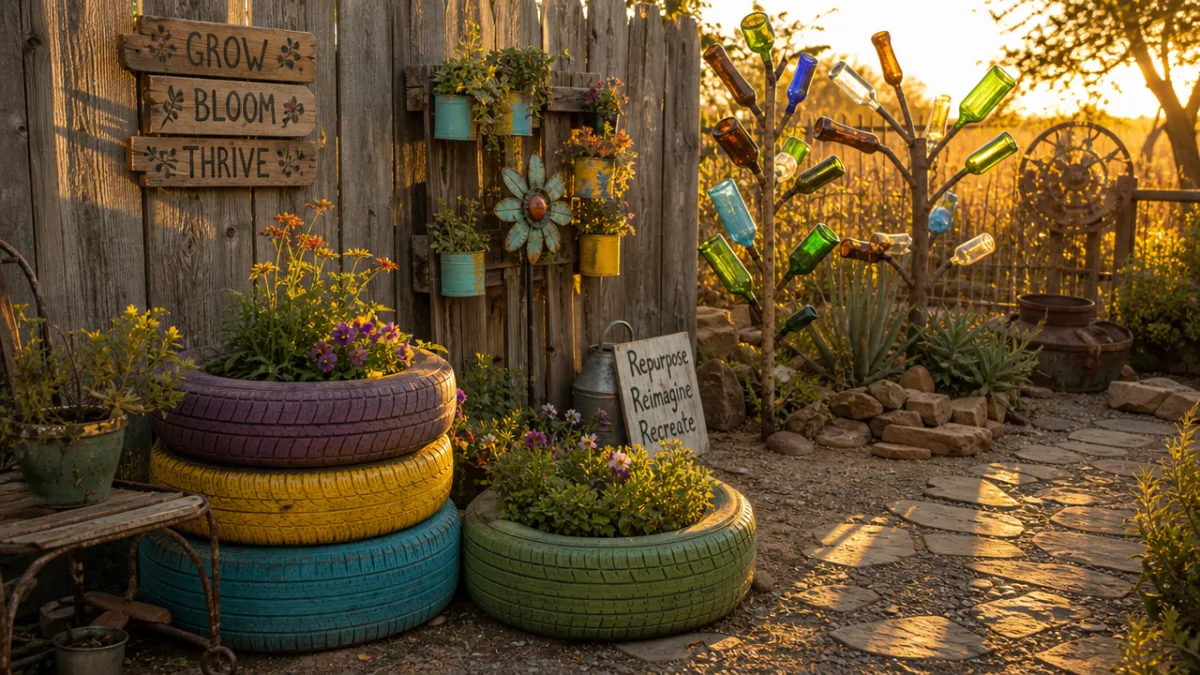
One of the most popular upcycling trends right now is turning reclaimed wood pallets into vertical garden features. A single standard pallet can become a hanging planter wall, a decorative trellis, a painted welcome sign, or the framework for a small herb garden. The rough, weathered texture of reclaimed wood adds warmth and a rustic quality that’s hard to fake with new materials. And since pallets are often free from hardware stores or shipping facilities, the whole project can come together for almost nothing while looking like it cost a lot more.
Another favorite approach is using broken or chipped ceramic dishes and garden pots to build “pot man” sculptures — stacked figures made from various sizes of ceramic containers, often painted in bright colors and posed among garden beds. They’re cheerful, a little quirky, and they carry a great story since they’re built from pieces that were heading for the trash. The skill that ties all upcycled yard art together is really just learning to look at a discarded object differently — not for what it was, but for what it could become with a little creative vision and some elbow grease.
- Old tires can be painted and stacked to create colorful planters or garden borders that add geometric definition to flower beds.
- Vintage glass bottles can be buried neck-down in decorative patterns to create glittering garden borders or bottle trees that catch light beautifully.
- Broken ceramic dishes and tiles are perfect raw material for mosaic projects on stepping stones, birdbaths, and garden walls.
- Reclaimed wood from old fences, barns, or pallets can be cut and painted to create signs, sculptures, and decorative wall panels.
- Rusty farm tools and vintage hardware add a nostalgic, rustic character when arranged as wall art on a garden shed exterior.
Painted Rock and Stone Art for Natural Beauty
Painted rock art might be the most beginner-friendly form of DIY yard art out there. All you really need are some smooth rocks, outdoor acrylic paint, a few brushes, and a clear weatherproof sealant to protect everything once it’s dry. But don’t let the simplicity fool you — arranged thoughtfully throughout a garden, painted rocks can make a real visual impact. A collection lining a garden path, clustered around the base of a tree, or tucked into flower beds creates this effect that feels both natural and intentional, like the garden is hiding little colorful treasures for people to discover.
The design possibilities are essentially endless. Mandala patterns are a big favorite because the radial symmetry is surprisingly forgiving for beginners — a little wobble here and there doesn’t matter much — and the finished pieces genuinely look impressive. Wildlife designs are another popular direction: ladybugs, frogs, hedgehogs, owls, butterflies. They bring a sense of life to parts of the garden where actual wildlife might not visit often. And painted flat river stones work beautifully as garden markers, helping visitors identify plants while adding a personal touch to vegetable beds and herb gardens.
For a more cohesive artistic statement, you could plan a series of rocks that together tell a story or form a larger design when arranged in sequence. A set of rocks painted with the letters of your family name along a front path makes for a really welcoming entry feature. Or scatter rocks painted with different elements of a forest scene — trees, mushrooms, animals, flowers — across a woodland garden to create a storybook atmosphere that kids and adults alike tend to love wandering through.
Water Features and Reflective Elements as Artistic Focal Points
Water has always been central to garden art and design, and for good reason — it brings movement, sound, and a sense of calm that’s genuinely hard to replicate with anything else. DIY water features have become much more accessible in recent years thanks to affordable submersible pumps, pre-formed pond liners, and a wide variety of decorative spouts. Even a modest project can end up being the undisputed focal point of your whole garden, constantly drawing both the eye and the ear with that steady, soothing presence.
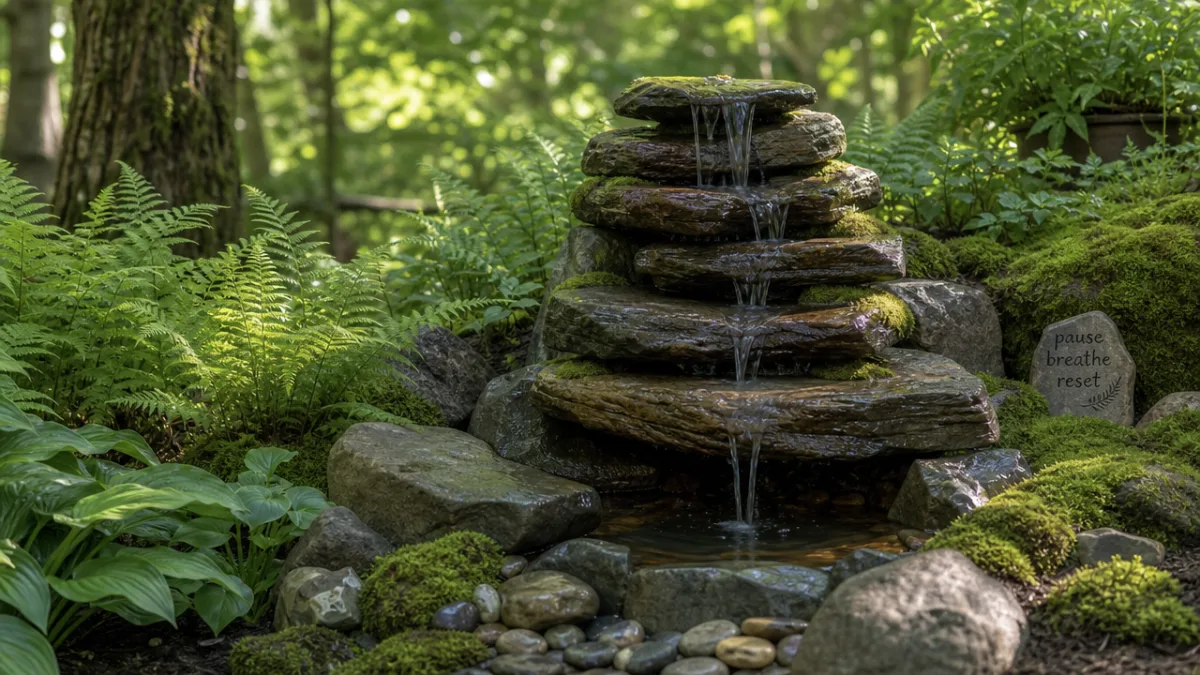
A stacked stone fountain is one of the most popular DIY water art projects for a reason — it manages to be both sculpturally beautiful and genuinely calming to sit near. The basic build involves selecting a collection of flat or rounded stones, drilling a channel through each one for the water tube, and stacking them over a hidden reservoir with a small recirculating pump inside. As water rises through the tube and flows over the stones, it makes a gentle burbling sound and creates a shimmering effect that makes the whole structure feel alive — and looks just as good in the evening as it does during the day.
Reflective surfaces and mirror art are another really compelling direction to explore. Large mosaic mirror panels mounted on garden walls or fences create an illusion of depth that can make even a compact yard feel expansive and almost magical. Gazing balls — those spherical mirrors set on pedestals among garden beds — have been a garden art tradition for centuries, and contemporary DIY versions range from painted bowling balls to elaborate glass spheres. When you place reflective elements thoughtfully around a garden, light, color, and movement get multiplied and echoed across the space in a way that makes everything feel richer than the actual square footage would suggest.
- Choose a focal point in your garden and plan your water feature or reflective element around it to anchor the overall design composition.
- Select materials that complement your existing garden palette — natural stone for organic gardens, polished metal for contemporary spaces, aged copper for traditional or cottage-style yards.
- Install a timer on any pump or lighting system associated with your water feature to extend its life and manage energy consumption efficiently.
- Seal all painted or mosaic elements with a high-quality outdoor waterproof sealant rated for freeze-thaw cycles if you live in a climate with cold winters.
- Layer your yard art at different heights and distances from main sightlines to create depth, visual rhythm, and a sense of discovery as visitors move through your outdoor space.
Lighting Art and Nighttime Ambiance in Your Yard
A lot of DIY yard art enthusiasts put all their energy into how the garden looks during the day and don’t give much thought to what happens after sunset — which is honestly a missed opportunity. Good lighting completely transforms yard art at night. Shadows deepen, colors shift, and the interplay of light and darkness creates a dramatic atmosphere that daylight just can’t replicate. Solar-powered LED technology has made DIY garden lighting more affordable and flexible than ever, opening up a whole new creative dimension for anyone willing to think of illumination as an art form in itself.
Luminaria — decorative lanterns made from paper bags, punched tin cans, or carved gourds — are a simple and charming way to bring that magic to any outdoor space on a warm evening. Punched tin can lanterns are particularly easy and durable: fill a can with water, freeze it solid so the metal doesn’t dent, then use a hammer and nail to punch decorative patterns through the sides before letting the ice melt. Drop a tea light or LED candle inside, and these lanterns project intricate patterns of light onto everything around them — perfect for outdoor dinners or just a quiet evening on the patio.
For something more permanent, consider building a DIY light sculpture using weatherproof LED strip lights wound through a sculptural framework of bent rebar, driftwood, or wire mesh. These glowing pieces become real focal points after dark, and since modern LED strips come in millions of colors with programmable controllers, you can completely change the mood of your garden to suit different seasons, occasions, or just how you’re feeling that evening. When a well-crafted physical sculpture is paired with thoughtfully integrated lighting, you end up with something that offers a genuinely different experience at every hour — yard art that’s worth looking at whether you’re out there at noon or midnight.








What do you think?
It is nice to know your opinion. Leave a comment.