










Cozy Winter Home Decor Ideas: Transform Your Space Into a Warm Retreat
As temperatures drop and daylight hours shrink, our homes become our sanctuaries — places where warmth, comfort, and beauty matter more than ever. Winter decorating is a distinct and deeply rewarding art form, one that goes far beyond simply pulling out the holiday ornaments and calling it a season. True cozy winter decor is about creating an atmosphere that envelops you the moment you step inside, making the cold outside feel irrelevant and the warmth inside feel intentional. Whether you live in a sprawling farmhouse or a compact city apartment, there are endless ways to infuse your space with winter magic that lasts well beyond the holidays.
The concept of “hygge,” the Danish philosophy of coziness and contentment, has captured the imagination of interior design enthusiasts worldwide, and for good reason. It captures something universal: the human desire to feel safe, warm, and connected during the coldest months of the year. Hygge isn’t about expensive purchases or dramatic renovations — it’s about layering textures, softening light, and surrounding yourself with things that bring genuine comfort. This philosophy will guide many of the ideas explored in this article, because the most effective winter decor isn’t just beautiful to look at; it’s something you can feel.
This guide will walk you through every major area of winter home transformation, from textiles and lighting to scent and seasonal accents. Each section is designed to give you actionable, inspiring ideas that you can begin implementing right away, regardless of your budget or design experience. By the end, you’ll have a comprehensive toolkit for turning your home into the cozy winter retreat you’ve always envisioned — a place where you actually want to spend your evenings, your weekends, and your quiet, snow-dusted mornings.
The Art of Layering Textiles and Soft Furnishings
Nothing signals the arrival of winter quite like the appearance of chunky knit throws draped over sofas and armchairs. Textiles are arguably the single most powerful tool in your winter decorating arsenal, capable of transforming the visual temperature of a room almost instantly. The key to doing this well is layering — combining different textures, weights, and materials to create depth and visual interest. Think wool blankets folded over linen armchairs, velvet cushions piled onto a linen sofa, or a faux-fur throw casually draped over the edge of a reading chair. Each layer adds warmth both literally and aesthetically.
When selecting your winter textiles, consider building around a cohesive color palette that evokes the season naturally. Deep jewel tones like burgundy, forest green, navy, and mustard work beautifully alongside neutrals like cream, warm grey, and camel. These colors echo the natural world outside — the dark evergreens, the earthy bark, the pale winter sky — and help your interior feel connected to the season rather than at odds with it. You don’t need to replace everything you own; even swapping out a few cushion covers and adding one or two new throws can make a dramatic difference in how a room feels.
Don’t overlook the floor when it comes to layering. A large area rug in a warm, textured material like wool or jute can anchor your living space and add considerable warmth underfoot — something that becomes especially noticeable on cold mornings. Layering a smaller sheepskin or accent rug on top of a larger flat-weave rug is a popular styling technique that adds dimension and a touch of organic luxury. Window treatments also play a key role: switching from lightweight summer curtains to heavier velvet or linen drapes will both insulate your windows and contribute to the enveloping, cozy atmosphere you’re working toward.
Consider extending your textile thinking to the bedroom, which should be the ultimate winter sanctuary. Invest in a high-quality duvet or comforter if you haven’t already, and layer it with an additional wool blanket or quilt at the foot of the bed. Add extra pillows in varying sizes and textures, and dress your bedside table with a soft lampshade that casts warm, golden light. The bedroom should feel like a place you genuinely look forward to retreating to — a nest of warmth and softness that makes waking up to a cold morning just a little more bearable.
Mastering Winter Lighting to Set the Perfect Mood
Lighting is one of the most underestimated elements of winter home decor, yet it may be the most transformative. During winter, natural light is scarce and often harsh in its absence, which means your artificial lighting carries an enormous amount of emotional weight. The goal is to move away from bright, overhead lighting that can feel clinical and stark, and toward multiple layers of warm, soft light sources that create pockets of glow throughout your home. Think of this as recreating the effect of firelight — intimate, flickering, and deeply comforting.
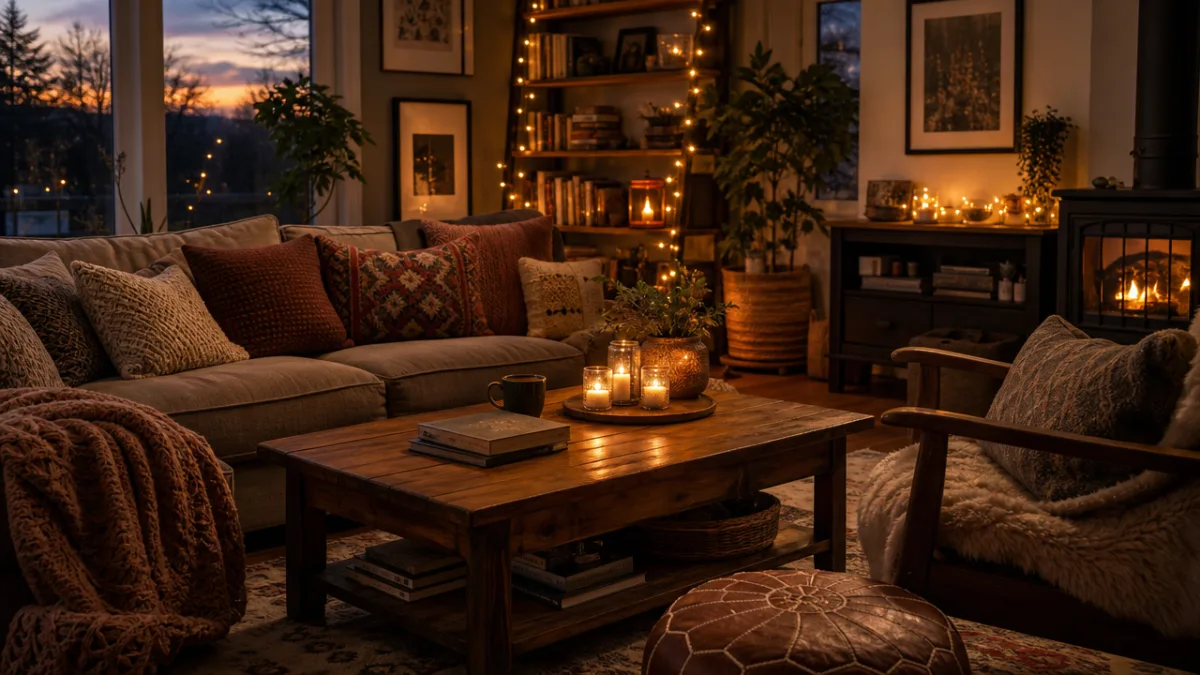
Candles are perhaps the most powerful single tool in the winter lighting toolkit. Real wax candles in groupings of varying heights create an atmosphere that no electric light can fully replicate. Place clusters of pillar candles on a wooden tray on your coffee table, line your mantelpiece with tapered candles in simple holders, or fill a large glass hurricane lamp with a chunky pillar candle for a dramatic centerpiece. Beeswax candles have the added advantage of a faint, natural honey scent that enhances the sensory experience of your space. If you prefer a flameless option, high-quality LED candles have become remarkably realistic and can be used safely in areas where an open flame would be impractical.
String lights are not just for the holiday season — they’re a year-round winter staple that can remain up through February or even March without feeling out of place. Draped across a bookshelf, woven through a garland, or arranged loosely in a glass vase, warm white string lights add a soft, magical glow that transforms any corner of your home. Table lamps with amber or warm-white bulbs should replace cool-toned bulbs for the season, and lampshades in warmer tones — cream, blush, or amber — will cast light with a noticeably warmer color temperature. Even these small adjustments can make a significant difference in how welcoming your home feels after dark.
Nature-Inspired Accents and Organic Decor Elements
One of the most enduring principles of great interior design is the power of bringing the natural world indoors, and this principle reaches its fullest expression in winter. When the landscape outside is stripped bare or blanketed in snow, natural elements inside the home provide a grounding, organic beauty that feels both timeless and deeply seasonal. The goal is not to fight against winter’s aesthetic but to embrace and celebrate it — finding beauty in bare branches, pinecones, and the muted tones of the natural winter palette.
Dried botanicals have become one of the most popular decor trends in recent years, and winter is the ideal season to lean into them fully. Dried pampas grass, eucalyptus, cotton stems, and wheat sheaves all carry a quiet elegance that pairs perfectly with winter’s neutral palette. Arrange them in tall ceramic vases or wide-mouthed baskets for a relaxed, organic look. Pinecones gathered from your yard or purchased in bulk make wonderfully versatile decor elements — pile them in a wooden bowl, string them together as a garland, or simply scatter them across a mantelpiece alongside candles and greenery for an effortlessly seasonal display.
Fresh greenery, even during winter, is more accessible than many people realize. Evergreen boughs — whether from a pine, fir, cedar, or eucalyptus tree — can be found at most garden centers and grocery stores throughout the winter months. A simple arrangement of evergreen sprigs in a pitcher of water, placed on a kitchen counter or dining table, fills the room with a clean, forest-fresh scent and a striking visual contrast against a white or neutral background. For those who enjoy a more formal look, a garland of fresh or faux evergreens draped across a mantelpiece or staircase railing creates a classic winter focal point that can be dressed up with pinecones, ribbon, or small ornaments.
Wood as a material deserves its own mention in the context of natural winter decor. The grain, warmth, and texture of wood — whether in the form of furniture, decorative logs, cutting boards displayed in the kitchen, or a simple wooden tray — adds an irreplaceable organic quality to any interior. A stack of real firewood beside a fireplace (or even beside a decorative hearth) is one of the most instinctively cozy sights imaginable. Wooden candleholders, birch bark vases, and driftwood sculptures all bring this earthy warmth to spaces where larger wooden elements may not be practical.

Color Palettes and Seasonal Styling Strategies
Choosing the right color palette for your winter decor is about striking a careful balance between warmth and restraint. The most successful winter interiors tend to work within a limited, cohesive range of colors rather than introducing too many competing tones at once. A foundational neutral palette — think warm whites, creamy linens, soft greys, and natural taupes — provides the ideal backdrop against which richer accent colors can truly sing. This approach allows your space to feel calm and unified while still being visually interesting and seasonally appropriate.
Deep, saturated accent colors are one of winter’s great decorating gifts. While summer palettes tend toward lightness and brightness, winter invites you to explore the richer end of the spectrum: deep burgundy, forest green, midnight navy, warm terracotta, and aged gold. These tones appear in nature during the season — in holly berries, evergreen needles, frozen earth, and low winter sun — which is part of why they feel so instinctively right. Introduce them through cushions, throws, artwork, candles, and small decorative objects rather than committing to a full room repaint, which gives you the flexibility to refresh the look each year.
Metallics deserve a special mention as a winter color story in their own right. Gold, bronze, copper, and warm silver all catch the light in a way that feels inherently magical during the darker months, evoking both the warmth of candlelight and the sparkle of frost. Rather than reserving metallic accents exclusively for holiday decorating, consider incorporating them as year-round winter elements: a brass candleholder, a copper pot filled with greenery, a gold-framed mirror that bounces light around the room. These pieces work beautifully from November through February and beyond, giving them a longevity that makes them worth investing in.
When it comes to styling individual surfaces and vignettes, the rule of odd numbers is your friend. Group decorative objects in threes or fives, varying heights and textures to create visual rhythm. A mantelpiece might hold three pillar candles of varying heights, a small evergreen arrangement, and a single framed print or mirror. A side table might feature a ceramic lamp, a stack of winter reading books, and a small tray holding a candle and a stone or crystal. These composed, intentional groupings make a space feel curated rather than cluttered — a subtle but important distinction in winter decor.
Creating Cozy Focal Points: Fireplaces, Reading Nooks, and Warm Corners
Every truly cozy winter home has at least one focal point — a place in the room that draws the eye and the body, a spot that practically invites you to settle in and stay awhile. The fireplace is the most iconic of these focal points, and if you’re fortunate enough to have one, winter is the time to make it the undisputed star of your living space. Even if you have a non-working decorative fireplace, it can be styled to stunning effect with candles, logs, lanterns, and a beautifully dressed mantelpiece that anchors the entire room.
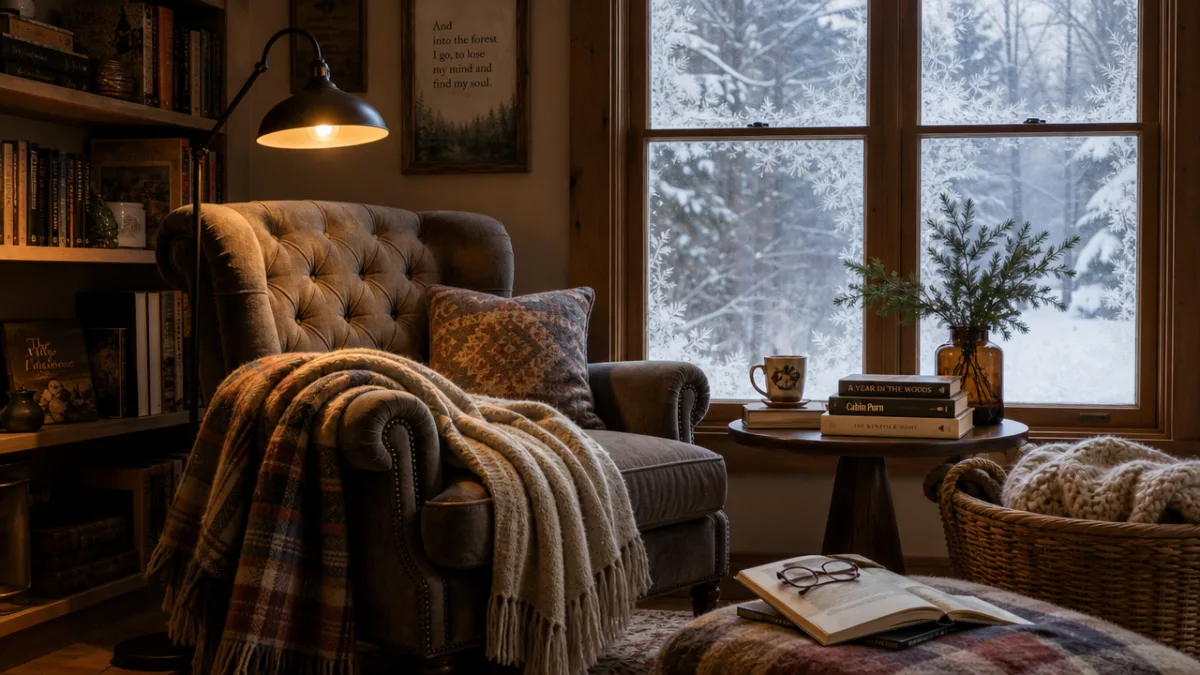
For those without a fireplace, a reading nook can serve the same psychological function — a defined, intimate space that signals comfort and retreat. Creating a reading nook doesn’t require a dedicated alcove or architectural feature; it can be as simple as a well-placed armchair positioned beside a window with a side table, a floor lamp, and a basket of throws within reach. The key is intentionality: this corner exists for one purpose, and everything about it — the soft lighting, the comfortable seat, the accessible books — supports that purpose. Even in a small apartment, carving out this kind of intentional space can have a profound effect on how the home feels to live in.
Window seats, if you have them, should be fully embraced during winter rather than used primarily as storage. Add a layer of cushioning, pile on some throw pillows, and drape a blanket over the back or arm of the seat. There’s something uniquely magical about sitting in a warmly lit window seat while snow falls or rain streaks the glass outside — the contrast between the warmth within and the cold without is itself a form of cozy luxury. If your window seat doubles as storage, keep the storage organized and hidden so that the surface remains inviting and uncluttered.
The dining table, often overlooked in discussions of cozy decor, offers one of the greatest opportunities for seasonal transformation. A thoughtfully styled winter table — with a simple linen runner, a cluster of candles at varying heights, a small botanical arrangement, and perhaps a few seasonal accents like pinecones or dried citrus slices — turns everyday meals into something that feels intentional and special. This doesn’t require elaborate effort; even lighting a single candle at dinner can shift the atmosphere of a meal from perfunctory to genuinely pleasurable. In winter especially, these small rituals of beauty and warmth take on an outsized importance in daily life.
Scent, Sound, and the Sensory Experience of Winter Living
The most immersive, memorable interiors engage all of the senses, not just sight. Winter is a season of distinctive sensory experiences — the smell of woodsmoke, the sound of a crackling fire, the taste of spiced cider, the feel of a warm mug in cold hands — and bringing these elements into your home decor strategy will elevate your space from visually appealing to genuinely, multi-dimensionally cozy. Scent, in particular, is powerfully tied to memory and emotion, making it one of the most effective tools available to the winter decorator.
Winter candles and home fragrances should lean into the season’s natural scent profile rather than fighting against it. Classic winter fragrance notes include the following categories worth exploring:
- Warm spices such as cinnamon, clove, cardamom, and nutmeg, which evoke baking and holiday warmth
- Woodsy notes like cedarwood, sandalwood, vetiver, and pine, which bring the forest indoors
- Citrus accents like orange, bergamot, and grapefruit, which add brightness and freshness without feeling summery
- Vanilla, amber, and musks, which provide a soft, enveloping base that feels inherently comforting
- Smoke and leather accords, for a more sophisticated, masculine edge reminiscent of fireside evenings
Reed diffusers, wax melts, essential oil diffusers, and linen sprays all offer ways to scent your home beyond traditional candles, giving you flexibility depending on where and how you want fragrance to be present. A linen spray in a winter scent used on your bedding at night, for example, is a small indulgence that contributes meaningfully to the overall sensory experience of your home. Simmering a pot of water on the stove with orange peel, cinnamon sticks, cloves, and star anise is perhaps the simplest and most economical way to fill your kitchen and living areas with a genuinely irresistible winter fragrance.
Sound is the final, often forgotten layer of the sensory winter interior. A crackling fireplace — or, for those without one, a high-quality recording of fireplace sounds played through a smart speaker — adds an almost subliminal layer of warmth to a room. Soft, instrumental music at a low volume, whether jazz, classical, or ambient, contributes to a sense of calm and ease that supports the cozy atmosphere you’ve worked to create through your visual and olfactory choices. When all of these elements work together — the soft lighting, the warm textiles, the winter fragrance, the gentle sounds — your home becomes something greater than the sum of its parts: a true sanctuary against the cold, a place that nourishes and restores you through the long winter months ahead.








What do you think?
It is nice to know your opinion. Leave a comment.