










Bud Blooming Calluna: The Complete Guide to Scotland’s Beloved Heather
What Is Calluna Vulgaris? Understanding the Bud Blooming Heather
Calluna vulgaris, commonly known as common heather or ling, is one of the most iconic flowering plants in the Northern Hemisphere. The term “bud blooming” refers to a remarkable horticultural characteristic found in certain cultivars of this species, where the flower buds remain in a perpetually semi-open state, never fully unfurling as a traditional flower would. This unique trait gives bud blooming Calluna an extraordinarily long decorative season, often stretching from late summer well into the depths of winter, making it one of the most valuable ornamental plants in temperate garden design.
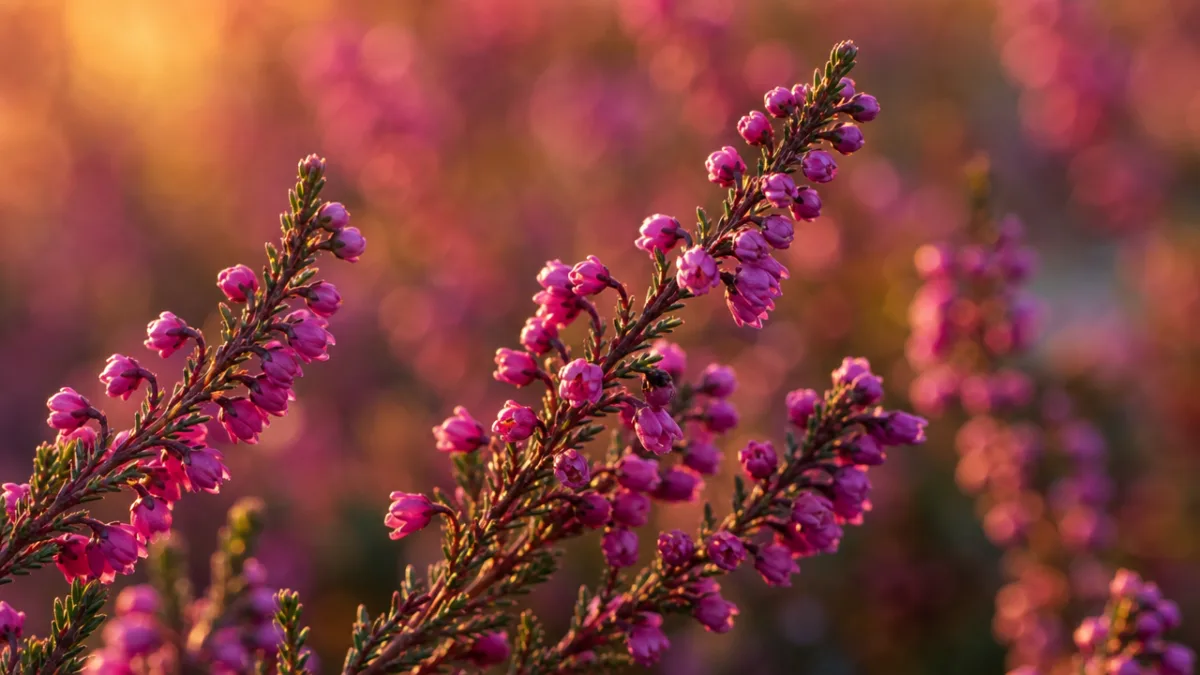
The discovery of bud blooming varieties revolutionized the way gardeners and florists think about heather as a seasonal plant. While traditional Calluna varieties burst into full bloom during late summer and then fade rather quickly, bud blooming cultivars maintain their delicate, jewel-like appearance for months at a stretch. The buds, packed tightly along arching stems, create a dense tapestry of color that appears to glow in autumn and winter light. Colors range from deep magenta and soft pink to pure white and lavender, offering gardeners an exceptional palette for late-season garden design.
Native primarily to the moorlands of Scotland, Ireland, and Scandinavia, Calluna vulgaris has a cultural and ecological history as rich as its floral display. It thrives in acidic, nutrient-poor soils where few other ornamental plants would survive, making it an extraordinarily resilient choice for challenging garden sites. The word “Calluna” itself derives from the Greek word “kallunein,” meaning to brush or to clean, a reference to the ancient practice of bundling heather stems together to make brooms. This deep historical connection to human life gives the plant a resonance that goes far beyond its visual beauty.
The Unique Science Behind Bud Blooming: Why These Flowers Never Fully Open
The bud blooming phenomenon in Calluna is a fascinating genetic characteristic that has been selectively cultivated over decades of horticultural breeding. In typical flowering plants, the progression from bud to full bloom and eventual seed dispersal is a choreographed biological sequence driven by temperature, light exposure, and hormonal signals. In bud blooming Calluna cultivars, this sequence is interrupted at the bud stage due to a natural mutation that prevents the petals from separating and opening fully. The result is a plant that produces flowers frozen in their most visually perfect state.
What makes this particularly remarkable from a botanical perspective is that despite their appearance of being perpetually on the verge of blooming, bud blooming Calluna plants are not actually stuck in an arrested development in any harmful sense. The plant remains vigorous, continues to photosynthesize normally, and can even set seed in some circumstances. The bud structure itself provides excellent protection against frost and wind damage, which helps explain why these cultivars often outlast their fully-blooming relatives in harsh autumn and winter conditions. The tightly packed sepals act as a natural shield, preserving the decorative quality of the plant through weather that would devastate a fully open flower.
From a purely visual standpoint, the bud blooming trait creates a remarkably fine and intricate texture that photographers and garden designers find irresistible. Each individual bud is a tiny, perfectly formed capsule of color, and when hundreds of thousands of these line a single branch, the cumulative effect is a dense, shimmering cloud of pigment. This fine texture contrasts beautifully with coarser foliage plants in a mixed border, and the effect is especially striking when the low autumn sun catches the buds from a raking angle, making them appear to glow from within.
Choosing the Right Bud Blooming Calluna Cultivars for Your Garden
The world of bud blooming Calluna cultivars is remarkably diverse, and selecting the right varieties for your garden requires some thought about color, habit, foliage, and the conditions of your specific site. Breeders in Germany and the Netherlands have been particularly prolific in developing new cultivars, and today gardeners can choose from dozens of named varieties, each with its own distinct personality. Understanding the differences between these cultivars will help you create a planting scheme that delivers maximum impact across the longest possible season.
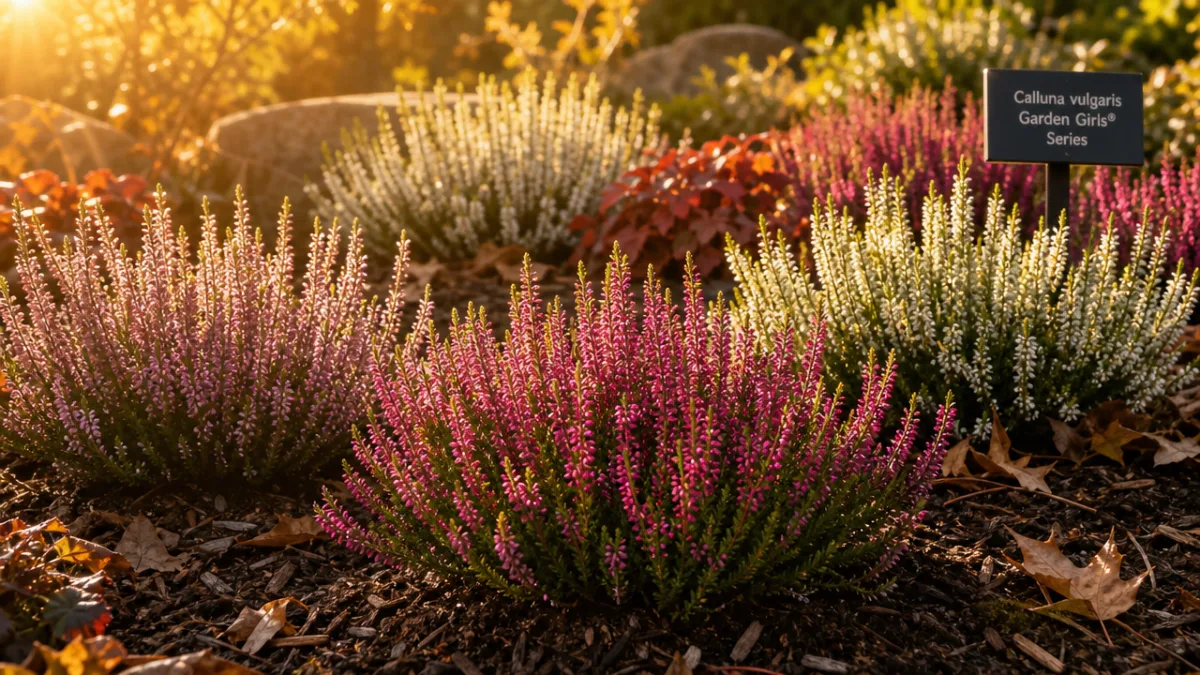
Some of the most celebrated bud blooming cultivars include ‘Alexandra,’ which produces deep crimson-red buds on a compact, rounded plant with bronzy winter foliage; ‘Alicia,’ beloved for its pure white buds that appear almost luminous against dark mulch or stone; and ‘Anette,’ a soft pink variety that brightens the autumn garden with a gentle, almost pastel warmth. ‘Marleen’ offers rich mauve-purple tones on a spreading habit ideal for ground cover, while ‘Melanie’ produces pristine white buds with extraordinary vigor and disease resistance. Each of these cultivars has been trialed extensively and awarded recognition by horticultural societies across Europe.
When selecting cultivars, it is also worth considering foliage color, since many Calluna varieties undergo dramatic color transformations in winter. Some cultivars, such as ‘Robert Chapman’ and ‘Beoley Gold,’ develop vivid orange and yellow tones in cold weather, adding a second dimension of visual interest entirely separate from the bud display. Mixing cultivars with different foliage and bud colors in a single planting creates a living mosaic that evolves through the seasons, ensuring that the garden never looks static or monotonous even in the darkest months of the year.
- ‘Alexandra’ — Deep crimson buds, compact habit, excellent for container planting and small gardens
- ‘Alicia’ — Pure white buds, vigorous growth, outstanding disease resistance and winter hardiness
- ‘Anette’ — Soft pink buds, upright habit, one of the longest-lasting displays of any cultivar
- ‘Marleen’ — Rich mauve-purple buds, spreading ground-cover form, excellent for slopes and banks
- ‘Melanie’ — White buds with a hint of blush, strong architectural form, superb container performance
- ‘Dark Beauty’ — Deep rose-red buds, semi-double appearance, extraordinary intensity of color
Planting and Growing Bud Blooming Calluna: Soil, Site, and Success
Growing Calluna successfully begins with understanding and respecting its native habitat. In the wild, heather dominates vast moorland landscapes where the soil is acidic, free-draining, and notably low in nutrients. These are conditions that many ornamental plants struggle with, but for Calluna they are essential. Before planting bud blooming Calluna in your garden, it is worth testing your soil pH with an inexpensive kit. The ideal pH range for Calluna is between 4.5 and 6.0, and if your soil is more alkaline than this, you will need to take corrective measures or consider growing your plants in containers filled with ericaceous compost.
Soil preparation is arguably the most important step in establishing a successful Calluna planting. If your garden soil is a heavy clay, digging in generous quantities of horticultural grit or coarse sand will dramatically improve drainage and help prevent the root rot that is the most common cause of failure with heather plants. Incorporating composted pine bark or ericaceous compost will also help acidify the soil and introduce the kind of organic matter that Calluna’s mycorrhizal root associations depend upon. Avoid adding conventional garden compost made from kitchen scraps or lime-rich materials, as these will counteract your acidifying efforts.
In terms of sunlight, bud blooming Calluna performs best in an open, sunny position where it receives at least six hours of direct sun per day. It tolerates partial shade but tends to become drawn and sparse in its growth, losing the dense, mounded habit that makes it so visually effective. A south or southwest-facing slope is ideal, particularly if it is protected from the coldest north and east winds. Once established, Calluna is remarkably drought-tolerant, but during the first growing season after planting, regular watering is essential to help the shallow root system establish properly in its new home.
Spacing is another consideration that new growers sometimes overlook. Bud blooming Calluna plants should be set out approximately 30 to 45 centimeters apart, depending on the vigor of the specific cultivar. This spacing allows the plants to grow together into a continuous mat within two to three growing seasons, eliminating gaps where weeds might otherwise establish. A layer of ericaceous bark mulch applied immediately after planting will conserve moisture, suppress weeds, and maintain the acid soil conditions that Calluna requires. Refresh this mulch annually in spring to maintain its effectiveness.
Pruning, Care, and Seasonal Maintenance of Bud Blooming Heather
One of the most common mistakes made by gardeners new to Calluna is neglecting to prune their plants regularly. Without annual pruning, heather plants quickly become leggy and woody at the base, losing their attractive compact form and producing progressively fewer flowers with each passing year. The good news is that pruning bud blooming Calluna is a simple and satisfying task that takes only minutes per plant once you understand the basic principles involved. The key rule is to prune after the display has ended in late winter or very early spring, before new growth begins.
The correct technique is to trim each plant back to just above the previous year’s woody growth, removing the spent flower stems but leaving the older, harder wood intact. A good pair of sharp garden shears or handheld secateurs works well for this task. It is important never to cut back into old wood more than a couple of centimeters, as Calluna, unlike many other shrubs, has very limited ability to regenerate from hard, leafless wood. Think of it as a light haircut rather than a radical renovation. This annual trim encourages the plant to produce a flush of vigorous new shoots that will carry the following season’s bud display.
Beyond pruning, bud blooming Calluna requires relatively little ongoing maintenance, which is one of the key reasons for its enduring popularity among busy gardeners. Feeding should be light and targeted; an application of a specialist ericaceous fertilizer in early spring, just as new growth begins, is usually sufficient for the entire growing season. Avoid general-purpose fertilizers, especially those high in nitrogen, as these encourage lush leafy growth at the expense of flowers and can actually reduce the plant’s winter hardiness. A granular fertilizer formulated for rhododendrons and azaleas will have the correct balance of nutrients and the right acidifying action.
Calluna in Garden Design: Landscaping Ideas and Companion Planting
Bud blooming Calluna is one of the most versatile plants available to the garden designer, equally at home in naturalistic moorland plantings, formal seasonal displays, and contemporary minimalist schemes. Its low, spreading habit and fine texture make it an ideal ground cover plant for large areas, and its extraordinary winter interest fills a gap in the seasonal calendar that few other plants can address so effectively. Whether you are designing a heather garden from scratch or simply looking to add a few plants to brighten an existing border, there are countless ways to incorporate bud blooming Calluna into your landscape.
For the most visually impactful results, consider planting bud blooming Calluna in bold sweeps of a single color rather than mixing many different varieties together in a small space. When planted in masses, the effect is far more dramatic and naturalistic than a patchwork of different colors, which can appear busy and confused. A sweeping ribbon of deep crimson ‘Alexandra’ flowing into pure white ‘Alicia’ and then blending into soft pink ‘Anette’ creates a gentle gradient of color that is both sophisticated and deeply satisfying to the eye. This approach also makes maintenance simpler, as you can prune entire sections at once without worrying about individual plants.
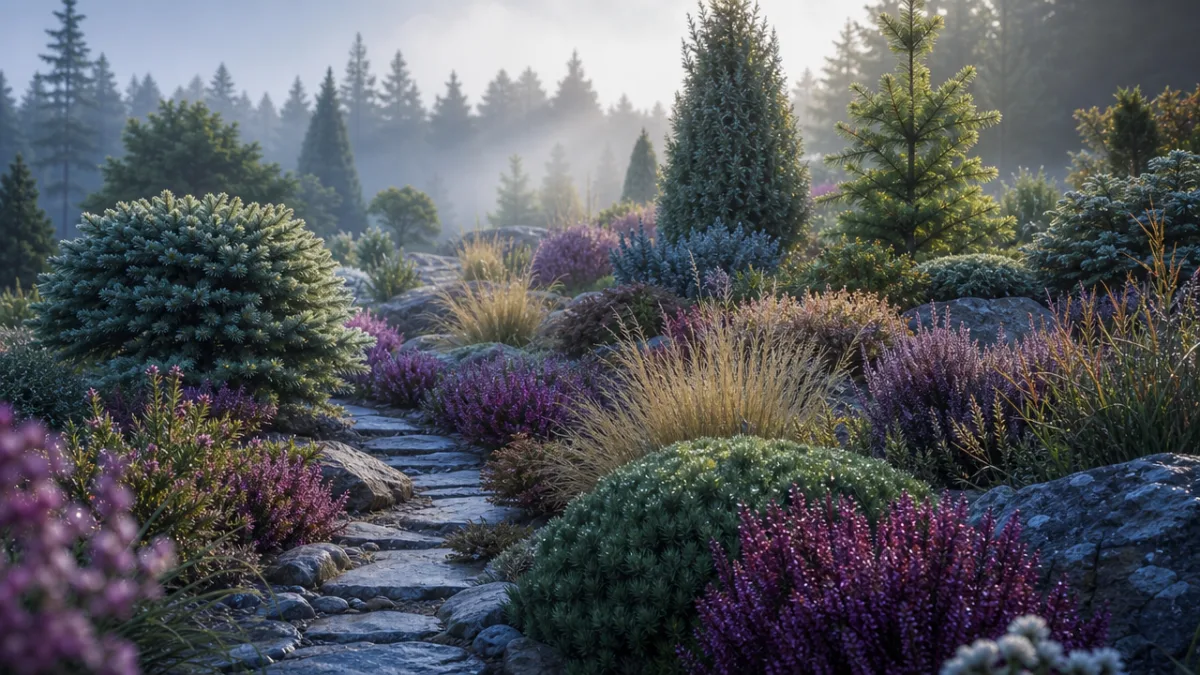
Companion planting with bud blooming Calluna opens up a wealth of design possibilities. Dwarf conifers such as Picea glauca ‘Conica’ or Juniperus communis ‘Compressa’ provide vertical accents and year-round structure among the low-growing heather, creating a landscape that looks deliberately composed rather than randomly planted. Ornamental grasses such as Festuca glauca complement the fine texture of Calluna while adding movement and a contrasting blue-grey color. Spring-flowering bulbs such as miniature narcissus or Iris reticulata can be planted among Calluna to extend the season of interest in the opposite direction, creating a planting that performs beautifully from January through to December.
- Mass planting in sweeping single-color drifts for maximum landscape impact and a naturalistic moorland aesthetic
- Mixed heather gardens combining bud blooming Calluna with winter and spring-flowering Erica species for year-round color
- Container displays using compact cultivars such as ‘Melanie’ or ‘Alexandra’ for patios, balconies, and doorstep decorations
- Rock garden plantings where the spreading habit of Calluna spills naturally over stones and fills crevices beautifully
- Wildlife gardens designed to attract bees, butterflies, and other pollinators during the crucial late-season foraging period
The Wildlife Value and Environmental Benefits of Bud Blooming Calluna
Beyond its extraordinary ornamental qualities, bud blooming Calluna provides significant ecological value that makes it a genuinely responsible choice for the environmentally conscious gardener. Heather moorlands are among the most biodiverse habitats in temperate Europe, supporting a remarkable array of specialized insects, birds, and other wildlife. When we plant Calluna in our gardens, we create small but meaningful extensions of this important habitat, providing food and shelter for species that are under increasing pressure in the wider agricultural landscape. The value of this contribution should not be underestimated.
Bees are among the greatest beneficiaries of heather planting in gardens. Calluna is a particularly important late-season nectar source, flowering at a time when most other plants have ceased production and wild bee colonies are building their winter fat reserves. Heather honey, produced by bees foraging on Calluna, is one of the most distinctively flavored and commercially valuable honeys in the world, prized for its dark amber color, robust flavor, and thick, gelatinous texture. Even though bud blooming cultivars do not fully open their flowers in the same way as traditional Calluna, they still provide accessible nectar to insects, maintaining their ecological function alongside their ornamental role.
From a sustainability perspective, Calluna deserves recognition as a model low-maintenance, low-input garden plant. Once established in appropriate soil conditions, it requires no supplementary irrigation in most temperate climates, no regular feeding beyond a single annual application of ericaceous fertilizer, and minimal intervention beyond the annual light pruning already described. Its deep roots help stabilize slopes and prevent erosion, while its dense ground-covering habit suppresses weeds naturally, reducing the need for herbicides. For gardeners seeking to reduce their environmental footprint while maintaining a beautiful and productive garden, bud blooming Calluna represents an almost ideal solution.
Heathland habitats, of which Calluna is the defining plant, are also recognized as important carbon sinks, with the deep, acidic soils of moorlands sequestering vast quantities of organic carbon accumulated over thousands of years. While a garden planting of Calluna cannot replicate the carbon storage capacity of a pristine moorland, every planting contributes to a network of habitat corridors and green spaces that together make our towns and countryside more resilient in the face of climate change. Choosing plants with genuine ecological value, like bud blooming Calluna, is one of the simplest and most beautiful ways that individual gardeners can participate in the broader effort to support biodiversity and environmental health in the places where we live.








What do you think?
It is nice to know your opinion. Leave a comment.