










Canvas Painting: A Complete Guide to Creating Stunning Works of Art
The Rich History and Enduring Appeal of Canvas Painting
Canvas painting has captivated artists and art lovers for centuries, serving as one of the most versatile and enduring mediums in the history of visual art. From the grand oil paintings of the Renaissance masters to the bold abstract expressions of modern contemporary artists, canvas has proven itself to be the ideal surface for capturing the full spectrum of human creativity and emotion. Its texture, durability, and responsiveness to paint of all kinds have made it the preferred choice for artists across cultures and generations.
The use of canvas as a painting surface became widespread in Europe during the 15th and 16th centuries, gradually replacing the heavier and more cumbersome wooden panels that had previously dominated the art world. Artists like Titian and Tintoretto helped popularize canvas in Venice, where the humid climate made wood panels impractical and prone to warping. The portability of canvas, along with its ability to be rolled and transported with relative ease, made it an enormously practical advancement that transformed how artists worked and how art was collected and displayed.
Today, canvas painting enjoys a remarkable renaissance among both professional artists and enthusiastic hobbyists. In an era increasingly dominated by digital screens and virtual experiences, there is something profoundly satisfying about applying physical paint to a tangible surface and creating something with your own hands. Whether you are drawn to the meditative quality of the process, the social aspect of painting classes, or simply the joy of producing your own unique artwork to hang in your home, canvas painting offers a deeply rewarding creative outlet that connects you to a long and distinguished artistic tradition.
Why Canvas Remains the Artist’s Preferred Surface
Artists continue to choose canvas over other surfaces for a wide variety of practical and aesthetic reasons that go far beyond mere tradition. The woven texture of canvas creates a natural tooth that helps paint adhere more effectively, giving artists greater control over how color and brushwork appear on the finished piece. This texture also adds a subtle visual dimension to paintings that smoother surfaces simply cannot replicate, lending depth and character to even the most minimalist compositions.
Canvas is also prized for its remarkable longevity when properly prepared and cared for. A well-primed canvas treated with quality paints and varnishes can last for hundreds of years without significant deterioration, as evidenced by the countless masterworks that survive in museums around the world. For artists who invest significant time and emotion into their work, this durability provides a reassuring sense that their creations will endure long after they are gone, carrying forward a visual legacy for future generations to appreciate and study.
The sheer variety of canvas options available to modern artists further explains its enduring dominance. Artists can choose from cotton or linen canvases, each offering distinct surface qualities and levels of absorbency. They can select stretched canvases ready for immediate use, canvas boards for a more rigid surface, or raw canvas rolls for large-scale or experimental work. This flexibility ensures that canvas can meet the needs of virtually any artistic vision, from intimate miniature portraits to sweeping large-format installations that fill entire gallery walls.
Essential Materials and Tools for Canvas Painting
Before you pick up a brush and begin your canvas painting journey, it is essential to familiarize yourself with the core materials and tools that will define your creative experience. Having the right supplies not only makes the painting process more enjoyable and efficient but also significantly impacts the quality and longevity of your finished artwork. Investing thoughtfully in your materials from the beginning will save you frustration and expense in the long run, setting a strong foundation for your artistic development.
The most important decision you will make as a beginning canvas painter is choosing your paint medium. Oil paints, acrylic paints, and watercolor each bring distinct qualities to canvas work, and understanding those differences will help you select the medium best suited to your personal style and goals. Oil paints dry slowly, allowing for extended blending and reworking, and produce rich, luminous colors that have made them the gold standard for fine art for centuries. Acrylics dry quickly, are water-soluble, and are far more forgiving for beginners, while watercolor on canvas creates ethereal, luminous effects that are quite different from traditional watercolor paper work.
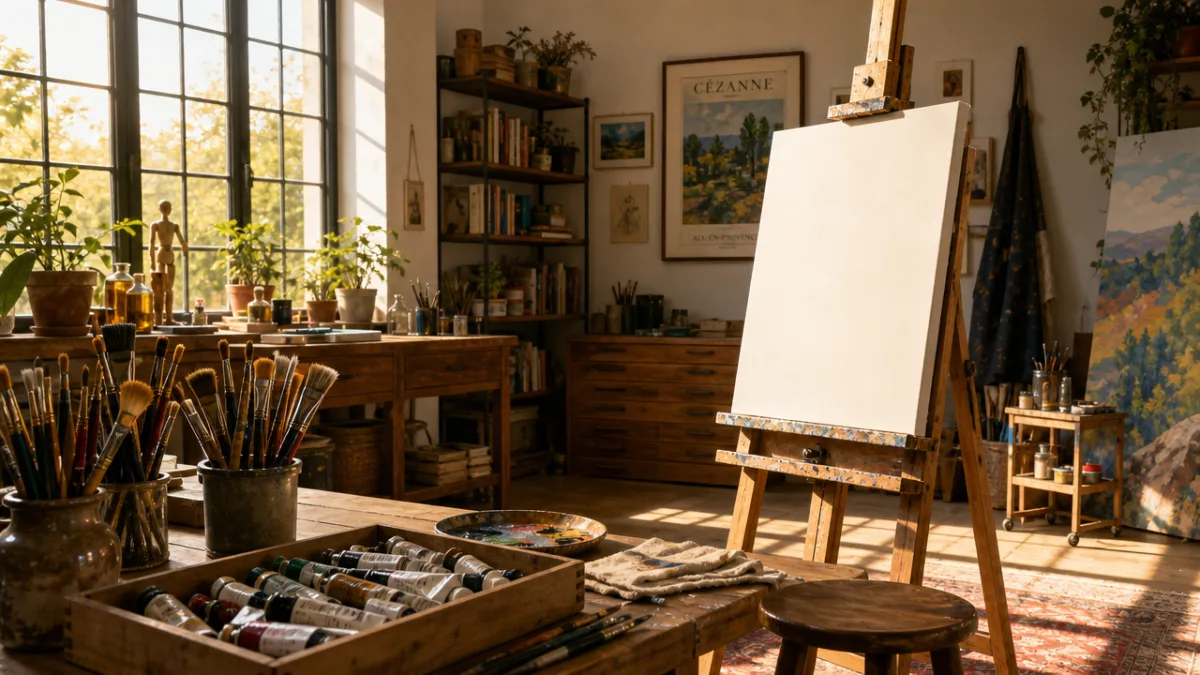
Brushes are your most intimate tools as a canvas painter, and building a thoughtful collection will dramatically expand your creative possibilities. Round brushes are ideal for detail work and fine lines, while flat brushes allow you to apply broad washes of color and create clean, crisp edges. Filbert brushes, with their oval shape, are wonderfully versatile and excellent for blending and soft edges. Fan brushes create unique textural effects, and palette knives offer a completely different approach, allowing you to apply paint in thick, sculptural impasto strokes that a brush could never achieve.
Preparing Your Canvas for Optimal Results
Proper canvas preparation is a step that many beginners overlook, yet it is one of the most critical factors in determining both the ease of your painting experience and the longevity of your finished work. Most commercially available stretched canvases come pre-primed with gesso, a white preparatory coating that seals the canvas fibers and provides an ideal surface for paint adhesion. However, applying additional coats of gesso can further refine the surface texture and absorbency to match your specific painting style and preferences.
When applying gesso yourself, thin it slightly with water and apply it in smooth, even strokes using a wide, flat brush or a foam roller. Allow each coat to dry completely before sanding lightly with fine-grit sandpaper and applying the next coat. Two to three coats of gesso typically provide an excellent working surface, though artists who prefer a very smooth finish may apply additional coats and sand more thoroughly between each application. The direction of your gesso strokes can also subtly influence the texture of the final surface, giving you another variable to experiment with as you develop your practice.
Some artists prefer to tint their gesso or apply a colored ground before beginning to paint, rather than working on a stark white surface. A toned ground, typically a mid-value neutral color like grey, warm tan, or muted green, can dramatically change how colors read on the canvas and simplify the process of building a unified color harmony throughout the painting. Working on a toned ground also means you never have to contend with unpainted white canvas showing through your composition, which can be visually disruptive and challenging to manage, particularly for less experienced painters.
Fundamental Techniques Every Canvas Painter Should Master
Developing a strong command of foundational painting techniques is the single most effective way to accelerate your growth as a canvas painter and unlock the full expressive potential of the medium. While there is no substitute for consistent practice and personal experimentation, understanding the core techniques that professional artists rely on will give you a structured framework within which to explore and develop your own unique style. These techniques are not rigid rules but rather flexible tools that you can adapt and combine in endlessly inventive ways.
Blocking in, or establishing the large masses of color and value across your composition before refining details, is perhaps the most important foundational technique for painters working in any medium. By starting with broad, approximate shapes and gradually working toward greater specificity and detail, you maintain a holistic view of the entire composition throughout the painting process. This approach helps prevent the common beginner mistake of becoming overly focused on isolated areas of detail before the overall composition and value structure have been properly established, which often results in paintings that feel fragmented and inconsistent.
Glazing is a classical technique in which thin, transparent layers of paint are applied over dried underlayers to subtly modify color, deepen shadows, or create luminous optical effects that cannot be achieved with opaque paint alone. Each glaze allows some of the underlying layers to show through, creating a visual depth and richness that gives oil and acrylic paintings their characteristic glow. The Old Masters used glazing extensively to achieve the remarkable skin tones and atmospheric depth visible in their portraits and figure paintings, and the technique remains just as relevant and powerful for contemporary artists today.
Color Theory and Its Practical Application on Canvas
A working knowledge of color theory is indispensable for any serious canvas painter, providing the intellectual framework that allows you to make confident, deliberate decisions about how to mix and arrange colors within your compositions. Understanding the relationships between primary, secondary, and tertiary colors, as well as the concepts of hue, value, and saturation, gives you precise control over the emotional impact and visual harmony of your paintings. Color is perhaps the most powerful tool at the painter’s disposal, capable of conveying mood, directing attention, and creating the illusion of depth and light.
Complementary colors, which sit directly opposite each other on the color wheel, create vibrant visual tension when placed side by side and produce rich, neutral tones when mixed together. Analogous color schemes, which group colors adjacent on the wheel, create harmonious, pleasing compositions that feel naturally unified. Understanding warm and cool color relationships is equally vital, as the strategic use of warm and cool tones creates the illusion of form, depth, and atmospheric perspective that brings a flat canvas painting to life and gives it a convincing sense of three-dimensional space.
Mixing your own colors from a limited palette is far more educational and ultimately more effective than relying on a vast array of pre-mixed hues straight from the tube. A limited palette, typically consisting of just one warm and one cool version of each primary color plus white and perhaps one or two earth tones, forces you to truly understand color relationships and teaches you to see subtle variations in hue and temperature that you might otherwise miss. Many master painters throughout history, including the Impressionists, worked with remarkably limited palettes that they learned to exploit with extraordinary sophistication and nuance.

Popular Styles and Subjects for Canvas Painting
One of the most exciting aspects of canvas painting is the vast range of styles and subjects available to explore, each offering its own unique set of challenges, pleasures, and expressive possibilities. Whether you are drawn to realistic representation, loose impressionistic interpretation, or pure abstract expression, canvas is a medium capable of accommodating virtually any artistic vision. Exploring different styles and subjects is not only a valuable learning exercise but also an important part of discovering your own artistic identity and the kinds of work that resonate most deeply with you personally.
Landscape painting remains one of the most beloved and widely practiced subjects for canvas painters at every level of experience. The natural world offers an inexhaustible source of inspiration, from sweeping panoramic vistas to intimate studies of a single tree or stream. Painting outdoors, or en plein air in the tradition of the Impressionists, brings unique challenges including changing light conditions and weather but also a directness and vitality that studio work can rarely fully replicate. Landscape painting teaches acute observational skills and a sensitivity to light, atmosphere, and the subtle relationships between colors in nature.
Portrait and figure painting represent perhaps the most technically demanding and emotionally resonant subjects in the canvas painting tradition. Capturing a convincing likeness requires a deep understanding of anatomy, proportion, and the complex way light interacts with the planes of the human face and body. Beyond technical accuracy, the best portrait painters also capture something of the inner life and character of their subjects, elevating what might otherwise be a straightforward likeness into a genuine work of psychological and emotional depth. Many artists find portrait painting to be the most demanding and ultimately the most rewarding area of their practice.
Abstract Painting: Freedom and Expression on Canvas
Abstract canvas painting offers a liberating departure from representational art, inviting artists to explore the pure expressive potential of color, form, line, and texture without the constraints of depicting recognizable subjects. For many artists, abstract painting represents a direct channel to emotional expression, allowing feelings, ideas, and experiences to be communicated through visual elements alone rather than through narrative or recognizable imagery. The freedom of abstraction can be both exhilarating and initially disorienting, particularly for artists accustomed to the structure that representational subjects provide.
Successful abstract painting, despite its apparent freedom, typically involves considerable thought and intention. The most compelling abstract works achieve a powerful visual logic through deliberate choices about composition, color relationships, scale, and the quality of marks and gestures. Artists like Mark Rothko, Helen Frankenthaler, and Joan Mitchell created abstract works of extraordinary power and sophistication that reward close looking and reveal increasing complexity the more time you spend with them. Studying these and other abstract masters provides invaluable insight into how non-representational paintings can achieve genuine emotional and intellectual depth.
For those new to abstract painting, beginning with some loose structural parameters can actually facilitate greater creative freedom rather than limiting it. Try starting with a limited color palette, a dominant shape or directional movement, or a specific emotional state or memory as your point of departure. These initial constraints give you something to push against and work with, generating productive creative tension that can lead to more interesting and coherent results than beginning with a completely blank canvas and no guiding intention whatsoever. Over time, as your confidence and visual vocabulary grow, these starting parameters can become progressively looser and more intuitive.
Building a Sustainable Canvas Painting Practice
Developing a consistent, sustainable painting practice is ultimately what separates artists who continue to grow and find fulfillment in their work from those who start enthusiastically but gradually lose momentum and abandon the pursuit. Building a practice means creating the conditions, habits, and mindset that allow you to paint regularly and with genuine engagement, even when motivation is low, time is scarce, or the work itself is frustrating and difficult. A sustainable practice is built incrementally, through small daily commitments rather than occasional bursts of intense activity followed by long periods of inactivity.
Setting up a dedicated painting space, even a modest one, is one of the most effective practical steps you can take to support a regular painting practice. When your materials are organized, accessible, and ready to use, the psychological and logistical barriers to sitting down and painting are dramatically reduced. You do not need a large studio or an elaborate setup to paint effectively. A small table, adequate lighting, and a well-organized collection of your essential materials can be entirely sufficient, particularly if you are disciplined about keeping your space clean and your supplies replenished and ready to go at a moment’s notice.
Keeping a visual journal or sketchbook alongside your canvas painting practice provides an invaluable space for experimentation, idea generation, and low-stakes creative exploration. Use your sketchbook to try out color combinations, work through compositional problems, record visual observations from daily life, and explore ideas that you are not yet ready to commit to canvas. Many professional artists consider their sketchbooks to be among their most important creative tools, providing a continuous record of their thinking and development that informs and enriches their more finished work in countless direct and indirect ways.
Continuing Your Growth as a Canvas Painter
The journey of artistic development in canvas painting is lifelong and endlessly rewarding, with new discoveries, challenges, and breakthroughs available at every stage of experience. Even artists who have been painting for decades continue to learn, evolve, and surprise themselves with unexpected developments in their work. Approaching your practice with genuine curiosity and a willingness to embrace uncertainty and experimentation rather than retreating to familiar formulas is the surest path to continued growth and a deeply fulfilling long-term creative life.
Seeking out opportunities to learn from other artists, whether through formal classes, workshops, online tutorials, or simply by studying and discussing paintings you admire, provides invaluable perspective and accelerates your development in ways that solitary self-teaching cannot. There are many excellent resources available for artists at every level, including the following valuable avenues for continued learning and community connection:
- Local art center workshops and classes that offer structured instruction and the company of fellow artists in a supportive, social environment.
- Online video tutorials and courses from professional artists covering every technique, medium, and subject matter imaginable, accessible at any time.
- Museum and gallery visits that allow you to study original works up close, observing brushwork, color, and texture in ways that reproductions cannot convey.
- Painting groups and critique circles that provide regular accountability, honest feedback, and the motivational energy of a shared creative community.
- Art books, artist biographies, and monographs that deepen your understanding of art history and provide sustained inspiration from the work of artists you admire.
Perhaps most importantly, remember that the primary measure of a successful canvas painting practice is not technical mastery or external recognition, but the quality of engagement, joy, and personal meaning that the work brings to your daily life. Canvas painting at its best is a practice of presence, attention, and genuine self-expression that enriches not only the lives of those who eventually view the finished work but, first and foremost, the life of the artist who created it. Show up regularly, paint with intention and curiosity, and trust that meaningful growth will follow naturally in its own time and at its own pace.








What do you think?
It is nice to know your opinion. Leave a comment.