










Aesthetic Cozy Room Hub: Your Complete Guide to Creating the Perfect Sanctuary
There is something deeply human about wanting a space that feels entirely your own — a corner of the world where the chaos outside cannot reach you. The aesthetic cozy room movement has grown from a quiet internet niche into a full cultural phenomenon, inspiring millions to reimagine their living spaces as true sanctuaries of warmth, personality, and calm. Whether you are starting from scratch in a new apartment or simply looking to breathe new life into a tired bedroom, this guide will walk you through every dimension of creating a room that feels like a warm hug at the end of a long day.
What makes a room truly cozy goes far beyond throwing a few blankets on a chair. It is the careful layering of textures, the thoughtful curation of light, the personal touches that tell the story of who you are. Aesthetic cozy rooms strike a balance between visual beauty and lived-in comfort — they look intentional without feeling stiff, and inviting without feeling cluttered. Understanding that balance is the first step toward building a space you will genuinely love spending time in.
Understanding the Aesthetic Cozy Room Philosophy
The foundation of any aesthetic cozy room lies in a simple but powerful philosophy: your space should serve your emotional needs as much as your practical ones. Unlike purely minimalist or maximalist design approaches, the cozy aesthetic sits comfortably in between — it welcomes personality and warmth while still maintaining a sense of visual harmony. The goal is a room that immediately signals rest, safety, and comfort the moment you step inside, one that lowers your cortisol levels without you even realizing it.
Central to this philosophy is the Danish concept of hygge, which refers to a quality of coziness and comfortable conviviality that engenders a feeling of contentment or well-being. Though the term comes from Scandinavian culture, the feeling it describes is universal. People across every culture and climate have an instinct for creating warmth in their environments, and the aesthetic cozy room trend simply gives that instinct a modern, visually curated language. Understanding hygge means understanding that coziness is not just decoration — it is a way of living and relating to your surroundings.
Another pillar of this philosophy is intentionality. Every element in a cozy aesthetic room should earn its place, not through rigid minimalism but through genuine meaning or function. A candle on the windowsill is not just decoration; it is an invitation to slow down. A stack of well-loved books on a side table is not clutter; it is evidence of a rich inner life. When you approach your room with this kind of mindfulness, the result is a space that feels deeply personal rather than like a showroom assembled from a catalog.
Key Principles to Keep in Mind
- Prioritize warmth over perfection — a lived-in space feels more inviting than an immaculate one.
- Layer rather than accessorize — build depth through stacking textures, tones, and materials.
- Let natural elements ground the space — wood, stone, plants, and linen all add organic warmth.
- Curate with meaning — choose objects that have a story or spark genuine joy rather than filling space arbitrarily.
- Design for how you actually live — consider your daily rituals and build the room around supporting them.
Mastering Light: The Single Most Powerful Cozy Tool
If there is one element that transforms a room from ordinary to deeply cozy, it is light. Lighting has an almost alchemical effect on atmosphere — the same room can feel clinical and cold under harsh overhead fluorescents and then magically intimate under warm, low-level lamp light. Aesthetic cozy rooms almost universally favor warm-toned lighting in the 2700K to 3000K color temperature range, which mimics the golden glow of candlelight or late-afternoon sun and triggers a physiological sense of relaxation in the human brain.
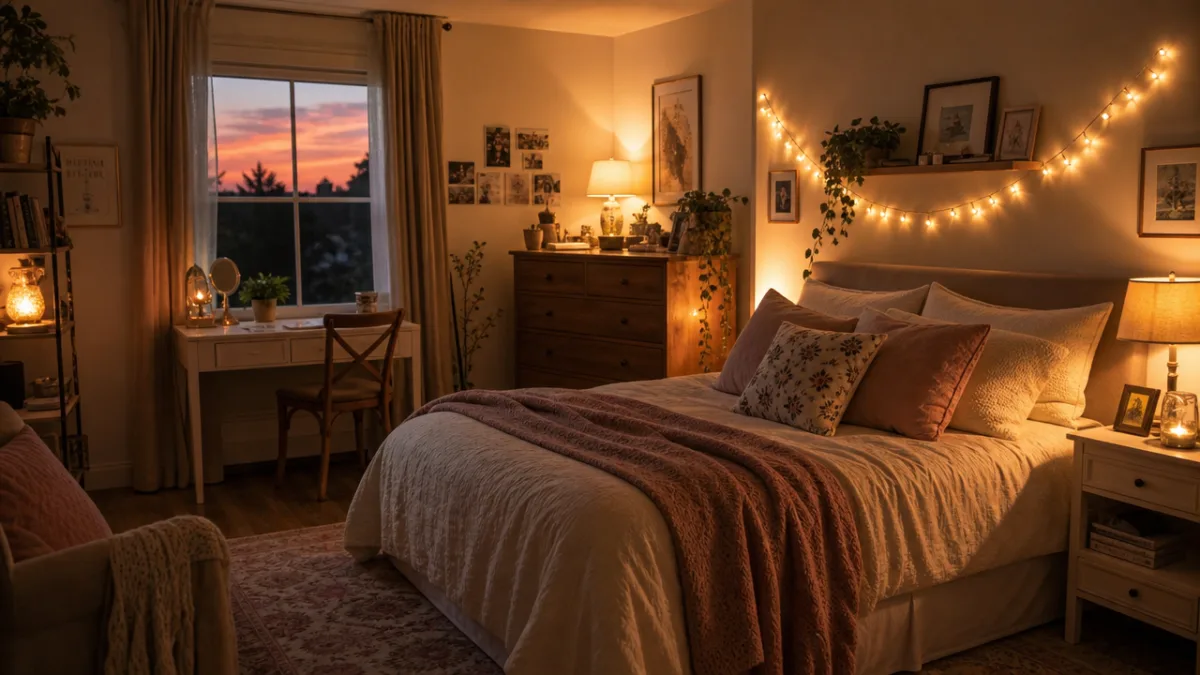
The key to cozy lighting is layering multiple light sources at different heights rather than relying on a single overhead fixture. A combination of floor lamps, table lamps, string lights, and candles creates what interior designers call “pools of light” — intimate pockets of warmth that draw the eye and invite you to settle in. Fairy lights draped along a bookshelf or behind a sheer curtain add a magical quality that no designer fixture can quite replicate. The goal is to avoid any single harsh light source and instead build a constellation of gentle glows throughout the space.
Natural light deserves equal attention, particularly in terms of how you manage and soften it. Sheer linen curtains are a staple of the cozy aesthetic for good reason — they diffuse sunlight into a soft, luminous glow that makes the whole room feel warmer and dreamier than direct light ever could. During the evening, consider using smart bulbs with adjustable warmth settings to gradually shift the room’s ambiance as the day winds down, mimicking the natural transition from golden hour to candlelight that our circadian rhythms are wired to find soothing.
Recommended Lighting Layers
- Ambient base layer: A warm-toned overhead fixture on a dimmer or a floor lamp positioned in a corner to spread light evenly without harshness.
- Task lighting: A focused desk lamp or bedside lamp for reading or working that adds both function and a warm focal point.
- Accent lighting: String lights, LED strip lights behind furniture, or small decorative lamps that add depth and visual interest.
- Atmospheric lighting: Real candles or flameless alternatives clustered on surfaces, providing the most intimate and emotionally resonant light of all.
Texture, Fabric, and the Art of Layering
Touch is one of the most underestimated senses in interior design, and yet it plays an enormous role in how comfortable and cozy a room actually feels. A room can look beautiful in photographs and still feel sterile and uninviting in person if it lacks tactile richness. The aesthetic cozy room approach remedies this by deliberately layering a variety of textures — chunky knit throws, velvet cushions, linen bedding, sheepskin rugs, and woven baskets — each one adding a different quality of warmth and inviting you to reach out and touch it.
The art of layering textiles is one that rewards a slightly maximalist instinct when it comes to softness. Your bed, for instance, should look like you could disappear into it — a base of quality cotton or linen sheets, topped with a lightweight duvet, then a heavier quilt folded at the foot, then two or three throw pillows in varying sizes and textures, perhaps with a chunky knit blanket draped casually over one corner. This kind of layering creates visual depth as much as physical comfort, making the bed the irresistible focal point of a cozy room.
Rugs are another transformative element that dramatically changes how a room feels underfoot and acoustically. Hard floors, while beautiful, can make a space feel echoey and cold without the softening effect of a well-chosen rug. In a cozy aesthetic room, the rug should be large enough that all major furniture pieces sit at least partially on it, anchoring the space and creating a sense of a unified, enveloping environment. Natural fiber rugs like jute or wool add organic warmth, while plush shag rugs deliver maximum tactile luxury — and there is no rule against layering two rugs for added depth and interest.
Essential Textures for a Cozy Room
- Chunky knit: Throws and cushion covers in chunky knit wool or cotton immediately signal warmth and handmade character.
- Linen: Washed linen bedding and curtains offer effortless texture that looks more beautiful the more it wrinkles and softens with use.
- Velvet: Used on cushions, ottomans, or an accent chair, velvet adds rich color depth and a luxurious tactile quality.
- Natural wood: Unfinished or lightly oiled wood surfaces bring organic warmth that no synthetic material can replicate.
- Ceramic and clay: Handmade ceramics on shelves or as plant pots add the subtle texture of human craft to a space.
Color Palettes That Breathe Warmth Into a Space
Color is perhaps the most emotionally charged tool in your cozy room arsenal, and the palettes most associated with the aesthetic cozy aesthetic tend to share a few common qualities: they are warm rather than cool, muted rather than saturated, and drawn from nature rather than from graphic design. Think of the colors you associate with autumn forests, stone cottages, warm sand beaches, and candlelit libraries. Burnt orange, terracotta, warm cream, dusty sage, mushroom brown, and blush pink — these are the hues that consistently appear in the most beloved cozy room designs, and for good reason.
The key to using these colors effectively is to build a palette rather than select individual colors in isolation. A cozy room typically works with three to five tones — one dominant neutral, one or two mid-tone accent colors, and one slightly bolder color used sparingly as a punctuation point. For example, a room with warm cream walls, natural oak furniture, and linen bedding might use dusty sage as an accent through cushions and a throw, with a single terracotta ceramic vase providing that small pop of warmth that brings the whole palette to life. The result feels cohesive and intentional without being formulaic.
Do not underestimate the impact of your wall color in setting the entire emotional tone of the room. Stark white walls, while popular in minimalist design, can make a cozy aesthetic feel cold and unfinished. Instead, consider warm whites with yellow or pink undertones, soft greige (a blend of grey and beige), or even a deep, rich tone like forest green or dusty burgundy for a more dramatic and enveloping feel. Dark-painted rooms, often called “moody” rooms in the design world, are surprisingly cozy because the color itself seems to wrap around you, creating an intimate cocoon effect that is utterly distinct from lighter palettes.
Building Your Cozy Hub: Furniture Arrangement and Focal Points
No matter how beautiful your individual pieces are, a room will not feel truly cozy until the furniture is arranged in a way that encourages gathering, settling in, and staying awhile. The most important principle in cozy furniture arrangement is creating intimate conversation and rest zones — pulling seating away from walls and grouping it inward so that people face each other rather than staring at the room’s perimeter. A sofa and two chairs arranged around a central coffee table, for instance, creates an immediate sense of enclosure and togetherness that feels far warmer than the same furniture pushed against three different walls.
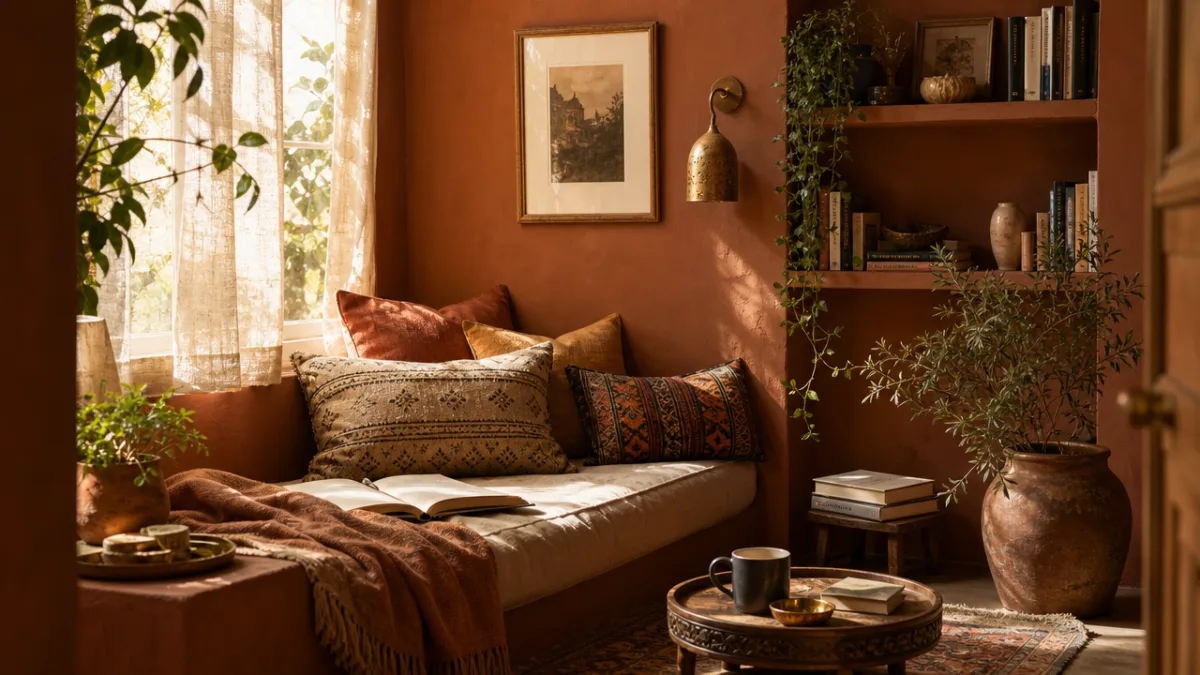
Every cozy room benefits from at least one dedicated “nesting spot” — a place that seems designed specifically for curling up. This might be a window seat piled with cushions and overlooking a garden, an oversized armchair angled beside a floor lamp with a small side table for a cup of tea, or a reading corner built into a bookshelf alcove with a low, cushioned bench and a string of lights overhead. These spots function as the emotional heart of the room — the place your eye is drawn to first, and the place you instinctively move toward when you need comfort. Designing one deliberately, rather than hoping it will emerge naturally, is one of the highest-impact investments you can make in the coziness of your space.
Focal points are equally important for creating a sense of purpose and intention in a room. A cozy aesthetic room typically organizes itself around one or two strong visual anchors — perhaps a vintage-framed mirror above a fireplace mantle styled with candles and dried botanicals, or a gallery wall of personal photographs and found art that tells the story of your life and travels. These focal points give the eye somewhere meaningful to land, preventing the room from feeling directionless. They also serve as conversation starters and constant reminders of the things and people that matter most to you, reinforcing the room’s identity as a deeply personal refuge.
Furniture Choices That Maximize Coziness
- Oversized sofas and sectionals with deep cushions that encourage you to truly sink in rather than sit upright.
- Low-profile furniture that keeps the eye line lower and the ceiling visually higher, creating a more relaxed and intimate scale.
- Rounded edges over sharp corners — curved sofas, oval coffee tables, and arched mirrors all soften the energy of a room.
- Furniture with natural material bases — solid wood legs, rattan frames, and stone surfaces all add organic character.
- Built-in or freestanding bookshelves that fill walls with books, plants, and objects, making the room feel richly inhabited.
Plants, Nature, and the Living Elements of a Cozy Room
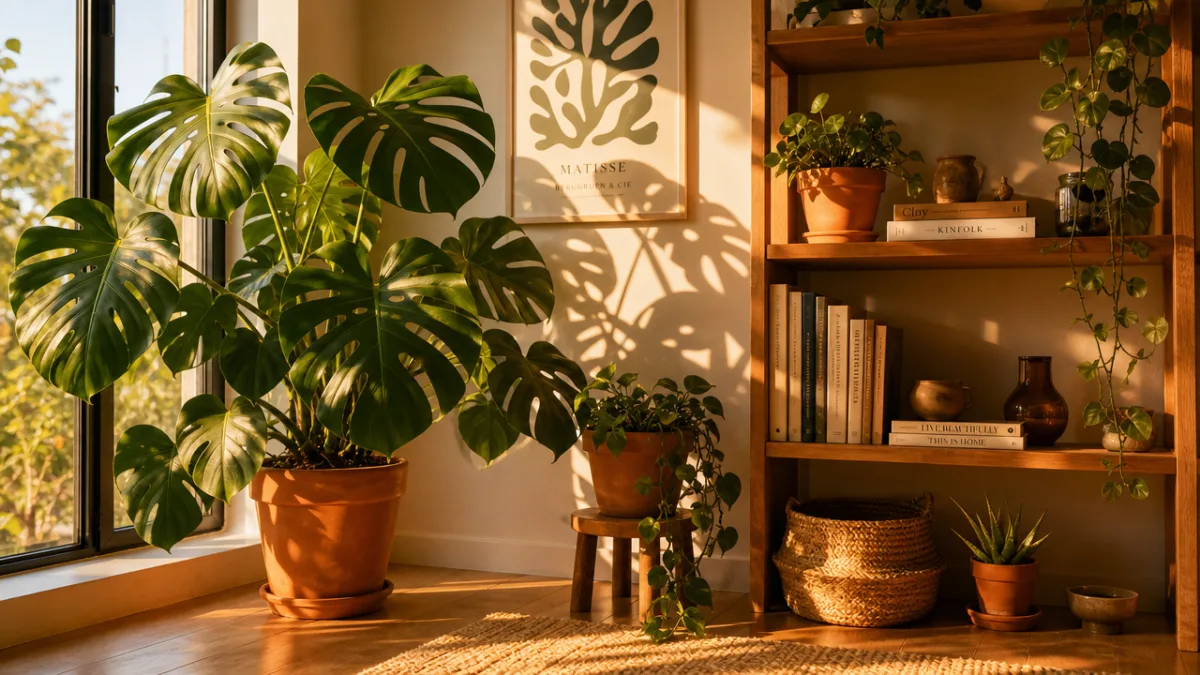
There is growing scientific evidence behind what intuition has long told us: the presence of living plants in a space makes people feel calmer, happier, and more at ease. For the aesthetic cozy room, plants serve a dual purpose — they are visually beautiful, adding color, texture, and scale to a space, and they connect the room to the natural world in a way that no manufactured object can quite replicate. Even a single trailing pothos cascading from a high shelf or a lush monstera in a terracotta pot by a window can transform the feeling of a room, making it feel alive and inhabited rather than static and staged.
The key to incorporating plants into a cozy aesthetic is to choose varieties that suit your actual lifestyle and light conditions honestly, rather than aspiring to a vision board filled with plants you will struggle to keep alive. Low-maintenance options like snake plants, ZZ plants, pothos, and peace lilies are forgiving, beautiful, and genuinely thrive in indoor conditions. For those with more light and ambition, trailing string of pearls, fiddle-leaf figs, and olive trees bring a romantic, slightly organic chaos to a room that perfectly suits the cozy aesthetic. The containers you choose matter as much as the plants themselves — handmade terracotta pots, woven baskets, and aged ceramic planters all complement the warm, natural palette far better than modern plastic or bright glazed alternatives.
Beyond potted plants, consider incorporating other natural elements that bring the outside world in without requiring a green thumb. A vase of dried pampas grass or eucalyptus adds texture and a muted, earthy color that complements most cozy palettes beautifully and lasts for months or even years without maintenance. Branches from a late-season walk arranged in a tall vessel, a bowl of pinecones on a coffee table, or a collection of smooth stones gathered from a meaningful place — these small acts of bringing nature indoors are among the oldest and most universally human forms of making a space feel like home, and they cost almost nothing.
Natural Elements Checklist
- At least one medium to large live houseplant as an anchor piece, positioned near natural light.
- A cluster of two or three smaller plants in complementary terracotta or ceramic vessels on a windowsill or shelf.
- Dried botanicals — pampas grass, lavender bundles, or wheat stems — in a simple vase as a low-maintenance natural accent.
- Natural material objects such as wooden bowls, stone coasters, woven baskets, or linen-covered books.
- A scent element — a candle or diffuser with a nature-inspired fragrance like cedarwood, sandalwood, or eucalyptus — to engage the olfactory sense.
Personal Touches and the Final Layer of Meaning
The final and perhaps most important dimension of a truly aesthetic cozy room is the layer of personal meaning that elevates it beyond an Instagram-worthy interior into a genuine home. This is the layer that no design blog or mood board can prescribe, because it comes entirely from you — your history, your passions, your relationships, and the small objects that carry outsized emotional weight. A worn paperback with a cracked spine on the nightstand, a photograph of people you love in a simple frame on the wall, a mug you have had since college that you simply cannot bring yourself to replace — these are the elements that make a room feel irreplaceably yours.
Gallery walls are one of the most effective vehicles for this personal layer, and they have become a hallmark of the aesthetic cozy room for good reason. A thoughtfully assembled gallery wall might combine original art, printed photographs, vintage postcards, pressed flowers under glass, meaningful quotes in simple frames, and small mirrors — all hung in a relaxed, organic arrangement that feels curated rather than rigid. The magic of a gallery wall is that it tells the story of a person or a family at a glance, creating an immediate sense of intimacy and depth that a bare wall or a single large print simply cannot achieve.
Scent is the most often overlooked but perhaps most powerful personal touch in a cozy room. Our olfactory sense is directly wired to the brain’s limbic system — the center of emotion and memory — which is why a particular scent can transport us instantly to a specific time, place, or feeling. Choosing a signature scent for your room, whether through candles, a wax warmer, a reed diffuser, or linen spray, creates a powerful sense-memory association that means stepping into your room will eventually trigger an almost Pavlovian sense of comfort and safety. Choose a scent that genuinely resonates with you — woody and resinous for depth, citrus and herbal for lightness, floral and powdery for romance — and let it become as much a part of your room’s identity as its color or furniture.
Ultimately, the most successful aesthetic cozy rooms are not the ones that most perfectly replicate a trend or a Pinterest board, but the ones that most accurately reflect the unique inner world of the person who inhabits them. Trends change, aesthetics evolve, and design movements come and go, but the feeling of walking into a space that knows you — that holds your history, supports your rituals, and welcomes you home at the end of every day — is timeless. Take the principles in this guide as a starting point, then trust your own instincts, your own memories, and your own sense of what warmth means to you. That is where the true cozy aesthetic lives.








What do you think?
It is nice to know your opinion. Leave a comment.