










Crocheted Pendant Pouch: A Complete Guide to Crafting a Beautiful Wearable Accessory
Introduction to the Crocheted Pendant Pouch
The crocheted pendant pouch is one of the most delightful intersections of fiber arts and wearable jewelry. These tiny, intricate pouches are crafted using fine crochet techniques to create a small bag that can hold a gemstone, crystal, or other meaningful object, then be worn as a necklace pendant. The result is a piece that is both functional and deeply personal, combining the warmth of handmade craft with the elegance of jewelry design.
What makes the pendant pouch so appealing to crafters of all levels is its remarkable versatility. You can tailor the size, color, and stitch pattern to suit any aesthetic, from bohemian and earthy to sleek and minimalist. The pouch can cradle a rough chunk of amethyst, a smooth river stone, a polished moonstone, or even a small glass bead, transforming an everyday material into a cherished wearable piece. This adaptability is one reason why crocheted pendant pouches have surged in popularity across the crafting community.
Beyond their beauty, these pouches carry a certain meditative quality in their making. The repetitive nature of working tiny stitches in the round encourages a kind of mindful focus that many crafters find deeply satisfying. Whether you are an experienced crocheter looking for a new challenge or a beginner eager for a manageable first project, the pendant pouch offers a rewarding experience from the first stitch to the finished wearable piece.
A Brief History of Wearable Crochet
Crochet has been used to create wearable items for centuries, evolving from practical necessity into high fashion and folk art. In the nineteenth century, Irish crochet lace became a celebrated form of intricate handwork, producing collars, cuffs, and decorative accessories that were prized across Europe. This tradition of using a simple hook and thread to create wearable art has never truly faded, and the crocheted pendant pouch stands as a modern continuation of that long heritage.
In more recent decades, the rise of the handmade and slow-fashion movements has reinvigorated interest in wearable crochet. Crafters began exploring ways to integrate their fiber arts into everyday personal style, moving beyond traditional garments to include jewelry, accessories, and small decorative items. The pendant pouch emerged as a natural expression of this trend, offering a way to combine the tactile pleasure of crochet with the personal symbolism often associated with crystals and gemstones.
Today, crocheted pendant pouches occupy a vibrant space in both the crafting and crystal communities. They are shared widely on platforms like Pinterest and Instagram, where artisans showcase their creations in a dazzling array of yarns, threads, and stones. Tutorials range from beginner-friendly designs using basic stitches to advanced patterns featuring intricate lace work and complex closures, ensuring that there is a project for every skill level and personal taste.
Materials and Tools You Will Need
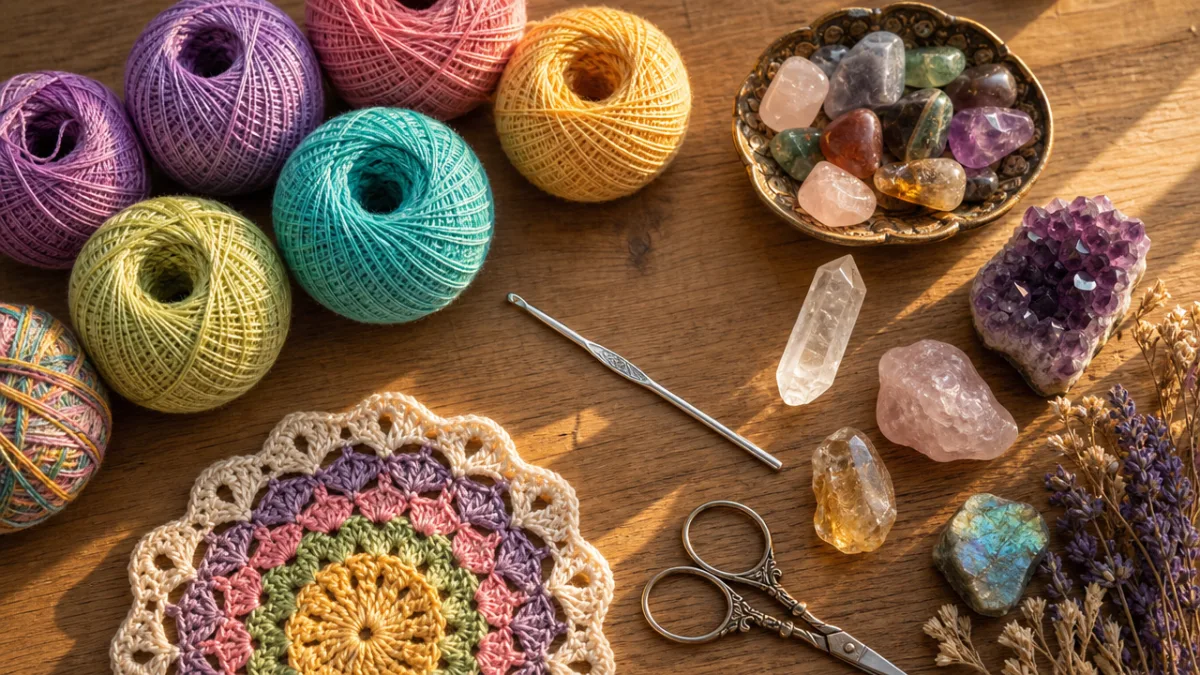
Choosing the right materials is perhaps the most important step in creating a pendant pouch that is both beautiful and durable. The thread or yarn you select will largely determine the look and feel of the finished piece. For delicate, lace-like results, many crafters prefer fine crochet thread in size ten or twenty, which produces a tight, refined mesh that cradles a stone securely without overwhelming it visually. Cotton thread is a popular choice because it holds its shape well, washes easily, and comes in an extraordinary range of colors.
If you prefer a softer, more organic look, fine fingering-weight yarn or even embroidery floss can produce a lovely result. These materials lend a slightly more textured, handmade quality to the finished pouch, which pairs beautifully with rough or unpolished stones. Metallic threads are another option worth exploring; a pendant pouch crocheted in gold or silver thread has a luxurious, almost magical quality that transforms even a simple pebble into something that looks deliberately precious and intentional.
In addition to your thread or yarn, you will need a crochet hook sized appropriately for your chosen material. For fine crochet thread, a steel hook in sizes ranging from 0.75mm to 1.75mm is typically ideal. For fingering-weight yarn, a hook between 1.5mm and 2.5mm usually works well. You will also need scissors, a tapestry needle for weaving in ends, and whatever stone or object you plan to encase. Having a ruler or measuring tape on hand helps ensure the pouch is sized correctly before you begin the finishing stages.
Selecting the Perfect Stone or Object
The choice of stone is deeply personal and can significantly influence how you design your pouch. Smooth, rounded stones such as labradorite, rose quartz, or howlite are among the most popular choices because their regular shapes are easier to accommodate within a standard circular or oval pouch design. However, raw or rough-cut crystals like selenite, amethyst clusters, or tourmaline carry a wild, elemental beauty that many crafters find irresistible, even if they require a slightly more adaptable pattern.
When selecting your stone, consider its weight as well as its size and shape. A very heavy stone may put undue strain on delicate crochet thread, causing the pouch to stretch out over time or the cord to wear and break. Medium-weight stones between ten and thirty grams tend to work best for most pendant pouch designs. If you are working with something heavier, consider using a more robust yarn and a reinforced cord or chain rather than a delicate thread tie.
Beyond the practical considerations, think about the meaning or intention you want to bring to your piece. Many people choose crystals based on their purported metaphysical properties, selecting amethyst for calm, citrine for positivity, or black tourmaline for protection. Others simply choose a stone that speaks to them visually or has sentimental value, such as a pebble collected from a meaningful place. Whatever your approach, that personal connection between maker, material, and meaning is what gives a handmade pendant pouch its true power.
Understanding the Basic Stitches and Techniques
Even if you are relatively new to crochet, the stitches required for a basic pendant pouch are approachable and manageable. The most commonly used stitches include the slip stitch, single crochet, half double crochet, and chain stitch. Most simple pendant pouch patterns are worked in continuous rounds rather than rows, which creates a seamless, three-dimensional structure that wraps naturally around a stone. Understanding how to work in the round is the single most important technical skill for this project.
Working in the round begins with a magic ring, also known as a magic circle or adjustable loop. This technique allows you to pull the beginning of your work tight, eliminating the hole that would otherwise appear in the center of your pouch. To make a magic ring, wrap the thread around your fingers, insert your hook, pull through a loop, and chain one or two stitches to anchor it. From there, you work your stitches into the ring, then pull the tail to close it firmly before continuing your rounds.
As you build the body of the pouch, you will work increases in early rounds to create width, then work even rounds without increases to build the sides, and finally work decreases to create the opening through which the stone will be inserted. The exact number of rounds and the stitch counts depend on the size of your stone, so it is good practice to check the fit frequently as you work, holding the pouch against the stone regularly to ensure it is shaping correctly before you go too far in any direction.
Working with Fine Thread: Tips and Tricks
Fine crochet thread can feel intimidating at first, particularly if you are accustomed to working with bulkier yarns. However, a few simple strategies can make the experience much more comfortable. First, ensure your workspace is well lit, as the fine thread can be genuinely difficult to see in poor lighting conditions. A daylight lamp positioned over your work area makes a substantial difference and helps reduce eye strain during longer crafting sessions.
Tension control is another critical factor when working with fine thread. The stitches in a pendant pouch need to be firm enough to hold the stone securely, but not so tight that the hook becomes difficult to insert or the thread begins to fray from excessive friction. Practice maintaining an even, moderate tension by wrapping the thread consistently around your fingers in the same way each time. With a little practice, the rhythm of working fine thread becomes second nature and is actually quite pleasurable.
If you find that your stitches are twisting or your rounds are spiraling unevenly, try placing a stitch marker at the beginning of each round. A small piece of contrasting thread tied loosely around the first stitch of each round works perfectly and costs nothing. Moving the marker up as you go helps you keep accurate count of your rounds and prevents the frustrating experience of losing your place mid-pattern.
Step-by-Step Pattern for a Classic Pendant Pouch
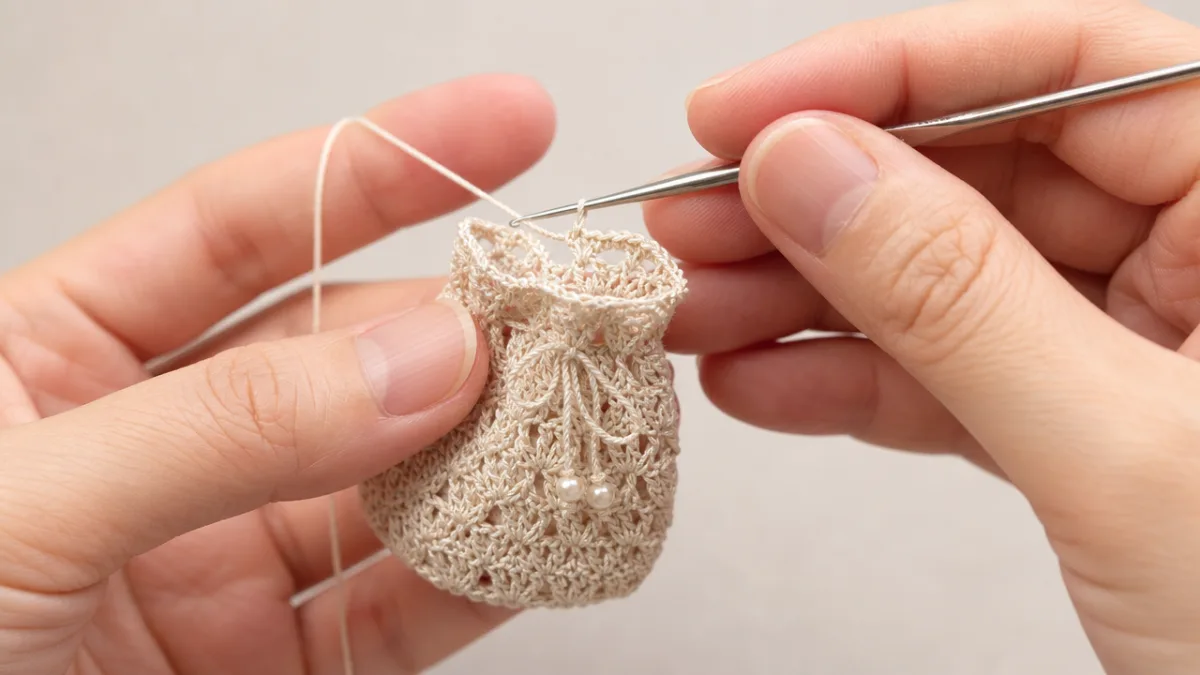
The following pattern is designed for a small to medium smooth stone approximately twenty-five to thirty millimeters in diameter, using size ten cotton crochet thread and a 1.5mm steel hook. Before you begin, place a slip knot on your hook and create a magic ring. Into the ring, work six single crochets, then pull the tail to close the ring firmly. This forms the base of your pouch and will ultimately become the bottom, the point farthest from the opening.
In round two, work two single crochets into each stitch around for a total of twelve stitches. In round three, alternate between working one single crochet in the next stitch and two single crochets in the following stitch, repeating around to reach eighteen stitches. In round four, work one single crochet in each of the next two stitches, then two single crochets in the following stitch, repeating around to reach twenty-four stitches. At this point, hold the work against your stone to check the width, and add one more increase round if necessary.
From round five onward, work even rounds of single crochet with no increases until the pouch is approximately two-thirds the height of your stone. Then begin decrease rounds by working single crochet two together at regular intervals to start drawing the pouch closed. Insert your stone before completing the final decrease rounds, as it will be impossible to fit through the opening once it is too small. Finish with a chain loop for the cord attachment, fasten off, and weave in ends securely with your tapestry needle.
Variations and Decorative Options
Once you have mastered the basic pattern, a world of creative variations opens up. One of the most popular embellishments is the addition of a picot edging around the opening of the pouch, created by working small chain loops between stitches in the final round. This gives the piece a delicate, lacy finish that softens the transition between the crocheted fabric and the cord, adding visual elegance without requiring advanced skills.
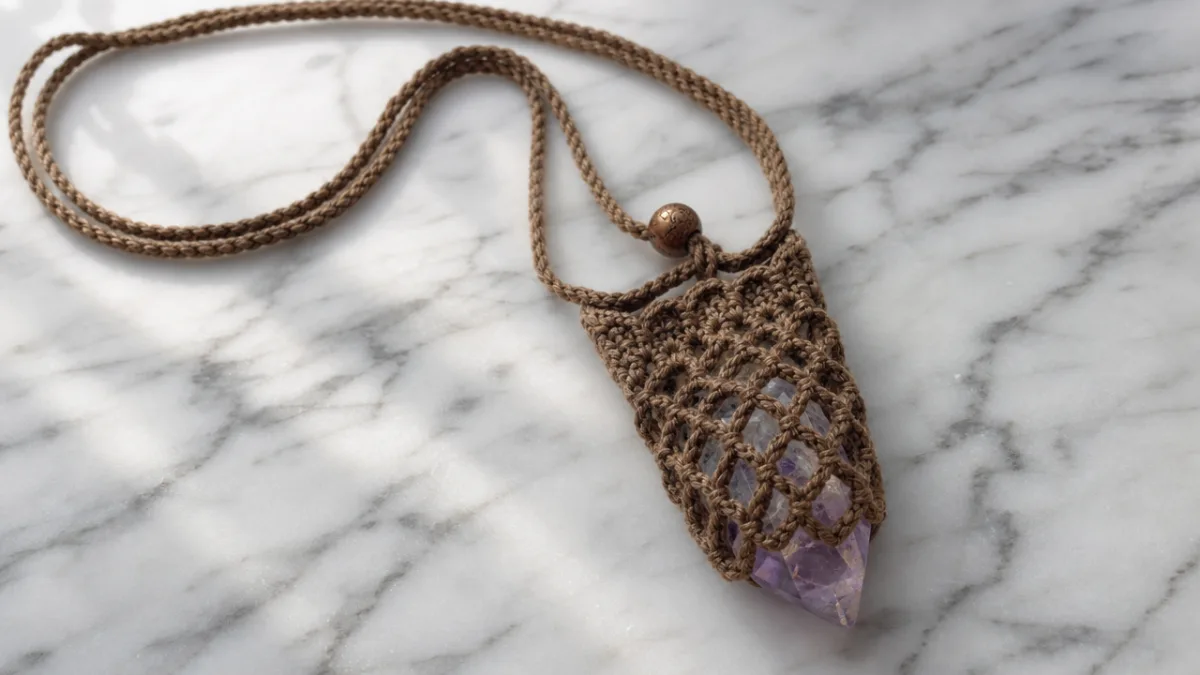
You might also experiment with more complex stitch patterns in the body of the pouch. A simple mesh pattern, created by alternating chains and single crochets, allows the color and texture of the stone to show through the fabric in a beautiful way. Shell stitches, puff stitches, and bobble stitches can all be incorporated into the side sections of the pouch to add dimension and decorative interest. These variations do require a slightly more advanced understanding of crochet, but they are well within reach for anyone who has completed a few beginner projects.
Color is another powerful design element. A pouch worked in a single color has a clean, unified look that lets the stone take center stage. Two-color designs, created by switching thread colors at strategic points in the pattern, can produce striking striped or gradient effects. Some crafters even use colorwork techniques borrowed from tapestry crochet to work small motifs or geometric patterns into the body of the pouch, creating a piece that is truly one of a kind and deeply expressive of the maker’s individual artistic vision.
Finishing, Wearing, and Caring for Your Pendant Pouch
The finishing process is where your pendant pouch truly comes to life as a wearable piece. Once the crochet is complete and all ends are woven in, you will need to attach a cord, chain, or ribbon that can be worn around the neck. Simple options include a length of waxed cotton cord, a leather thong, or a satin ribbon threaded through the chain loop or top stitches of the pouch. For a more polished look, a purchased metal chain paired with a small jump ring and lobster clasp creates a professional, jewelry-store-quality finish.
Before wearing the pouch, it is worth giving the finished piece a gentle blocking to even out the stitches and help the fabric settle into its final shape. To block a cotton crochet piece, simply dampen it thoroughly, gently shape it by hand, and allow it to dry flat on a clean towel. For a more dramatic result, you can use a spray bottle and pins on a foam blocking mat to pin the piece into a precise shape. Blocking makes a noticeable difference in the neatness and drape of the finished piece and is highly recommended even for small projects like this one.
Caring for your pendant pouch over time is relatively straightforward. Cotton thread is generally machine washable on a gentle cycle in a mesh laundry bag, though hand washing in cool water with a mild soap is always the safest approach for preserving delicate work. Remove the stone before washing if possible, as some crystals and minerals are sensitive to water and may be damaged by prolonged soaking. Allow the pouch to dry naturally rather than placing it in a dryer, and reshape it gently while damp to maintain its form.
Gifting and Personalizing Your Pendant Pouch
A crocheted pendant pouch makes an extraordinarily thoughtful handmade gift, particularly when the stone is chosen with the recipient in mind. The combination of a handmade item and a meaningful crystal creates something that feels genuinely personal and considered in a way that few store-bought gifts can match. To make the gift even more special, consider writing a small card that explains the properties or significance of the stone you have chosen, adding a layer of intention and storytelling to the present.
Personalization can extend to the color palette as well. Crocheting the pouch in the recipient’s favorite colors, or selecting thread shades that complement a stone you know they love, demonstrates a level of care and attentiveness that is deeply appreciated. You might also add their initial in a contrasting thread using simple embroidery stitches over the completed crochet, creating a monogrammed piece that is uniquely theirs. These small personal touches transform an already beautiful object into a genuine keepsake.
For those interested in turning their craft into a small business, crocheted pendant pouches are an excellent product to consider. They are relatively quick to make once you are comfortable with the pattern, they use minimal materials, and they photograph beautifully for online shops and social media. Offering customization options such as choice of stone, thread color, and cord style allows you to create a product line that appeals to a wide audience while still maintaining the handmade quality that makes each piece special. Whether made for yourself, for loved ones, or for sale, the crocheted pendant pouch is a project that rewards every moment of effort invested in its creation.








What do you think?
It is nice to know your opinion. Leave a comment.