










40 Gorgeous DIY Home Décor Ideas and Designs: Transform Your Space on a Budget
Why DIY Home Décor Is Having a Major Moment
There has never been a better time to embrace DIY home décor, and the reasons go far beyond simply saving money. Across Australia and around the world, homeowners and renters alike are discovering the profound satisfaction that comes from creating something beautiful with their own hands. The rise of platforms like Pinterest has democratised design inspiration, making it easier than ever to find ideas that suit every taste, skill level, and budget. What was once the exclusive domain of interior designers is now accessible to anyone willing to pick up a paintbrush or a hot glue gun.
The appeal of DIY décor is deeply personal. When you craft or customise something for your own home, it carries a story and a meaning that no store-bought item can replicate. A hand-painted feature wall, a repurposed timber shelf, or a macramé wall hanging all speak to the personality and creativity of the person who made them. This sense of ownership over your living space is something that resonates strongly with Australians, who have long had a culture of rolling up their sleeves and getting things done themselves.
Beyond the emotional rewards, DIY décor also offers remarkable practical advantages. With the cost of living continuing to rise and renovation budgets feeling tighter than ever, the ability to refresh a room without spending thousands of dollars is genuinely valuable. Many of the most impactful DIY projects require little more than a few hours of time, some basic supplies, and a willingness to experiment. Whether you are a first-time homeowner, a renter looking to personalise your space without losing your bond, or a seasoned renovator, there is a DIY idea out there that is perfect for you.
Statement Walls: The Fastest Way to Transform Any Room
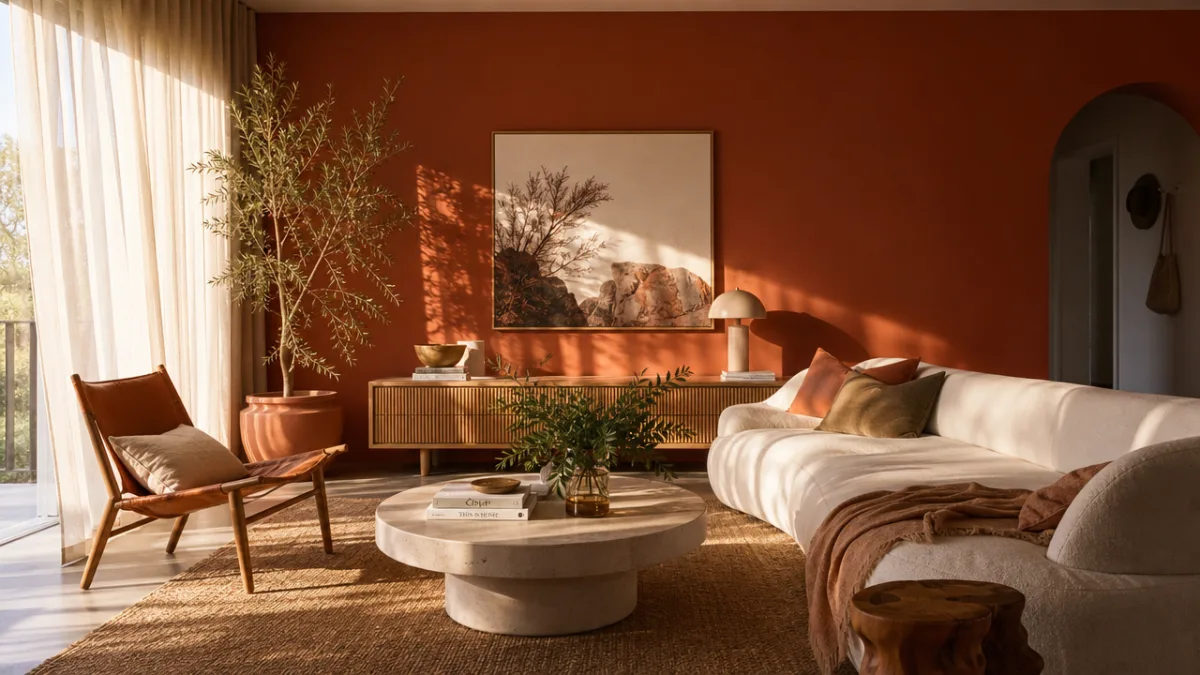
One of the most dramatic transformations you can make to a room involves nothing more than a tin of paint and a clear vision. A statement wall, sometimes called a feature wall, draws the eye and anchors the entire design of a space. The beauty of this approach is its versatility: you might choose a deep, moody charcoal in a bedroom for a cosy, intimate feeling, or a bold terracotta in a living room to bring warmth and character. Even a single wall painted in a contrasting colour can completely alter the perceived proportions and atmosphere of a room.
For those who want to go beyond solid colour, textured wall treatments are an exciting and increasingly popular option. Limewash paint, for example, creates a beautifully aged, layered effect that adds depth and an organic quality to walls. It is surprisingly achievable as a DIY project, requiring only the paint itself and a wide brush applied in overlapping, irregular strokes. Similarly, plaster effects and Venetian polished plaster techniques, while they require a little more practice, can create a luxurious finish that looks far more expensive than it actually is.
Wallpaper and peel-and-stick alternatives have also revolutionised the statement wall concept for renters and those who like to change things up frequently. Modern removable wallpapers come in an extraordinary range of patterns and textures, from bold botanical prints to subtle geometric designs, and can be applied and removed without damaging the underlying wall surface. For those handy with a saw and some timber, a DIY shiplap, vertical board and batten, or herringbone timber panel feature wall adds texture, warmth, and a sense of craftsmanship that is genuinely impressive and incredibly satisfying to build.
Upcycling and Repurposing: Giving Old Items a New Life
Upcycling is one of the most creative and environmentally responsible approaches to home décor available to us today. The concept is simple: instead of throwing away old or worn furniture and household items, you find ways to transform them into something new, functional, and beautiful. An old timber ladder becomes a rustic bathroom towel rack. Vintage wine crates become stylish floating shelves. A worn-out chest of drawers gets new legs, a coat of paint, and brass hardware to emerge as a stunning bedside table. The possibilities are genuinely limited only by your imagination.
Furniture flipping has become a genuine hobby and even a small business for many Australians. Op shops, garage sales, Facebook Marketplace, and hard rubbish collections are treasure troves of solid timber furniture that simply needs a little attention to become a standout piece in any home. The process typically involves cleaning the piece thoroughly, sanding back any old finish, applying a fresh coat of paint or stain, and replacing outdated hardware with something modern. This process can take as little as a weekend and the results are often astonishing, producing pieces with far more character than anything available at a flat-pack furniture retailer.
Beyond furniture, there is an entire world of upcycling possibilities in smaller decorative items. Consider some of the most popular approaches:
- Transforming empty glass bottles and jars into stylish vases or candle holders with a coat of chalk paint or a wrap of natural twine.
- Turning old timber pallets into coffee tables, garden beds, or outdoor furniture with minimal tools and effort.
- Repurposing vintage picture frames as decorative trays, jewellery organisers, or wall-mounted cork boards.
- Converting old books or suitcases into unique side tables or decorative storage solutions with genuine vintage charm.
- Using leftover tiles or broken ceramics to create beautiful mosaic artwork for walls or garden paths.
The environmental dimension of upcycling adds another layer of meaning to these projects. By keeping items out of landfill and reducing the demand for new manufactured goods, every upcycling project is a small but meaningful act of sustainability. This resonates particularly strongly with a growing number of Australians who are looking to reduce their environmental footprint without sacrificing style or comfort in their homes. The combination of creativity, economy, and ecological responsibility makes upcycling one of the most compelling DIY trends in contemporary home décor.
Textiles, Soft Furnishings, and the Art of Layering
Nothing transforms the look and feel of a room more quickly and affordably than the strategic use of textiles and soft furnishings. Cushions, throws, rugs, curtains, and bedlinen are the tools through which interior designers create warmth, texture, colour, and personality in a space. The good news is that this is also one of the most DIY-friendly aspects of home décor, since even those with limited sewing skills can achieve remarkable results with minimal effort. A basic ability to cut fabric and use iron-on hem tape is genuinely all you need for many projects.
Making your own cushion covers is one of the most satisfying and practical DIY textile projects you can undertake. With fabric available from Australian retailers like Spotlight at very reasonable prices, you can create custom cushion covers in exactly the colours, patterns, and textures you want for a fraction of the cost of buying them ready-made. The same principle applies to table runners, placemats, and simple curtain panels. Even if your sewing skills are modest, there are no-sew techniques using fusible webbing that allow you to create neat, finished seams without ever threading a needle.
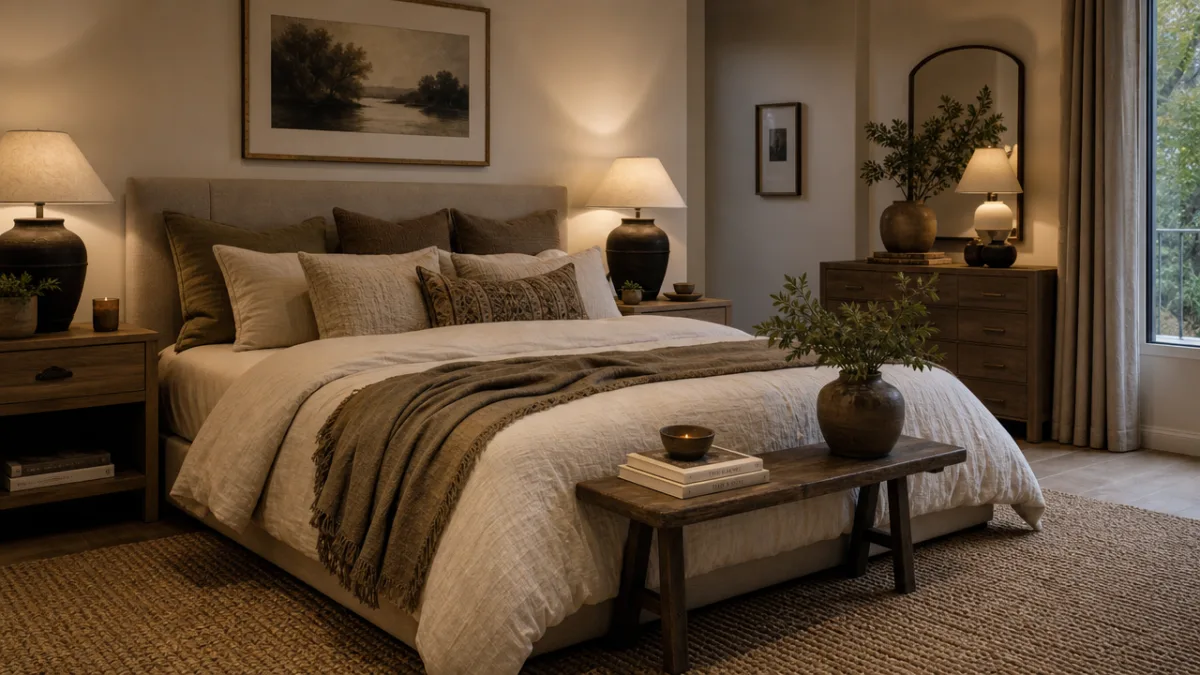
The concept of layering is fundamental to achieving that effortlessly styled look you see in interior design magazines and Pinterest boards. Layering means combining multiple textiles in complementary but varied textures and tones to create depth and visual interest. In a bedroom, this might mean a crisp white duvet cover, a linen throw folded across the foot of the bed, several cushions in varying sizes mixing pattern and plain fabric, and a woven jute rug on the floor. In a living room, an oversized area rug grounds the furniture arrangement, while textured cushions and a casually draped knit throw add coziness and personality. The key is to vary texture while keeping a relatively cohesive colour palette.
Greenery and Natural Elements: Bringing the Outside In
The biophilic design movement, which centres on the human need to connect with nature, has profoundly influenced contemporary home décor. Bringing natural elements into the home, from living plants to dried botanicals, raw timber, stone, and water features, creates spaces that feel calming, grounding, and alive. Numerous studies have confirmed what most of us intuitively feel: surrounding ourselves with natural elements reduces stress, improves mood, and even enhances cognitive function. This makes incorporating greenery and natural materials into your home not just an aesthetic choice but a genuinely wellness-enhancing one.
Indoor plants are perhaps the simplest and most impactful way to transform a space with natural beauty. The range of plants suitable for Australian homes is enormous, and many are extraordinarily low-maintenance. Pothos, devil’s ivy, snake plants, ZZ plants, and heartleaf philodendrons thrive even in lower light conditions and require minimal watering. For those with bright, sunny spaces, fiddle-leaf figs, monsteras, and bird of paradise plants make dramatic architectural statements. The DIY element comes in through the pots and planters you choose or create: terracotta pots painted in matte tones, concrete planters cast at home, macramé plant hangers, and timber plant stands all add personality and craft to the display.
Beyond living plants, dried and preserved botanicals have become enormously fashionable in recent years, and for good reason. Dried pampas grass, bunny tails, lunaria, eucalyptus branches, and dried citrus slices all bring organic texture and muted, earthy tones into a space with zero maintenance requirements. You can create your own arrangements simply by harvesting or purchasing these materials and grouping them in textured vases or wrapping them with natural twine. Wreaths made from dried botanicals, seed pods, and foliage make beautiful wall decorations that last for years and cost very little to create.
Incorporating raw natural materials beyond plants adds another dimension of warmth and authenticity to DIY home décor. Timber is the most versatile of these materials, working equally well in sleek, modern spaces and in relaxed, rustic settings. A simple floating shelf made from a rough-sawn timber plank and black metal brackets takes an afternoon to install and makes an enormous visual impact. Woven baskets, rattan furniture, stone candle holders, linen cushion covers, and jute rugs all contribute to that layered, organic aesthetic that defines so much of the most admired contemporary Australian interior design.
Lighting: The Most Underrated Element of Home Décor
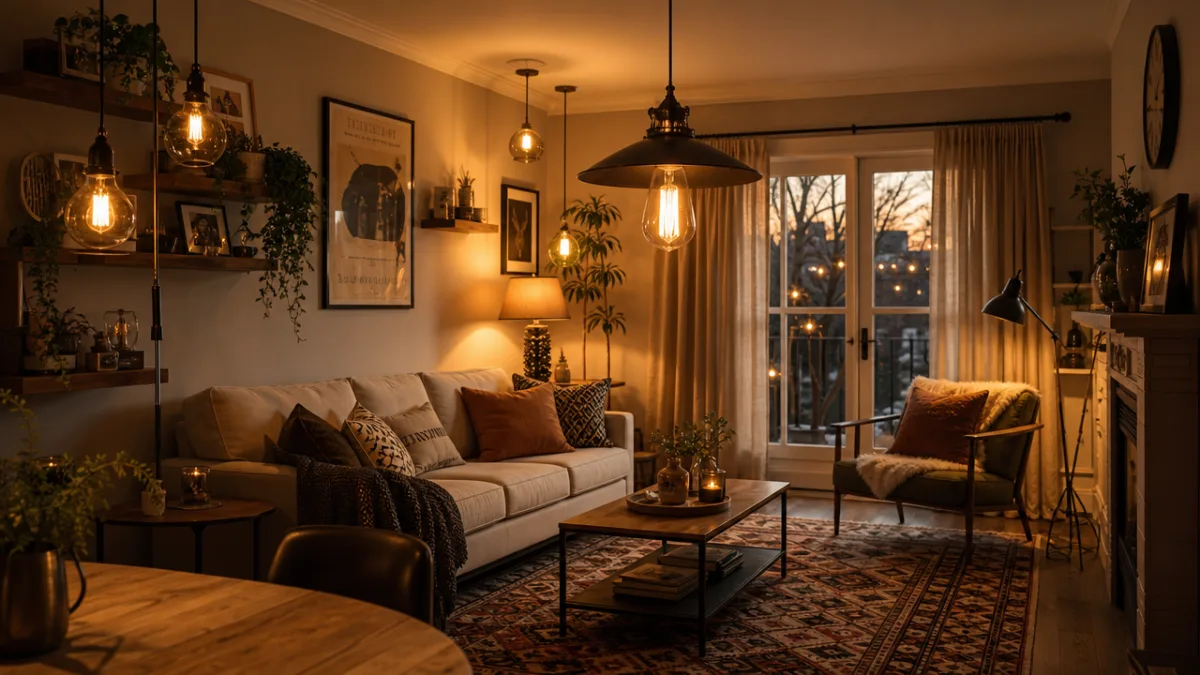
Interior designers consistently identify lighting as the single most transformative and frequently overlooked element of home décor. The right lighting can make a small room feel spacious, a cold room feel warm, and an ordinary space feel magical. Yet most homeowners pay relatively little attention to their lighting choices, relying on whatever overhead fitting came with the house and perhaps a standard floor lamp from a homewares store. The DIY approach to lighting opens up an entirely different world of possibility, allowing you to create bespoke fittings and layered lighting schemes that are uniquely your own.
One of the most impactful and achievable DIY lighting projects involves creating pendant lights from unexpected materials. A large woven basket or an oversized terracotta pot can be converted into a pendant light with a pendant cord kit, which is available at most hardware stores in Australia for a very modest cost. Paper lanterns, macramé light covers, and even sculptural forms made from wire and plaster gauze can all be transformed into beautiful overhead lighting with the addition of a pendant cord and an Edison-style bulb. These projects require no electrical skills beyond attaching the cord to a standard light socket, making them genuinely beginner-friendly.
The principle of layered lighting is as important in a DIY context as it is in professional interior design. Rather than relying on a single overhead light source, aim to incorporate at least three types of lighting in each main living area:
- Ambient lighting provides the overall base illumination for a room and typically comes from ceiling-mounted fixtures, recessed downlights, or flush mounts.
- Task lighting serves a specific functional purpose, such as a reading lamp beside a chair, under-cabinet lighting in a kitchen, or a desk lamp in a home office.
- Accent lighting is used to highlight architectural features, artwork, or decorative objects and includes picture lights, LED strip lights, and directional spotlights.
- Decorative lighting serves primarily as a visual feature in itself, including fairy lights, candles, neon signs, and sculptural statement fixtures.
The colour temperature of your light bulbs is another critical factor that is easy to overlook. Bulbs are rated in Kelvin, and the difference between a warm white bulb at around 2700K and a cool white bulb at 5000K is dramatic in terms of the atmosphere it creates. For bedrooms, living rooms, and dining areas, warm white bulbs create a cosy, flattering, and inviting glow. For home offices, studios, and kitchens, a slightly cooler temperature promotes alertness and makes it easier to see colour accurately. Swapping out bulbs for the correct colour temperature is one of the cheapest and most immediately effective DIY upgrades you can make to your home.
Outdoor Spaces: Extending Your Living Area Beyond the Walls
Australians have always been passionate about outdoor living, and the courtyard, deck, balcony, or backyard is as much a part of the home as any interior room. With the right DIY approach, even a modest outdoor space can be transformed into a genuinely beautiful and functional extension of your living area. The same design principles that apply indoors, including attention to furniture arrangement, textiles, lighting, greenery, and personal decoration, apply just as powerfully outside. The difference is simply that your materials need to be chosen with weather resistance in mind.
Outdoor furniture makeovers are one of the most popular and rewarding DIY projects for Australian homeowners. Timber outdoor furniture that has faded or weathered can be spectacularly restored with a thorough sanding, a coat of teak oil or exterior paint, and perhaps some new cushions covered in outdoor fabric. Old metal patio chairs and tables can be wire-brushed, treated for rust, and spray-painted in a fresh colour for a completely new look. Building simple outdoor furniture from scratch, such as a timber bench seat, a potting table, or a pallet daybed, is within the reach of anyone comfortable with basic carpentry tools.
Creating ambiance in an outdoor space requires the same layered approach as indoors. String lights draped across a pergola or between posts create an instantly magical atmosphere on summer evenings. Outdoor rugs in weather-resistant materials define seating areas and add colour and pattern underfoot. A simple DIY fire pit made from stacked concrete blocks or a repurposed steel bowl creates a focal point and a gathering place that extends the outdoor season well into the cooler months. Vertical gardens built from pallet timber or tiered planter stands bring greenery and privacy to small courtyards and balconies without taking up precious floor space.
The investment you make in your outdoor space pays dividends not only in your daily enjoyment of your home but also in its overall value. Real estate agents consistently identify well-presented outdoor areas as significant contributors to buyer appeal and sale price. A thoughtfully designed outdoor entertaining area, even if created entirely through DIY effort and resourcefulness, can meaningfully increase the perceived value of a property. This makes outdoor DIY décor projects among the most financially as well as aesthetically rewarding you can undertake, offering genuine returns on every hour and dollar invested in making your outdoor spaces as beautiful and liveable as possible.








What do you think?
It is nice to know your opinion. Leave a comment.