










20 DIY Home Decor Ideas That Look Expensive (But Aren’t!)
Why DIY Home Decor Is Having a Major Moment
There has never been a better time to pick up a paintbrush, a hot glue gun, or a power drill and transform your living space on your own terms. The DIY home decor movement has grown from a niche hobby into a full-blown cultural phenomenon, fueled by social media inspiration, rising furniture costs, and a growing desire for spaces that feel genuinely personal. More homeowners and renters than ever are discovering that a stunning, polished interior does not require a designer’s budget or a decorator’s expertise — just a little creativity and willingness to try.
The most compelling argument for DIY decor is the sheer gap between perceived value and actual cost. A framed gallery wall that looks like it belongs in a boutique hotel might cost you less than thirty dollars in materials, while a similar arrangement purchased ready-made could run several hundred. That gap represents something powerful: the ability to live beautifully without financial stress. When your home looks curated and intentional, guests assume you spent a fortune — and you get to enjoy the quiet satisfaction of knowing exactly how little you actually paid.
Beyond the financial benefits, DIY decorating offers something that no store-bought piece can replicate: a direct connection between you and your environment. Every project you complete becomes a small story embedded in your home. The texture of a wall you plastered yourself, the lamp base you painted on a rainy Sunday afternoon, the throw pillow you sewed from fabric you found at a local market — these details layer together into an atmosphere that is unmistakably yours. That authenticity is, in the end, the most expensive-looking quality a home can have.
Budget-Friendly Painting Techniques That Transform Walls
Paint is the single most powerful tool in a DIY decorator’s arsenal, and it is remarkably forgiving for beginners. A fresh coat of color can completely reshape how a room feels — making a small space feel intimate and cozy, a large room feel grounded and sophisticated, or a dated rental feel surprisingly current. The key is moving beyond basic flat paint and experimenting with techniques that add dimension, texture, and visual interest to your walls without requiring specialized training or expensive materials.
Color blocking is one of the most striking and accessible techniques available today. By painting two or more sections of a wall in contrasting or complementary colors — separated by clean, taped lines — you can create a graphic, architectural effect that looks like something from an interior design magazine. A classic approach is painting the lower third of a wall in a deep, moody tone while leaving the upper portion a crisp white or soft neutral. This creates a visual weight that anchors the room and makes the ceiling feel taller. All you need is painter’s tape, two paint colors, and a steady hand.
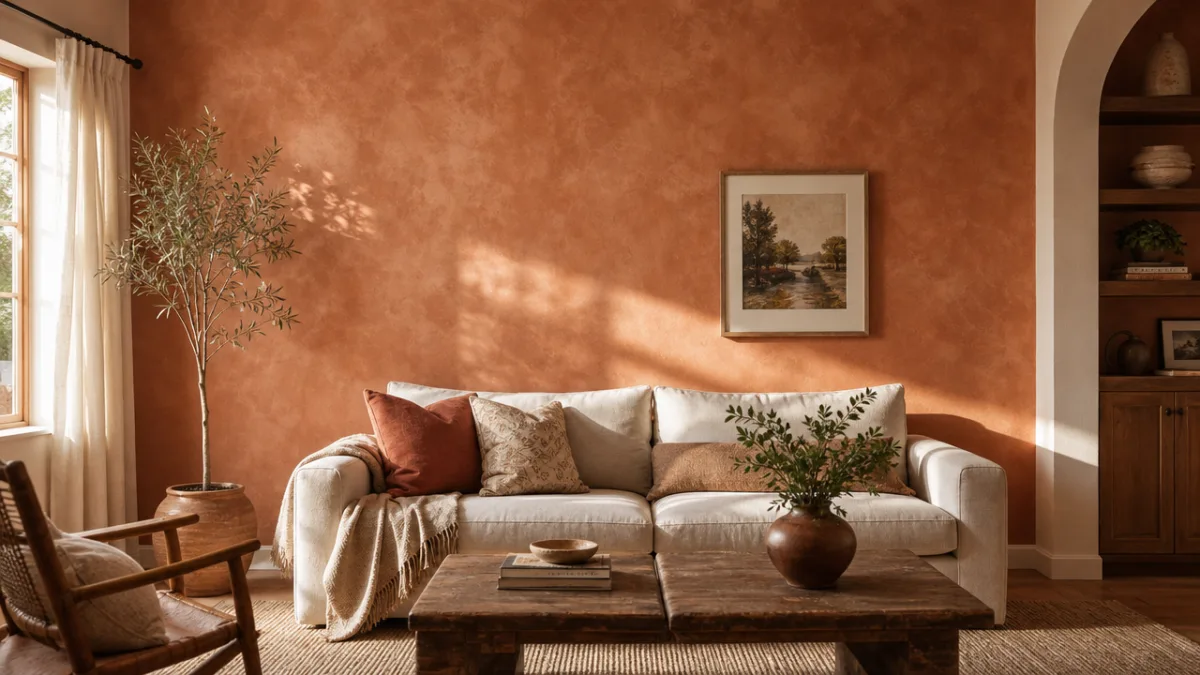
Limewash paint and its DIY alternatives have surged in popularity for good reason. The technique involves diluting regular matte paint and applying it in uneven, overlapping strokes with a wide brush, then partially wiping it back before it dries. The result is a beautifully aged, Venetian-plaster-like finish that adds enormous character to any wall. For a fraction of the cost of authentic limewash products, you can achieve a nearly identical effect using latex paint, water, and a bit of patience. Accent walls treated this way become instant focal points that look custom and costly.
Thrift Store Flips and Upcycling Furniture Like a Pro
The thrift store is perhaps the most underestimated design resource available to the modern decorator. Beneath layers of dated upholstery, chipped veneer, and questionable hardware lies some of the best-built furniture of the last century — solid wood construction, dovetail joints, and proportions that modern flat-pack pieces rarely match. Learning to see past surface imperfections and recognize the underlying quality of a piece is the first and most important skill in the thrift-flip toolkit. Once you develop that eye, thrift stores transform from cluttered chaos into treasure troves.
A can of spray paint and new hardware can completely reinvent a tired piece of furniture. A brass-handled dresser from the 1980s, sprayed in a deep forest green or a warm terracotta, suddenly looks like a bespoke designer piece. Replacing plastic or worn metal hardware with matte black pulls, ceramic knobs, or brushed brass handles takes roughly fifteen minutes and costs under twenty dollars, yet it is one of the most noticeable upgrades you can make. The contrast between a beautifully painted surface and thoughtfully chosen hardware signals craftsmanship and intention — the exact qualities that make furniture look expensive.
Reupholstering chairs and stools is easier than most people assume, and the transformation it enables is remarkable. A dining chair with a slip seat — the removable padded section — can be recovered in under twenty minutes with a screwdriver, a staple gun, and a yard of fabric. By choosing a rich boucle, a bold geometric print, or a classic linen, you can take a chair purchased for five dollars and turn it into something that looks straight from a high-end furniture boutique. Even more complex upholstery projects, like recovering a headboard or a bench cushion, are well within reach for a determined beginner.
Textiles and Soft Furnishings That Elevate Any Room
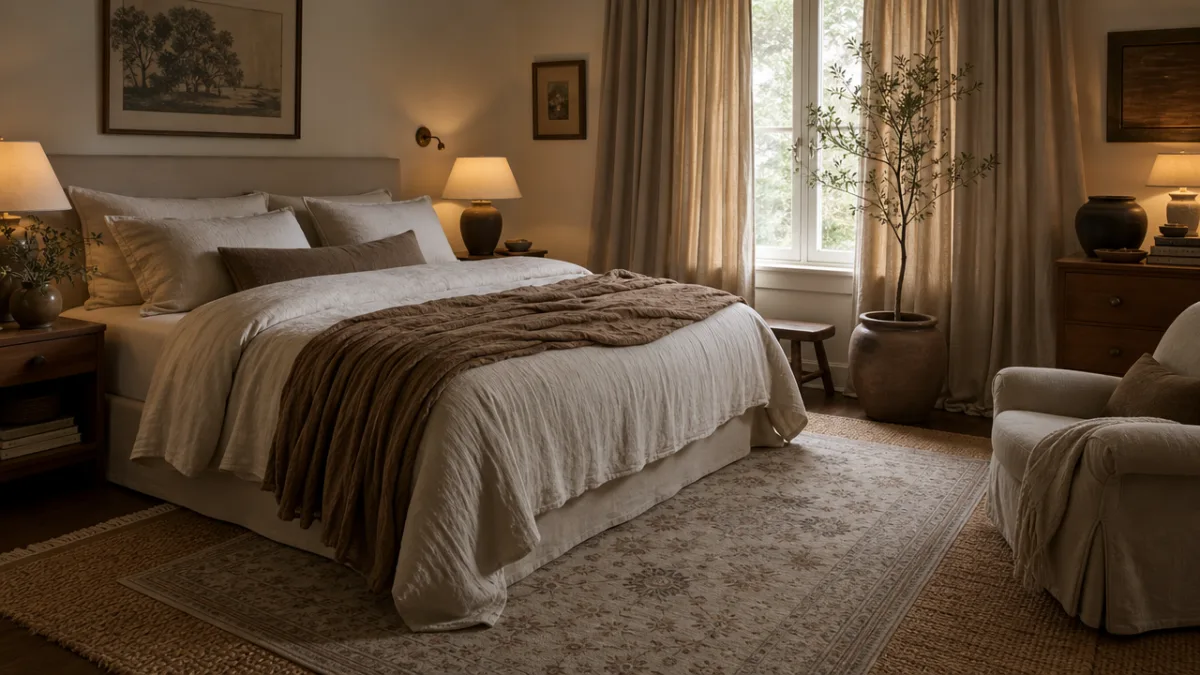
Textiles are one of the fastest and most reversible ways to add luxury to a space, which makes them ideal for both homeowners and renters. The weight, texture, and drape of fabrics in a room communicate quality before anyone consciously registers what they are looking at. A room dressed in heavy linen curtains that pool slightly on the floor, layered throw blankets in complementary textures, and a generously sized area rug will always feel more expensive and considered than the same room with bare windows and a single thin blanket tossed on a couch.
Making your own curtains is one of the highest-impact, lowest-difficulty DIY projects available. Even without a sewing machine, no-sew hem tape allows you to create clean, professional-looking curtain panels from any fabric you love. The secret to curtains that look designer-quality lies in two details: length and fullness. Curtains should hang from as close to the ceiling as possible and fall to the floor — this elongates the room dramatically. They should also be wide enough to gather generously when open, typically two to two-and-a-half times the width of the window, which creates that luxurious ripple effect seen in high-end interiors.
Layering rugs is a technique borrowed directly from professional interior designers that costs surprisingly little when done thoughtfully. Placing a smaller, patterned or textured rug on top of a larger, more neutral one adds visual depth and warmth to any floor. A jute or sisal rug as the base layer provides an organic, grounding texture, while a smaller vintage-style or geometric rug layered on top introduces color and pattern. This approach allows you to use more affordable rugs — or even second-hand finds — while achieving a look of layered richness that appears far more considered and costly than any single rug alone.
DIY Wall Art and Gallery Arrangements That Impress
Original art is widely considered one of the markers of a truly elevated interior, yet the assumption that good wall art must be expensive is one of the easiest misconceptions to disprove. Abstract painting, in particular, is far more accessible to beginners than it appears. Using a canvas purchased from a craft store, acrylic paints, and a palette knife or even a piece of cardboard as a spreading tool, you can create textured, color-rich pieces that genuinely resemble work sold in boutique galleries. The key is committing to a limited palette of two to four colors and allowing the layering process to develop organically rather than forcing a predetermined outcome.
Gallery walls, when executed with care, can function as the centerpiece of an entire room. The most polished gallery walls share a few consistent qualities: a cohesive color story running through the frames or the artwork itself, a mix of sizes that creates rhythm without chaos, and frames that either match or deliberately contrast in a way that feels intentional. Mixing black frames with one or two natural wood frames, for instance, creates an eclectic but curated feel. Printable art — downloadable from online marketplaces or even sourced from free public domain collections — means you can fill those frames beautifully for almost nothing.
Beyond traditional framed prints, consider three-dimensional wall treatments that add architectural interest. Arrangements of woven baskets in graduated sizes, a collection of decorative plates in a tonal color family, or a series of small ceramic wall hangings can create a gallery effect with enormous tactile richness. Dried botanicals framed in simple clip frames, shadow boxes displaying meaningful objects, or even pages torn from art books and mounted in inexpensive frames all carry a similar sophistication. The underlying principle is the same in every case: intentional curation communicates taste and effort, and taste is what makes decor look expensive.
Lighting Upgrades That Instantly Change the Atmosphere
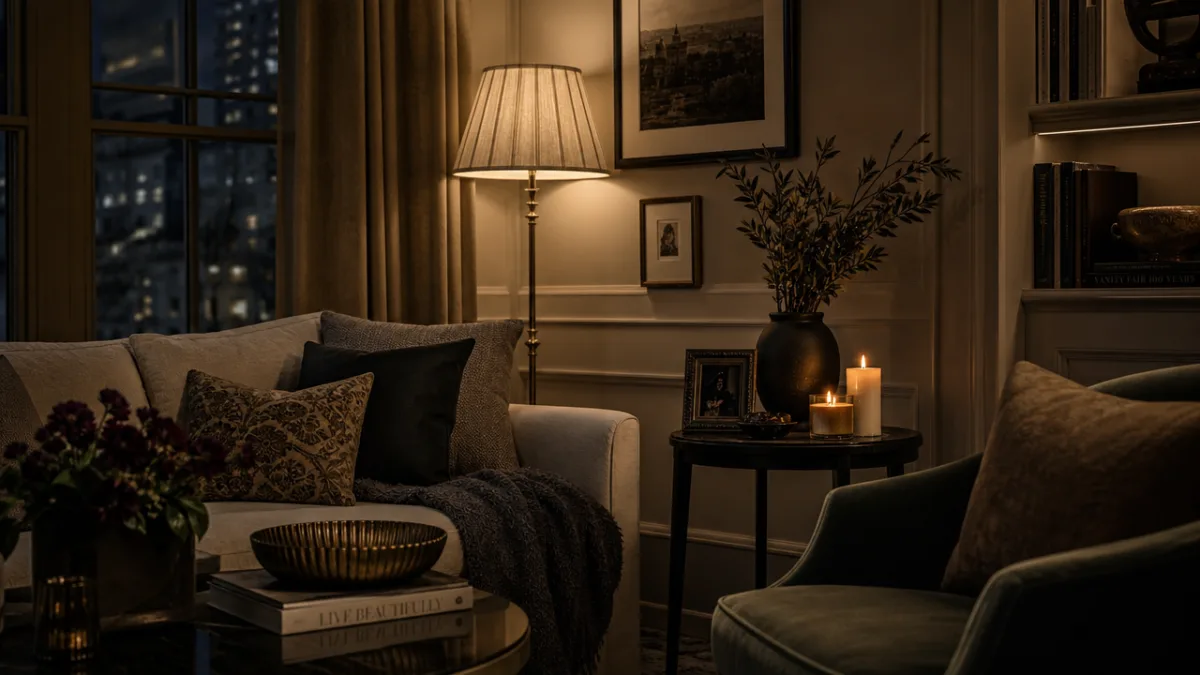
Lighting is perhaps the most underestimated element in interior design, and it is the area where small DIY investments yield some of the most dramatic transformations. The difference between a room lit by a single overhead fixture and one with multiple layered light sources — a floor lamp in the corner, table lamps on either side of a sofa, candles on the coffee table — is the difference between a functional space and an atmospheric one. The goal of layered lighting is to eliminate harsh shadows, reduce reliance on overhead glare, and create pools of warm, inviting illumination throughout the room.
Swapping out lampshades is one of the simplest and most overlooked DIY upgrades available. A dated or generic lamp base can be completely redeemed by a new shade in a fresh shape or material. Drum shades in a natural linen give a calm, organic feel; empire shades in a rich jewel tone add drama; rattan or woven shades introduce texture and a resort-like warmth. For a more involved project, covering an existing lampshade with new fabric, trim, or even a layer of pressed botanicals sealed under a thin material creates a truly one-of-a-kind piece that serves as decor even when the lamp is switched off.
Candles and candlelight deserve far more credit than they typically receive as design tools. Beyond their obvious atmospheric contribution, candles in interesting vessels — ceramic bowls, vintage glassware, terracotta pots, or carved wooden holders — function as sculptural objects even when unlit. Making your own candles from soy wax, which is widely available and beginner-friendly, allows you to customize scent, color, and vessel entirely. A cluster of handmade candles in vessels chosen to complement your existing palette can serve as a centerpiece, a mantelpiece display, or a coffee table vignette that looks thoughtfully composed and expensive without costing more than a few dollars each.
Bringing the Outdoors In: Plants and Natural Elements
Incorporating natural elements into a home’s decor is one of the most reliable paths to an interior that feels alive, layered, and considered. Plants, in particular, have an almost magical ability to make a space feel finished. A room without any organic element — no greenery, no natural fiber, no wood grain — tends to feel flat and lifeless no matter how carefully everything else has been arranged. Adding even a single well-placed plant can shift the energy of a room entirely, softening hard edges and introducing a sense of growth and vitality that no manufactured object can replicate.
The most impactful plant displays tend to involve grouping rather than isolation. Three plants of varying heights clustered in a corner create far more visual interest than three plants spread across a room. Pairing a tall floor plant like a fiddle-leaf fig or a monstera with a trailing plant on a shelf above and a small pot on the floor below creates a vertical layering effect that draws the eye and fills dead space beautifully. Mixing pot materials — terracotta, ceramic, woven baskets, concrete — adds to the richness of the arrangement and prevents it from feeling too uniform or catalog-like.
Beyond living plants, natural materials sourced for free or very low cost can add enormous textural richness to a home. Branches from the garden arranged in a tall vase, smooth river stones grouped in a bowl, dried grasses tied with a piece of linen ribbon, or a piece of driftwood displayed on a shelf — these objects carry the irregular, imperfect beauty of the natural world into an interior and create a sense of groundedness and calm. Dried eucalyptus, pampas grass, and dried citrus slices have become popular precisely because they last indefinitely and continue to look beautiful long after their fresh counterparts would have faded.
Putting It All Together: Building a Cohesive, Expensive-Looking Home
The difference between a home that looks expensive and one that merely contains expensive-looking individual pieces lies in cohesion. Every element of a well-designed room — the wall color, the furniture finishes, the textile palette, the art, the plants, the lighting — should feel as though it belongs to the same visual family. This does not mean everything must match; in fact, the most interesting interiors deliberately mix styles, eras, and materials. What it does mean is that there should be an underlying thread — a consistent color story, a shared mood, a recurring material — that ties everything together into a unified whole.
Developing your own design sensibility is a process that happens gradually and benefits enormously from the practice of DIY. Every project you complete teaches you something about what you respond to and what feels right in your specific space. You begin to notice light differently — how it changes the color of a wall throughout the day, how a warm-toned lamp transforms an evening corner. You develop preferences for texture and scale. Over time, those preferences accumulate into a personal style that is more sophisticated and more genuinely your own than anything a shopping catalog could offer you.
The final and perhaps most important principle of DIY home decor is editing. Restraint is the hallmark of expensive-looking interiors — the confidence to leave space, to allow a few carefully chosen objects to breathe rather than filling every surface and covering every wall. As your collection of DIY pieces grows, resist the temptation to display everything at once. Rotate objects seasonally, store what is not currently serving the room, and give your best pieces the visual space they deserve. A single beautiful handmade item given prominence in a clean, uncluttered vignette will always make a stronger impression than a dozen items competing for attention. That editorial confidence, more than any material or technique, is what transforms a house into a home that truly looks expensive.








What do you think?
It is nice to know your opinion. Leave a comment.