










Dark Academia: A Complete Guide to the Aesthetic That Romanticizes Knowledge, Mystery, and Timeless Style
What Is Dark Academia? Understanding the Aesthetic’s Origins and Soul
Dark academia is so much more than just a trend — it’s a full-on cultural movement rooted in classic European university life, Gothic literature, ancient mythology, and an almost obsessive love of learning. It started taking shape on Tumblr in the early 2010s before exploding on Pinterest and TikTok throughout the 2020s. At its core, dark academia treats the pursuit of knowledge as something both noble and a little melancholy — intellectual life wrapped in candlelight and the smell of old books.
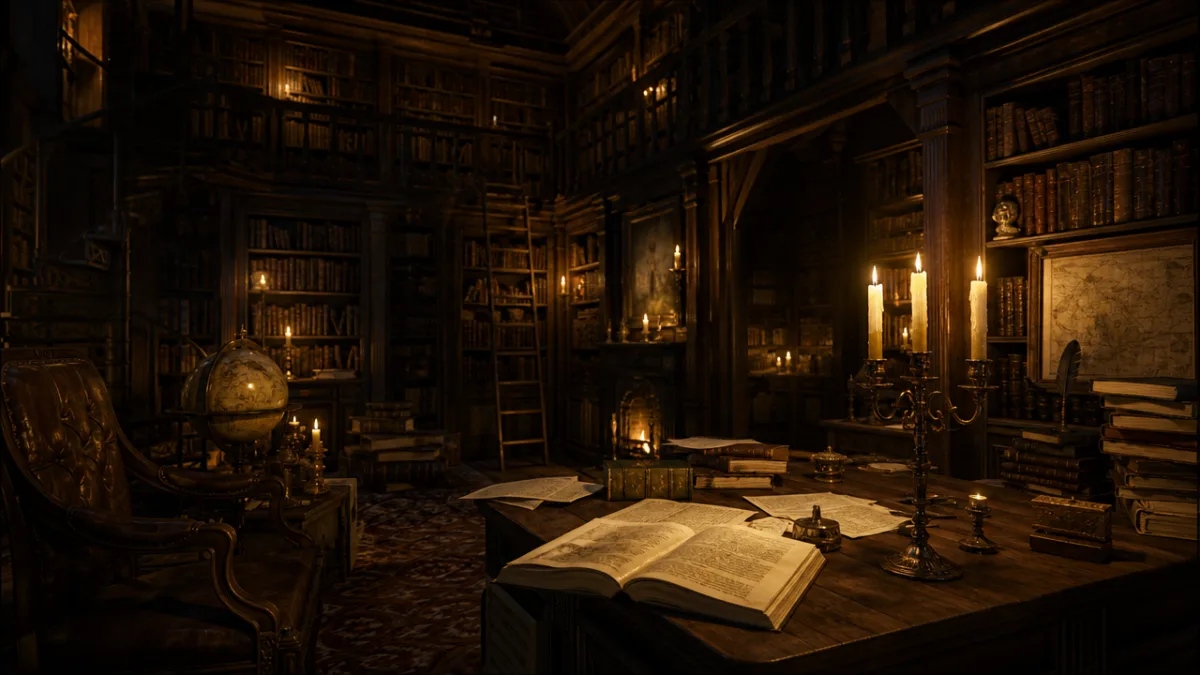
The look and feel draws from places like Oxford and Cambridge — wood-paneled libraries that feel ancient and almost sacred, stone archways covered in ivy, gaslit streets glowing amber on a crisp autumn evening. There’s a real tension at the heart of dark academia: a love of beauty alongside the quiet awareness that beauty fades, a hunger for knowledge paired with the understanding that you’ll never quite know enough. That bittersweet quality is exactly what gives it such emotional depth, and it’s why so many people feel an instant sense of recognition the first time they come across it.
A handful of literary works form the philosophical backbone of the whole thing. Donna Tartt’s The Secret History is the dark academia novel — a story of morally complicated students obsessed with ancient Greek culture at a small Vermont college. Other touchstones include Evelyn Waugh’s Brideshead Revisited, the poetry of John Keats and Sylvia Plath, Edgar Allan Poe’s Gothic fiction, and films like Dead Poets Society and Maurice. Together, they build a world where a passion for ideas is always tangled up with drama, longing, and a sharp awareness of mortality.
The Visual Language of Dark Academia: Colors, Textures, and Mood
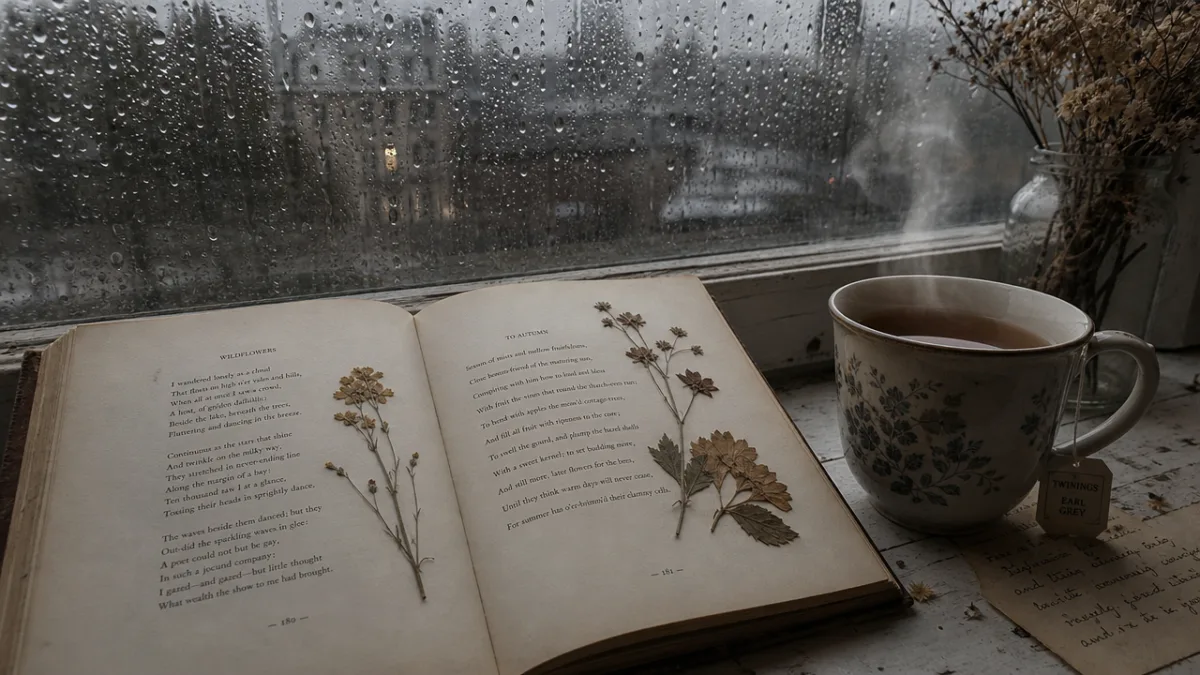
One of the most striking things about dark academia is how instantly recognizable it is — it has an incredibly cohesive visual palette. The color scheme lives in deep, muted, earthy territory: warm browns, dark tans, forest greens, burgundy, charcoal gray, and the near-black of aged leather. These aren’t bright or saturated colors — they’re the shades you find in old oil paintings, in the wood of an antique desk, in dried botanical specimens pressed between the pages of a forgotten book. When there’s light in a dark academia image, it’s always warm and directional — a single desk lamp, candlelight caught in a rainy window, afternoon sun filtering amber through stained glass.
Texture matters just as much as color here. Rough wool and tweed, cracked leather, aged paper with foxed edges, rough stone walls, velvet upholstery in deep jewel tones, brass fittings gone green with age — these are the materials that fill dark academia’s most evocative imagery. All that texture tells you something: these objects have histories, they’ve been touched by many hands before yours. That layering of time and use is what gives dark academia spaces and wardrobes their sense of lived-in authenticity — something no amount of brand-new shopping can fake.
Dark academia photography tends toward intimacy and interiority. The images people love most in this aesthetic are shot in close quarters — a corner of a library, a desk buried in books and scattered papers, hands wrapped around a ceramic mug with steam curling off the top. Wide open spaces rarely show up unless they’re wrapped in fog or twilight. That preference for enclosed, richly furnished spaces reflects something deeper about the aesthetic — a belief that the most important worlds are the ones inside your mind, on the page, and in the candlelit room.
Dark Academia Fashion: Building a Wardrobe That Tells a Story
For most people, fashion is the easiest and most immediate way into dark academia — and it’s one of the most thoughtfully developed parts of the whole aesthetic. The style pulls heavily from mid-twentieth century British university dress codes, the preppy traditions of American Ivy League campuses, and the timeless elegance of Continental European intellectual circles. Think tailored tweed blazers, high-waisted wool trousers, oversized cable-knit sweaters, Oxford shirts in cream or muted plaid, and midi-length pleated skirts. Every piece signals a kind of seriousness of purpose — clothing as intellectual armor.
Layering is everything in dark academia dressing. A crisp white collared shirt under a knitted vest, under a structured blazer, under a long overcoat — that kind of deliberate accumulation of garments mirrors the aesthetic’s broader love of depth and complexity. Nothing is worn simply when it can be worn with intention. Accessories are enormous: wire-framed glasses, vintage leather satchels and briefcases, Oxford brogues and Mary Jane heels, delicate gold jewelry, the occasional silk scarf or cravat. The right accessories can take an outfit from clothes to something that feels like a costume from a novel you desperately wish existed.
Here’s the thing about building a dark academia wardrobe — it doesn’t have to cost much, which is a big part of its appeal. Thrift stores and vintage markets are where enthusiasts consistently recommend hunting, because older garments carry exactly the kind of history and wear the aesthetic prizes. A blazer from a 1970s thrift shop, a pair of worn leather shoes resoled at a cobbler, a wool coat found at a charity sale — these pieces have a provenance that new fast-fashion items simply can’t replicate. Many people also love altering and personalizing what they find, adding embroidery, patches, or just wearing things in unexpected combinations.
- Essential outerwear: A long wool overcoat in camel, charcoal, or deep navy is arguably the single most important piece in the whole wardrobe. It makes any outfit feel cinematic and purposeful.
- Foundational layers: Turtleneck sweaters, ribbed knit vests, button-down Oxford shirts in white, cream, or muted plaid, and structured blazers in tweed or herringbone are the core of the layering system.
- Trousers and skirts: High-waisted wool trousers in dark tones, pleated midi skirts, and occasionally wide-leg corduroy pants round out most dark academia looks below the waist.
- Footwear: Oxford brogues, loafers, heeled Mary Janes, and simple leather boots have exactly the right blend of tradition and practicality.
- Accessories: Wire-framed or round tortoiseshell glasses, leather satchels, vintage watches, simple gold rings and chains, and woolen scarves tie everything together.

Creating Dark Academia Spaces: Interior Design and Atmosphere
A dark academia living space isn’t really a room — it’s more of a sanctuary, a place where thinking feels not just possible but inevitable. The approach to interior design shares all the same instincts as the fashion: warmth, texture, and layers of meaning. Dark wood furniture is the structural backbone — heavy bookshelves, writing desks worn smooth with use, ladder-back chairs, side tables bearing the marks of decades. Ideally these pieces are actually antique, or at least convincingly antique in feel, suggesting a real continuity with a longer tradition of scholarly life.
Books are the most important design element in a dark academia interior, but how you arrange them matters enormously. The aesthetic has nothing to do with the perfectly curated, color-coded bookshelves that are popular elsewhere — it’s about the organic accumulation of volumes that reflects genuine use. Books stacked horizontally on top of upright neighbors, spines facing in every direction, mixed in with dried botanical specimens, small sculptures, inkwells, and collected curiosities — that kind of bookshelf reads as a portrait of a mind rather than a decorative object. The books themselves should ideally span centuries and subjects, suggesting an appetite for knowledge that has no particular system or limit.
Lighting might be the single easiest way to immediately shift a space toward dark academia. The goal is to get rid of overhead fluorescent or bright white light entirely, replacing it with multiple sources of warm, directional light — table lamps with amber bulbs, candles in holders of varying heights, an arched floor lamp next to the reading chair. This kind of light creates depth and shadow, making the space feel layered and intimate. Other details that really complete the picture: houseplants in terra cotta pots (trailing or climbing varieties work especially well), vintage maps and botanical prints in thin frames, magnifying glasses and compasses used as decorative objects, and small collections of natural specimens — stones, shells, pressed leaves.
Scent is an often-overlooked dimension of dark academia atmosphere, but people who are serious about the aesthetic treat it with as much care as anything visual. The ideal space smells of old paper, beeswax candles, leather, and something faintly botanical — cedar, dried lavender, sandalwood, or vetiver. Some people burn incense or use candles with these notes; others simply let the slow accumulation of old books and natural materials do the work on their own. That attention to scent points to something true about dark academia more broadly: it’s a fully sensory experience, an attempt to build an entire atmosphere rather than just a look.
Dark Academia Literature, Music, and Media: Curating an Intellectual Life
Dark academia as a way of living extends well beyond fashion and interior design into what you actually read, listen to, and watch. The literary canon of the aesthetic is genuinely extensive and rewarding — it spans centuries of Western literature with a particular love for works that combine intellectual passion with moral complexity, beauty with darkness, and grand ambition with very human frailty. If you want to actually live inside the aesthetic rather than just dress it, treating reading as a daily practice rather than an occasional activity makes all the difference.
The music associated with dark academia leans classical and introspective. Baroque and Romantic period classical music features heavily — Bach’s cello suites, Chopin’s nocturnes, Schubert’s lieder, Beethoven’s late string quartets. Beyond the classical canon, dark academia playlists often pull in contemporary artists working in a similar emotional register: the atmospheric compositions of Ólafur Arnalds, the melancholy folk of Iron and Wine, the chamber pop of Sufjan Stevens, and carefully chosen film scores. What all of it has in common is that it creates space for thought rather than demanding your attention for itself.
Films and television in the dark academia tradition share a recognizable set of qualities: elite institutions either idealized or examined critically, intense intellectual and emotional bonds between characters, a period or period-adjacent setting, and an atmosphere of beautiful melancholy. Beyond the obvious touchstones like Dead Poets Society, practitioners of the aesthetic have claimed films as varied as Whit Stillman’s Metropolitan, Peter Weir’s Picnic at Hanging Rock, and the Merchant Ivory productions as part of the cinematic lineage. Television series like Skins, the 1981 adaptation of Brideshead Revisited, and even certain corners of Gossip Girl have been welcomed into the canon when they capture that right mix of intensity and visual lushness.
- Essential Dark Academia novels: The Secret History by Donna Tartt, Brideshead Revisited by Evelyn Waugh, A Little Life by Hanya Yanagihara, The Name of the Rose by Umberto Eco, Possession by A.S. Byatt, and the complete works of Oscar Wilde.
- Poetry collections to read slowly: John Keats’s complete odes, Sylvia Plath’s Ariel, Pablo Neruda’s love sonnets, Emily Dickinson’s collected poems, and W.B. Yeats’s later work.
- Films to watch with tea in hand: Dead Poets Society, Maurice, Little Women (2019), Picnic at Hanging Rock, The Talented Mr. Ripley, and Atonement.
The Philosophy and Community Behind Dark Academia: Why It Resonates So Deeply
To really understand why dark academia has struck such a chord — especially with younger people — you have to look past the surface aesthetics and into the values it speaks to. At its deepest level, dark academia is a kind of quiet protest against a culture obsessed with productivity, efficiency, and constant digital stimulation. It argues that slow, careful, deep engagement with ideas and beauty isn’t a luxury — it’s a necessity. In a world that increasingly measures worth in metrics and output, dark academia insists that the hours you spend reading a difficult poem or copying out a passage of prose by hand are among the most worthwhile hours you can spend.
The online community that’s grown up around the aesthetic has become something genuinely meaningful, particularly for young people who feel out of place in environments that don’t value intellectual passion or artistic sensitivity. Forums, Discord servers, Pinterest boards, and YouTube channels devoted to dark academia function as gathering places for people who share a particular relationship with learning — one that’s romantic and emotional as much as analytical and disciplined. Members swap reading lists, study playlists, and advice on building an aesthetically aligned wardrobe on a small budget. Perhaps most importantly, they share the sense that loving books and ideas isn’t eccentric but beautiful. That feeling of belonging is arguably as central to the aesthetic as any visual element.
It’s also worth acknowledging that dark academia — rooted as it is in the traditions of Western European elite institutions — has faced real and legitimate criticism around elitism, exclusivity, and the often-troubled histories of the very institutions it romanticizes. The more thoughtful corners of the community have taken these critiques seriously, broadening the literary and cultural canon to include writers from across global traditions and asking harder questions about which aspects of institutional academic culture actually deserve celebration. That ongoing conversation adds real intellectual depth to the community, and honestly reflects the aesthetic’s own stated values of rigorous inquiry and honest engagement with complexity.
Ultimately, dark academia endures because it offers something genuinely rare right now: a framework for taking beauty, learning, and emotional depth seriously. It tells you that spending an afternoon in a library for no productive reason is worthwhile. That it matters which cup you drink your tea from and which lamp lights your reading corner. That the particular quality of October light through a high window is worth stopping to notice and sit with. In that sense, dark academia is less an aesthetic and more a philosophy of attention — a daily practice of noticing and savoring the textures of an intellectual and sensory life lived with real intention and care.








What do you think?
It is nice to know your opinion. Leave a comment.