










Lithops: How to Grow and Care for Living Stone Plants
What Are Lithops? Understanding Nature’s Master of Disguise
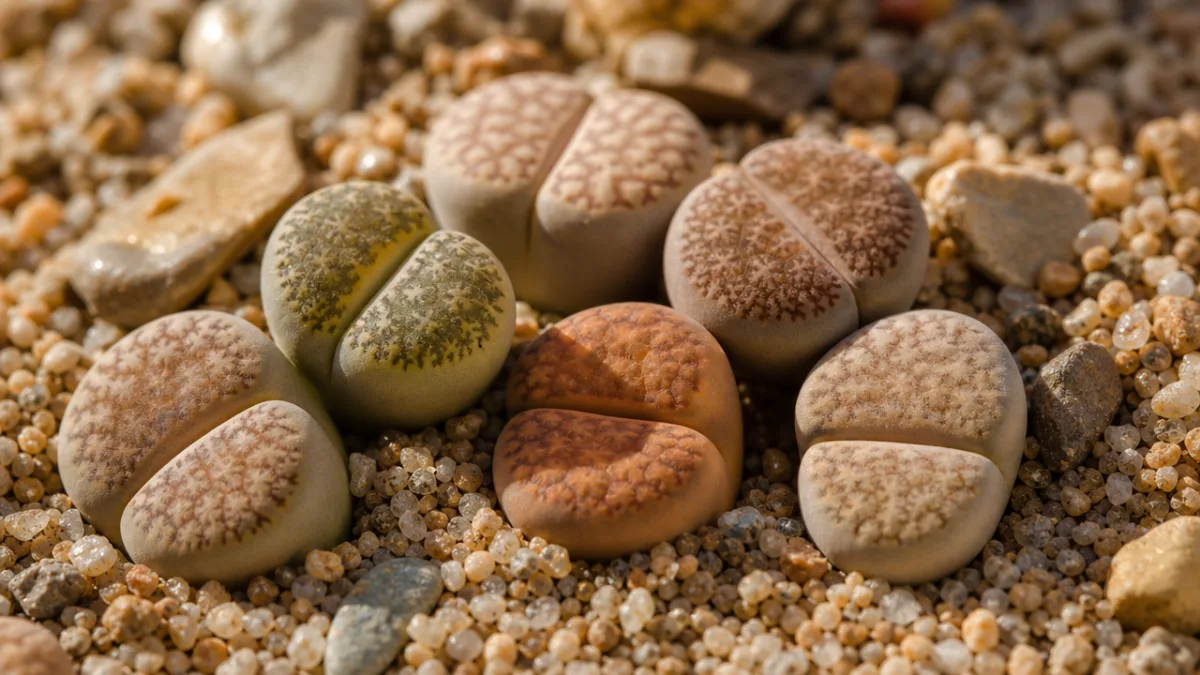
If you’ve never come across a Lithops before, prepare to have your mind a little blown. These tiny succulents — better known as living stones — are native to the arid scrublands of southern Africa, mainly South Africa and Namibia, and they’ve spent millions of years perfecting one very clever trick: looking exactly like the rocks around them. It’s not just a quirky aesthetic, either. That camouflage is a genuine survival strategy, making them invisible to the herbivores desperately seeking out any scrap of moisture in the harsh desert environment.
The name “Lithops” comes from the Greek words “lithos” (stone) and “ops” (face or appearance), so it literally means “stone face” — which is pretty much perfect. Even experienced gardeners will do a double-take when they spot one nestled among a handful of gravel. Each plant is essentially a pair of thick, fleshy leaves fused together at the base, forming a small rounded body that sits almost completely underground, with just the flat or slightly domed top poking out at soil level.
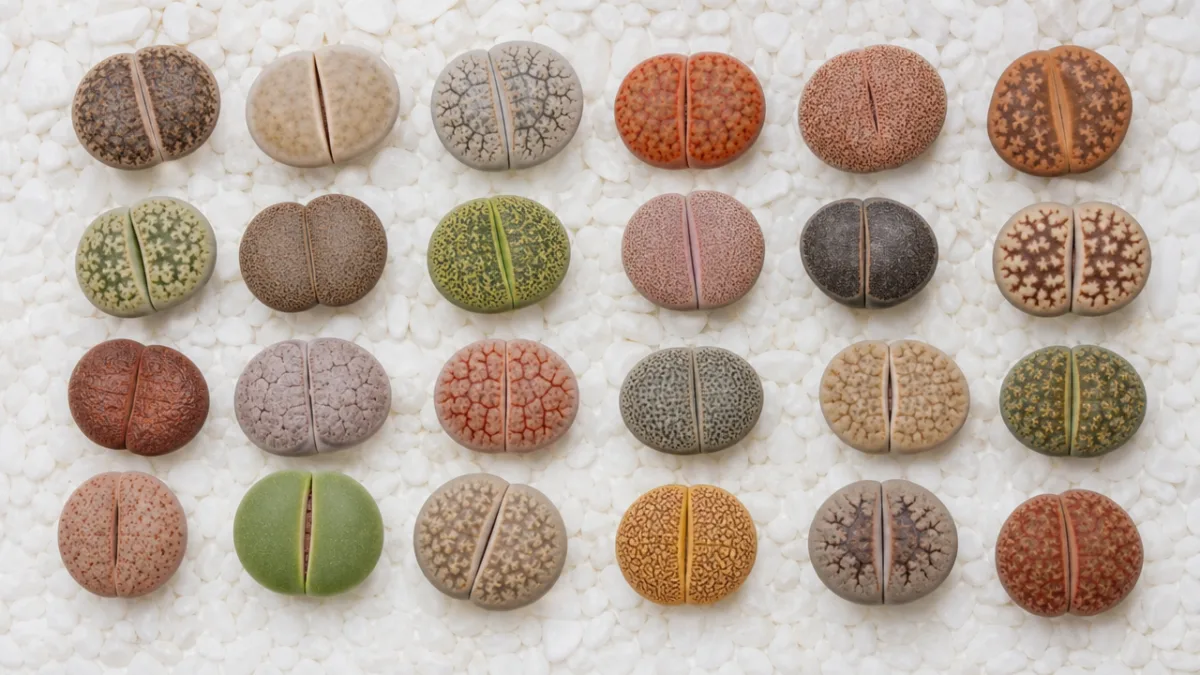
There are over 145 recognized species of Lithops, and the variety is remarkable. Colors range from pale silvery greens and chalky whites all the way to rich tawny browns, dusty pinks, and deep brick reds. Many have intricate mottled patterns or subtle translucent “windows” on their surface that allow light to filter down into the leaf tissue — a beautifully clever adaptation that keeps photosynthesis ticking along while the plant stays mostly out of sight.
The Unique Life Cycle of Living Stones
Here’s the thing about Lithops that trips up so many first-time growers: these plants run on their own schedule, and it doesn’t look anything like the schedule of your average houseplant. They have a very specific annual rhythm of growth, flowering, and dormancy, and if you try to water or fertilize them at the wrong moment, you can kill them surprisingly fast — even with the best intentions.
Their most active period runs from late summer through autumn, roughly August to November in the Northern Hemisphere. This is when a single daisy-like flower pushes up from the central split between the two leaf lobes. The flowers are almost comically large for such a tiny plant and are usually bright yellow or white, though some species go for a more dramatic orange. They’re sweetly scented and only open in the afternoon sun, closing up again each evening — a neat trick for attracting exactly the right pollinators at the right time of day.
After flowering comes one of the most fascinating things in the plant world. Through late winter and into spring, a brand new pair of leaves begins forming inside the old body, slowly drawing all the moisture and nutrients out of the existing leaves as it develops. You’ll notice the old leaves starting to shrivel and split, eventually peeling away to reveal a fresh pair underneath. During this whole process, you absolutely cannot water the plant. Not even a little. The new leaves are essentially drinking the old ones from the inside, and any extra moisture will cause them to bloat and burst prematurely, which usually kills the plant.
Once the new leaves have fully emerged and the old husks have dried up and fallen off — typically by late spring — the plant settles into its summer dormancy. It goes quiet, conserves energy and moisture, and waits for the cooler autumn temperatures to kick off the whole cycle again. Respecting this dormancy and keeping water away during it is probably the single most important thing you can do for a Lithops.
Choosing the Right Soil and Potting Mix
If there’s one thing that will make or break your experience with Lithops, it’s the soil. In the wild, these plants grow in some of the poorest, fastest-draining ground imaginable — mostly quartz, gravel, and crumbled rock with barely any organic material in sight. Your goal is to get as close to that as you can, because rich or moisture-retentive soil is basically a death sentence for them.
A standard cactus and succulent mix is a reasonable starting point, but on its own it’s usually still too rich and too water-retentive for Lithops. Most experienced growers cut it heavily with inorganic grit — things like perlite, pumice, coarse horticultural sand, decomposed granite, or poultry grit all work well. A typical ratio is one part commercial succulent mix to two or three parts inorganic material. Yes, really — that gritty.
Keep organic matter to a minimum. Peat-based mixes are particularly bad news, since they hold onto moisture for ages and can turn almost water-repellent once they dry out. Some dedicated Lithops growers go entirely inorganic, mixing pumice, perlite, and coarse sand in equal parts with just a small pinch of compost for the bare minimum of nutrition. Whatever blend you land on, do a quick test before planting: water it thoroughly and watch how fast the excess drains through. If it pools or drains slowly, keep adjusting.
Pot Selection, Watering, and Light Requirements
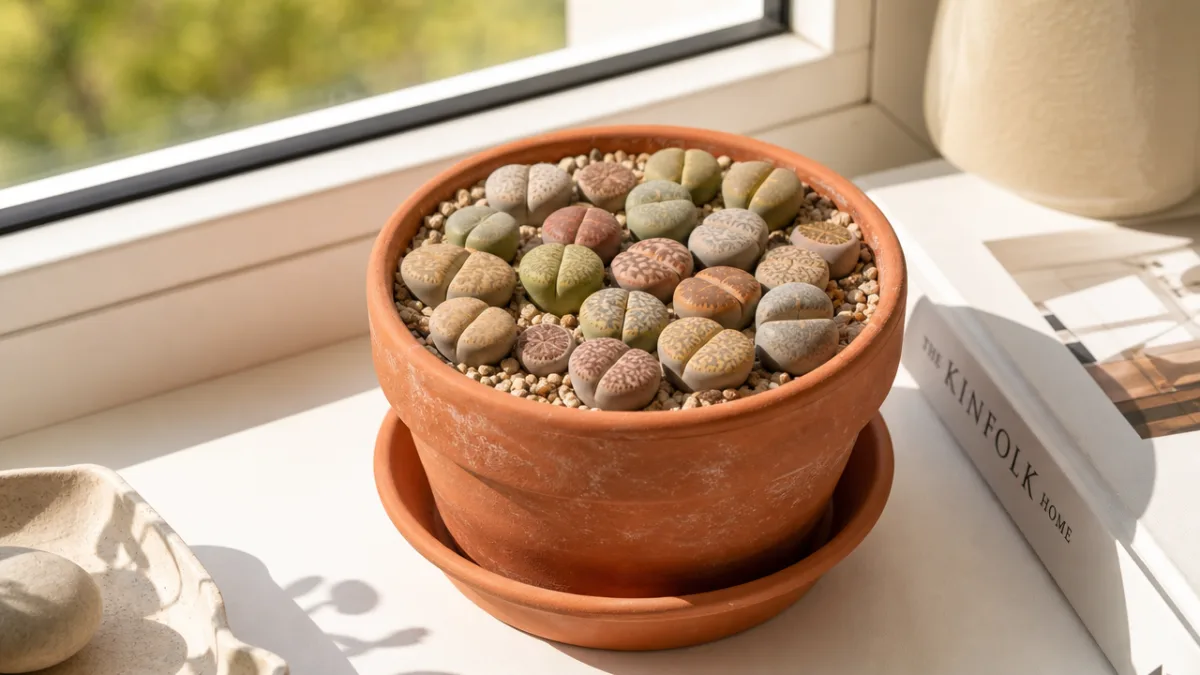
The pot matters more than you might think. Lithops have surprisingly long taproots for such small plants, so they actually prefer a pot that’s deeper than it is wide. Unglazed terracotta is a popular choice among growers because the porous walls let the soil breathe and dry out more evenly, which lowers the risk of moisture sitting around the roots. Plastic pots work too, but they hold water longer, so you’ll need to be even more careful with how often you water.
Speaking of watering — this is where most people go wrong, and it’s genuinely the hardest part of Lithops care. The rhythm goes like this: water sparingly from late summer through autumn while the plant is growing and flowering, stop almost completely during the winter leaf-change period, then resume with very light, infrequent watering in spring once the new leaves have fully come in. During the summer dormancy, you essentially stop altogether, with perhaps just the occasional light misting to keep the roots from completely drying out. When you do water, go thoroughly enough to wet the whole root zone — then wait until the soil is bone dry before you think about watering again.
Light is the other big one. Lithops come from some of the sunniest places on earth, and they need strong, direct light to stay compact and colorful. Without enough sun, they etiolate — stretching upward and going pale in a search for more light — and that stretched shape is permanent. They never go back. A south-facing windowsill (north-facing if you’re in the Southern Hemisphere) with at least four to six hours of direct sun daily is the baseline you’re aiming for.
Temperature, Dormancy, and Seasonal Care Calendar
Lithops are tougher than they look when it comes to temperature. Their native deserts swing from brutal daytime heat — well above 40°C (104°F) — to surprisingly cold nights that can dip near freezing. That said, they’re not frost-hardy, and anything below about 5°C (41°F) for an extended period is risky. For most home growers in temperate climates, a range of 15–30°C (59–86°F) works perfectly, making them pretty well-suited to windowsill life as long as the light is good.
Thinking in seasons makes Lithops care much more manageable. In spring (roughly March through May), your main job is to stay hands-off while the leaf renewal finishes up. Keep watering minimal or skip it entirely until the new pair of leaves has fully emerged and the old husks are dry and gone. In early summer you can gently begin watering again, but the soil should never stay consistently damp. Through the hottest part of summer, especially in warmer climates, a bit of shade from the harshest midday sun can help — even these tough little sun-lovers can scorch under truly extreme conditions.
Autumn is the payoff season. Flowers appear, the plants look their most vibrant, and you can water a little more regularly to support the blooming and the new growth forming inside the leaves. Even so, always let the soil dry out completely between waterings. Then, as November or December rolls around and days get shorter and cooler, start pulling back on water again to ease the plant into its winter rest.
Propagation, Common Problems, and Long-Term Success
Lithops can be grown from seed or divided from an established clump, and both methods will test your patience. Seed is the more common route and genuinely rewarding once you get the hang of it — just know that seedlings take three to five years to reach flowering size, so this is very much a long game. Sow fresh seed in late summer in a fine, gritty mix, keep it warm and lightly moist, and you’ll usually see germination within a week or two. The seedlings start out as tiny green beads, barely visible, and need careful handling. Over the first year or two, gradually introduce them to lower humidity and less frequent watering, as young plants are more prone to rot than their mature counterparts.
Division works when you have an older plant that’s built up a cluster of multiple heads over the years. Ease it out of its pot, gently separate the individual heads with their root systems intact, and let the divisions air dry for a day or two before potting them up in fresh gritty mix. Wait about a week before giving them their first water, to let any cut surfaces callus over properly. It’s a quicker route to a decent-sized plant than starting from seed, but you’re limited by how many mature, multi-headed specimens you have to work with.
Almost every problem you’re likely to encounter with Lithops comes back to too much water or not enough drainage. Root rot from persistently wet soil is the number one killer, and the cruel thing is that by the time you notice the plant looking mushy or collapsed, it’s usually too late to save it. Watch for yellowing, unexpected shriveling outside of the normal leaf change, or a deflated wrinkled look that doesn’t improve after watering — all of these can point to root trouble. Pests are rare, but mealybugs do occasionally turn up in the central fissure or around the roots, and a diluted systemic insecticide will usually sort them out.
The real secret to long-term success with Lithops is knowing when to leave them alone. These are plants that evolved to survive with almost no help from anyone, and the urge to fuss over them — watering a little more, adding fertilizer, moving them around — works directly against what they need. Give them strong light, fast-draining soil, and a watering routine that follows their natural cycle, and they’ll reward you by quietly going about their business for decades. Plenty of growers have plants that have been sitting in the same pot on the same windowsill for twenty years or more, splitting and renewing themselves each spring and flowering each autumn without any fuss at all. For such small, unassuming things, they’re endlessly captivating.








What do you think?
It is nice to know your opinion. Leave a comment.