










14 Easy Homemade Cleaning Solutions for a Chemical-Free Clean
Why Chemical-Free Cleaning Is Worth the Switch
Most conventional cleaning products lining grocery store shelves contain a cocktail of synthetic chemicals — surfactants, artificial fragrances, bleach derivatives, and preservatives — that can irritate skin, aggravate respiratory conditions, and leave residues on the surfaces your family touches every day. The shift toward homemade cleaning solutions isn’t just a trend driven by aesthetics or frugality; it’s a genuinely meaningful choice for your household’s health and the environment around you. When you know exactly what’s going into your spray bottle, you eliminate a significant source of uncertainty about what your children and pets are being exposed to on a daily basis.
Beyond health concerns, commercial cleaners contribute substantially to indoor air pollution. The Environmental Protection Agency has repeatedly noted that indoor air can be two to five times more polluted than outdoor air, and volatile organic compounds released by conventional cleaners are a major contributor. Switching to plant-based, pantry-derived ingredients like white vinegar, baking soda, and castile soap dramatically reduces your home’s chemical load while keeping surfaces genuinely clean. The irony is that many of these simple ingredients have better antimicrobial properties than people assume — vinegar, for instance, has been shown to kill certain bacteria and mold spores effectively.
There’s also a compelling financial argument. A large bottle of white distilled vinegar costs a fraction of a name-brand multi-surface spray, and a box of baking soda stretches across dozens of cleaning tasks. When you make your own solutions, you stop paying for water, fancy packaging, and marketing budgets. Most homemade recipes require nothing more than a few reusable spray bottles and a handful of pantry staples, turning your cleaning routine into something both sustainable and surprisingly affordable without any sacrifice in effectiveness.
The Core Ingredients You Need in Your Cleaning Arsenal
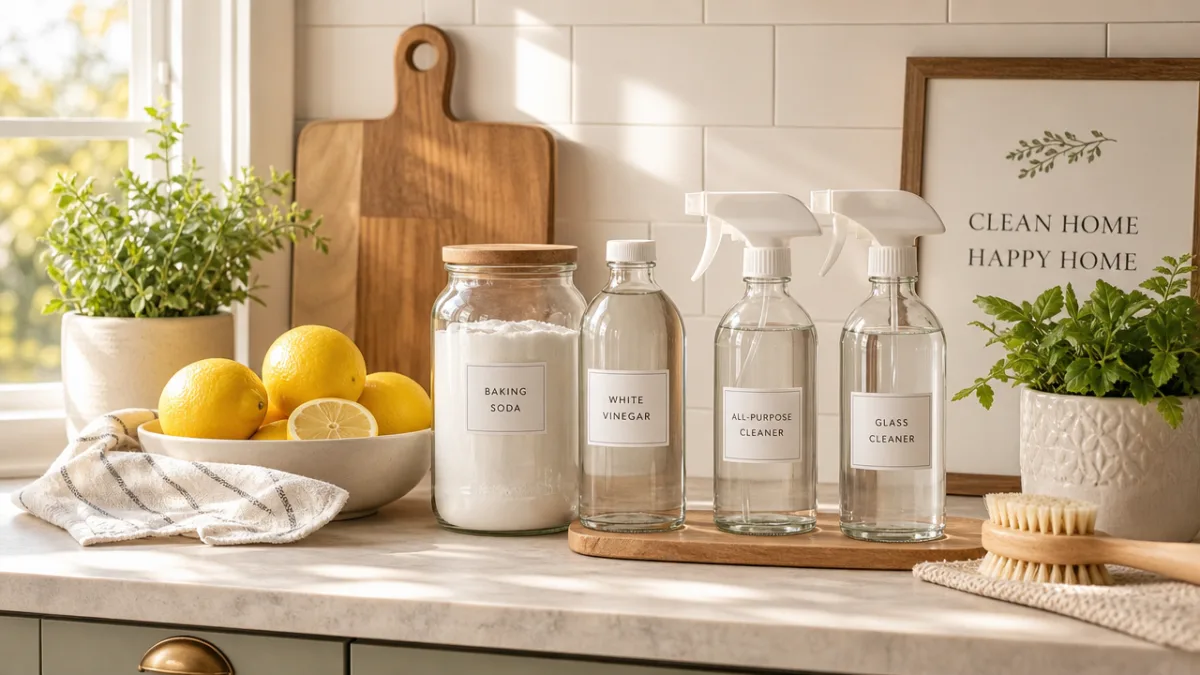
Building a chemical-free cleaning routine begins with stocking just a handful of versatile, readily available ingredients. White distilled vinegar is arguably the cornerstone of DIY cleaning — its acidity cuts through grease, dissolves mineral deposits, and inhibits mold growth. Baking soda, or sodium bicarbonate, acts as a gentle abrasive and natural deodorizer capable of absorbing odors rather than merely masking them. Together, these two ingredients form the backbone of dozens of effective cleaning recipes. You’ll find them in virtually every reliable homemade cleaning guide for good reason: they work, they’re safe, and they’re cheap.
Castile soap, a plant-oil-based liquid soap traditionally made with olive oil, is another indispensable ingredient. Unlike synthetic detergents, castile soap biodegrades completely and contains no petroleum-derived surfactants. It lathers well, cuts grease effectively, and mixes easily into cleaning solutions. Hydrogen peroxide (the standard 3% solution sold in drugstores) serves as a mild disinfectant and whitening agent, making it useful for bathroom surfaces and grout without the harsh fumes of bleach. Essential oils like tea tree, lavender, lemon, and eucalyptus add natural antibacterial and antifungal properties while giving your solutions a pleasant, genuinely clean scent rather than an artificial chemical odor.
Rounding out your toolkit: rubbing alcohol (isopropyl, 70% concentration) for streak-free glass and disinfecting hard surfaces; washing soda (sodium carbonate, stronger than baking soda) for heavy-duty degreasing tasks; and liquid castile soap concentrate for making everything from dish soap to floor cleaner. With these seven or eight ingredients, you can replace virtually every commercial cleaner in your home. The beauty of this approach is its modularity — you mix what you need, in the quantity you need, and store the rest of the raw ingredients for months or even years without degradation.
All-Purpose Cleaners for Every Room in the House
An all-purpose cleaner is the workhorse of any cleaning routine, and the homemade version is remarkably simple to put together. The most popular recipe combines equal parts water and white vinegar in a spray bottle, with twenty to thirty drops of essential oil — lemon or lavender work beautifully — to balance out the vinegar smell, which dissipates quickly as it dries anyway. This solution works on countertops, stovetop surfaces, cabinet fronts, light switches, door handles, and most sealed hard surfaces throughout the house. It’s worth noting that vinegar-based cleaners should not be used on natural stone like marble or granite, as the acidity can etch the surface over time.
For a slightly more powerful all-purpose formulation, try combining one cup of water, half a cup of white vinegar, a quarter cup of rubbing alcohol (70%), and fifteen drops of your chosen essential oil. The alcohol boosts the solution’s ability to cut through grease and evaporate quickly, leaving surfaces streak-free. This version is particularly effective in kitchens where cooking residue tends to accumulate, and it works wonderfully on stainless steel appliances when buffed with a microfiber cloth. The rubbing alcohol component also elevates the solution’s disinfecting power beyond what vinegar alone can achieve.
A castile soap-based all-purpose spray offers a gentler, soap-focused alternative for households with sensitive family members or for surfaces where you prefer a soap-and-rinse approach rather than an acid-based cleaner. Mix two teaspoons of liquid castile soap with two cups of water in a spray bottle, then add ten drops of tea tree oil for its natural antimicrobial properties. Shake gently before each use since the soap can settle slightly. This formulation is safe on virtually all surfaces including natural stone, making it a more versatile choice if your home has granite countertops or marble tiles. It leaves surfaces genuinely clean and smells like a spa rather than a laboratory.
Targeted Solutions for Kitchens and Bathrooms
Kitchens present specific challenges that a general-purpose cleaner sometimes can’t fully address: baked-on grease around the stovetop, mineral deposits on faucets, stubborn stains inside the oven, and the lingering odors that come with regular cooking. For heavy-duty oven cleaning, a paste made from baking soda and water — roughly three parts baking soda to one part water — applied generously inside a cool oven and left overnight performs remarkably well. The next morning, wipe away the paste and residue with a damp cloth, then spray the interior with undiluted white vinegar to activate any remaining baking soda, causing it to foam and lift the last bits of grease. The result rivals what harsh commercial oven cleaners achieve, without the choking fumes.
Bathroom cleaning calls for targeted solutions that address soap scum, hard water stains, mold and mildew, and toilet bowl buildup. A paste of baking soda with a small amount of castile soap applied with a scrubbing brush tackles soap scum on tub and shower surrounds beautifully. For hard water deposits on showerheads and faucets, soaking a cloth in undiluted white vinegar and wrapping it around the fixture for thirty to sixty minutes dissolves mineral buildup without any scrubbing. Toilet bowls respond well to a cup of baking soda followed by a cup of white vinegar — the fizzing action loosens stains, and a quick scrub with a toilet brush finishes the job effectively.
Grout is one of the more satisfying cleaning challenges to tackle naturally. A simple paste of baking soda and hydrogen peroxide (3%), applied to grout lines with an old toothbrush and allowed to sit for ten minutes before scrubbing, whitens grout and kills mold spores without bleach. For ongoing mold prevention in bathrooms, a spray bottle filled with undiluted hydrogen peroxide, applied to tiles after showering and left to dry naturally, creates an inhospitable environment for mold. A few drops of tea tree oil added to this hydrogen peroxide spray boosts the antifungal effect and leaves the bathroom smelling fresh. Consistency matters more than aggressive scrubbing — a light maintenance routine keeps bathroom surfaces far cleaner than occasional deep-cleaning sessions.
Here are some especially effective targeted recipes to keep handy:
- Dish soap booster: Add one tablespoon of white vinegar and five drops of lemon essential oil to your regular castile dish soap to cut through grease more effectively on heavily soiled pots and pans.
- Garbage disposal refresher: Freeze white vinegar in an ice cube tray, drop two cubes into the running disposal, then follow with a handful of coarse salt and a few citrus peels. The ice sharpens the blades while the vinegar deodorizes.
- Faucet shine spray: Mix equal parts water and white vinegar with five drops of lemon oil. Spray, let sit two minutes, then buff dry with a microfiber cloth for sparkling, streak-free fixtures.
- Mold preventive spray: Combine one cup of water, one cup of hydrogen peroxide, and ten drops of tea tree essential oil. Spray on tile and grout after cleaning and leave without rinsing.

Laundry, Floors, and Fabric Care Without Harsh Chemicals
Laundry detergent is one area where many households haven’t yet made the switch to homemade alternatives, perhaps because laundry feels more consequential — nobody wants dingy clothes or detergent residue irritating sensitive skin. A simple homemade laundry detergent can be made by combining one cup of washing soda, one cup of baking soda, and half a cup of finely grated castile bar soap, thoroughly mixed together. Use two tablespoons per load. For whitening, add half a cup of hydrogen peroxide directly to the washing machine drum alongside this detergent. The results are genuinely effective on normal household laundry loads, and people with eczema or skin sensitivities often report dramatic improvement when they switch away from commercial detergents loaded with synthetic fragrances and optical brighteners.
White vinegar doubles brilliantly as a fabric softener replacement. Adding half a cup of white vinegar to the fabric softener compartment of your washing machine softens fabrics naturally by breaking down mineral deposits and detergent residue that cause stiffness. There is no vinegar smell left on clothes once they dry — the scent completely dissipates during the wash cycle. If you want a light fragrance, add ten to fifteen drops of lavender or eucalyptus essential oil to the vinegar before pouring it in. This approach also keeps your washing machine drum cleaner over time, preventing the mold and musty odors that accumulate when fabric softener residue builds up in machine crevices and gaskets.
For floor cleaning, the appropriate homemade solution depends on your flooring type. Hardwood floors benefit from a very dilute solution — just a quarter cup of white vinegar per gallon of warm water — applied sparingly with a well-wrung mop to avoid moisture damage. Tile and linoleum floors handle a stronger mixture of half a cup of white vinegar per gallon of water, plus a few drops of essential oil. Avoid using soap-based cleaners on tile floors regularly, as they leave a residue that attracts more dirt over time. For carpet stains, a spray of equal parts white vinegar and water, blotted (never rubbed) with a clean cloth, lifts most common stains effectively. For tougher stains, apply a baking soda paste, let it dry completely, then vacuum up the residue.
Specialty Cleaners: Glass, Wood, and Stainless Steel
Glass and mirror cleaning is an area where commercial products often disappoint, leaving streaks that are somehow worse than what you started with. The homemade solution is almost embarrassingly simple and dramatically more effective: combine two cups of water, half a cup of white vinegar, and a quarter cup of rubbing alcohol (70% concentration) in a spray bottle. Spritz the solution onto glass or mirrors and wipe with a clean microfiber cloth or crumpled black-and-white newspaper — the newsprint texture buffs glass to a streak-free shine in a way that paper towels simply can’t match. This formulation cuts through fingerprints, toothpaste splatter, and cooking grease on oven doors with ease, and the alcohol component speeds drying to prevent streaking.
Wood surfaces — furniture, cabinets, cutting boards — require a gentler and more nourishing approach than hard surfaces. For wood furniture and cabinets, a mixture of one part white vinegar, one part olive oil, and a few drops of lemon essential oil, applied sparingly with a soft cloth and buffed in, cleans and conditions simultaneously. This works particularly well on wood that has lost some of its luster. For wooden cutting boards, which harbor bacteria in their knife cuts and grain, a two-step approach is most effective: scrub with coarse salt and half a lemon, then rinse and apply a thin coat of food-grade mineral oil to condition and protect the wood. This method is both food-safe and genuinely sanitary.
Stainless steel appliances, notorious for showing every fingerprint and smudge, respond beautifully to simple homemade treatment. Apply a small amount of olive oil or mineral oil to a microfiber cloth and buff in the direction of the steel’s grain — this removes smudges and leaves a protective coating that repels future fingerprints for days. For heavier cleaning of stainless steel sinks or cookware, a paste of baking soda and dish soap scrubbed gently with the grain removes stains and water spots without scratching. Follow with a wipe of diluted white vinegar to neutralize and shine. This combination keeps stainless steel looking as good as it did when it was new, entirely without the synthetic chemicals found in commercial stainless steel polishes.
A few additional specialty recipes worth keeping in rotation:
- Refrigerator interior cleaner: Two tablespoons of baking soda dissolved in one quart of warm water. This deodorizes and cleans simultaneously, and is completely food-safe for surfaces that contact your groceries.
- Microwave steam cleaner: Place a microwave-safe bowl filled with one cup of water and two tablespoons of white vinegar inside. Microwave on high for five minutes. The steam loosens all baked-on splatter, which then wipes away effortlessly with a damp cloth.
- Silver polish: Line a bowl with aluminum foil, fill with hot water, add one tablespoon of baking soda and one tablespoon of salt. Submerge tarnished silver items for ten minutes. The electrochemical reaction transfers tarnish from the silver to the foil.
- Drain declogger: Pour half a cup of baking soda followed by half a cup of white vinegar down the drain, wait fifteen minutes while it fizzes, then flush with a full kettle of boiling water to clear soap and grease buildup.

Building Lasting Habits for a Naturally Clean Home
Transitioning to a completely chemical-free cleaning routine is most successful when approached gradually rather than all at once. Begin by replacing the products you use most frequently — all-purpose spray, glass cleaner, and dish soap — with homemade alternatives, and live with those for a few weeks before expanding your repertoire. This gradual approach lets you troubleshoot individual recipes, adjust concentrations to suit your preferences, and build confidence in the effectiveness of natural ingredients without feeling overwhelmed by making a wholesale change overnight. Most people who try even one or two homemade cleaning solutions find themselves surprised by how well they work, which naturally motivates expanding the practice.
Organization makes the difference between a homemade cleaning routine that sticks and one that fades back to commercial products out of convenience. Invest in a set of good-quality glass or BPA-free plastic spray bottles, label them clearly, and keep them in the same places you stored your old products. Mix larger batches of your most-used solutions — a week or two’s worth at a time — so you’re not making a fresh batch every few days. Store dry ingredients like baking soda and washing soda in sealed glass jars near your cleaning station. When the process is as convenient as grabbing a commercial bottle from under the sink, the habit maintains itself without any additional effort or willpower.
It’s also worth celebrating the broader impact of this shift. Every time you reach for a spray bottle filled with vinegar and water instead of a commercial cleaner, you’re reducing plastic waste, cutting the demand for petroleum-derived chemicals, protecting waterways from synthetic surfactants, and keeping your indoor air cleaner for everyone who breathes it. A fully chemical-free cleaning routine reduces the number of single-use plastic bottles your household discards by dozens per year. The cumulative effect of many households making this shift is genuinely significant. And perhaps most immediately rewarding: your home smells like clean air, citrus, and lavender rather than chemicals — a subtle but transformative difference in the experience of living in a freshly cleaned space.








What do you think?
It is nice to know your opinion. Leave a comment.