










DIY Wood Decor: Transform Everyday Materials Into Stunning Home Accents
The Art of Upcycling: Why DIY Wood Decor Is Having a Major Moment
Honestly, there’s never been a better time to get into DIY wood decor. Scroll through any social media platform, browse a craft community, or land on an interior design blog and you’ll see handmade wooden pieces everywhere — and for good reason. They bring warmth and character to a space in a way that anything off a big-box store shelf just can’t match. When you make something yourself, every little imperfection, every swirl in the grain, every brushstroke of finish is part of the story. And that story is worth showing off.
A big part of what’s driving this trend is a growing awareness around sustainability and waste. People are rethinking disposable decor, and wood is one of the best materials to give a second life. Pallets, reclaimed lumber, old furniture, fallen branches, scrap timber from the hardware store — all of it can become something beautiful. And because so much of this material is free or nearly free, it’s one of the most budget-friendly hobbies you can pick up.
There’s also something genuinely satisfying about making things with your hands. Working on a wood project pulls you into a kind of creative problem-solving mode, and when you’re done — when that raw piece of wood has become a wall hanging or a shelf or a centerpiece — the feeling is hard to describe. That “I made this” moment is real, and it’s a big part of why people keep coming back to the craft.
Gathering Your Materials: Tools and Supplies You Actually Need
A lot of people assume you need a fully stocked workshop to start making wood decor. You really don’t. Most beginner and intermediate projects come together just fine with a hand saw, sandpaper in a few grits, wood glue, a basic drill, and a couple of clamps. If you already own most of those things, you’re basically ready to go.
Finding wood is easier than you might think too. Hardware stores often sell off-cuts at a steep discount and will sometimes hand over scrap pieces for free. Reclaimed wood — old fence boards, pallet slats, weathered barn wood, pieces pulled from discarded furniture — has a natural character that’s nearly impossible to replicate artificially. It looks like it belongs in a home because it’s already lived a life. Local buy-nothing groups, online marketplaces, and neighbors doing renovations are all great places to score material without spending much.
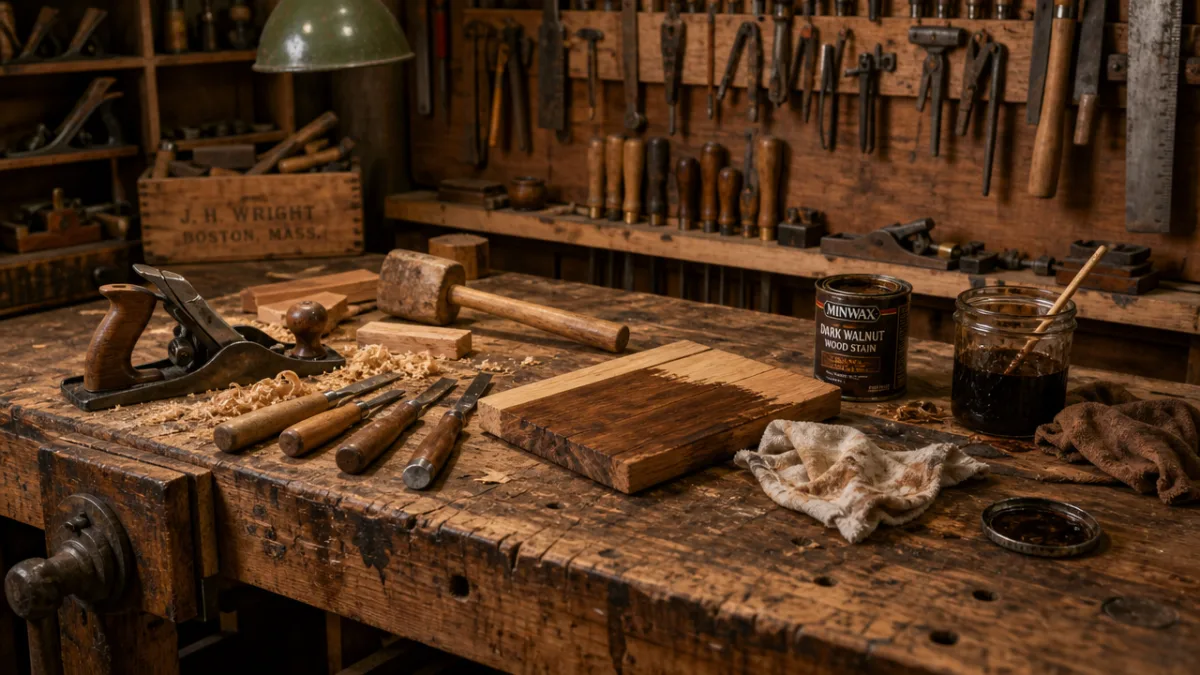
Don’t overlook your finishing supplies. Working through sandpaper grits from around 80 (for rough shaping) up to 220 (for a silky final surface) makes a huge difference in how the finished piece looks. Warm stain tones like walnut, ebony, and golden oak are popular for a reason — they bring out the wood grain in a really flattering way. Matte sealants and beeswax finishes keep things looking organic and handmade rather than plasticky. And stocking up on cheap brushes, rags, and disposable gloves makes the whole finishing process a lot less stressful.
- Basic hand saw or jigsaw for cutting shapes and lengths
- Sandpaper in 80, 120, and 220 grits for progressive smoothing
- Wood glue and clamps for assembly without visible hardware
- A drill with assorted bits for hanging hardware and joinery
- Stains, paints, or natural oils for color and protection
- Measuring tape, pencil, and a reliable square for accurate cuts
Five Beginner-Friendly DIY Wood Decor Projects to Start With
Starting simple is the move. A wooden serving tray is a classic first project — you’re just cutting, sanding, and finishing, but the result is something you’ll actually use and want to display. Two side boards, two end pieces, a flat base, some wood glue, and a few finish nails, and you’ve got the structure. Everything else is up to you.
Floating wall shelves are another great early project with a big payoff. Take a length of reclaimed timber, sand it smooth, hit it with a walnut stain, mount it with concealed hardware, and you’ve got the kind of detail that people walk into a room and immediately notice. The best part? You can make it exactly the size you need, which is something you’ll never get from a shelf at a furniture store.
Wooden plant stands, geometric wall art, monogrammed signs, ladder shelving units, rustic photo frames — there’s no shortage of good beginner options. The goal early on isn’t perfection. It’s getting a feel for how wood actually behaves: how it splits, how it drinks up stain unevenly, how the grain direction affects the way you sand. That hands-on understanding is what everything else builds on.
- Wooden serving tray with rope handles — ideal first project, minimal cuts required
- Floating reclaimed wood shelf — high visual impact, teaches wall-mounting skills
- Geometric hexagon wall art — introduces pattern-cutting and assembly
- Rustic wooden frame — great for learning clean mitered corners
- Simple plant stand — introduces angled cuts and structural joinery
Techniques That Elevate Your Wood Decor From Homemade to Handcrafted
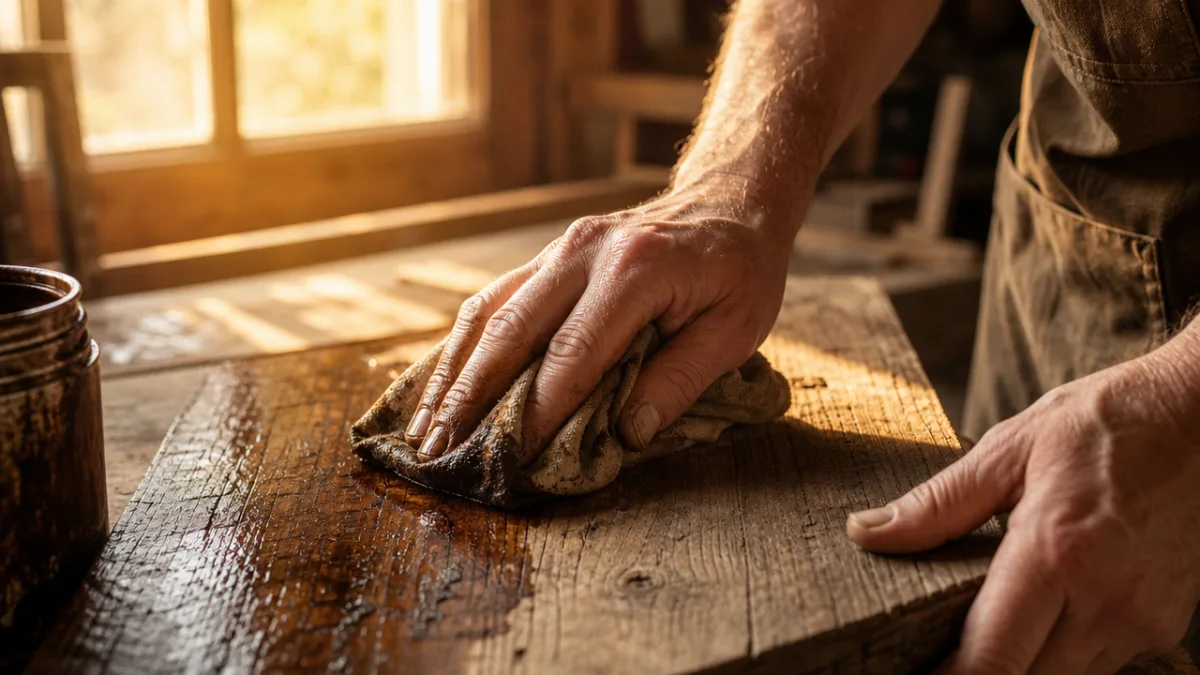
The gap between something that looks obviously homemade and something that looks genuinely artisanal usually comes down to two things: surface prep and finishing. Sanding is where beginners most often cut corners, and it shows immediately. Taking the time to move through the grits properly — rough first to remove marks and unevenness, medium to refine, fine for that final smooth surface — changes everything about how the stain absorbs and how the wood looks in light.
Wood burning, or pyrography, has become really popular in the DIY decor world, and it’s easy to see why. With an inexpensive burning tool and a bit of practice, you can add botanical designs, geometric patterns, quotes, or names directly to the wood surface. The result has a genuine heirloom quality to it that paint and stickers just can’t replicate. Most beginners are surprised by how quickly they get comfortable with it — usually by the first or second session.
Mixing materials is another technique worth trying early. Pairing natural wood with metal pipe creates an industrial shelf look. Leather cord adds texture to macrame-wood wall hangings. Small tiles or mosaic glass embedded in wooden frames look genuinely designed. Raw wood and concrete together make for a really striking modern tray. These combinations aren’t usually any more difficult than working with a single material, but the finished result looks a lot more considered and complex.
Designing With DIY Wood Decor: How to Style Your Handmade Pieces at Home
Making the piece is half the work — knowing how to display it is the other half. The same principles that apply to any quality decorative object apply here: be intentional, don’t overcrowd, and think about how scale, texture, and color work together in the space. One large, well-placed piece — a wide reclaimed wood shelf, a bold geometric wall installation — will almost always have more impact than a bunch of smaller items scattered around without a clear visual plan.
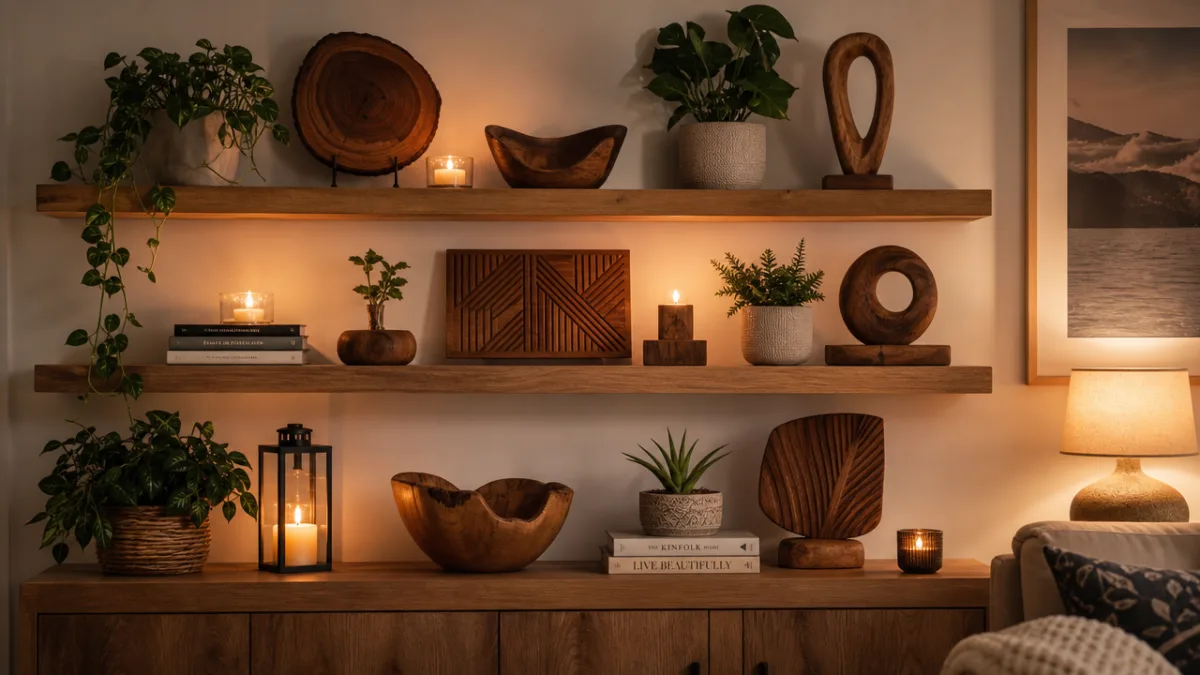
Layering textures is one of the most effective styling tricks, and wood is a natural fit for it. Natural timber pairs beautifully with soft textiles like linen and knit, with live plants that echo the organic feel of the wood, and with woven baskets, ceramics, and glass that contrast nicely with wood’s warmth. When you’re grouping objects on a shelf or surface, designers tend to work in odd numbers for a reason — three or five items together almost always look more natural and dynamic than four or six.
Lighting is something a lot of people forget about, but it genuinely transforms how a wood piece reads in a room. Warm bulbs in the 2700–3000 Kelvin range bring out the golden and amber tones in wood beautifully. A lamp or directional spotlight grazing across a textured surface will reveal the grain and depth in a way that flat overhead lighting completely kills. If you’ve put real time into crafting something, it’s worth giving equal thought to how it’s lit. That’s often the difference between a piece that blends into the room and one people actually stop and look at.
Building a Sustainable Creative Practice: Growing Your DIY Wood Decor Hobby
Once you’ve finished a few projects and the satisfaction of working with wood has really clicked, it’s natural to want more — more complexity, a more defined personal style, maybe even sharing or selling what you make. Keeping that momentum going sustainably means finding a rhythm that fits your actual life without letting the hobby spiral into something stressful or expensive. Even a small dedicated workspace — a corner of the garage, a section of the utility room — makes a real difference in how consistently you show up to it.
Community matters more than people expect. Online spaces on Pinterest, Instagram, and woodworking forums are full of people sharing techniques, troubleshooting problems, and cheering each other on. Local maker spaces and woodworking clubs give you access to tools that would be impractical to buy for home use, and the more experienced people there are almost always happy to share what they know. That kind of in-person mentorship is hard to find and genuinely valuable.
Documenting your projects — the raw materials, the work in progress, the finished piece in your home — builds a record of how far you’ve come, and it can be a real source of inspiration for people just getting started. A lot of DIY decorators have built communities simply by sharing their process honestly, mistakes and all, alongside the finished results. The wood decor world is a welcoming one, and that makes it a great hobby to grow into over time, wherever you’re starting from.








What do you think?
It is nice to know your opinion. Leave a comment.