










10 Brilliant Ways to Make Your Home Smell Amazing
Why Home Fragrance Matters More Than You Think
The second you walk through your front door, your nose is already forming an impression — way before your eyes have had a chance to take anything in. Scent is one of our most powerful senses, wired directly into the limbic system, the part of the brain that handles emotion and memory. A home that smells good doesn’t just seem cleaner; it feels warmer, more inviting, and unmistakably yours. Research in environmental psychology has found that pleasant ambient scents reduce stress, lift your mood, and can even help you focus better when you’re working from home.
And yet, home fragrance is one of the most overlooked parts of interior design. People will happily drop thousands on new furniture or a fresh coat of paint without stopping to think about what their home actually smells like to someone walking in for the first time. First impressions hit all the senses at once, and a beautifully decorated room that carries a musty or stale odor quietly undoes all the effort you put into how it looks. In a lot of ways, paying attention to how your home smells is one of the best-value improvements you can make.
The great news is that you don’t need expensive gadgets or a pricey candle subscription to pull this off. Many of the most effective approaches use everyday ingredients you probably already have in your kitchen, paired with a few simple habits that quickly become second nature. In this guide, we’ll walk through ten practical, genuinely useful strategies — from quick fixes to longer-term systems — that can turn your home into a place that smells as good as it looks.
Natural Simmer Pots: Your Kitchen’s Secret Weapon
One of the oldest tricks for making your home smell wonderful is also one of the easiest: the stovetop simmer pot. The idea is beautifully simple — fill a small saucepan with water, toss in some fragrant ingredients, and let it bubble away on the lowest heat. Within minutes, warm, natural aromas start drifting through the house. Unlike plug-in air fresheners that often smell artificial and a little sharp, simmer pots give off a soft, organic scent that feels genuinely cozy rather than chemically clean.
The combinations you can try are practically endless, so you can match your simmer pot to the season, an occasion, or just whatever mood you’re in. For a classic autumn feel, apple slices, cinnamon sticks, whole cloves, and a strip of orange peel work beautifully. In winter, cranberries, rosemary, and a vanilla bean create something that smells like a festive bakery. When spring and summer roll around, go lighter — lemon rounds, fresh mint, and a few sprigs of lavender hit the spot. Just remember to top the water up every half hour or so; you don’t want it to boil dry.
On top of smelling great, simmer pots add a little gentle moisture to the air, which is genuinely useful during winter when central heating makes everything dry out. That added humidity can help with dry skin and scratchy sinuses, and it’s even good for wooden furniture. It’s worth keeping a small dedicated saucepan just for simmering — after a while, it starts to absorb the scents of all the spices and citrus you’ve used, and that only makes each new batch smell even better.

Strategic Candle Placement and Wax Melt Systems
Candles are the classic go-to for home fragrance, but most people don’t get the most out of them — lighting one in the living room and wondering why the rest of the house still smells the same. The trick is in where you put them and understanding how scent actually travels. Warm air rises, so placing scented candles lower in a room lets the fragrance drift upward and fill the space more naturally. Near a doorway or at the bottom of a staircase, the scent can catch air movement and carry into neighbouring rooms.
Wax melts have become a really popular alternative to regular candles, and for good reason. Since they use a warmer rather than an open flame, they’re a safer option if you have kids or pets running around, and they give you more control over how strong the scent is. They tend to be better value too — one cube usually lasts longer than a candle at a similar price point, and you can mix different cubes together in the warmer to create your own custom blends. That creative element makes them especially fun if you like tailoring your space to your own taste.
Whether you’re buying candles or wax melts, it’s worth paying attention to quality. Paraffin wax is cheap, but it can release a bit of soot and synthetic residue when it burns. Soy wax or beeswax options burn cleaner, hold their scent better, and generally just feel more pleasant to have in your home. For candles, trimming the wick to about a quarter of an inch before each burn makes a real difference — you get a steadier flame, more even fragrance throw, and far less of that sooty black buildup on the inside of glass jars.
Reed Diffusers and Essential Oil Systems for Continuous Fragrance
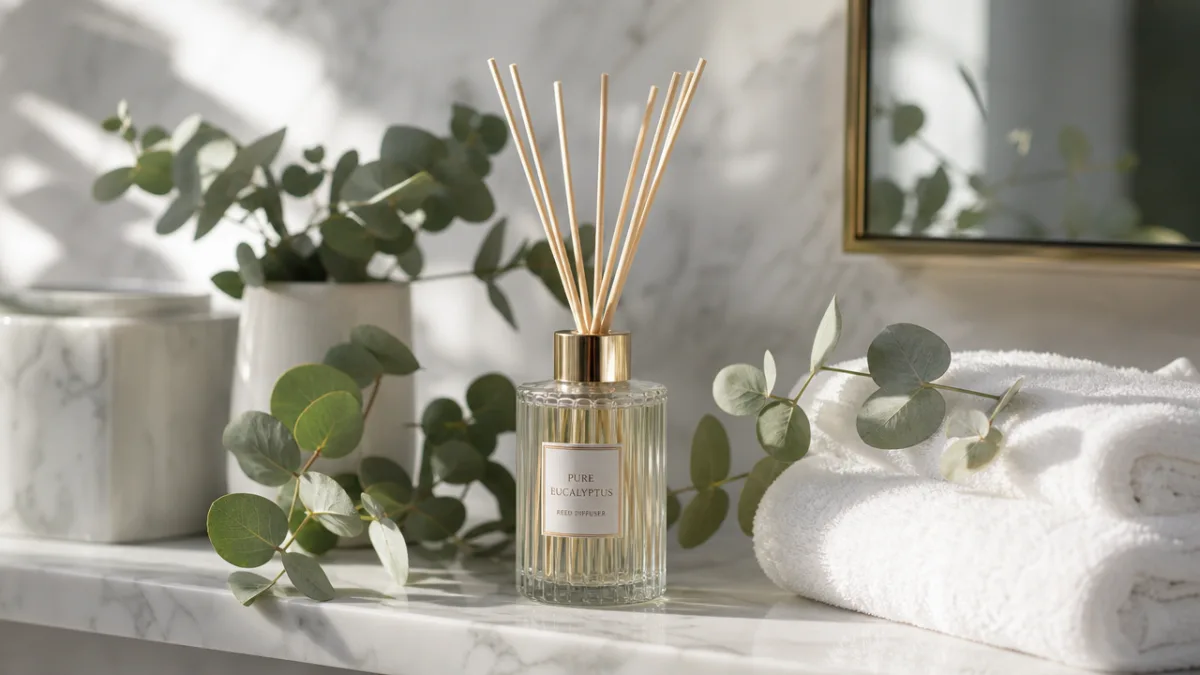
If you want a low-effort, always-on approach to home fragrance, reed diffusers and essential oil diffusers are hard to beat. Reed diffusers work through capillary action — the porous reeds slowly draw the oil up through the stick and release it into the air around the clock, no heat or power needed. That slow, steady release makes them ideal for hallways, bathrooms, and entryways where you want a consistent background scent rather than something that hits you all at once.
Where you place them matters more than most people think. Setting a reed diffuser somewhere with a bit of gentle air movement — near a door that opens and closes regularly, at the bottom of the stairs, or close to a running fan — helps the scent spread further without becoming overwhelming in any one spot. Flipping the reeds every few days refreshes the saturated ends and gives a temporary boost to the fragrance output, which is handy before you’re expecting guests. You can also control intensity simply by adjusting how many reeds you use — more reeds for a stronger scent, fewer for something subtler.
Ultrasonic essential oil diffusers take things a step further by actively misting microscopic water droplets infused with essential oils into the air. They’re popular partly because you can customize your scent completely using pure essential oils, which have genuine aromatherapeutic benefits beyond just smelling nice. Lavender is perfect for bedrooms — it’s calming and helps with sleep. Eucalyptus and peppermint feel energizing and clear-headed, making them great for a home office. And citrus blends like bergamot, lemon, and sweet orange bring a bright, uplifting energy to kitchens and living areas where everyone tends to gather.
Eliminating Odors at the Source: The Foundation of a Fresh Home
No amount of candles or diffusers can do their job properly if you haven’t dealt with what’s causing bad smells in the first place. Before you start layering in lovely fragrances, it’s worth tackling the underlying culprits — and they’re usually more manageable than you’d expect. The kitchen is almost always the main offender: cooking oils, the food bin, and the inside of the fridge all quietly contribute to a background staleness that fragrance can only cover up temporarily. A quick weekly wipe of your bin with diluted white vinegar, plus a small open box of baking soda inside it, makes a surprisingly big difference before the odor even has a chance to spread.
Soft furnishings — your sofa, rugs, curtains, mattress — are incredible at absorbing smells over time, silently soaking up everything from cooking fumes and pet hair to body oils and damp air over months and years. A simple homemade fabric spray works really well here: just combine two cups of water, two tablespoons of white vinegar, and fifteen drops of your preferred essential oil in a fine-mist bottle. A light spritz on upholstery and soft furnishings once or twice a week actually neutralizes odors rather than just masking them, and leaves behind a clean, faint scent from the oil.
Ventilation is probably the most underused weapon against household smells. Opening your windows for even ten or fifteen minutes in the morning lets stale air out and fresh air in, and it noticeably reduces the build-up of airborne odor that accumulates overnight. This is especially true in bathrooms, bedrooms, and the kitchen. If you live somewhere where opening windows isn’t always practical — a busy city street, for example — a HEPA air purifier with an activated carbon filter is a great alternative. It actively pulls volatile compounds and odor-causing particles out of the air rather than simply covering them up.
Botanical and Natural Touches That Fragrance Your Space Beautifully
One of the loveliest ways to make your home smell good is also one of the most natural: bringing in live and dried botanicals that release scent as a passive part of your everyday décor. Fresh flowers are the obvious starting point, and people often underestimate just how far their scent can travel. A single bunch of roses, freesias, hyacinths, or gardenias near your front door can fill the whole ground floor. Eucalyptus branches hung in the shower release their fresh, mentholated scent every time the hot water runs — an incredibly easy way to give your morning routine a genuine spa feel.
Dried botanical sachets are a longer-lasting, lower-maintenance alternative. Lavender sachets tucked into wardrobe drawers and linen closets keep clothes smelling fresh for months and double as a natural moth deterrent. Cedar blocks work well in wardrobes too, giving off a clean, woody scent while protecting your natural fibre clothes. For living spaces, a bowl of dried potpourri — rose petals, dried citrus slices, cinnamon sticks, star anise — adds visual interest alongside a gentle ambient fragrance that releases a little more every time air moves across it.
Potted herbs in the kitchen are one of those things that just keep giving. Basil, rosemary, mint, and thyme all release their characteristic scents throughout the day on their own, and giving them a gentle brush as you walk past sends a lovely little burst of fragrance into the air. A pot of jasmine or gardenia on a sunny windowsill can fill a whole room with extraordinary natural perfume when it’s in bloom. There’s also something about botanical fragrance that just feels more considered and authentic than anything that comes out of a bottle — it contributes to the sense that your home is genuinely, thoughtfully alive.

Scent Zoning: Creating a Fragrance Story Throughout Your Home
The most thoughtful approach to home fragrance is to think of your whole space as one connected sensory experience, with each room carrying its own scent that feels complementary to the others — like chapters in the same story. This idea, often called scent zoning, actually comes from high-end hospitality. Luxury hotels have been doing it for decades, using signature scents to create an emotional atmosphere that guests associate with comfort and welcome. The same principle works beautifully in a home, and it changes the feeling of moving from room to room in a way that’s hard to put into words until you’ve experienced it.
A practical scent zone map for a typical home might go something like this. The entryway and living room work best with bright, open fragrances — something citrusy, a light floral, or a fresh green note that says “clean and welcoming” the moment you walk in. The kitchen does better with herb-based or gently spiced scents that work alongside cooking smells rather than clashing with them. Bathrooms call for something fresh and spa-like: eucalyptus, mint, sea salt, or soft white tea all fit the bill. And bedrooms should carry the most relaxing scents you own — lavender, chamomile, sandalwood, warm vanilla — anything that tells your nervous system it’s time to wind down.
The most important thing when building a scent map is making sure your chosen fragrances belong to compatible scent families, so moving between rooms feels natural rather than jarring. Pairing a sharp, medicinal eucalyptus bathroom with a heavy incense-filled living room, for instance, creates an olfactory clash that feels off without you quite being able to place why. Instead, try building your home’s scent story around one unifying note — maybe a thread of citrus that shows up subtly in the kitchen, more prominently in the living room, and fades beneath warmer base notes in the bedroom. That kind of continuity and intention is what makes a home feel truly considered.
Quick Daily Habits That Keep Your Home Consistently Fresh
Keeping your home smelling great isn’t really about big occasional efforts — it’s about small, consistent habits that slot into your existing routine and quietly maintain a high baseline of freshness all week long. One of the most effective micro-habits is adding a few drops of essential oil to the inside of your vacuum cleaner bag or canister filter before you vacuum. As the machine runs, it disperses a light mist of fragrance through every room you move through, turning a chore you were already going to do into a chance to refresh the whole house at the same time.
Your laundry routine is another easy opportunity. A few drops of lavender or eucalyptus oil on wool dryer balls infuses your clean laundry with a lovely scent and releases fragrance into the laundry room and nearby spaces every time you run a cycle. Hanging freshly dried curtains or fabric items while they’re still slightly warm lets their clean scent drift through the room as they cool down and settle. And here’s a small one that sounds almost too simple: wiping down your light bulbs with a cloth barely dampened with diluted essential oil means every time you turn a lamp on, the warmth releases a soft, subtle fragrance into the air around it.
Building a quick weekly reset into your routine — maybe Sunday evening or first thing Monday morning — where you flip reed diffuser sticks, trim candle wicks, restock simmer pot ingredients, and give your upholstery a light spray, makes sure your fragrance systems never just quietly fade out without you noticing. It takes fifteen minutes at most and pays off across the whole week that follows. Once that kind of fragrance maintenance becomes as habitual as tidying up or watering your plants, a wonderfully scented home stops being something you have to work toward — it just becomes the natural state of the place you live in.








What do you think?
It is nice to know your opinion. Leave a comment.