










How Luffa Turns from a Vegetable into a Natural Sponge
What Is a Luffa? Understanding the Plant Behind the Sponge
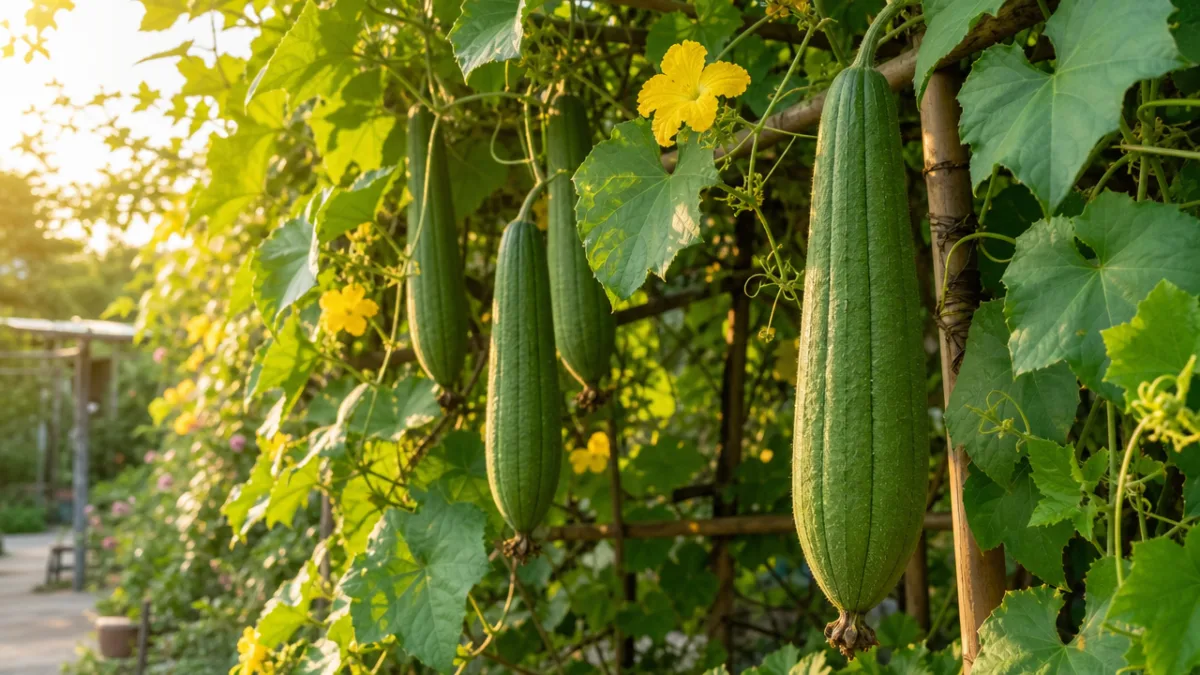
Most people first come across luffa in the bathroom — that rough, scratchy thing hanging by the shower. And here’s what surprises almost everyone: it didn’t come from a factory. It came from a garden. Luffa (sometimes spelled loofah) is actually a genus of tropical vines in the cucumber family, Cucurbitaceae. It’s closely related to cucumbers, squash, and zucchini, and just like those, it grows a green, elongated fruit that dangles from sprawling vines.
Two species are mainly grown for use as sponges: Luffa aegyptiaca, the smooth or Egyptian luffa, and Luffa acutangula, the ridged or angled variety. Both love warm, humid climates with lots of sunshine and a long frost-free growing season — usually around 150 to 200 days. They’re widely cultivated across Asia, Africa, the Caribbean, and parts of South America, where people have been growing them for centuries as both food and a handy household material.
When you pick luffa young and tender, it’s completely edible — a common ingredient in Asian and Middle Eastern cooking with a mild, zucchini-like flavor. You can stir-fry it, toss it into soups, or eat it raw in salads. But leave it on the vine long enough, and something remarkable happens: the soft, watery flesh dries out and collapses, leaving behind an intricate mesh-like skeleton of interlocking cellulose fibers. That natural transformation is exactly what makes luffa such a surprisingly good sponge.
The Biology of Transformation: What Happens Inside the Fruit
The whole magic of luffa’s transformation comes down to what’s happening inside the fruit. Like all plants, luffa fruits contain a network of fibrous strands that carry water and nutrients through the growing vegetable. In most edible plants, those vascular bundles stay thin and soft, tucked inside dense, moisture-rich flesh. In luffa, though, these fibers are unusually tough and form an elaborate three-dimensional lattice that runs through the entire fruit from stem to tip.
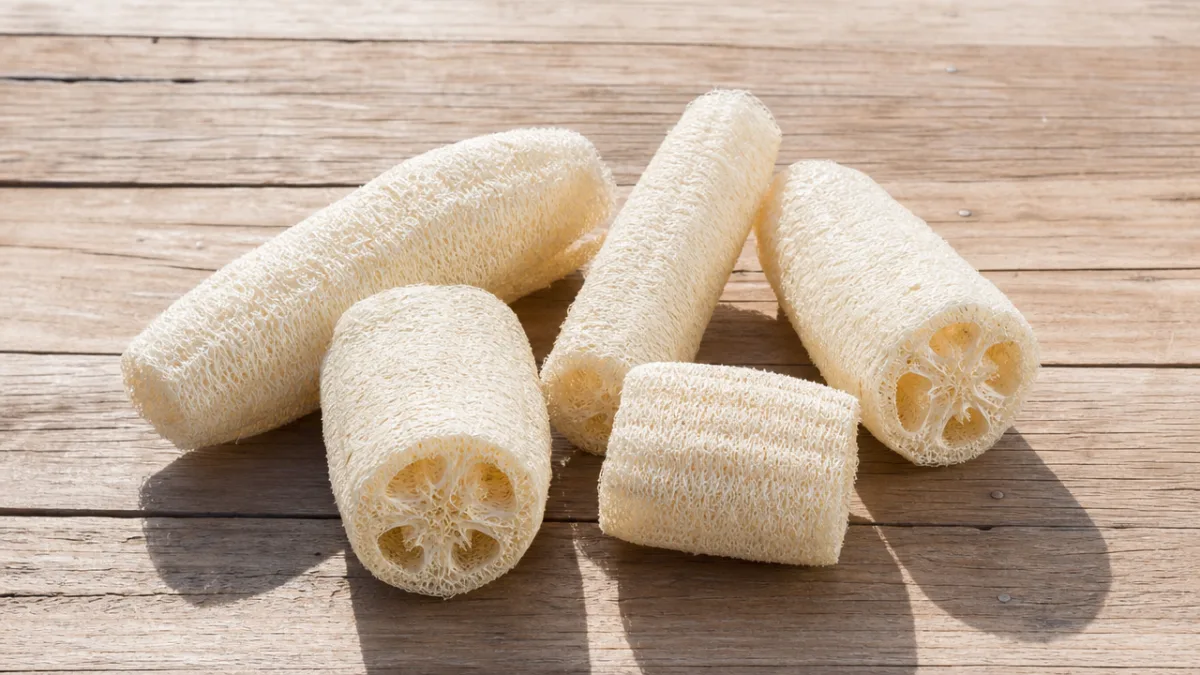
As the fruit matures past the eating stage, the flesh around that fiber network starts to break down on its own. Moisture drains away, the soft tissue shrinks and decomposes, and what was once a plump green vegetable slowly becomes a dry, lightweight, brown-skinned pod that rattles when you shake it — the seeds have separated from the sponge and dried out too. The fibrous skeleton, though, stays perfectly intact, stiffening into the shape most of us recognize as a luffa sponge.
Botanically speaking, this is a form of natural desiccation — the plant essentially lets its own fruit die and dry in a controlled way, concentrating the structural cellulose that was always there but hidden inside living tissue. What’s left behind is strong, flexible, and remarkably open in structure, with countless tiny interconnected pores that let water and soap flow right through. That porosity is exactly why luffa works so well for scrubbing skin or washing dishes: it holds a lather, distributes pressure evenly, and rinses out clean with ease.
Scientists have taken a real interest in luffa’s fiber matrix beyond its bathroom applications. The cellulose scaffold has shown promise as a biomaterial in filtration systems, composite materials, wound dressings, and even as a scaffold for growing tissue in biomedical research. Its natural porosity, biodegradability, and tensile strength make it a fascinating subject for sustainable materials science, and researchers are still finding new ways to put what nature already perfected to good use.
Growing Luffa: From Seed to Harvest
Growing luffa for sponges takes patience, space, and the right climate. Start seeds indoors four to six weeks before the last expected frost, since the plants need a long season for the fruits to fully mature and dry on the vine before cold weather rolls in. Luffa seeds have a tough outer coat, so soaking them in warm water for 24 hours before planting really helps kick-start germination. Once the seedlings have a few true leaves and outdoor temperatures are reliably warm, they’re ready to move into a sunny garden bed or a large container.
The vines grow fast and get big — we’re talking 30 feet or more in a single season. They need a sturdy trellis, fence, or pergola to climb, and in return they’ll reward you with large, cheerful yellow flowers all summer long. Bees and other insects do the pollinating, and fruits form quickly after that. Keeping the soil consistently moist during fruit development matters a lot; water stress tends to produce smaller fruits or poorly developed fiber inside.
Knowing when to harvest is probably the most important skill in growing luffa. For sponge production, leave the fruits on the vine until they start turning brown and feel noticeably lighter than the green ones next to them. A ready luffa sponge will feel almost hollow, and if you shake it, you’ll hear the dried seeds rattling around inside. Harvest too early and the interior is still damp with fibers that haven’t fully set. Wait too long and the outer skin becomes stubbornly hard to peel. Most gardeners find that fruits harvested after the first light frost but before a hard freeze give the best results.
- Start seeds indoors: Begin 4–6 weeks before the last frost date, soaking seeds overnight for faster germination.
- Provide strong support: Install a trellis or fence capable of holding the weight of multiple heavy fruits on vigorous vines.
- Water consistently: Luffa is a thirsty plant during fruit development; irregular watering can lead to bitter or poorly formed fruits.
- Watch for color change: The transition from deep green to yellow-brown signals the fruit is approaching maturity for sponge harvest.
- Test for lightness: Pick up individual fruits periodically; a dramatic reduction in weight confirms the drying process is underway inside.
Processing the Luffa: Turning a Dried Fruit into a Usable Sponge
Once you’ve brought your dried luffa in from the garden, there’s a simple — and honestly pretty satisfying — processing routine before it’s ready to use. First, you need to get that tough outer skin off. A quick soak in water for a few minutes softens it enough to peel away by hand or with a knife. Most people find it easiest to start at the stem end, where the skin tends to crack first, and work their way down. It peels off in large strips, revealing the golden-tan fiber network underneath.
Next, shake and tap the peeled luffa firmly to knock out the seeds, which fall out easily through the open ends of the fiber skeleton. The seeds are viable, so it’s worth saving them for next year’s garden — it makes luffa an incredibly economical crop. After the seeds are out, you’ll likely notice some residual dried plant matter and brownish discoloration from the decomposed flesh. A good rinse under running water followed by a soak in diluted bleach or hydrogen peroxide takes care of that, lightening the fibers and sanitizing the sponge at the same time.
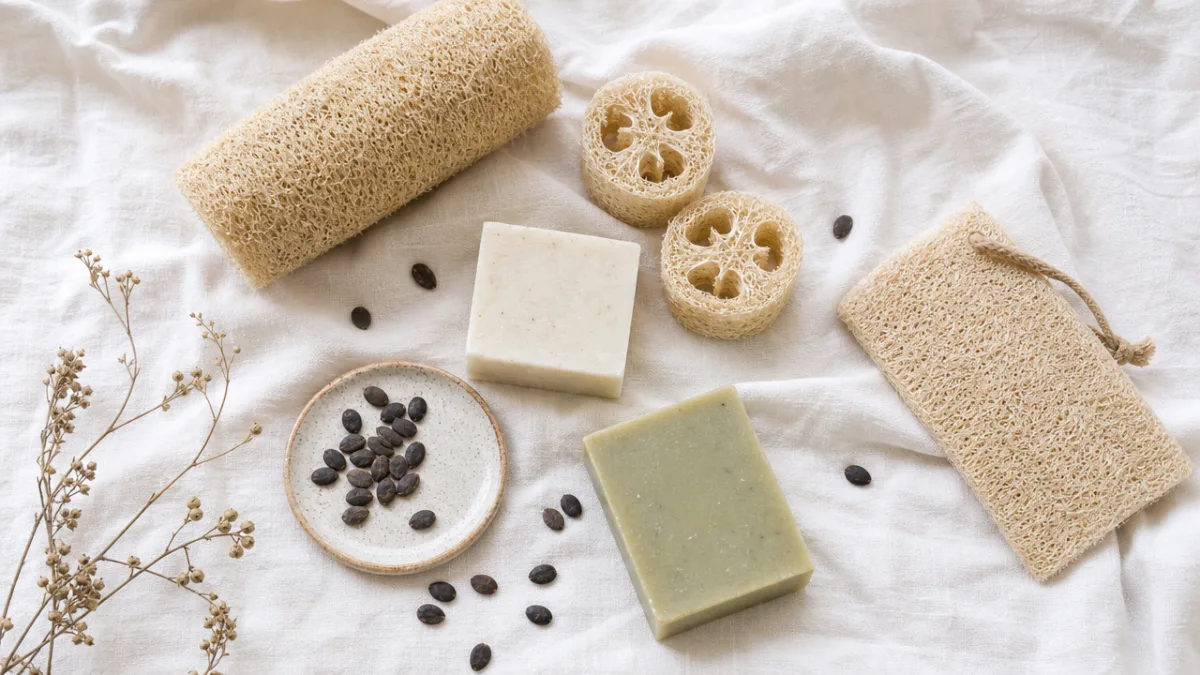
After the bleaching soak, rinse the sponge thoroughly and let it dry completely in a well-ventilated spot or out in direct sunlight, which gives it a little extra natural bleaching. Once dry, the finished luffa is surprisingly springy and resilient. You can leave it whole, slice it into sections for different purposes, or embed it into handmade soap bars — which is exactly what many artisan soap makers do, creating a self-exfoliating bar that’s as practical as it is pretty.
- Soak the harvested dried fruit briefly in warm water to soften the outer skin.
- Peel away the brown skin by hand, starting at the stem end and working toward the tip.
- Shake out the seeds through the open ends and reserve them for replanting if desired.
- Rinse the fiber skeleton thoroughly under running water to remove plant debris.
- Soak in a diluted bleach or hydrogen peroxide solution for 15–30 minutes to lighten and sanitize.
- Rinse again completely and allow to air dry in sunlight until fully dry before use or storage.
The Many Uses of Luffa Beyond the Shower
Luffa is most at home in the bathroom, sure — but its usefulness stretches well beyond that. In the kitchen, it makes a great dish scrubber: tough enough to tackle baked-on food, but gentle enough not to scratch most cookware. And unlike synthetic scrubbing pads, luffa is fully biodegradable, so when it eventually wears out you can toss it in the compost rather than the trash. For households trying to cut down on single-use plastic, that’s a genuinely appealing quality.
Crafters have also found a lot to love about luffa. It works as a natural stamp for painting patterns, adds organic texture to wreaths and floral arrangements, and makes a charming, eco-friendly filler for gift baskets. The fibrous skeleton takes dye beautifully — fabric dye or natural plant-based pigments both work well — and sliced luffa rounds have shown up as coasters, trivets, and decorative accents in rustic home décor, where their warm honey tones pair nicely with wood, linen, and stone.
On a more industrial scale, luffa has been drawing serious attention from researchers. Its impressive tensile strength, low density, and high porosity make it worth studying as a reinforcing material in polymer composites for automotive parts, construction panels, and packaging. Environmental engineers have explored its potential in water filtration, where its porous matrix can trap particulate matter and certain contaminants. When you combine rapid biodegradability with solid structural performance, luffa becomes a compelling alternative to synthetic foams and fiberglass in applications where both weight and sustainability matter.
And back in the bathroom: there’s a solid reason luffa has stuck around as a skin care staple. Regular use promotes exfoliation, sloughing off dead skin cells that can clog pores and dull your complexion. That gentle mechanical scrubbing encourages cell turnover and can improve skin texture over time. Unlike plastic microbeads — now banned in many countries for their harm to marine ecosystems — luffa does the same job through a completely natural, compostable material. Dermatologists generally suggest using it two to three times a week at most to avoid over-exfoliation, and it’s important to let the sponge dry out fully between uses so bacteria don’t get a foothold.
Luffa and Sustainability: The Eco-Friendly Alternative to Synthetic Products
As awareness of plastic pollution has grown, more and more people have started looking for natural alternatives to the synthetic products they use every day. Luffa sits right at the crossroads of several of those trends: zero-waste living, natural skin care, home gardening, and sustainable materials. While synthetic sponges and scrubbing pads made from petroleum-derived materials can linger in landfills and oceans for centuries, a luffa sponge is completely biodegradable and breaks down in the compost within weeks. That closed-loop lifecycle is one of the strongest cases you can make for switching to luffa.
Growing your own takes the sustainability angle even further. When you raise luffa at home without synthetic fertilizers or pesticides, you’re looking at an essentially zero-carbon footprint compared to commercially produced alternatives that require manufacturing, packaging, and global shipping. A single vine can produce anywhere from five to thirty fruits in a good season depending on climate and care — enough to keep a household stocked with sponges all year, for nothing more than the cost of seeds, water, and a little time. Extra sponges make great gifts, sell well at farmers markets, or can be donated to community organizations.
The commercial luffa industry reflects these values too, in many places. Small-scale producers in developing countries grow and process luffa using traditional methods that require no industrial machinery and generate almost no waste. Seeds, skin scraps, and unusable fiber all get composted or used as animal feed, making luffa cultivation about as waste-free as agriculture gets. Fair-trade certified luffa products have become increasingly easy to find in natural food stores and online, so even people who can’t grow their own have access to sustainably produced, ethically sourced options.
The future looks genuinely promising for this ancient plant. With growing interest from materials scientists, sustainable product designers, and everyday consumers trying to make better choices, luffa is finding new relevance all the time. Whether it’s climbing a backyard trellis, tucked into an artisan soap bar, sitting under a microscope in a university lab, or simply hanging in someone’s shower doing exactly what it’s done for thousands of years — luffa is one of nature’s most elegant and underappreciated tricks. A reminder that some of the best technologies are already quietly growing in the garden, just waiting to be noticed.








What do you think?
It is nice to know your opinion. Leave a comment.