










15+ Unique Backyard Garden Room Ideas to Transform Your Outdoor Space
The Rise of the Outdoor Garden Room
Over the past decade, the concept of the backyard garden room has evolved from a modest shed or greenhouse into a fully realized living space that blurs the boundary between indoors and outdoors. Homeowners across the world are increasingly investing in these structures as a way to expand their usable square footage without undertaking costly home extensions. Whether used as a creative studio, a quiet reading retreat, or a vibrant entertainment hub, the garden room represents one of the most exciting trends in modern residential design.
The appeal is easy to understand. Traditional home expansions require permits, contractors, and months of disruption to daily life. A well-designed garden room, by contrast, can often be installed in a matter of days and immediately adds both functional space and significant property value. Studies in the UK and across North America have shown that a quality garden room can increase a home’s resale value by anywhere from five to fifteen percent, making it one of the smartest investments a homeowner can make in their property.
Beyond the financial advantages, garden rooms offer something that traditional home additions rarely can: a genuine sense of escape. Positioned at the far end of a garden, surrounded by planting, birdsong, and natural light, these spaces provide a psychological distance from the main house that many people find deeply restorative. In an era of remote work and increasing stress, having a dedicated outdoor room that is separate from the domestic bustle of family life has become less of a luxury and more of a genuine necessity for many households.
Choosing the Right Style for Your Space
Before a single board is laid or a window frame fitted, one of the most important decisions you will make is choosing the architectural style of your garden room. The structure should complement the existing aesthetic of your home and garden rather than clash with it. A sleek, contemporary glass-and-steel pod will look stunning against a modern minimalist property but might feel jarring beside a traditional Victorian terraced house. Conversely, a rustic timber cabin with a sedum roof could look perfectly at home in a cottage garden but out of place in an ultra-modern setting.
Contemporary garden rooms are among the most popular choices right now, characterized by clean lines, large glazed panels, and a restrained color palette of grays, blacks, and natural timber tones. These structures often feature bi-fold or sliding doors that open the entire front wall to the garden, creating a seamless flow between inside and out. The use of large windows and rooflights ensures these spaces are flooded with natural light throughout the day, making them feel airy and spacious even when the footprint is relatively modest.
For those who prefer a more organic, naturalistic approach, the rustic or Scandinavian-inspired garden room offers a warmer and more textural alternative. Think rough-sawn cedar cladding, exposed internal beams, wood-burning stoves, and woolen throws. These spaces feel cozy and grounded in a way that ultra-modern designs sometimes do not, and they tend to age beautifully as the timber weathers and the surrounding planting matures. Other popular styles include the industrial loft aesthetic with steel frames and raw concrete finishes, the Moroccan-inspired retreat with decorative tiles and lanterns, and the classic potting shed reimagined with designer flair.
Garden Rooms for Work and Creativity
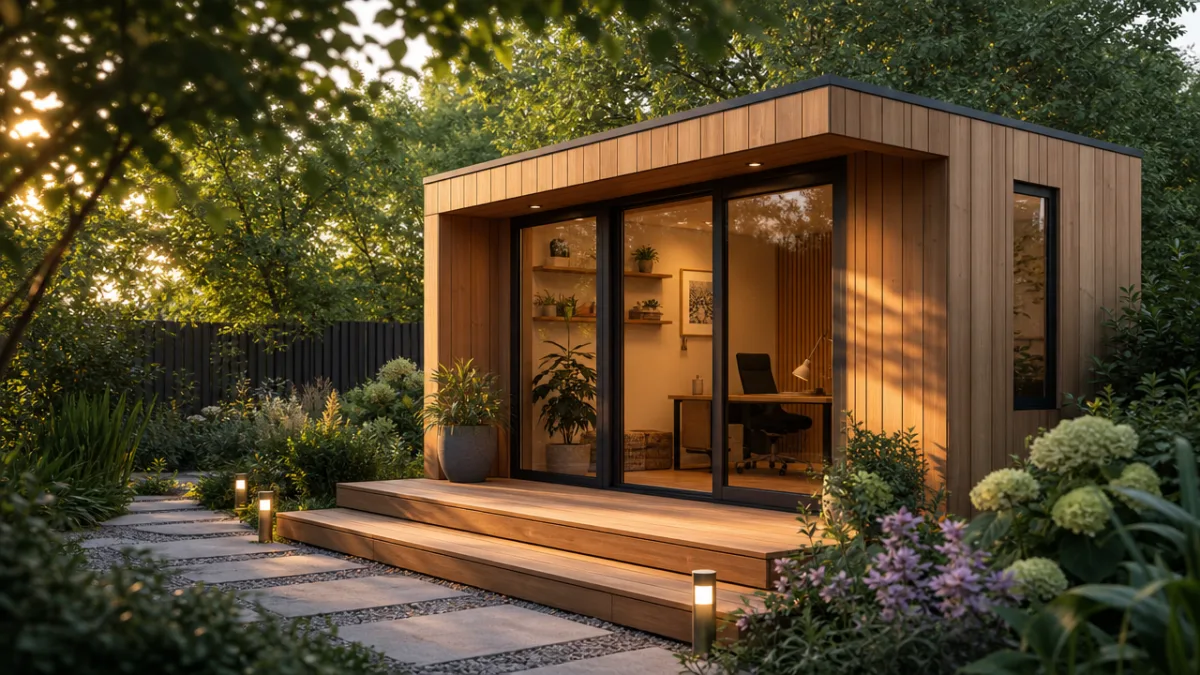
The global shift toward remote and hybrid working has been perhaps the single biggest driver of garden room construction in recent years. When the home office moved from a rare luxury to an everyday necessity, millions of people suddenly found themselves working from kitchen tables, spare bedrooms, and living room corners — spaces that were never designed for focused professional work. The garden room office emerged as the elegant solution: a dedicated, professional-grade workspace that happens to be located at the bottom of the garden.
A purpose-built garden office offers advantages that no interior room can easily replicate. The physical act of walking down the garden path each morning creates a mental commute that helps the brain switch into work mode. At the end of the day, the reverse journey signals the transition back to home life — a psychological boundary that many remote workers struggle to establish when their desk is just down the hall. Inside, these spaces can be fitted out to a genuinely high professional standard, with built-in desking, cable management, high-speed internet connections, climate control, and excellent acoustic insulation.
Artists, writers, musicians, and craftspeople have been equally quick to embrace the garden room as a creative studio. Painters love the natural north light that a well-positioned rooflight can deliver. Potters and sculptors appreciate the freedom to make a mess in a space that is separate from the family home. Writers and musicians value the acoustic privacy that a properly insulated garden room provides. Designing a creative studio requires thinking carefully about storage, surfaces, lighting, and ventilation — and the good news is that garden room manufacturers now offer highly customizable interiors to suit almost any creative discipline.
- Home office setup: Invest in quality ergonomic furniture, excellent broadband infrastructure, and acoustic panels to create a genuinely productive workspace that rivals any commercial office environment.
- Artist’s studio: Prioritize natural overhead lighting via rooflights, durable flooring that can handle paint and clay, and deep storage for materials and finished works.
- Music room: Acoustic insulation is paramount — specialist acoustic panels, floating floors, and double-glazed windows with laminated glass will keep sound in and external noise out.
- Photography studio: Consider a large blank wall for backdrops, controllable artificial lighting rigs, and blacked-out windows to enable full control over the light environment.
Entertaining and Socializing in Your Garden Room
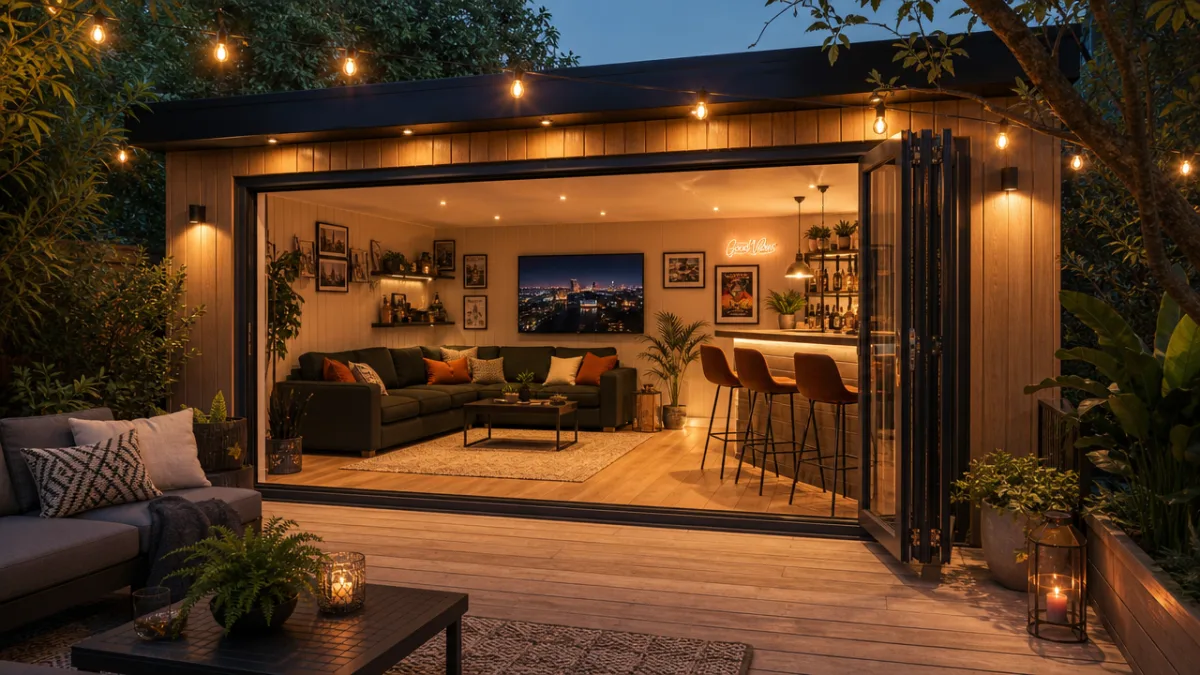
Garden rooms designed specifically for entertaining represent some of the most ambitious and visually spectacular examples of the genre. An outdoor entertaining space that offers proper shelter, warmth, and comfort fundamentally changes the way you use your garden across the seasons. Rather than being limited to sunny summer afternoons, a well-designed entertainment garden room extends the social season well into autumn and even winter, allowing you to enjoy the beauty of the garden even when the weather outside is less than cooperative.
The most successful entertaining garden rooms typically feature a wide, fully glazed front elevation that can be opened completely during good weather and closed in inclement conditions. A bar or kitchen area fitted with a wine cooler, compact refrigerator, sink, and preparation surfaces transforms the space from a simple room into a genuine hospitality venue. Many homeowners also install a wood-burning fireplace or outdoor-rated wood burner, which adds tremendous ambiance as well as warmth during cooler evenings. Comfortable seating, ambient lighting, and a quality sound system complete the picture.
For those who love to cook and eat outdoors, the garden kitchen room takes the concept a step further. These spaces are essentially fully equipped outdoor kitchens housed within a permanent structure, allowing for year-round outdoor dining regardless of the weather. Fitted with professional-grade appliances including induction hobs, ovens, and built-in grills, they represent the ultimate in alfresco entertaining. The combination of a covered outdoor kitchen with a dining terrace and a well-planted garden beyond creates an experience that is genuinely unique — and one that guests remember long after the evening ends.
Wellness and Relaxation Retreats
One of the most exciting applications of the garden room concept is the dedicated wellness retreat. As awareness of the importance of mental and physical health has grown, many homeowners are choosing to invest their garden room budget in spaces specifically designed to support relaxation, mindfulness, and physical wellbeing. These spaces range from dedicated yoga and meditation studios to fully equipped home gyms, and from luxurious spa rooms with hot tubs and saunas to simple, beautifully designed reading rooms where the only goal is quiet and calm.
A yoga or meditation studio at the bottom of the garden is a particularly appealing proposition. These spaces benefit from natural light, a connection to the sounds and sights of the garden, and the physical separation from the household that allows genuine mental quietude. Fitted with sprung wooden floors, mirrors, and subtle ambient lighting, they can rival any commercial yoga studio for quality. Many practitioners find that having a dedicated home studio removes the barriers — travel time, class schedules, cost — that can prevent a consistent practice, making it easier to show up on the mat every day.
The home spa garden room represents the most indulgent end of the wellness spectrum. These structures are typically larger, requiring space for a hot tub or plunge pool, a sauna cabin, changing facilities, and relaxation seating. The engineering involved is more complex, with special attention required for waterproofing, drainage, ventilation, and electrical safety. When done well, however, the result is extraordinary: a private spa experience accessible at any time of day or night, set within the beauty of your own garden. The experience of moving between a hot sauna and a cold plunge pool while looking out over a frost-covered garden on a winter morning is, by many accounts, one of life’s great simple pleasures.
- Yoga and meditation studio: Sprung floors, ample natural light, underfloor heating, and minimal decoration create the ideal conditions for a focused and restorative practice.
- Home gym: Rubber flooring, mirrored walls, strong structural supports for wall-mounted equipment, and good ventilation are the non-negotiables for a safe and effective training environment.
- Spa room: Invest in professional waterproofing, commercial-grade ventilation, and proper drainage — and consider planning permission if you are installing a hot tub or pool.
- Reading room: A comfortable daybed or chaise lounge, excellent task lighting, built-in shelving, and a small wood burner create the perfect conditions for literary escape.
- Therapy room: For those who work in the helping professions, a quiet, accessible garden room makes an ideal consulting or therapy space with the added benefit of natural surroundings.
Planting and Landscaping Around Your Garden Room
A garden room does not exist in isolation — it sits within a broader outdoor environment, and the relationship between the structure and its surrounding planting is one of the most important factors in determining whether the overall design feels cohesive and considered or awkward and afterthought-like. The best garden room installations treat the structure and the planting as a single integrated design project, with the building, the terrace, the pathways, and the beds all working together to create a unified outdoor living space that is beautiful from every angle.
Screening planting is often one of the first considerations, particularly for garden rooms positioned close to neighboring properties or overlooked by adjacent windows. A combination of evergreen structural shrubs and deciduous climbers can provide year-round privacy without making the garden feel enclosed or gloomy. Pleached trees — trained to form a raised screen on a clear stem — are a sophisticated and increasingly popular choice, as are bamboo screens, living willow structures, and tall ornamental grasses. Whatever you choose, it is worth taking a long-term view and selecting plants that will reach their full screening potential within three to five years rather than requiring decades to mature.
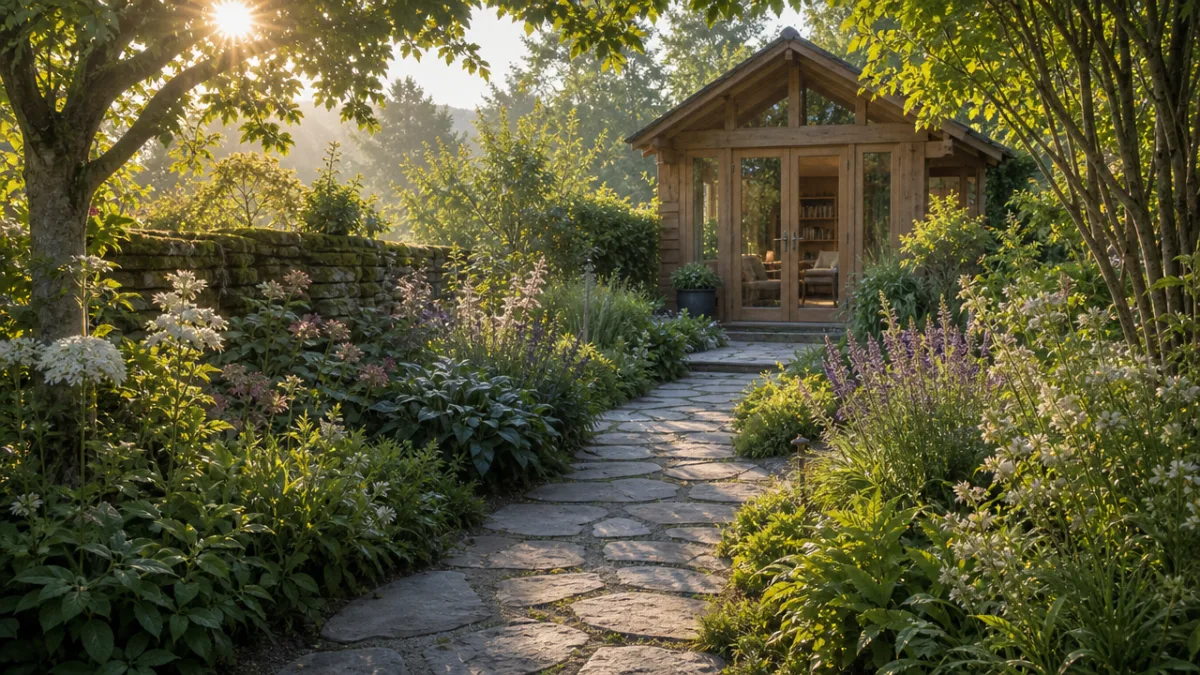
The pathway leading from the house to the garden room is an often-overlooked design opportunity. This is the daily commute for a home office worker, the evening promenade for a homeowner heading to their entertainment space, and the moment of transition from the domestic interior to the garden retreat. Making this journey beautiful — through the use of quality paving materials, atmospheric pathway lighting, fragrant planting along the edges, and perhaps a pergola or archway to mark the threshold — transforms a functional route into a daily ritual that enhances the overall experience of the garden room and the garden alike.
Practical Considerations: Planning, Insulation, and Budget
However inspiring the design possibilities, any garden room project must begin with a clear-eyed assessment of the practical realities. In most jurisdictions, garden rooms fall under what is known as permitted development or exempt development — meaning that planning permission is not required provided the structure falls within certain size, height, and siting restrictions. These rules vary significantly between countries and even between local authorities, so it is essential to consult your local planning department or a qualified architect before committing to any design that pushes against the boundaries of what is permitted.
Insulation is the factor that most directly determines whether a garden room can be used comfortably year-round or only in the milder months. A well-insulated garden room — with high-performance insulation in the walls, floor, and roof, combined with double or triple-glazed windows and an effective heating system — can maintain comfortable interior temperatures even in the depths of winter without excessive energy consumption. Poorly insulated garden rooms, by contrast, can be unbearably cold in winter and uncomfortably hot in summer, defeating the purpose of having a year-round retreat. Always ask your supplier about the specific U-values of their building system and compare them against current best-practice standards.
Budget is inevitably one of the biggest practical considerations. Garden room costs vary enormously, from a few thousand dollars or pounds for a basic timber structure with minimal insulation and no services, to well over one hundred thousand for a large, architecturally designed space with full glazing, underfloor heating, kitchen facilities, and a hot tub. The key is to be clear about your priorities and your budget from the outset, and to allocate spending accordingly. It is generally better to build a smaller space to a very high specification than a larger space with compromises on insulation, glazing, or finishes — as the former will be far more enjoyable to use and will hold its value better over time.
- Planning permission: Always verify local permitted development rules before starting any design work — a reputable garden room company should be able to advise you on this.
- Building regulations: Even when planning permission is not required, certain building regulations regarding electrical installation, structural safety, and drainage will still apply.
- Services: Factor in the cost of connecting electricity, data cables, water, and drainage from the main house — this can add significantly to the overall project cost.
- Insurance: Inform your home insurer before construction begins and ensure the completed garden room is appropriately covered under your buildings and contents policy.
- Maintenance: Timber cladding requires periodic treatment, gutters need cleaning, and glazing seals should be inspected annually — build a maintenance routine into your long-term planning.
Ultimately, a well-planned and beautifully designed backyard garden room is one of the most rewarding investments a homeowner can make in their property and their quality of life. Whether it becomes a place of focused work, creative expression, joyful entertaining, physical wellness, or simple daily restoration, it adds a dimension to domestic life that is difficult to achieve by any other means. The key is to approach the project thoughtfully, to invest in quality where it matters most, and to integrate the structure into the broader garden with as much care as you bring to the design of the room itself. Do all of this, and your garden room will reward you — and anyone lucky enough to share it — for many decades to come.








What do you think?
It is nice to know your opinion. Leave a comment.