










How To Paint Your Own Garden Figurines and Décor: A Complete Guide to Easy Backyard Gardening Art
Introduction: Why Painted Garden Décor Transforms Your Outdoor Space
There is something deeply satisfying about walking into a garden that feels genuinely personal — a space that reflects your creativity, your color preferences, and your unique sense of style. Painted garden figurines and decorative accents are one of the most accessible and affordable ways to achieve that effect, turning even the most ordinary backyard into an outdoor gallery filled with character and charm. Whether you are working with terracotta pots, concrete statues, ceramic mushrooms, or simple stepping stones, a fresh coat of paint and a little imagination can completely transform how your garden looks and feels throughout the seasons.
Many gardeners assume that painting outdoor décor requires professional skill or expensive equipment, but the reality is quite the opposite. With the right supplies, a bit of preparation, and a willingness to experiment, anyone can create beautifully painted garden pieces that hold up against rain, sun, and the general wear of outdoor living. The process is also wonderfully forgiving — unlike canvas painting or fine art, garden décor invites a relaxed, playful approach where imperfection often adds to the charm rather than detracting from it.
Beyond aesthetics, painting your own garden figurines and décor gives you complete control over your outdoor design scheme. You can coordinate colors with your home’s exterior, match seasonal themes, or create whimsical scenes that delight both children and adult visitors alike. This guide will walk you through everything you need to know — from selecting your materials and choosing the right paints to applying sealants and maintaining your finished pieces year after year. By the end, you will have all the knowledge you need to start your very own outdoor painting project with confidence.
Gathering Your Supplies: What You Need Before You Begin
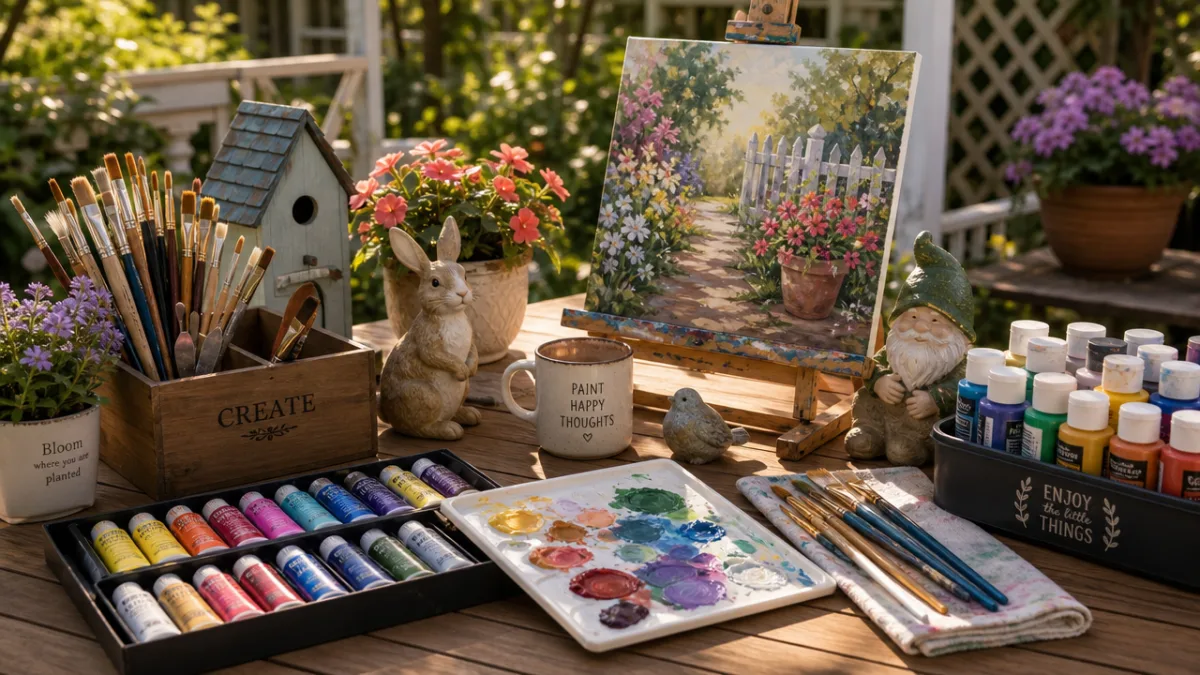
Starting any creative project on the right foot means assembling your tools and materials before you pick up a single brush. For painting garden figurines and outdoor décor, your supply list will vary slightly depending on the material you are working with, but there is a core set of essentials that applies to almost every project. Having everything within reach before you begin will keep your workflow smooth, prevent frustrating mid-project trips to the hardware store, and ultimately lead to a more polished, professional-looking result that you will be proud to display outdoors.
The most important supply decision you will make is choosing the right type of paint. For outdoor garden projects, you should always reach for exterior-grade acrylic paint, which is specially formulated to resist moisture, UV rays, and temperature fluctuations. Craft acrylics work reasonably well for smaller projects if you seal them properly afterward, but for larger figurines or pieces that will be exposed to heavy weather, investing in a quality outdoor acrylic or even spray paint designed for exterior use is well worth the extra cost. Oil-based paints are durable but take much longer to dry and require chemical solvents for cleanup, making them less beginner-friendly for casual garden projects.
Beyond paint itself, you will want to gather the following items before getting started:
- A range of paintbrush sizes, including wide flat brushes for base coats and fine-tipped detail brushes for intricate work on figurines
- Sandpaper in medium and fine grits for smoothing rough surfaces and helping paint adhere properly
- A primer suitable for the material you are painting — concrete, ceramic, resin, and terracotta each benefit from different primer formulas
- Painter’s tape for creating clean edges and protecting areas you do not want painted
- A clear exterior sealant or varnish, either in spray or brush-on form, to protect your finished design from the elements
- Disposable palettes or old plates for mixing colors, along with water containers and paper towels for cleanup
- Drop cloths or newspaper to protect your work surface
One often-overlooked supply is a good light source. Natural daylight is ideal for outdoor painting projects because it shows colors accurately without the warm or cool casts that artificial lighting can introduce. If you are painting in a shaded area or working during evening hours, invest in a daylight-balanced LED work lamp to ensure that the colors you mix and apply look exactly as intended when displayed in your garden under natural conditions.
Preparing Your Surfaces: The Step That Makes or Breaks Your Project
No matter how skilled you are with a paintbrush or how beautiful your chosen color palette might be, a poorly prepared surface will undermine your entire project. Paint applied to dirty, greasy, or unprepared surfaces will peel, chip, and fade far sooner than it should, leaving you with disappointing results and the prospect of having to redo your work within a single season. Taking the time to properly clean and prime your garden figurines and décor pieces before you begin painting is the single most important thing you can do to ensure a lasting, professional-quality finish that will hold up for years.
Begin by thoroughly cleaning each piece you plan to paint. Outdoor figurines and décor often accumulate dirt, algae, moss, and other debris, particularly if they have been sitting in a garden for any length of time. Use a stiff brush and warm soapy water to scrub away all surface grime, then rinse thoroughly and allow the piece to dry completely — ideally in direct sunlight for several hours. For particularly stubborn stains, mildew, or old flaking paint, a diluted solution of white vinegar or a commercial masonry cleaner can be very effective, especially on concrete or ceramic surfaces.
Once your piece is clean and dry, inspect it carefully for cracks, chips, or rough spots that might affect the final appearance of your paint job. Small cracks in concrete or terracotta can be filled with exterior-grade filler or caulk, smoothed flush with the surface, and sanded once dry. Rough textures can be lightly sanded to reduce their prominence if you want a smoother painted finish, or left as-is if you prefer a more rustic look. After any sanding, wipe the surface down with a damp cloth to remove all dust particles before moving on to the priming stage.
Priming is a step that many beginners skip in their eagerness to get to the fun part, but it is genuinely essential for outdoor projects. A good exterior primer seals porous surfaces like concrete and terracotta so that paint does not soak in unevenly, provides a consistent neutral base that allows your chosen colors to appear true and vibrant, and dramatically improves adhesion so that your finished paint job resists peeling and chipping. Apply primer in thin, even coats using a brush or spray can, allow it to dry completely according to the manufacturer’s instructions, and apply a second coat if the surface is particularly porous or uneven.
Painting Techniques: From Base Coats to Beautiful Details
With your surfaces properly prepared and primed, the real creative work can begin. The key to achieving a polished, professional look on garden figurines and décor is building up your paint in layers rather than trying to achieve full coverage in a single heavy coat. Thin, even layers dry faster, adhere better, and give you far greater control over the final result. This layered approach is especially important when working with figurines that have dimensional detail — rushing through with thick paint tends to obscure the very features that make the piece interesting and visually appealing.
Start every piece with a solid, opaque base coat in your primary color. This foundational layer should cover the entire surface evenly and completely, setting the stage for all subsequent detail work. Allow this base coat to dry thoroughly before applying any additional colors — touching wet paint with a brush loaded with a different color will muddy both shades and create a messy, unintended effect. Depending on the opacity of your paint and the absorbency of the surface, you may need two or even three base coats to achieve the smooth, solid coverage that provides the best foundation for detail work.
Once your base coat is fully dry and solid, you can begin adding detail, shading, and decorative elements. Some popular and beginner-friendly techniques for garden figurines include:
- Dry brushing: Load a brush with a small amount of paint, wipe most of it off on a paper towel until the brush is nearly dry, then lightly drag it across raised surfaces. This creates a highlighted effect that emphasizes texture and dimension beautifully.
- Washes: Dilute paint heavily with water to create a transparent, ink-like consistency, then brush it over the surface and wipe back the excess. This settles into crevices and creates natural-looking shadows and depth.
- Stippling: Use a sponge or a stiff, splayed brush to dab paint onto the surface in a patchy, textured pattern. This technique works wonderfully for creating mossy, stone, or aged effects on concrete garden décor.
- Freehand detailing: Use a fine-tipped brush to add flowers, polka dots, stripes, vines, or any decorative motif that suits your style. Even simple patterns can have a dramatic visual impact on a painted garden piece.
Do not be afraid to step back and evaluate your work frequently as you paint. What looks right up close sometimes reads differently from a normal viewing distance in the garden. Hold the piece at arm’s length or place it temporarily in its intended garden spot to check how the colors and details look in context. This ongoing assessment will help you make adjustments before the paint dries and ensure that you are completely happy with the result before you move on to the final sealing stage.

Sealing and Protecting Your Finished Work
After all your creative effort, the last thing you want is to see your beautifully painted garden figurines begin to fade, peel, or deteriorate after just a few weeks in the garden. This is where a good quality exterior sealant becomes absolutely indispensable. Sealing your painted garden décor is not optional — it is the critical final step that locks in all your hard work and ensures that your pieces can withstand the harsh realities of outdoor life, including UV radiation, rain, frost, and the general passage of time.
When choosing a sealant, look for products specifically labeled as exterior grade, UV resistant, and waterproof. These products come in both spray and brush-on formulas, and both can deliver excellent results when applied correctly. Spray sealants tend to produce the most even, streak-free finish on dimensional figurines with complex shapes and crevices, while brush-on sealants may offer slightly better durability on flat surfaces like stepping stones or painted pots. Many gardeners prefer a matte finish sealant for a natural, aged look, while others choose satin or glossy finishes for a brighter, more vibrant effect — the choice is entirely a matter of personal taste.
Apply your sealant in multiple thin coats rather than one heavy application, allowing each coat to dry completely before adding the next. Two to three coats of a quality exterior sealant will provide excellent protection for most garden conditions. Pay special attention to the base and underside of each piece, as these areas are often most vulnerable to moisture absorption from the ground. For pieces that will remain outdoors year-round in harsh climates, you may want to reapply a fresh coat of sealant each spring as part of your regular garden maintenance routine to keep your painted décor looking its best season after season.
Creative Ideas and Inspiration for Your Garden Painting Projects
One of the most exciting aspects of painting your own garden figurines and décor is the virtually unlimited scope for creativity and personalization. Whether your garden style leans toward whimsical cottage charm, sleek modern minimalism, or vibrant tropical color, painted décor can be tailored to fit your vision perfectly. The best projects often come from looking at your garden as a whole and thinking about what kind of visual story you want it to tell — and then finding pieces that help you express that narrative in a fun, accessible, paint-and-brush way.
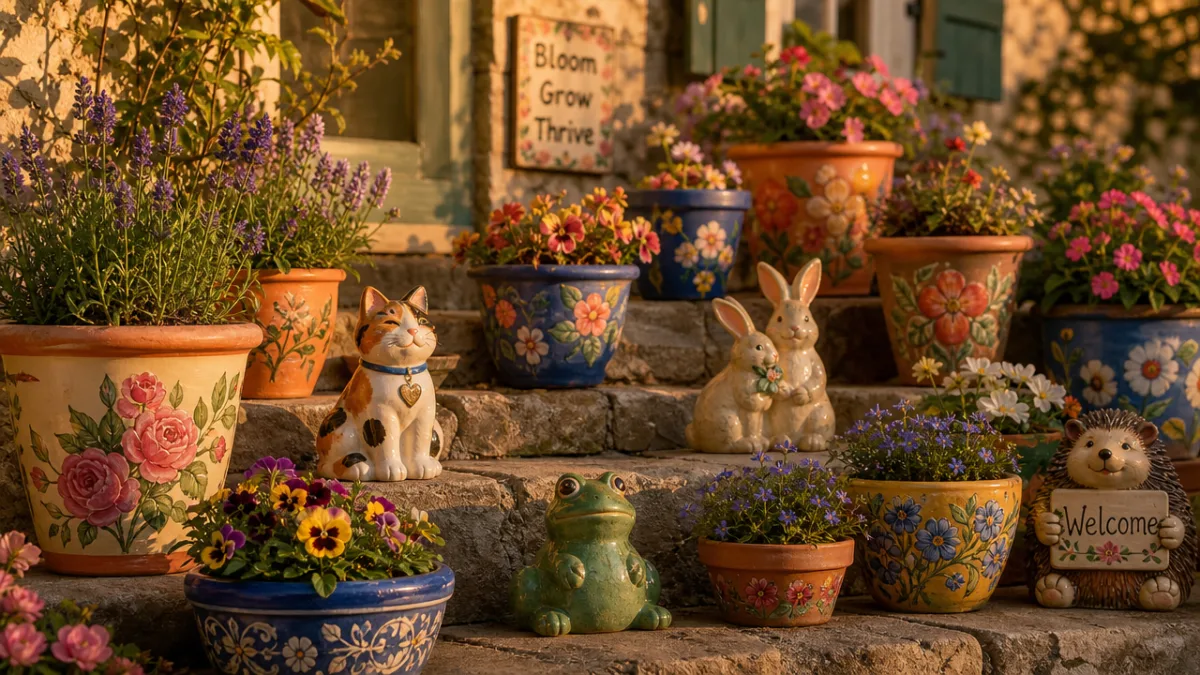
Some of the most popular and visually striking garden painting projects include transforming plain terracotta pots with geometric patterns or botanical illustrations, painting concrete garden statues to look like aged verdigris bronze or weathered stone, and creating themed sets of small figurines — think a family of painted hedgehogs, a colony of brightly colored toadstools, or a flock of decorative garden birds in coordinated hues. Stepping stones offer another fantastic canvas, allowing you to paint pathways that guide visitors through your garden with colorful, cheerful art underfoot. Even something as simple as painting the rims of plain black plastic planters in a row of coordinated jewel tones can completely transform the look of a patio or balcony garden.
For those who love seasonal decorating, painted garden figurines offer wonderful opportunities to rotate your outdoor décor throughout the year. Consider keeping a small collection of plain white or neutral-colored pieces that you can repaint (or touch up with new details) as each season changes — spring florals giving way to summer tropicals, then warm autumnal tones, and finally festive winter designs. With a good sealant protecting each layer, this seasonal approach allows your garden to feel fresh and dynamic throughout the year without requiring you to purchase new décor for every occasion.
If you are looking for ways to make your garden painting projects even more meaningful, consider involving the whole family. Children particularly love painting garden décor — it is a low-pressure, mess-friendly creative activity that produces tangible results they can be proud of every time they look out into the garden. Set up a simple outdoor painting station with age-appropriate brushes and non-toxic outdoor paints, let each family member choose a figurine or pot to decorate, and create a charming, one-of-a-kind garden that genuinely reflects everyone who lives there. These kinds of family art projects also make wonderful gifts for neighbors, grandparents, or friends who appreciate handmade, personal touches in their own outdoor spaces.
Maintaining Your Painted Garden Décor Over Time
Even the best-sealed and most carefully painted garden figurines will eventually show some signs of wear if left outdoors indefinitely. The good news is that with a small amount of regular attention, you can keep your painted garden décor looking fresh and vibrant for many years — and in most cases, touching up or refreshing a painted piece is far quicker and easier than the original project. Developing a simple maintenance routine as part of your broader garden care habits will protect your investment of time and creativity and ensure that your outdoor décor continues to bring you joy season after season.
At least once a year — ideally at the start of the gardening season in spring — take time to inspect each of your painted pieces carefully. Look for areas where the sealant may have worn thin, where paint has begun to chip or fade, or where moisture may have found its way under the painted surface. Small chips and scratches can be touched up easily with a fine brush and the original paint colors, followed by a fresh coat of sealant over the repaired area. More significant damage, such as large areas of peeling or flaking paint, may call for a more thorough approach: sanding back to a clean surface, re-priming, and repainting the affected section completely.
Storage is another important factor in extending the life of your painted garden décor. In regions with harsh winters, bringing delicate painted pieces indoors or storing them in a garage or shed during the coldest months will dramatically reduce weather-related wear and significantly extend their lifespan. If outdoor storage is your only option, covering pieces with breathable fabric covers or burlap sacking will offer some protection from frost and ice without trapping moisture against the painted surface. Elevating figurines and pots slightly off the ground on small feet or pot risers also helps prevent moisture from pooling underneath them, which is one of the most common causes of paint failure and material deterioration in outdoor garden décor.








What do you think?
It is nice to know your opinion. Leave a comment.