










Lophospermum: The Stunning Petunia Alternative Your Containers Have Been Missing
What Is Lophospermum and Why Should You Care?
If you’ve been growing petunias in your containers year after year and feel like something is missing — a little more drama, a little more conversation-starting charm — then it’s time to meet Lophospermum. This genus of trailing and climbing flowering plants, native to Mexico and Central America, has been quietly winning over serious gardeners who are always on the hunt for something beautiful, reliable, and just different enough to make visitors stop and ask, “What is that?” It belongs to the Plantaginaceae family and produces an abundance of tubular, trumpet-shaped flowers that closely resemble foxglove blooms, lending a cottage-garden feel even to the most compact of patio containers.
Lophospermum goes by several common names depending on the variety and region. You might encounter it labeled as Lofos, Creeping Gloxinia, or simply by brand names like Lofos Wine Red or Lofos White. These aren’t rare botanical specimens locked away in specialty catalogs — they’re increasingly available at garden centers and big-box garden departments, particularly as the gardening industry has recognized the growing appetite for petunia alternatives among adventurous container gardeners. Their nodding, foxglove-like blooms appear along vigorous, twining stems that can easily reach three to six feet in a single growing season.
What makes Lophospermum particularly compelling from a practical standpoint is its adaptability. Unlike some showy flowering plants that demand very specific conditions and reward any deviation with sulking and sparse blooms, Lophospermum is a reasonably forgiving plant. It thrives in containers because containers allow gardeners to control the growing medium, drainage, and placement with precision. Whether you’re dressing up a front porch railing, creating a dramatic tall centerpiece for a mixed planter, or trailing color over the edge of a raised garden wall, Lophospermum has the structural versatility to do the job beautifully.
How Lophospermum Compares to Petunias in the Container Garden
Petunias are workhorses of the container garden world, and there’s genuinely good reason for their popularity. They bloom prolifically, come in virtually every color imaginable, tolerate heat reasonably well, and are universally available from early spring through summer at almost every garden retail outlet. But petunias have their limitations, and if you’ve grown them for a few seasons, you’ve almost certainly encountered the sticky, glandular foliage that collects dust and debris, the need for regular deadheading on non-self-cleaning varieties, and the tendency to look ratty and leggy by midsummer if not aggressively cut back. For some gardeners, these maintenance requirements are perfectly manageable; for others, they’re genuinely frustrating.
Lophospermum sidesteps several of these frustrations in a satisfying way. The foliage is soft and velvety rather than sticky, and it maintains its attractive appearance throughout the growing season without the deterioration that petunias often show in the dog days of summer. The plant does not require deadheading in the same intensive way — spent blooms simply drop cleanly, and the plant continues sending out new flowering shoots. This makes Lophospermum an appealing choice for gardeners who want maximum visual impact with moderate maintenance investment, or for those who manage many containers and can’t afford to spend significant time grooming each one individually.
The aesthetic differences are equally worth considering. Petunias deliver a certain bold, flat-faced flower that reads as cheerful and informal. Lophospermum, with its nodding tubular blooms and softly hairy, heart-shaped leaves, delivers something that feels more romantic, more layered, and arguably more sophisticated. The flowers genuinely resemble those of Asarina or Creeping Snapdragon, to which Lophospermum is closely related, and they attract hummingbirds and pollinators with notable enthusiasm. If you grow petunias partly for their pollinator appeal, Lophospermum will serve that goal at least as well, and the hummingbird visitation is frequently more dramatic.
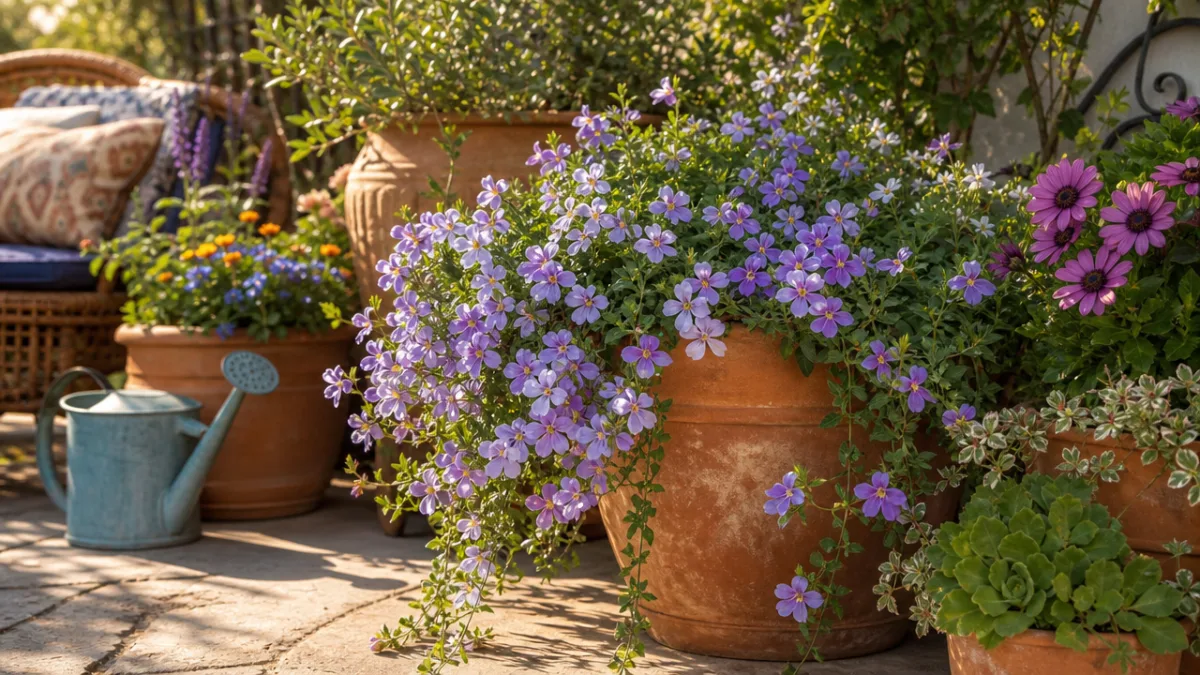
Choosing the Right Varieties for Your Container Garden
The variety landscape for Lophospermum has expanded considerably as commercial interest has grown. The most widely available varieties fall under the Lofos series, which was specifically bred for container and basket performance. Lofos Wine Red is perhaps the most popular, producing deep magenta-to-wine-colored tubular flowers against rich green, velvety foliage. It has a vigorous, twining habit that works beautifully in tall containers where it can climb a central support or drape luxuriously over the sides. The color reads as deeply jewel-toned in direct sunlight and takes on a moody, dramatic quality in shadier conditions.
For gardeners who prefer softer color palettes, Lofos White offers pristine, pure white blooms with a slightly translucent quality that glows magnificently in evening light. This variety tends to be slightly less aggressive in its growth habit than the wine-red form, making it a better choice for mixed containers where you don’t want one plant to completely dominate its neighbors. Lofos Compact Rose, as the name suggests, offers a more restrained growth habit in a warm rosy-pink tone that pairs beautifully with silver-leaved companions like Dichondra argentea or Plectranthus argentatus. The compact varieties are particularly well-suited to smaller containers where a full-sized Lophospermum might overwhelm the planting.
When selecting varieties, consider not just the flower color but the intended role in your container design. Lophospermum can function in several distinct ways depending on the support structure and training you provide. Key roles to consider include:
- Thriller element: Trained up a central obelisk or stake in a large container, Lophospermum adds significant vertical drama and becomes the clear focal point of the planting.
- Spiller element: Allowed to trail freely over the edges of tall urns or raised planters, the flexible stems create romantic cascading curtains of foliage and bloom.
- Climber on structures: Planted at the base of a trellis, pergola post, or fence, Lophospermum will enthusiastically climb and provide seasonal coverage with relatively little guidance needed.
- Mixed container accent: Compact varieties woven through mixed plantings add textural contrast and vertical movement without overwhelming smaller companion plants.
Growing Lophospermum Successfully: Soil, Sun, and Water
Like most container plants, Lophospermum rewards gardeners who pay attention to the fundamentals. The single most important factor for success is drainage. Lophospermum despises waterlogged roots, and a container that holds water in the lower portion of the root zone will eventually lead to root rot, yellowing foliage, and a rapid decline that can be mistaken for other problems. Use a premium, well-draining potting mix rather than garden soil, and ensure your containers have multiple drainage holes that aren’t blocked by debris. Some experienced container gardeners add a small amount of perlite to their standard potting mix to improve drainage and aeration further.
In terms of sun exposure, Lophospermum performs best in full sun to partial shade. In climates with intense summer heat, particularly in the American South and Southwest where afternoon temperatures routinely exceed 95°F (35°C), some afternoon shade protection is actually beneficial. The plant will bloom most prolifically with at least five to six hours of direct sunlight per day, but it does have more shade tolerance than petunias, which is worth noting if you’re trying to bring color to a partly shaded porch or balcony. In cooler climates further north, full sun is ideal and the plant will reward maximum light exposure with the most vigorous growth and bloom production.
Watering should follow the general container gardening principle of checking before watering rather than following a rigid schedule. Push a finger an inch or two into the potting mix — if it feels dry at that depth, it’s time to water thoroughly until water runs freely from the drainage holes. In hot weather, containers may need daily watering; in cooler or cloudy periods, every two to three days may be sufficient. Overhead watering directly onto the foliage during sunny periods can cause minor leaf scorch, so watering at the base of the plant or in the early morning is preferable. Consistent moisture is the goal — never waterlogged, never bone dry.
Fertilization is equally important for container-grown Lophospermum because frequent watering leaches nutrients from the potting mix relatively quickly. A balanced, slow-release granular fertilizer incorporated into the potting mix at planting time provides a good foundation. Supplementing with a liquid fertilizer higher in phosphorus and potassium than nitrogen encourages bloom production over excessive vegetative growth. A feeding schedule such as the following works well for most gardeners:
- Incorporate slow-release granules at planting time according to package directions.
- Begin liquid feeding every two weeks once the plant is established and showing active new growth.
- Switch to a bloom-boosting formula with higher phosphorus content when buds first appear.
- Continue regular feeding through the end of the growing season, tapering off only as temperatures drop and growth slows.

Companion Planting: What Grows Beautifully With Lophospermum
One of the genuine pleasures of container gardening is the creative process of pairing plants to create compositions that are greater than the sum of their parts. Lophospermum’s soft texture, vining habit, and jewel-toned or soft pastel flowers make it an exceptionally versatile companion plant. Its velvety, heart-shaped leaves provide textural contrast to plants with fine, feathery foliage or bold, smooth-leaved specimens, and the tubular flowers create a wonderful visual rhythm when placed near flat-faced flowers of contrasting form.
For container compositions with a romantic, cottage-inspired feel, consider pairing the wine-red Lophospermum with soft lavender Calibrachoa, deep purple Heliotrope, and a silver Dichondra as a spiller. The combination creates a moody, richly layered planting that looks complex and intentional while relying on straightforward plants with similar care requirements. White Lophospermum pairs magnificently with blue Scaevola, chartreuse Lysimachia nummularia (Creeping Jenny), and soft pink Diascia for a light, airy combination that performs beautifully in partial shade situations.
Gardeners interested in maximizing pollinator value should consider pairing Lophospermum with other hummingbird and butterfly favorites. Excellent companion choices include:
- Salvia: Annual salvias in red or orange shades create a dramatic color contrast with wine-red Lophospermum and draw hummingbirds with magnetic reliability.
- Cuphea: The cigar plant (Cuphea ignea) offers complementary tubular flowers and similar sun and water requirements, making it a practical and beautiful pairing.
- Fuchsia: In partially shaded containers, trailing fuchsias and Lophospermum create an elegant, hummingbird-friendly combination with a distinctly romantic character.
- Verbena: Trailing verbena in purple or magenta tones fills the spaces between Lophospermum’s vines with cheerful flat-topped flower clusters that butterflies adore.
Overwintering, Propagation, and Getting the Most From Your Investment
In most temperate climates, Lophospermum is grown as an annual, purchased fresh each spring and composted at season’s end. However, it is actually a tender perennial native to warm climates, which means that in frost-free zones (USDA Hardiness Zones 9 through 11) it can be grown as a true perennial and will return and bloom year after year with minimal intervention beyond occasional pruning and regular fertilization. For gardeners in colder regions who want to preserve a particularly vigorous or beloved plant, overwintering is entirely possible with a little preparation before the first frost.
To overwinter Lophospermum, bring the container indoors before temperatures drop below 40°F (4°C). Place it in the brightest available location — a south-facing window is ideal, and supplemental grow lighting can make a significant difference in maintaining plant health through the darker winter months. Reduce watering substantially, as the plant will be in a semi-dormant state with much slower growth. Do not fertilize during winter dormancy. Cut the plant back by roughly one-third before bringing it inside to reduce the overall size and make indoor storage more practical. In early spring, begin increasing water and light, resume fertilization, and the plant will typically respond with vigorous new growth ready for outdoor placement after the last frost date.
Propagation from cuttings is another option that allows gardeners to multiply their Lophospermum investment without purchasing new plants each year. Take stem cuttings of four to six inches in length from healthy growth, ideally in late summer or early fall before plants are brought indoors. Remove the lower leaves, dip the cut end in rooting hormone powder or gel, and insert into a well-draining propagation medium such as perlite and peat moss mixed in equal parts. Keep the cuttings in a bright, humid environment and they should root within three to four weeks. These rooted cuttings can then be potted into small containers and overwintered indoors, emerging in spring as young plants ready for their first full season of growth in your containers.
The overall value proposition of Lophospermum compared to petunias becomes clearest when you account for the full season of performance. While petunias can require repeated deadheading, occasional hard pruning to combat legginess, and sometimes replacement of plants that decline in midsummer heat, Lophospermum tends to maintain its attractive appearance and continue blooming with relatively little intervention. For gardeners who invest meaningfully in their container plantings — purchasing quality potting mix, premium fertilizers, and multiple plants to fill large urns and baskets — the reduced maintenance demands of Lophospermum translate directly into more time to simply enjoy the garden rather than working in it.

Troubleshooting Common Lophospermum Problems
Despite its reputation as a relatively trouble-free plant, Lophospermum can encounter a few common problems that are worth understanding before they occur. The most frequently reported issue is yellowing foliage, which can have several distinct causes that require different responses. Yellowing of older, lower leaves while upper growth remains green is typically a normal part of the plant’s growth cycle and nothing to worry about. Generalized yellowing across all foliage, however, usually indicates either overwatering and compromised root health, or a nutrient deficiency — particularly iron chlorosis, which manifests as yellowing between the veins of leaves while the veins themselves remain green.
Powdery mildew can occasionally affect Lophospermum, particularly in periods of high humidity combined with poor air circulation around the plants. The characteristic white powdery coating on leaf surfaces is unmistakable. Prevention is more effective than treatment: space plants to allow adequate air movement, avoid overhead watering in the evening, and remove and dispose of affected foliage promptly. If mildew does appear, a fungicide labeled for powdery mildew treatment applied according to directions can slow its spread, and improving air circulation around the container will prevent recurrence.
Aphids occasionally find Lophospermum’s soft new growth attractive, clustering at stem tips and on the undersides of young leaves. A strong spray of water to dislodge them, repeated over several days, is usually sufficient for minor infestations. More persistent populations can be treated with insecticidal soap spray applied directly to the affected areas. Spider mites are another possible pest, particularly in hot, dry conditions — regular misting of the foliage and ensuring adequate soil moisture helps prevent spider mite outbreaks. As with most garden problems, catching issues early when they are minor is significantly easier than attempting to rescue a severely affected plant, so regular observation of your containers as you water is the most valuable pest and disease management strategy available to any gardener.








What do you think?
It is nice to know your opinion. Leave a comment.