










The Art of Flower Decor: Transforming Your Home with Nature’s Beauty
The Timeless Appeal of Floral Decoration
Flowers have been part of how humans decorate their world for thousands of years — you’ll find them in ancient Egyptian tombs, Renaissance paintings, and Victorian parlors alike. Their appeal cuts across cultures, climates, and design trends in a way that almost nothing else does, making them one of the rare decorative elements that genuinely never feels dated. Whether you prefer fresh-cut blooms in a crystal vase or dried botanicals pressed behind glass, flowers bring a kind of organic warmth to a room that no manufactured object can really replicate.
Part of what makes floral decor so enduringly powerful is its ability to communicate emotion without saying a word. A cluster of sunflowers on a kitchen table signals cheerfulness and abundance. A single white orchid on a bathroom shelf says quiet elegance. Wildflowers loosely gathered in a ceramic jug conjure something relaxed and pastoral. In that sense, the flowers you choose — and the way you display them — become a form of self-expression, a visual language that tells guests something true and personal about who you are.
Beyond aesthetics, there’s a growing body of scientific evidence that living with flowers actually improves how we feel. Studies in environmental psychology have found that people in rooms with flowers report lower anxiety, more positive emotions, and even better concentration. Flower arranging itself has been used therapeutically for decades. So when you invest in floral decor, you’re not just making a room prettier — you’re genuinely doing something good for the people who live in it.
Choosing the Right Flowers for Each Room
Not every flower belongs in every room, and being thoughtful about your selections is what separates a truly curated home from one that just looks like someone grabbed whatever was left at the supermarket checkout. When you’re picking blooms for a specific space, it’s worth thinking about the room’s natural light, its color palette, the overall vibe you’re going for, and the practical realities of humidity and temperature. Getting those factors right means your arrangements will look intentional — and they’ll actually last.
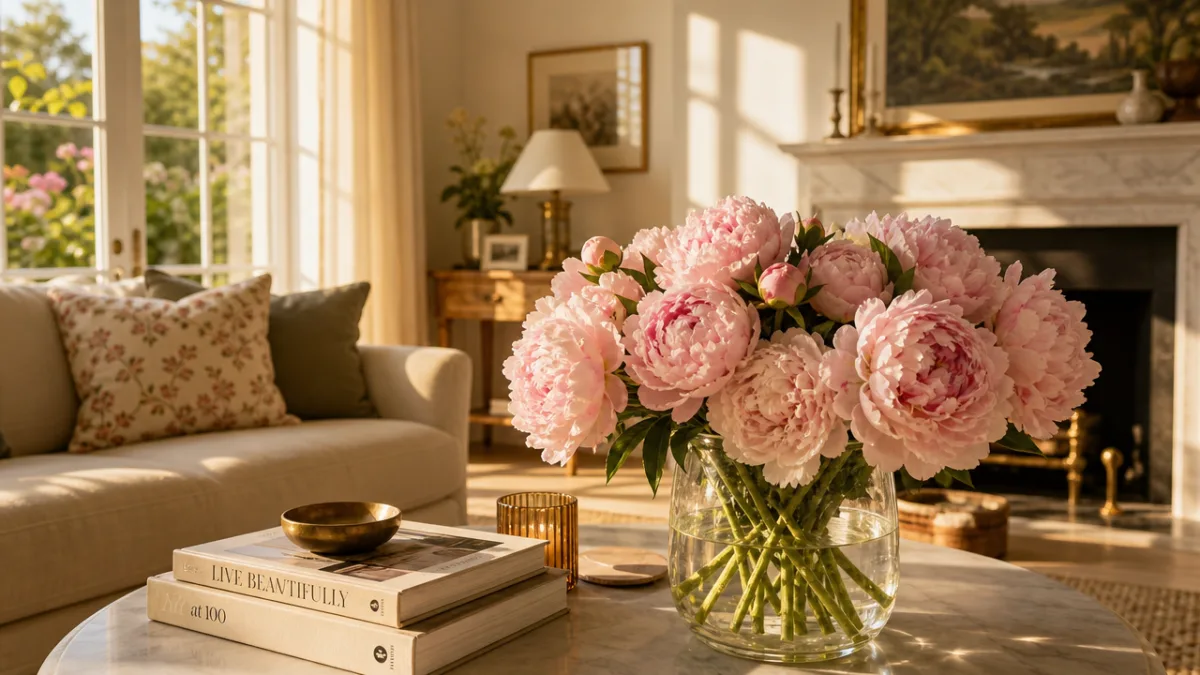
The living room, which tends to be the social heart of a home, calls for flowers with genuine presence and visual impact. Big, generous blooms like peonies, hydrangeas, garden roses, and dahlias look wonderful in substantial vases on coffee tables or sideboards. These flowers hold their shape well and reward attention from across the room, which makes them ideal for a space where people gather and linger. If your living room leans neutral, don’t be shy about using flowers as a bold pop of color — a deep burgundy ranunculus arrangement against pale grey walls is genuinely stunning.
In the bedroom, you’re usually aiming for calm rather than drama, so lighter, more delicate arrangements tend to work better than showstopping centerpieces. Lavender, chamomile, and soft blush roses not only look serene but carry gentle fragrances that actually encourage restful sleep. Steer clear of heavily perfumed flowers like gardenias or tuberose in sleeping spaces — what starts as lovely can quickly become overwhelming by midnight. A single stem in a small bud vase on the nightstand is often more effective than an elaborate arrangement. In the bedroom, restraint is almost always the right call.
- Kitchen: Hardy herbs like rosemary, thyme, and basil pull double duty as both decor and a useful cooking resource. Cheerful sunflowers and yellow ranunculus complement the warm tones of wooden cabinetry and bring a nice energy to the busiest room in the house.
- Bathroom: Orchids, anthuriums, and peace lilies actually thrive in the humidity of a bathroom and bring a spa-like elegance to the space. Their glossy leaves and clean architectural forms look particularly striking against white tiles.
- Home office: Research suggests that flowers and plants near a workspace can boost creativity and ease mental fatigue. A few bright gerberas or a small succulent arrangement keep the energy positive without competing for your attention during focused work time.
- Entryway: This is your home’s first impression, so it’s worth making it count. A tall arrangement of dramatic stems — think branches, alliums, or sculptural proteas — makes an immediate statement and sets the tone for the whole interior.
Vases, Vessels, and the Containers That Elevate Arrangements
The container you choose for your flowers isn’t a secondary consideration — it’s half the composition. A spectacular bunch of garden roses in the wrong vessel can look confused and underwhelming, while even a handful of wildflowers becomes something genuinely lovely when paired with the right container. Developing an eye for vessel selection is one of the most rewarding skills you can build as a home decorator, and it doesn’t require spending much money. Some of the most effective flower containers are everyday objects you already own.
Classic glass vases remain popular for good reason: their transparency lets the stems become part of the visual display, adding texture and green depth to the arrangement. Clear cylinders and globe-shaped vases suit contemporary and minimalist interiors particularly well. If clear glass feels a bit too clinical for your taste, colored or frosted glass is worth exploring — it softens the look while still letting light move beautifully through the vessel. Antique glass bottles and decanters from flea markets can be among the most charming options out there, and they typically cost almost nothing.
Ceramic and stoneware vessels bring a warmth and tactility that glass simply can’t match. Handmade pottery with its small irregularities and varied glazes pairs naturally with organic, garden-gathered arrangements. A rough-textured grey stoneware jug filled with dried grasses and seed heads looks like something straight out of a Scandinavian interiors magazine. For a more rustic or farmhouse feel, enamelware pitchers, wicker-wrapped bottles, or even terracotta pots used without drainage trays make wonderfully grounded, earthy alternatives to conventional vases. The goal is always to make sure the personality of the container works with the flowers rather than competing with them.
Beyond traditional vases, here are some unconventional vessel options that can turn an ordinary arrangement into something genuinely original:
- Vintage teapots and pitchers — their spouts create a natural asymmetry that suits loose, cottage-style arrangements perfectly.
- Apothecary jars and laboratory glassware — these bring an intriguing, slightly scientific aesthetic to modern or eclectic interiors.
- Wooden crates and boxes lined with waterproof containers — ideal for creating low, lush centerpieces with a rustic garden feel.
- Hanging glass globes and wall-mounted test tube vases — a great choice when you’re decorating a small space where every surface counts.
- Copper and brass vessels — their warm metallic tone enhances jewel-toned flowers like deep purple anemones and rich coral dahlias magnificently.
Color Theory and Floral Arrangements
A basic understanding of color theory can immediately lift your floral arrangements from pleasant to genuinely accomplished. The color wheel — which arranges hues in a logical spectrum from warm to cool — gives you a reliable framework for deciding which flowers to put together and how they’ll sit against the existing colors in your home. Intuition and personal taste always matter, of course, but having a little foundational knowledge helps you avoid the common trap of creating arrangements that feel visually chaotic or oddly flat despite being made from beautiful individual flowers.
Monochromatic arrangements, which use different shades, tints, and tones of a single color, are among the most sophisticated and surprisingly easy approaches in floral decor. A vase filled entirely with flowers in shades of blush, dusty rose, deep fuchsia, and burgundy creates a composition that feels cohesive, layered, and visually rich — with zero risk of clashing. All-white monochromatic arrangements are particularly versatile and elegant, working well in almost any interior style from grand formal rooms to pared-back contemporary spaces. Adding varied textures within the same color family — smooth petals alongside feathery fronds and round seed pods — keeps the arrangement from feeling monotonous.
Complementary color combinations, which pair hues from opposite sides of the color wheel, create the most energetic and eye-catching arrangements. Orange and blue, yellow and violet, red and green — these pairings generate a vibrant contrast that draws the eye immediately and gives a sense of lively abundance. If you want your arrangement to really command attention and become the focal point of a room, a complementary color scheme is your most powerful tool. Just be mindful of proportion: using both colors in equal measure can start to feel visually tiring, so let one dominate while the other plays a vivid supporting role.
Analogous color schemes, which group colors sitting next to each other on the color wheel, offer a nice middle ground between the unity of monochromatic arrangements and the high drama of complementary ones. Combining peach, coral, orange, and golden yellow creates an arrangement that feels warm, harmonious, and beautifully abundant — like a sunset caught in a vase. Cool analogous palettes of blue, lavender, and soft purple have an almost ethereal quality that suits contemporary or bohemian interiors really well. These schemes are intuitive and forgiving to work with, which makes them a great starting point if you’re new to thinking deliberately about color in your floral arrangements.

Dried and Preserved Flowers: Sustainable Beauty That Lasts
The surge of interest in dried and preserved flowers over recent years reflects a broader shift toward sustainability, longevity, and a more considered approach to decorating. Unlike fresh flowers, which typically last one to two weeks, properly dried botanicals can stay beautiful for months or even years, making them a genuinely practical and economical choice for ongoing home decor. They need no water, no trimming, and barely any maintenance — and they travel well, which is why they’ve become increasingly popular for events, gifts, and permanent installations in commercial spaces.
Air-drying is the most accessible method of flower preservation and requires no specialist equipment whatsoever. Just gather your chosen stems, remove excess foliage, tie them loosely with twine, and hang them upside down somewhere warm, dry, and well-ventilated, away from direct sunlight. Within two to three weeks, most flowers will be fully dried while holding much of their original shape and a good portion of their color. Roses, lavender, statice, strawflowers, and globe amaranth are among the varieties that air-dry most reliably and beautifully. Higher-moisture flowers like tulips and hydrangeas can be air-dried too, but they need more time and a bit more patience.
Silica gel drying, glycerin preservation, and professional freeze-drying each produce different results in terms of color retention, texture, and structural integrity. Silica gel gives the most lifelike results, preserving the three-dimensional form of delicate flowers like garden roses and gardenias with remarkable fidelity. Glycerin preservation creates botanicals with a slightly waxy, supple quality that works especially well for leaves and greenery. Freeze-drying, available through specialist preservation companies, is the most expensive option but yields flowers that are virtually indistinguishable from fresh blooms in photographs — which is why it’s the go-to method for preserving wedding bouquets.
Styling dried flowers well requires a slightly different eye than styling fresh arrangements. Because dried botanicals tend toward muted, earthy, vintage tones — dusty pinks, warm tans, faded mauves, soft ochres — they feel right at home in interiors that embrace natural materials, neutral palettes, and a relaxed, organic aesthetic. Here are some popular ways to display them:
- Wall-mounted bundles: Tied with linen ribbon and hung against a white or limewashed plaster wall, dried flower bundles create an artisanal, studio-like atmosphere that feels both romantic and effortlessly put-together.
- Mixed-media arrangements: Combining dried flowers with living succulents, air plants, or fresh seasonal foliage creates a dynamic composition that balances permanence with a bit of living energy.
- Framed botanical art: Pressing dried flowers and foliage between glass makes beautiful wall art you can create at home and customize to match any interior palette.
- Wreaths and garlands: Dried flower wreaths made from lavender, eucalyptus, strawflowers, and grasses make stunning year-round door decorations and work equally well as wall features inside the home.
Seasonal Flower Decorating: Working with Nature’s Calendar
One of the most rewarding approaches you can take to flower decor is simply following the seasons. Leaning into seasonal flowers rather than relying on year-round imported varieties tends to be more economical — seasonal blooms are always at peak supply, so they’re naturally at their most affordable — but more than that, it creates a living rhythm in your home that keeps you genuinely connected to the natural world. Your home’s character shifts with the months, and that continual, gentle change keeps an interior feeling fresh and alive in a way that static decoration just can’t pull off.
Spring is arguably the most exciting season for flower lovers. Markets fill with tulips, daffodils, hyacinths, narcissus, ranunculus, anemones, and the first garden roses of the year, offering a palette that runs from the purest white through every shade of yellow, pink, coral, and violet. Spring arrangements benefit from a light touch — loose, abundant compositions that feel like a garden just waking up. Forcing branches of cherry blossom, forsythia, or quince indoors a little ahead of schedule is a wonderful trick for capturing those first notes of spring while the outdoor world is still finding its feet.
Summer brings the year’s greatest diversity of blooms, from the spectacular showiness of peonies and sweet peas in early summer through peak dahlia season in late summer and early autumn. This is the season for large-scale, lush, overflowing arrangements that celebrate abundance without holding back. Garden flowers cut directly from an outdoor space — even a modest balcony garden or a few window boxes — have a freshness and vitality that bought flowers rarely match, and cutting and arranging your own blooms is one of the most quietly pleasurable domestic rituals you can build into your week. Sunflowers, zinnias, cosmos, and cornflowers bring a joyful, cottage-garden energy that perfectly captures the warmth and generosity of the season.
Autumn and winter, often underestimated by those new to seasonal decorating, have their own remarkable palette and character. As fresh blooms become scarcer, foliage, berries, seed heads, and branches step in to carry the seasonal mood with equal beauty. Copper beech leaves, rosehip stems, eucalyptus branches, amaranthus, and dried allium heads create arrangements of textural richness and autumnal warmth that fresh flowers alone could never achieve. In winter, paperwhite narcissus, amaryllis, hellebores, and forced hyacinths offer fragrant, luxurious blooms that make the dark months feel genuinely festive and alive — a good reminder that nature’s generosity never fully disappears, no matter the season.








What do you think?
It is nice to know your opinion. Leave a comment.