










Transform Your Outdoor Space with Rustic DIY Garden Decor Projects
The Timeless Appeal of Rustic Garden Aesthetics
There’s something really special about walking into a garden that feels like it’s always been there — where weathered wood, old terracotta, and chunky natural stone seem to belong together in a way that’s both carefully arranged and a little wild at the edges. That’s exactly what rustic garden decor does so well. It borrows from the textures and materials of the natural world to give your outdoor space a warmth and personality that sleek, modern designs just can’t quite pull off. And the best part? It works whether you’ve got a huge backyard or a tiny patio.
What I love most about rustic DIY projects is the mindset behind them: imperfection isn’t just tolerated, it’s kind of the whole point. A planter with uneven edges, a trellis with boards that don’t quite match up, a stone path where moss has crept in to fill the gaps — none of that is a mistake. It’s what makes it look good. That also means these projects are genuinely accessible to anyone, regardless of skill level. You don’t need a workshop full of tools or years of woodworking under your belt to make something you’ll be proud of.
There’s also a really practical side to all of this. Rustic garden decor is often the most budget-friendly and sustainable direction you can go. A lot of the best projects are built from reclaimed, upcycled, or foraged materials — old pallets, salvaged fence boards, cracked clay pots, driftwood, river stones. You’re giving stuff a second life instead of sending it to the bin, and what you end up with is completely one-of-a-kind. No garden center in the world is selling what you’ll make from a pile of old wood and a free Saturday afternoon.
Choosing the Right Materials for an Authentic Look
Getting your materials right is honestly half the battle with rustic garden projects. The good news is that the qualities you’re looking for are pretty simple: natural, visibly aged, and graceful about getting older. Reclaimed wood is at the top of nearly every list for good reason — it has a depth of texture and warmth that fresh lumber just doesn’t have yet. Old barn wood, fence pickets, pallet boards, and driftwood picked up from a beach or riverbank are all fantastic options.
Stone and terracotta are equally essential. Natural stone — slate, limestone, sandstone, rough fieldstone — brings a kind of earthy permanence to paths, borders, and raised beds that feels completely at home outdoors. Terracotta pots, especially older ones with mineral staining and a bit of moss on them, are about as rustic as it gets. If you can only find new terracotta, don’t worry — you can speed up the aging process by brushing the outside with a mix of yogurt or buttermilk and water, then leaving them somewhere shady and damp for a few weeks. Moss and lichen will find them on their own.
Metal is the third ingredient that really pulls a rustic garden together. Wrought iron, galvanized steel, rust-patinated tin — all of these look fantastic against wood and stone. Old watering cans, galvanized buckets, and tin tubs are brilliant as planters, and wrought iron hooks, trellises, and lantern holders add height and that lovely old-world feel. If you want to find the really good stuff — pieces that already have age and character built in — estate sales, flea markets, and salvage yards are your best friends.
- Reclaimed barn wood and fence pickets for planters and trellises
- Natural stone such as slate, sandstone, and fieldstone for paths and borders
- Aged or artificially weathered terracotta pots and urns
- Galvanized metal buckets, watering cans, and tin tubs for planters
- Driftwood, branches, and willow for sculptural and structural elements
- Wrought iron hooks, stands, and decorative accents
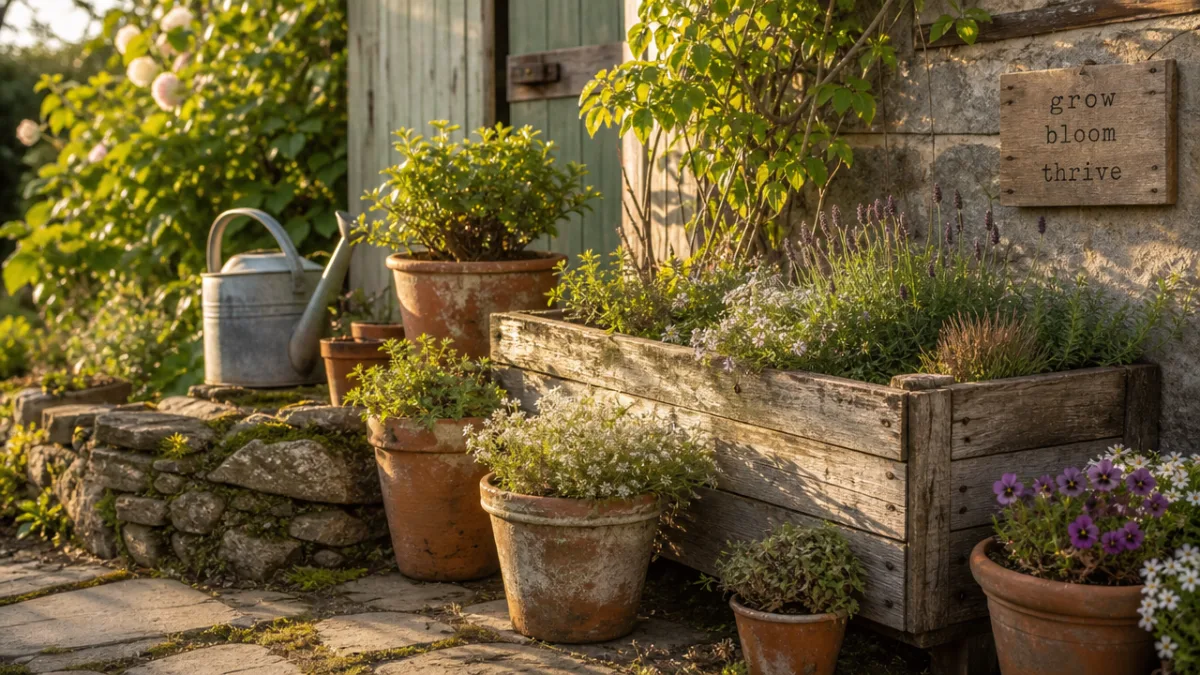
DIY Wooden Planter Projects That Define the Space
If there’s one project that can completely transform a corner of your garden, it’s a wooden planter — and they’re also one of the most beginner-friendly things you can tackle. A simple raised box built from reclaimed pallet boards only needs basic cutting and fastening, but the end result can become the whole focal point of a garden space. The trick is to lean into the character of the wood rather than trying to hide it. Knots, nail holes, saw marks, grain variation — all of that is exactly what you want.
Once you’ve got the basic box planter figured out, there’s a whole world of variations to try. Tiered planters stacked from old railway sleepers are dramatic and work brilliantly for herbs or strawberries. A rough-cut cedar window box mounted under a window or along a fence brings instant cottage-garden charm, even in an urban setting. And if you have the patience, a hollowed-out log makes one of the most striking statement planters you’ll ever see — fill it with ferns, succulents, or trailing nasturtiums and it’ll stop people in their tracks.
How you finish your wooden planters matters more than people often realize. You want some protection from moisture without making the wood look sealed or shiny — that’s the quickest way to lose the rustic feel. Linseed oil, tung oil, or a beeswax-based wood treatment are all great options; they soak in rather than sitting on the surface. Steer clear of varnish or polyurethane. If you’d like a painted finish, milk paint in earthy tones like sage green, ochre, clay red, or slate blue looks beautiful and ages really well outdoors.
Creating Enchanting Garden Pathways and Borders
A garden path does a lot more than just keep your feet clean. It creates structure, pulls the eye through the space, and gives visitors a sense of being guided through something intentional. For a rustic look, stepping stones made from irregular flagstone or rough-cut slate are hard to beat — the gaps between them are an invitation for moss, creeping thyme, or baby’s tears to move in, and the path actually gets better looking with every season that passes.
Wooden rounds — cross-sections sliced from a good-sized log — are another wonderful path material that’s surprisingly easy to work with. Cut them to a fairly consistent thickness of around three to four inches, treat the undersides with preservative to slow down rot, and set them into a prepared gravel or sand base. They’ll silver and weather beautifully over time, and in shadier spots moss will start creeping around their edges, making them look like they’ve always been part of the landscape. Mix them with gravel or crushed bark and the effect gets even more naturalistic.
Borders are what give planted beds their definition, and in a rustic garden, the border material is part of the decoration, not just an afterthought. Woven willow or hazel edging — either bought from a garden supplier or made at home if you can get hold of flexible stems — has an instantly artisan quality that’s hard to replicate. Rows of upright logs or thick branch sections give a chunkier, woodland feel that suits informal cottage-garden beds particularly well. And if you live near a beach or river, a line of rounded stones gathered on your last walk costs nothing and looks completely at home.
- Choose a path material that complements your existing garden style and scale
- Prepare a proper base of compacted gravel or sand to ensure stability and drainage
- Allow generous gaps between stones or rounds for ground-covering plants
- Edge the path with woven willow, log sections, or river stones
- Plant creeping herbs like thyme or chamomile along the path edges to soften lines
- Maintain paths seasonally, replenishing gravel and clearing debris as needed

Vertical Garden Features and Decorative Structures
Vertical structures are what give a garden its architecture — they add height, create focal points, and give the eye somewhere to travel beyond the flat plane of beds and borders. In a rustic garden, these structures should look like they’ve earned their place over time, built simply from honest materials. A trellis made from branches lashed together with twine is about as pure as it gets — no cutting, no hardware, no paint — and yet it’s one of the most charming vertical features you can make. Climbing roses, beans, or sweet peas will cover it happily.
If you want to go a bit bigger, pergolas and arbors built from rough-sawn timber or heavy branches create proper outdoor rooms and frame views within the garden in a really satisfying way. A rustic arbor at the entrance to a path, with climbing roses or wisteria growing over it, sets the tone for the whole garden with one simple gesture. Building a full pergola takes more planning than the smaller projects, but the skills involved — digging post holes, basic timber joinery, straightforward carpentry — are well within reach for anyone reasonably practical with a free weekend to spare.
Beyond the structural, it’s worth thinking about the decorative corners of your garden too — the spots that might otherwise just feel empty. A stack of vintage terracotta pots in graduating sizes, a row of old galvanized watering cans on a wooden shelf, a salvaged ladder leaned against a wall with potted herbs hanging from its rungs — these little arrangements do so much for a space. Birdhouses and feeders made from reclaimed wood go one step further by inviting actual wildlife in, which adds movement, sound, and a kind of aliveness to the garden that no inanimate decoration can match.
Water Features and Lighting for Rustic Atmosphere
Water has always been one of the most powerful things you can add to a garden, and even a very simple DIY feature changes the whole atmosphere. For a rustic space, the best water features are the ones that look natural and unhurried rather than engineered. A half-barrel water garden is a perfect example — fill it with water lilies and a few aquatic plants, drop in a handful of aquatic snails to keep the algae in check, and within a season it’ll look like it’s always been there. All it needs is a few hours of sun a day.
A slightly more involved but very doable option is a small recirculating feature built into a cluster of natural stones. A submersible pump hidden under tumbled rocks, feeding water up through a hollow bamboo spout or ceramic pipe, creates a soft, gentle trickle that you hear before you see. It runs from a standard outdoor outlet, costs very little to run, and can be taken apart seasonally if you need to. Honestly, the sound of moving water might be the single most effective thing you can do to make a garden feel like a real escape.
Good evening lighting pulls a rustic garden together in a completely different way once the sun goes down, and you don’t need to rewire anything to get it right. Solar lanterns with a warm amber glow, tea light holders punched from old tin cans, mason jars wired to branches, beeswax pillar candles clustered on flat stones — all of these create something genuinely magical. Warm white or amber string lights wound through a pergola or draped along a fence are another simple, inexpensive option that looks beautiful against weathered wood. The aim is soft, layered light that picks out texture and creates cozy pockets of warmth throughout the space.
Seasonal Maintenance and Evolving Your Rustic Garden
One of the best things about a rustic garden is that it’s genuinely a living project — it shifts with the seasons and honestly tends to improve with age. Unlike a formal garden that needs constant attention just to stay looking right, a rustic space gets more beautiful as it settles in, weathers, and fills out. That said, a little seasonal care keeps things feeling looked-after rather than just left to chance. Spring is the moment to refresh mulches, fix anything that took a beating over winter, and plug any gaps with new plants.
Summer is mostly about managing the enthusiasm of everything that’s growing — cutting back plants that have gone a bit rogue, training climbers up their supports, deadheading to keep flowering going. It’s also a really good time to just watch the garden and take notes. Where’s it working? Where does it feel like something’s missing? Keep a notebook or take regular photos throughout the season — you’ll be amazed how useful that is when you sit down to plan over winter. Pay attention to where shade falls, which plants are thriving on their own, and where your eye naturally wants to land.
Autumn and winter have their own kind of rustic beauty, and the temptation to tidy everything up is worth resisting. Seedheads left standing through the cold months look architectural and give birds something to eat, while fallen leaves left to accumulate in the right spots break down into leaf mold — genuinely one of the best free soil improvers you can get. Use the quieter time to plan new builds, hunt for reclaimed materials, and get structures ready for the season ahead. A rustic garden is never really finished, and that’s precisely what makes it so satisfying. It just keeps getting richer and more characterful as the years go by.








What do you think?
It is nice to know your opinion. Leave a comment.