










Decorating with a Garden Mirror: Transform Your Outdoor and Indoor Spaces
Garden mirrors have quietly become one of the most versatile and impactful decorating tools available to homeowners and interior designers alike. Whether placed in a sun-drenched courtyard, a shaded corner of a patio, or even brought indoors to evoke the feeling of the outdoors, a well-chosen garden mirror can completely transform the character of a space. Unlike most decorative accessories, mirrors do double duty — they add visual interest while simultaneously making any area feel larger, brighter, and more dynamic. The Listed Home has long championed this approach, and for good reason: the results speak for themselves.
The appeal of garden mirrors lies in their ability to blur the boundaries between the natural and the designed. When a mirror is positioned thoughtfully in a garden, it reflects the surrounding greenery, flowers, and sky, creating the illusion of a space that extends far beyond its actual limits. A small urban courtyard that might otherwise feel claustrophobic can suddenly appear to open up into a lush, layered landscape. This optical trickery is not just a clever trick — it is a foundational principle of garden design that has been employed by landscape architects for centuries in formal European gardens.
What makes the garden mirror trend feel so fresh today is the extraordinary range of styles now available. From ornate wrought-iron frames that suit a romantic cottage garden to sleek, frameless panels that complement a contemporary minimalist outdoor space, there is a garden mirror to suit virtually every aesthetic. Understanding how to choose the right mirror, place it correctly, and pair it with complementary elements is the key to achieving a result that looks intentional, elegant, and effortlessly styled.
Choosing the Right Garden Mirror for Your Space
The first and most important step in decorating with a garden mirror is selecting a piece that suits both the style of your garden and the practical demands of an outdoor environment. Not all mirrors are created equal, and using an indoor mirror outdoors can lead to rapid deterioration from moisture, temperature fluctuations, and UV exposure. Purpose-built garden mirrors are constructed with weather-resistant frames — often made from powder-coated steel, treated hardwood, or durable resin — and use acrylic or specially sealed glass that can withstand the elements without fogging, rusting, or cracking over time.
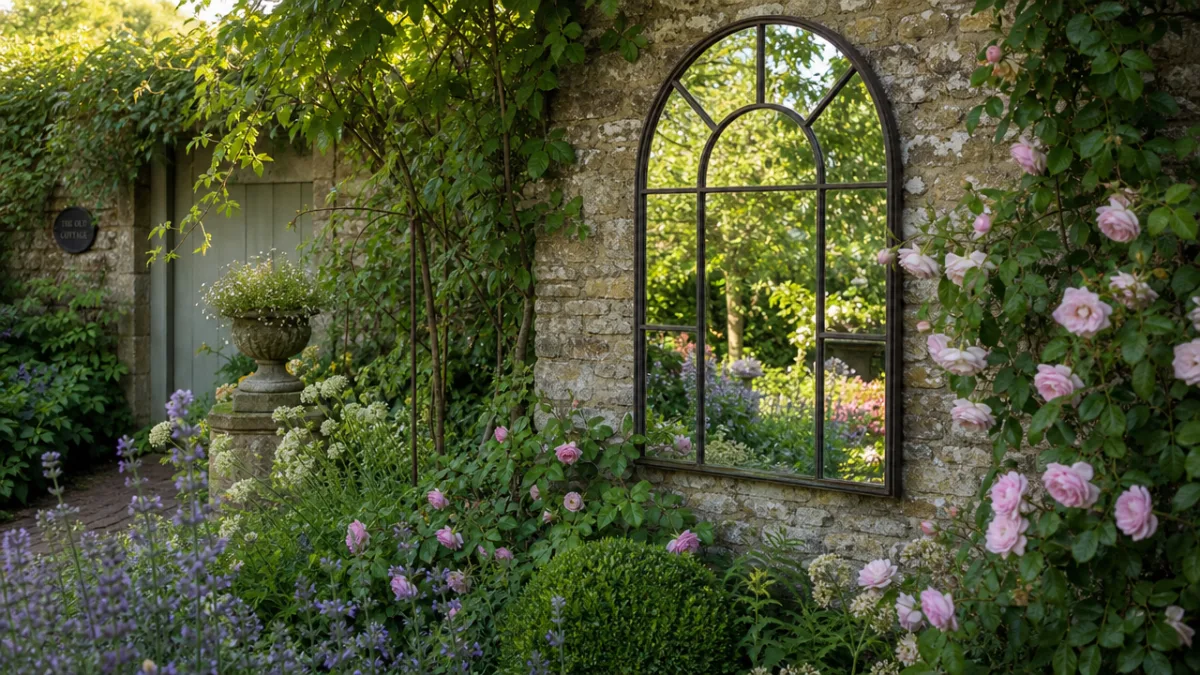
When considering style, think carefully about the overall aesthetic of your outdoor space. A classic arched mirror with a distressed painted frame works beautifully in a cottage or country garden filled with climbing roses, lavender, and box hedging. For a more contemporary urban garden or terrace, a large rectangular frameless mirror or one with a slim black metal frame will feel far more at home. Mediterranean-inspired spaces with terracotta pots and olive trees benefit from mirrors with ornate mosaic or wrought-iron frames that add to the sense of artisan craft and warmth.
Size is another critical consideration that many decorators underestimate. A mirror that is too small will disappear into the backdrop of a garden wall and fail to create the dramatic effect you are aiming for. As a general rule, the mirror should be large enough to reflect a meaningful portion of the surrounding garden — a minimum of 60 to 90 centimetres in the smallest dimension is usually recommended for outdoor use. However, in compact spaces like a small balcony or an enclosed courtyard, a large mirror can be the single most transformative investment you make, turning a squeeze into a showpiece.
- Weather resistance: Always check that the mirror is rated for outdoor use, with sealed backing and a rust-proof or rot-proof frame.
- Style compatibility: Match the frame material and design language to your existing garden furniture and planting scheme.
- Size proportion: Choose a mirror large enough to reflect a genuine portion of the garden, ideally a feature planting or attractive architectural element.
- Glass vs. acrylic: Glass offers superior clarity but is heavier and more fragile; acrylic is safer and lighter but may show minor distortions.
- Mounting method: Consider how the mirror will be secured — wall-mounted options are safest and most permanent, while freestanding mirrors offer flexibility.
The Art of Placement: Where to Hang Your Garden Mirror
Placement is arguably the most important factor in determining whether your garden mirror becomes a stunning focal point or a disappointing afterthought. The fundamental principle is this: a mirror should always be positioned so that it reflects something beautiful. This sounds obvious, but it requires genuine thought and planning. Before committing to a location, hold the mirror up or prop it temporarily against the wall and step back to examine what it captures. You want to see lush planting, architectural features, pots and urns, or the sky — not a fence panel, a rubbish bin, or the back of a shed.
One of the most effective placements is at the end of a garden path or sightline, where it creates the impression of the path continuing beyond the boundary. This technique, beloved by landscape designers, works particularly well in narrow or elongated gardens where the goal is to create depth and a sense of journey. The mirror appears to extend the garden into an infinite continuation of itself, and when framed by climbing plants or flanked by tall topiary, the illusion becomes genuinely convincing and magical. Visitors often do a genuine double-take when they encounter a well-placed garden mirror for the first time.
Angle also plays a crucial role. A mirror hung perfectly flat against a wall will reflect whoever is walking toward it, which can be startling rather than beautiful. Angling the mirror very slightly downward — just a degree or two — shifts the reflection toward the ground-level planting and away from the approaching viewer, creating a more naturalistic and pleasing effect. Similarly, positioning a mirror to catch the reflection of a water feature, a particularly beautiful specimen plant, or a decorative urn can turn the mirror into a living artwork that changes subtly with the light and the seasons.
It is also worth considering the relationship between the mirror and sunlight throughout the day. While mirrors that capture morning or afternoon light can create beautiful, warm reflections, a mirror positioned to catch direct midday sun can become a safety hazard, directing intense beams of light toward seating areas or even creating a fire risk if the reflection falls on dry plant material. Shade-facing positions — on north-facing walls in the northern hemisphere — are often the safest and most flattering, as the softer, more diffused light produces a gentler, more atmospheric reflection.
Using Garden Mirrors to Enhance Small Spaces
Small gardens, balconies, and enclosed courtyards present unique design challenges. The available square footage is limited, natural light may be restricted by surrounding buildings, and the risk of the space feeling oppressive or cramped is real. Garden mirrors are one of the most powerful tools available for addressing all three of these challenges simultaneously. By reflecting light deeper into a dark corner and visually doubling the apparent size of the space, a single well-chosen mirror can make a dramatic and immediate difference to how a small outdoor area feels to spend time in.
In a small courtyard garden, consider treating one entire wall as a mirrored feature. Large-format outdoor mirrors, or a series of smaller mirrors grouped together in a gallery-wall arrangement, can make a courtyard feel like an open terrace. This approach works especially well when the adjacent planting is layered and textural — ferns, hostas, grasses, and climbers all read beautifully in reflection, creating a sense of lushness and abundance that the physical dimensions of the space alone could not provide. Adding outdoor lighting positioned to illuminate the planting after dark extends the effect beautifully into the evening hours.
Balconies and roof terraces, where floor space is especially precious, benefit from mirrors mounted on parapet walls or exterior walls adjacent to the space. A mirror reflecting the open sky above creates an instant sense of expansion and airiness, which is particularly valuable when the balcony is surrounded by urban architecture. Pairing the mirror with a small table, two chairs, and carefully chosen container plants creates an outdoor room that feels far more generous and inviting than its actual dimensions might suggest. The Listed Home approach of layering textures, plants, and reflective surfaces together is particularly effective in these compact environments.
Indoor Garden Mirrors: Bringing the Outside In
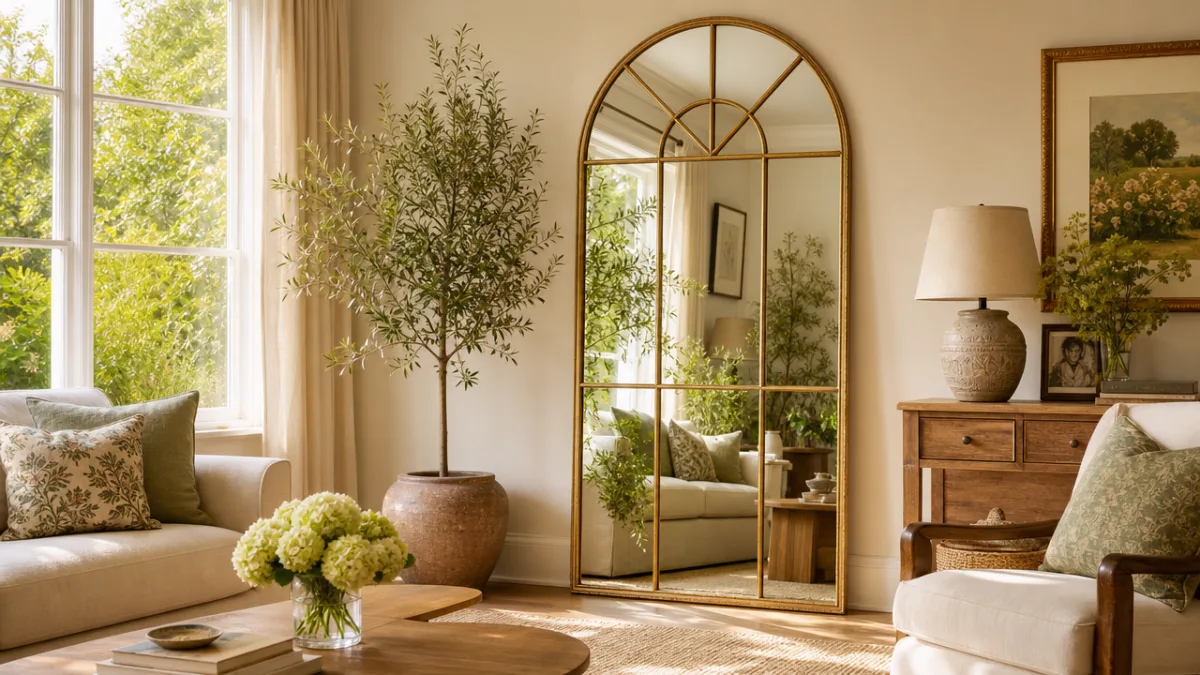
The garden mirror is not limited to outdoor use. Bringing a garden-style mirror inside is one of the most effective ways to create a connection between your interior spaces and the natural world beyond your windows. Placing a large arched or ornate-framed mirror adjacent to a window that looks out onto a garden effectively doubles the presence of the greenery in the room, filling the interior with reflected light and the movement of plants and branches. This technique is especially powerful in rooms where the windows themselves are small or positioned awkwardly.
In a hallway, a garden mirror with an elaborate botanical or organic frame sets the tone for the entire home, signalling an aesthetic rooted in nature, craft, and considered decoration. Paired with a console table carrying a potted plant, a stack of books, and perhaps a small lamp, the combination creates an entry vignette that is both welcoming and visually rich. The mirror’s reflection captures the life of the hallway as people come and go, adding energy and depth to what can often be a rather static and underdecorated space in many homes.
Living rooms and kitchen diners benefit enormously from garden mirrors placed on walls adjacent to garden views. By positioning a mirror so that it captures the reflection of a window looking onto a garden, you effectively create a second window — one that adds a completely different perspective on the outdoor space. On grey or overcast days, this additional reflected light can genuinely brighten a room and improve the mood of everyone in it. Interior designers often recommend this approach as one of the most cost-effective ways to increase the perceived brightness and spaciousness of a room without any structural changes.
- Adjacent to windows: Position mirrors to capture and amplify the natural light and garden views entering through nearby windows.
- In hallways and entryways: Use garden-style mirrors to create a nature-inspired first impression and add depth to narrow corridors.
- Above fireplaces: A large ornate garden mirror above a mantelpiece creates a dramatic focal point that references the outside world even in the heart of the home.
- In bathrooms: Botanical-framed mirrors bring a spa-like, garden feel to bathroom spaces, particularly when paired with plants and natural materials.
- In dining rooms: A large mirror opposite a window creates the impression of a room that opens on two sides to the outside, making mealtimes feel more expansive.
Styling Around Your Garden Mirror: Plants, Furniture, and Accessories
A garden mirror does not exist in isolation — its impact is always shaped by the elements surrounding it. The most successful garden mirror installations treat the mirror as the centrepiece of a carefully composed vignette, with every adjacent element chosen to enhance the overall effect. Flanking the mirror with tall potted plants or trained climbers is one of the oldest and most reliable tricks in the garden designer’s playbook, because it frames the reflection and softens the edges of the mirror, making it appear to emerge organically from the surrounding planting rather than sitting against it.
In terms of furniture arrangement, placing a seating area in the sight line of a garden mirror creates a comfortable spot from which the full effect of the reflection can be appreciated. A pair of chairs or a garden bench positioned facing the mirror creates a contemplative space that functions almost like a room with a view. If the mirror is large enough, it can even be used to visually connect the seating area with a feature on the opposite side of the garden — a water feature, a beautiful tree, or an ornamental border — creating a dialogue across the space that makes the garden feel designed and intentional.
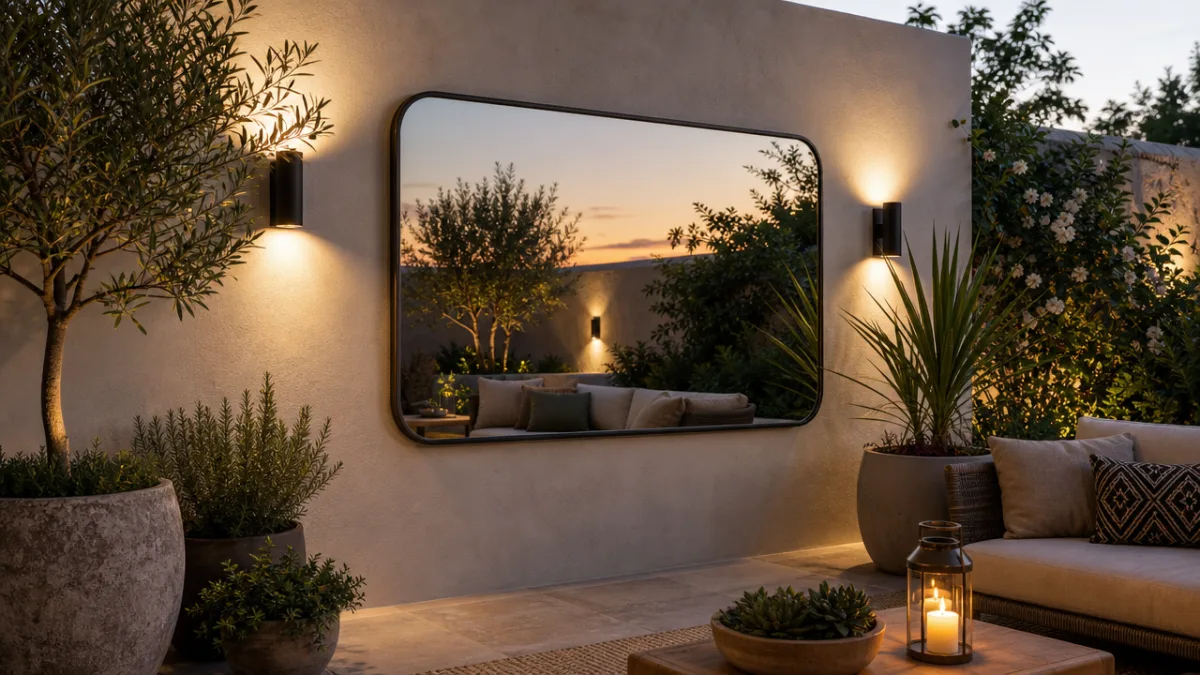
Lighting is one of the most underutilised tools when it comes to styling around garden mirrors, and it is worth thinking carefully about both natural and artificial light. During the day, consider which direction the mirror faces and what quality of light it will receive at different times. In the evening, positioning outdoor spotlights or lanterns to illuminate the planting reflected in the mirror creates a theatrical and atmospheric effect. Uplighting a plant or architectural feature that the mirror reflects doubles the visual impact of the lighting, while candles or string lights positioned near the mirror create a warm, flickering glow that transforms the garden after dark.
Maintenance, Safety, and Longevity
Caring for a garden mirror is straightforward but important if you want it to retain its clarity and finish over many years. Outdoor mirrors accumulate grime, algae, bird droppings, and water spots more rapidly than indoor mirrors, and regular cleaning is essential. For the glass or acrylic surface, a solution of warm water and a small amount of white vinegar applied with a soft microfibre cloth is highly effective and will not scratch or damage the surface. Avoid abrasive cleaners or anything containing bleach, which can damage both the mirror surface and the frame finish over time.
The frame requires attention appropriate to its material. Powder-coated metal frames should be inspected annually for chips or scratches in the coating, which should be touched up promptly to prevent rust from developing underneath. Wooden frames benefit from an annual application of exterior wood oil or paint to maintain their water resistance. Resin frames are the most low-maintenance option and generally only require a wipe-down with soapy water to keep them looking their best. In very exposed locations, or if you live in a region with harsh winters, bringing the mirror inside or covering it during the coldest months will significantly extend its lifespan.
Safety is an important consideration that should not be overlooked, particularly in gardens used by children or in areas prone to high winds. Garden mirrors — especially large ones — are heavy and can cause serious injury if they fall. Wall-mounted mirrors should always be secured with appropriate fixings rated for the weight of the mirror and the type of wall surface. In windy or exposed locations, consider additional security measures such as mirror clips or fixing wires. Acrylic mirrors are a safer choice than glass in family gardens, as they will not shatter if they do fall. Always follow the manufacturer’s installation guidelines, and if in doubt, consult a professional installer.
The longevity of a garden mirror also depends on the quality of the original purchase. Investing in a well-made mirror from a reputable supplier, rather than repurposing a cheap indoor mirror for outdoor use, will always pay dividends in the long run. A quality garden mirror, properly maintained and thoughtfully positioned, can remain a beautiful and functional feature of your outdoor space for a decade or more, evolving with the garden around it as plants mature and the space develops its own unique character. It is, in the truest sense, a long-term investment in the beauty and livability of your home.








What do you think?
It is nice to know your opinion. Leave a comment.