










29 Magical Fairy Garden Ideas to Fill Your Home With Wonder and Happiness
The Enchanting World of Fairy Gardens: An Introduction
Fairy gardens have been capturing hearts for generations — and honestly, it’s not hard to see why. There’s something about these tiny, whimsical landscapes that pulls you right out of the everyday and into something that feels a little bit magical. Whether you tuck one into a quiet corner of your living room or set it up on a sunny balcony, a well-made fairy garden has this wonderful ability to transform a space into something people of all ages want to stop and linger over.
But fairy gardens aren’t just pretty decorations. They invite you to slow down and pay attention to the small stuff — the kind of details that bigger gardening projects rush right past. When you’re carefully arranging a tiny mossy path or settling a miniature wooden bench beneath a dwarf fern, you’re not just decorating. You’re building a world. You’re telling a story that lives in your home and gets richer every time you add something new to it.
What I love most about fairy gardens is how accessible they are. You don’t need a big backyard or a big budget. A shallow terracotta pot, some soil, a few small plants, and a handful of carefully chosen miniature accessories are genuinely all it takes to get started. From there, your garden can grow over weeks and months into something intricate and layered that really reflects who you are — and brings a little quiet happiness into your day, every single day.
Choosing the Perfect Container for Your Fairy Garden
The container you pick sets the whole tone for your fairy garden, so it’s worth giving it some real thought before you dive in. Terracotta pots and ceramic planters are always solid choices, but honestly, the possibilities go so much further than that. Vintage colanders, wooden wine crates, old wheelbarrows, watering cans, even hollowed-out tree stumps — all of these make wonderfully characterful homes for a miniature fairy world. The main thing you need to check is that whatever you choose has enough depth to support root growth if you’re planning to use live plants.
Scale is something a lot of people underestimate when they’re starting out. A container that’s too small will feel cramped and really limit your plant choices, while one that’s too large can end up feeling sparse and hard to pull together. Most experienced fairy gardeners will tell you to start with something at least twelve inches across and six inches deep. That gives you enough room to create some real landscape variety — little hills, pathways, open clearings — without things feeling either crowded or empty.
Drainage is one of those practical things that’s easy to forget when you’re excited about the creative side, but it genuinely matters. Most fairy garden plants — succulents, thyme, miniature hostas — don’t do well with soggy roots and will go downhill fast without proper drainage. If your container doesn’t have drainage holes, add a generous layer of gravel or horticultural charcoal at the bottom to help water move through. Or, use your decorative outer container as a cachepot and keep your plants in a simple nursery pot inside that you can pull out for watering.
- Terracotta pots — classic, breathable, and available in many sizes
- Wooden crates or barrels — rustic charm with excellent depth for landscaping
- Vintage colanders or enamel basins — quirky and full of personality
- Hollowed logs or tree stumps — organic and deeply atmospheric
- Ceramic or glazed bowls — elegant and ideal for indoor displays
- Repurposed bird baths — elevated and eye-catching for outdoor gardens
The Best Plants for Miniature Fairy Gardens
If there’s one decision that makes or breaks a fairy garden, it’s the plants. They’re what set the atmosphere, establish the sense of scale, and keep the whole thing alive and thriving long-term. What you’re looking for are plants that stay small and slow-growing, look good together, and ideally have similar care needs so your garden can function as one happy little ecosystem. The good news is that the plant world has plenty of gorgeous miniature and dwarf varieties that are basically made for this kind of thing.
Moss is the undisputed star of fairy garden planting, and it earns that title completely. Nothing else creates that soft, velvety ground cover that instantly makes a landscape feel ancient and mysterious in just the right way. Sheet moss, cushion moss, mood moss — they all work beautifully, each with its own texture and personality. Moss is also wonderfully forgiving once it’s settled into conditions it likes (think indirect light and regular gentle misting), which makes it a great choice whether you’re a complete beginner or have been at this for years.
Beyond moss, there’s a genuinely lovely palette of small plants to play with. Miniature sedums and succulents bring jewel-like colors and interesting textures while handling occasional neglect with real grace. Dwarf thyme releases a gentle fragrance when you brush it and produces tiny flowers that look perfectly in proportion in a fairy setting. Baby tears, with those impossibly delicate little leaves, cascade beautifully over container edges and fill gaps between accessories without any fuss at all. Irish moss creates such a dense, bright green carpet that it genuinely looks like a lush fairy meadow — it’s remarkable stuff.
- Sheet moss or cushion moss for ground cover and atmosphere
- Miniature ferns for height, drama, and woodland character
- Dwarf thyme for fragrance and delicate flowering
- Baby tears for cascading, gap-filling softness
- Miniature hostas for bold, leafy texture in shaded spots
- Sedum varieties for color, texture, and drought tolerance
- Miniature mondo grass for structure and vertical interest
Designing the Fairy Village: Paths, Structures, and Accessories
Once your container and plants are sorted, this is where the real fun begins — designing the actual village. The way you arrange paths, structures, and accessories is where your personality gets to shine. Before you start placing things in soil, it helps to sketch out a rough layout first. Think about where you want the eye to land, how it will travel through the scene, and whether you want to tell a specific story or just create a general sense of magic and peace. A little planning up front saves a lot of digging things back up later.
Pathways are one of my favorite elements in any fairy garden, because they do something really special — they imply life. A winding trail of tiny pebbles, flat slate pieces, or crushed shell immediately suggests that someone actually walks here, that this tiny world is inhabited and active. Run that path toward a doorway, a little bench, or a small pond, and suddenly you have a sense of destination and journey that pulls both the eye and the imagination along with it. Even a path that doesn’t lead anywhere in particular adds a lovely sense of mystery that makes the whole thing feel genuinely lived-in rather than just set-dressed.
Structures are what most people picture first when they think of fairy gardens — the little houses, bridges, fences, gates, and bits of furniture — and they really do make a transformative difference. The range of miniature accessories available has exploded in recent years, so finding detailed, affordable pieces is easier than ever. That said, some of the most charming structures come from making your own. A bundle of twigs tied with twine becomes a rustic fence. A flat stone balanced on two small pebbles becomes a bridge. A walnut shell lined with soft moss becomes the coziest fairy bed you’ve ever seen. Handmade pieces have a warmth and character that purchased ones just can’t quite match.
- Tiny pebble or gravel pathways that wind through the landscape
- Miniature wooden or ceramic fairy houses and cottages
- Twig-and-twine fences to define different areas
- Small mirrors or resin pieces to create the illusion of ponds
- Miniature lanterns or LED fairy lights for magical evening atmosphere
- Tiny furniture: benches, tables, and chairs placed near cottage doors
- Small signs with whimsical sayings painted on flat stones

Indoor Fairy Garden Ideas: Bringing Magic Inside Your Home
Indoor fairy gardens have really taken off in recent years, and it’s easy to understand why — they let you enjoy a little miniature landscape all year round, rain or shine. They look gorgeous on windowsills, coffee tables, bookshelves, and kitchen counters, and they bring a living, breathing focal point to rooms that might otherwise feel a bit flat. The key to making an indoor fairy garden work is choosing plants that are genuinely happy inside, especially ones that can handle lower light and the dry air that heating systems tend to create in winter.
Terrariums are a particularly lovely solution for indoor fairy gardens, especially if your home tends to run dry or you’re working with limited space. A glass globe, an old fish tank, or a geometric terrarium frame can house a beautifully self-contained little world that barely needs any attention once it’s established. Closed terrariums create their own humidity cycle, which makes them perfect for moisture-loving plants like ferns, baby tears, and tropical mosses. Open terrariums allow better airflow and work well for succulents, air plants, and hardier herbs like thyme and sedum.
Lighting is worth thinking about carefully for indoor gardens — both for your plants’ wellbeing and for the mood you want to create. Placing your garden near a bright but indirect light source is usually the best starting point. On top of that, adding a set of miniature LED string lights or a few tiny battery-powered lanterns can turn your fairy garden into something genuinely breathtaking after dark. The warm glow of little lights filtering through moss and miniature foliage is one of those effects that’s hard to describe but impossible not to love — it gets a gasp out of just about everyone who sees it for the first time.
Seasonal and Themed Fairy Garden Concepts
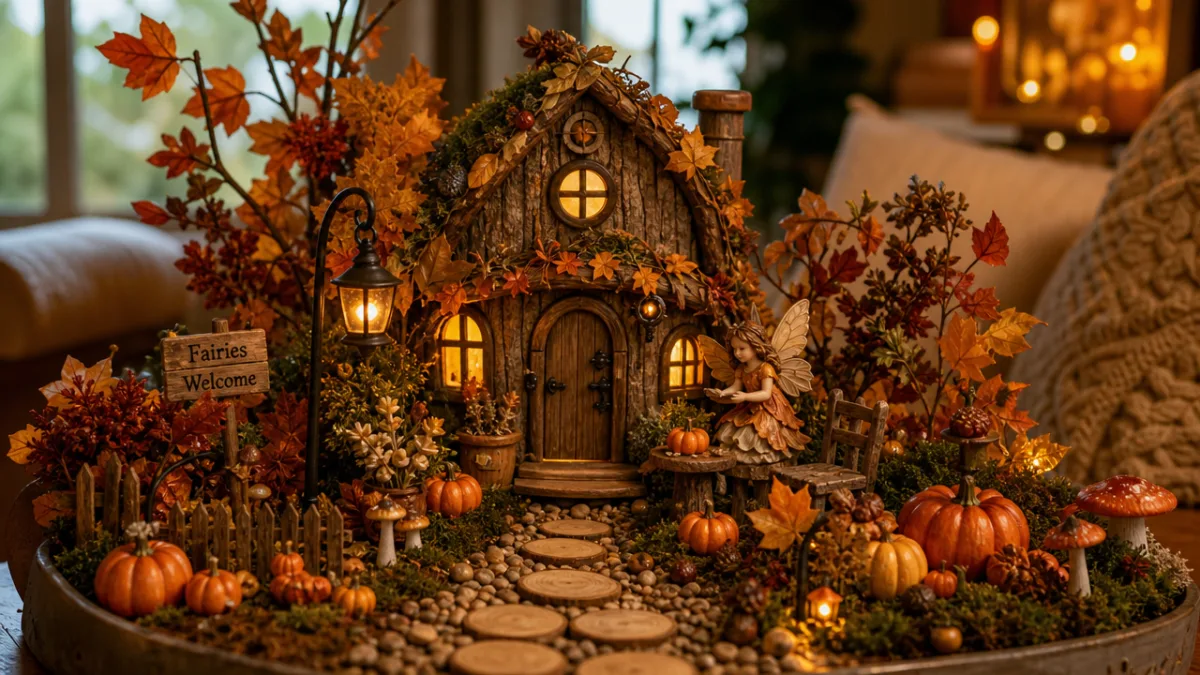
One of the best things about having a fairy garden is the excuse to refresh it with the seasons. It gives you a recurring creative project to look forward to all year, and it keeps the garden feeling new and alive rather than something you set up once and stop noticing. A spring fairy garden might burst with tiny flowering plants, pastel accessories, and little Easter surprises tucked into the moss. Summer lends itself to a lush cottage-garden feel with miniature hammocks and maybe even a tiny barbecue scene. Come autumn, pressed dried leaves, small pumpkins, and warm amber tones make for something that feels beautifully cozy and nostalgic.
Themed fairy gardens take the whole concept somewhere even more satisfying, letting you really commit to a specific aesthetic or story. A woodland fairy garden might feature dark rich soil, miniature conifers standing tall for their scale, tiny mushrooms scattered about, and a rustic log cabin half-tucked behind a fern. A beach fairy garden could use white sand, sea glass, little pieces of driftwood, and miniature deck chairs arranged around a small mirror pond. A cottage garden theme might lean into wildflower-style planting, a picket fence, and a tiny wheelbarrow absolutely overflowing with miniature blooms.
Holiday-themed fairy gardens have become a genuine tradition in a lot of homes, and honestly, they’re a lovely alternative to the usual seasonal decorating. A Christmas fairy garden nestled among evergreen sprigs, dusted with artificial snow, and lit with warm tiny lights can become the centerpiece the whole family ends up gathering around. A Halloween version with miniature witches, tiny cauldrons, and a wonderfully gnarled little tree brings out the excitement in kids and adults alike. These seasonal projects also give you the best possible reason to wander through garden centers and craft shops with completely fresh eyes, hunting for that one perfect miniature piece that makes this year’s version feel just right.
Tips for Maintaining Your Fairy Garden Over Time
A fairy garden isn’t something you put together and then forget about — it’s a living ecosystem, and it genuinely rewards a little regular attention. Setting up a simple maintenance routine early on will keep your miniature landscape looking its best and your plants healthy enough to stay in proportion with the overall design. The main things to keep on top of are watering correctly for the plants you’ve chosen, keeping an eye out for pests that might sneak in among the foliage, and trimming back anything that starts to outgrow its place in the scene.
Plant growth is both the joy and the challenge of keeping a fairy garden over time. That same living quality that makes it so much more special than a static decoration also means that things will eventually get bigger than you planned, shift shape with the seasons, or occasionally just decide to give up and need replacing. Try to embrace that rather than fight it. A plant that’s outgrown its spot might do wonderfully in a larger container elsewhere, and the gap it leaves behind might be exactly the opportunity you needed to introduce something new that refreshes the whole design in an exciting way.
Your accessories need a bit of love too, especially if your garden lives outside. Resin and ceramic pieces generally weather pretty well, but wooden items will thank you for an occasional coat of outdoor sealant, and metal pieces are worth checking for rust in wetter months. Every now and then, it’s a great idea to take everything out, give it a gentle clean, and put it back with fresh eyes. You’ll almost always spot a better arrangement than the one you had before, and that process of periodic reinvention is a big part of what keeps a fairy garden interesting and joyful to live with for years to come.








What do you think?
It is nice to know your opinion. Leave a comment.