










Garden Pottery: Transforming Your Outdoor Space with Beautiful Planters and Containers
<h2 id="section-1-the-timeless-appeal-of-garden-pottery”>The Timeless Appeal of Garden Pottery
Garden pottery has been part of outdoor life for thousands of years — ancient civilizations were already using clay vessels to grow herbs, flowers, and food plants right outside their doors. That tradition is very much alive today, with an incredible range of styles, materials, and sizes available to gardeners at every level. Whether you’re working with a sprawling backyard or a tiny apartment balcony, the right pot can take your garden from something functional to something genuinely beautiful.
Part of what makes garden pottery so enduringly popular is how versatile it is. One well-chosen pot can become the focal point of an entire garden bed, or create a striking first impression flanking a front door. A mismatched but thoughtfully assembled collection of vessels can tell the story of your travels and tastes, built up over years in a way that feels genuinely personal. Even a humble terra cotta pot has a warmth and earthiness that plastic simply can’t replicate — there’s something about it that feels connected to the natural world in a way that actually matters.
Beyond the looks, though, garden pottery is a genuinely practical tool for serious growers. Containers let you cultivate plants that would otherwise be a lost cause in your native soil — acid-loving blueberries in an alkaline yard, or tropical plants that need to come inside when it gets cold. Being able to control the soil mix, drainage, and moisture retention individually for each pot gives you a precision that in-ground planting just can’t offer. It really is as functional as it is beautiful.
Choosing the Right Material for Your Garden Pottery
The material your pottery is made from affects a lot more than just how it looks — it shapes how durable it is, how heavy, how well it insulates roots, and how well it suits different plants and climates. Terra cotta, that classic orange-red fired clay, remains the most popular choice for good reason. It’s porous, which lets excess moisture evaporate through the walls and dramatically lowers the risk of root rot. It also develops a beautiful patina over time as mineral deposits and moss build up on the surface. The one downside is that traditional terra cotta can crack in freezing conditions when water trapped in the clay expands, so in colder climates you’ll want to either bring it inside for winter or make sure drainage is impeccable.
Glazed ceramic pots are a gorgeous alternative — they give you the thermal mass of clay but with a sealed, waterproof surface that comes in just about every color you can imagine. Because moisture can’t pass through the walls, you’ll need to water a little less often than with terra cotta, but these pots are far more frost-resistant since they don’t absorb water into their structure. A good quality glazed ceramic can live outside year-round in most climates, won’t develop mineral deposits, and just needs an occasional wipe-down to look as vivid as the day you bought it.
If practicality and light weight are your top priorities, modern resin and fiberglass pots have gotten remarkably good. Today’s better quality resin containers can convincingly mimic the look and texture of stone, aged terra cotta, lead, or even weathered wood — at a fraction of the weight. That makes them a smart choice for rooftop gardens, balconies with weight limits, or anyone who wants to rearrange their display without throwing their back out. Concrete and hypertufa pots sit somewhere in the middle, giving you genuine stone aesthetics and the ability to cast custom shapes, though they share the considerable weight of natural stone.
Selecting the Perfect Size and Shape for Your Plants
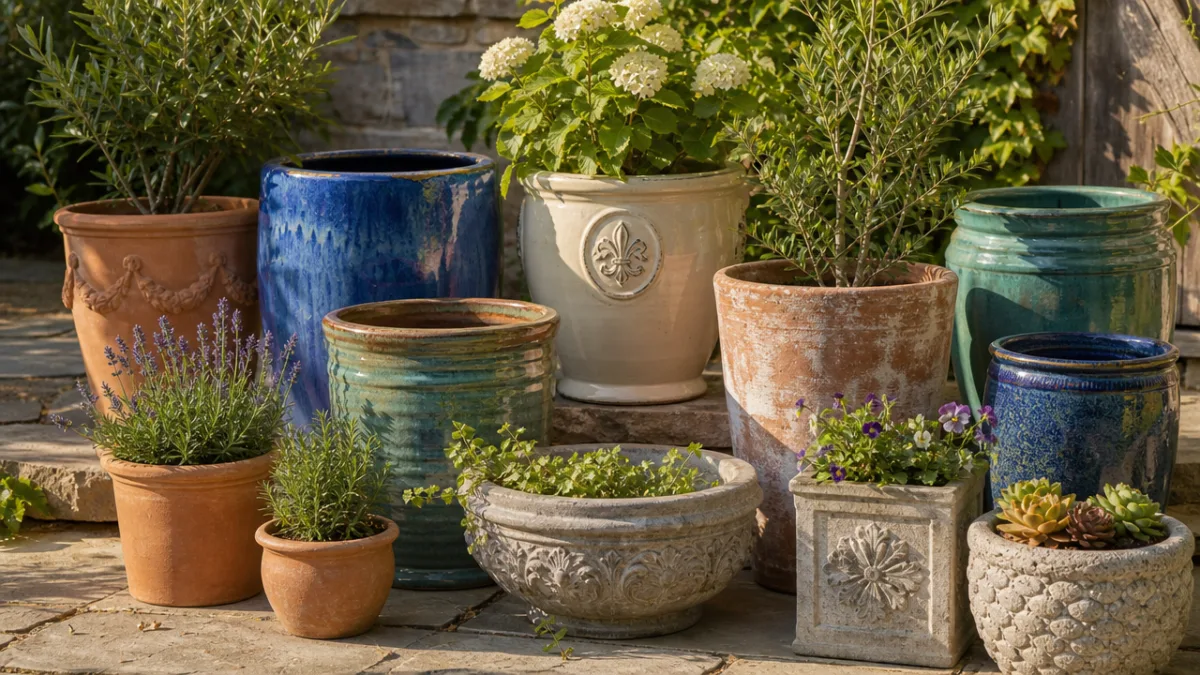
Getting the pot size right for your plant is one of the most important calls a container gardener makes — and one of the most commonly misunderstood. A lot of gardeners assume bigger is always better, figuring that more soil means more room for roots to explore. But oversizing a pot for a small plant is actually a common cause of root rot, because all that extra soil holds onto moisture long after the plant has taken what it needs, creating soggy, airless conditions that suffocate roots. The rule of thumb is to go two to four inches larger in diameter than the plant’s current root ball, and size up gradually as it grows.
Shape matters just as much, and it’s easy to overlook when you’re focused on aesthetics. Tall, narrow pots are great for deep-rooted plants like tomatoes, carrots, and small trees that need vertical space for their tap roots. Wide, shallow bowls suit succulents, alpines, and many annual flowers whose roots spread outward rather than downward. Strawberry pots, with their distinctive side pockets, were designed for their namesake fruit’s trailing habit but work equally well for herbs, sedums, and creeping thyme. Thinking about how a plant’s roots actually grow — rather than just how the pot looks — makes a real difference.
The drainage hole might be the single most important feature of any garden pot, and whether it’s there, absent, or just too small can be the difference between a thriving plant and a struggling one. Every container meant for outdoor planting should have at least one generously sized hole in the base — for large pots, several holes spread across the bottom are even better. Some decorative containers have no drainage at all and are designed as cache pots, meant to hold a planted nursery container inside while hiding the utilitarian plastic exterior. That system works well, but you have to remember to empty any accumulated water from the outer pot after heavy rain. If you don’t, it will wick back up into the soil and cause exactly the waterlogging you were trying to avoid.
Styling and Arranging Garden Pottery for Maximum Impact
How you arrange your pottery matters as much as the individual pieces, and a few simple design principles can be the difference between a display that feels considered and one that just looks busy. One of the most effective tricks is working in odd numbers — group your pots in threes, fives, or sevens rather than pairs or fours, which tend to feel static and overly formal. Within each grouping, mix heights: a tall statement pot alongside medium companions and a low bowl creates a layered silhouette that draws the eye and stays interesting from multiple angles.
Color coordination for pottery follows much the same logic as interior design, and thinking about your palette before you buy can save you from ending up with a chaotic jumble. A monochromatic scheme — pots in varying shades of the same color family — creates a sophisticated, pulled-together look that lets the plants do the talking. Contrasting schemes, like pairing warm terracotta with cool blue-grey glazes, generate a livelier energy that works well in contemporary settings. Neutral collections in weathered stone, aged lead, and chalky white have the advantage of working with virtually any planting palette, which makes them a flexible and forgiving choice.
Seasonal rotation is one of the real joys of container gardening, and thinking of your pottery as a long-term investment that supports changing displays throughout the year makes it much easier to justify spending more on quality pieces. A handful of handsome, substantial pots that anchor your design year-round can be supplemented by smaller, less expensive containers that rotate through seasonal plantings — tulip bulbs in spring, pelargoniums and petunias through summer, ornamental kale and asters in autumn, and architectural evergreens or berry-laden branches through winter. That way your most significant investment works hard across all twelve months.
Caring for Your Garden Pottery Through the Seasons
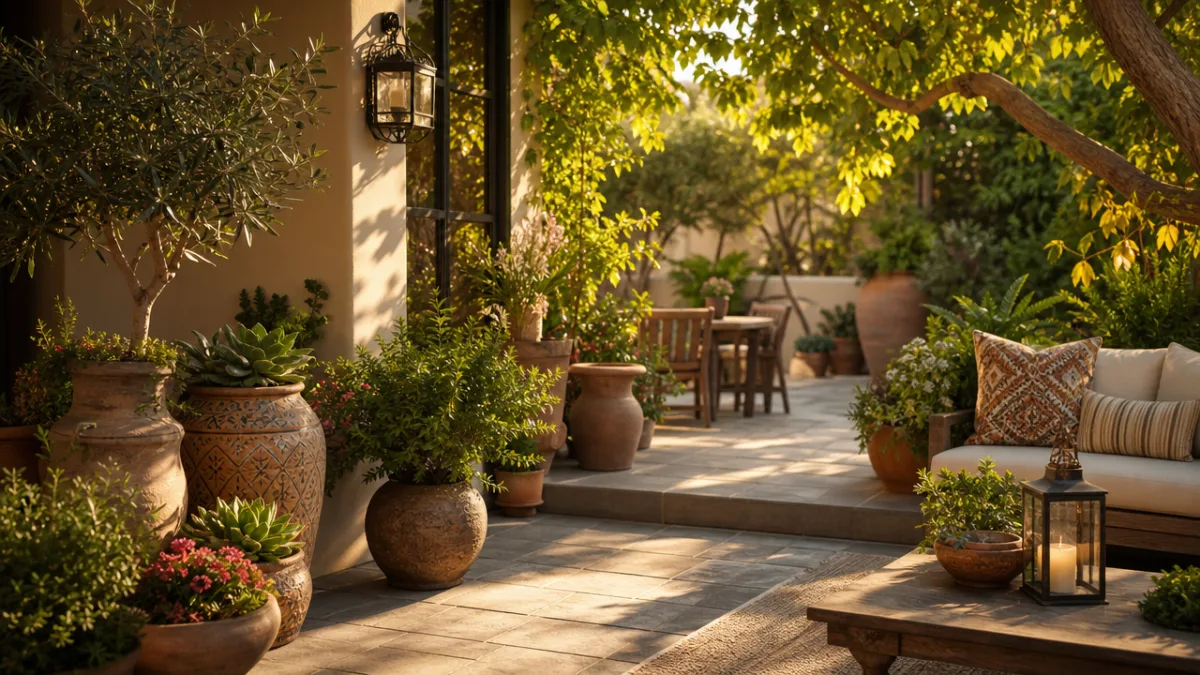
Looking after your pottery properly will dramatically extend its life and keep it looking good year after year. At the end of each growing season, it’s worth taking the time to give everything a proper clean before storing tender pots away or replanting others for the cooler months. Empty them completely, scrub with a stiff brush and dilute bleach solution to remove accumulated salts, algae, and any pathogens that might otherwise overwinter and affect next year’s plantings. Let everything dry completely before storing — moisture trapped inside ceramic or terra cotta during cold weather is the main reason pots crack and spall.
Frost protection is especially important if you’ve invested in quality ceramic or unglazed clay pots and you live somewhere with real winters. The most reliable approach is simply moving vulnerable containers into a frost-free shed, garage, or conservatory — this protects both the pot and any marginally hardy plants like agapanthus, tree ferns, or citrus that need cool but frost-free conditions over winter. For pots that are too big or heavy to shift, raising them off the ground on pot feet to improve drainage and wrapping them in horticultural fleece or bubble wrap can offer meaningful protection where frosts are occasional rather than sustained. Lining the inside of terra cotta pots with bubble wrap before planting also reduces moisture absorption through the walls and adds a bit of extra frost resistance.
Refreshing your soil each season is just as important as caring for the pots themselves. Container compost degrades faster than most people expect under the demands of intensive planting — its structure gradually collapses until it’s compacted and poorly draining, and its nutrients get depleted by roots and repeated watering. At the start of each new season, removing the old compost and replacing it with fresh, high-quality potting mix enriched with slow-release fertilizer gives your plants the best possible start. For perennials that live in the same container for several years, top-dressing with fresh compost each spring and giving a regular liquid feed through the growing season compensates for the nutrients they simply can’t access from a limited soil volume.
Shopping for Garden Pottery: What to Look For and Where to Find It
Shopping for garden pottery means balancing quality, price, aesthetics, and practicality — and knowing what to look for before you buy can save a lot of disappointment. When you’re looking at ceramic or terra cotta pots in person, tap them gently with your knuckle. You’re listening for a clear, resonant ring rather than a dull thud, which can signal internal cracking or air pockets in the clay that will lead to premature failure. Check that the base is genuinely flat rather than warped from firing, since a rocking pot will drain unevenly and sit unstably on hard surfaces. On glazed ceramics, look closely at the glaze for crazing, pinholes, or uneven coverage — any of these could let water in and cause frost damage later.
Online marketplaces have genuinely transformed the garden pottery market, making it possible to browse a range of styles and sizes that no physical garden center could ever stock. The real advantage of buying online is access to customer reviews, which give you real-world insight into things that are impossible to judge from photos alone — whether the colors are accurately represented, how the pots hold up through winter, how well they’re packaged for shipping. Looking for pots with a solid number of reviews and reading carefully for comments about durability, actual versus photographed color, and packaging quality will help you avoid the frustration of buying something breakable sight unseen.
Building a pottery collection over time is one of the most satisfying parts of developing a mature garden, and taking a patient, intentional approach — rather than trying to kit out an entire space in one shopping trip — tends to produce better results both visually and financially. Start with two or three anchor pieces in a style and material you genuinely love, then add to the collection gradually as your sense of the garden’s direction becomes clearer. Estate sales, antique markets, and online resale platforms can turn up extraordinary finds — aged lead, hand-thrown studio pottery, antique stone troughs — at prices that would be unthinkable new. And there’s a depth that old pots bring to a garden design that you simply can’t buy off the shelf.
- Terra cotta pots: Best for herbs, succulents, and Mediterranean plants that prefer drier conditions and benefit from the breathable, porous clay walls.
- Glazed ceramic containers: Ideal for moisture-loving plants and for gardeners who want vibrant color that remains consistent year after year without weathering.
- Lightweight resin and fiberglass: The top choice for balconies, rooftops, and anyone who needs to move containers frequently without assistance.
- Concrete and stone: Perfect for permanent placements where weight is an advantage, providing thermal stability that protects roots from extreme temperature fluctuations.
- Hypertufa and hand-cast pots: Wonderful for alpine plants and rock gardens, providing an authentic aged stone appearance with surprisingly manageable weight.
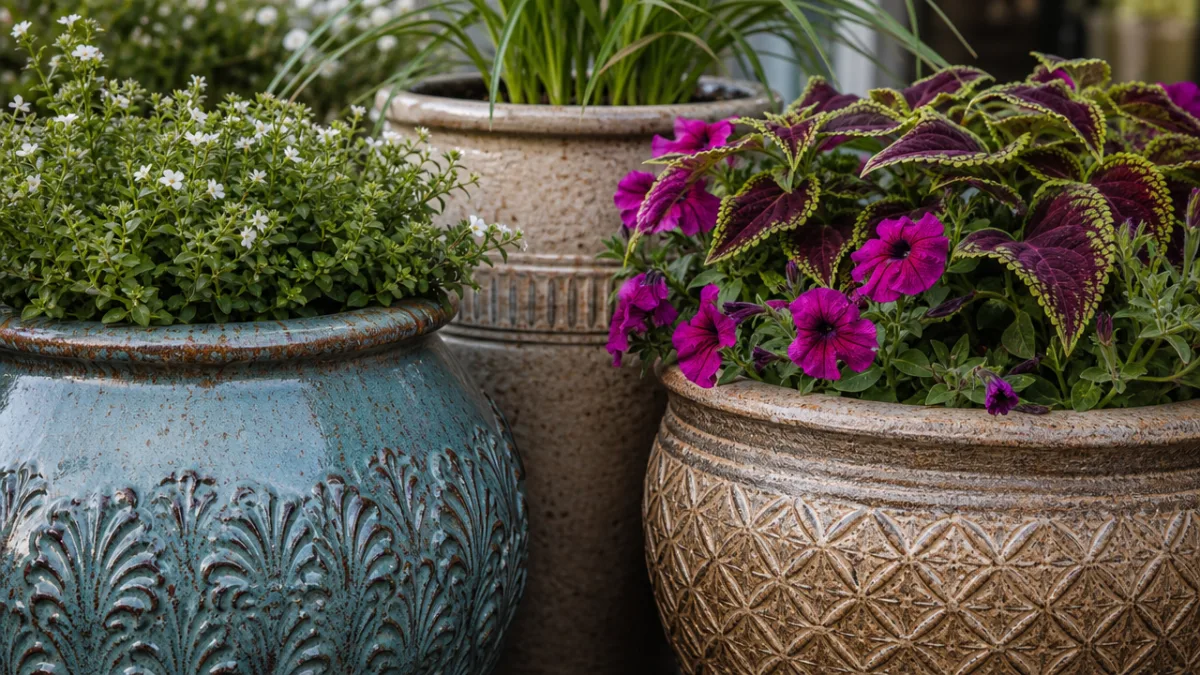
Whatever your budget, your garden style, or your level of horticultural ambition, putting some real thought into your garden pottery is one of the most rewarding ways to develop your outdoor space. The right containers do so much more than hold plants — they frame them, elevate them, and weave them into a designed landscape that reflects your personal taste and connects you to a very long human tradition of cultivating beauty close to home. With the range of options available today through both local retailers and online marketplaces, there really has never been a better time to start or grow a collection, and discover just how much the right vessel can transform both your plants and the way you experience your garden.








What do you think?
It is nice to know your opinion. Leave a comment.