










Fish Sweaters: The Quirky, Cozy Trend That Keeps Swimming Back Into Fashion
The Enduring Charm of the Fish Sweater
There aren’t many pieces of knitwear that manage to be genuinely warm and genuinely fun at the same time — but the fish sweater pulls it off every time. Whether it’s a bold intarsia print, delicate embroidery, or chunky cable knit with little fish woven through it, this category of knitwear has carved out a special place in the hearts of fashion lovers, crafters, and anyone who has a soft spot for the sea. The fish sweater doesn’t take itself too seriously, and honestly? That’s exactly why people keep coming back to it.
The fish sweater lives at this fascinating crossroads between folk art and modern fashion. It started out in coastal fishing communities where tough, warm knitwear wasn’t optional — it was survival. The fish, waves, boats, and anchors knitted into those garments weren’t just decoration; they told stories about where people lived and how they made their living. Over time, those practical pieces became cultural heirlooms, and eventually, full-blown fashion objects pinned to Pinterest boards by people who’ve probably never set foot on a fishing dock — and there’s nothing wrong with that.
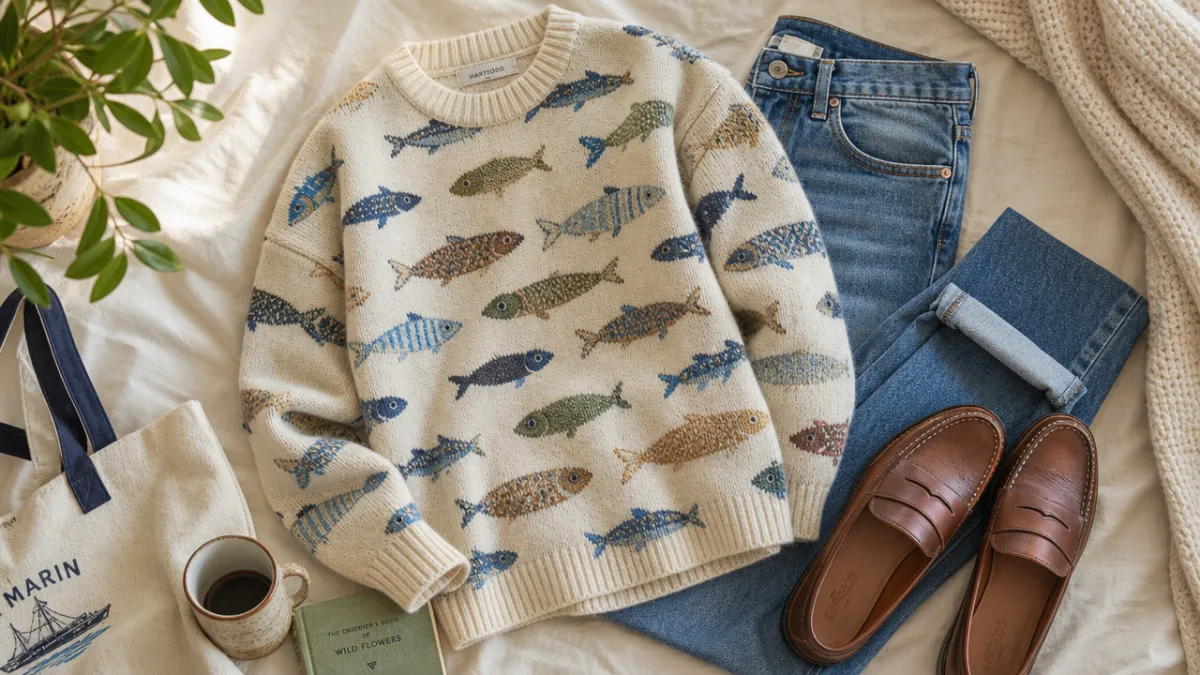
What keeps the fish sweater interesting is how well it plays with other things in your wardrobe. It can anchor an eclectic, maximalist look, or add one unexpected note to something otherwise pretty low-key. Pair it with wide-leg trousers and loafers and it looks deliberate and a little sophisticated. Throw it over a turtleneck with jeans and it’s the perfect lazy weekend outfit. Not many garments work that hard across that many different vibes, which is probably why the fish sweater keeps finding its way back into the conversation every single season.
A History Stitched in Scales: Where the Fish Sweater Comes From
To really appreciate why fish sweaters feel so good to wear and own, it helps to know where they came from. In the British Isles, the Fair Isle and Aran knitting traditions gave us some of the most iconic patterned knitwear in history, and maritime motifs were central to a lot of those designs. Coastal communities used different stitch patterns the way people use logos today — as identifiers, tied to a specific island, village, or even a particular family. The fish, as a symbol of the sea and everything it provided, showed up again and again in this visual language of yarn and color.
Scandinavia had its own version of this. Norwegian and Icelandic sweaters, with their bold two-color geometry and crisp patterning, often featured animals and natural imagery — fish alongside reindeer, snowflakes, and birds, all carrying cultural weight. These were practical garments, yes, but they were also expressions of identity. As Scandinavian design became a global obsession through the twentieth century, these sweaters found fans far beyond their home countries, and the fish motif traveled right along with them.
Japan brought something different to the fish sweater story. There, knitwear intersected with a deep cultural reverence for aquatic imagery — koi, goldfish, and sea creatures that had carried symbolic meaning for centuries, representing things like good fortune, perseverance, and transformation. Japanese knitters and textile artists folded those meanings into their work, creating sweaters that felt less like clothing and more like wearable art objects. That tradition is very much alive today, with Japanese indie knitwear designers producing some of the most sought-after fish-themed knits you can find anywhere in the world.
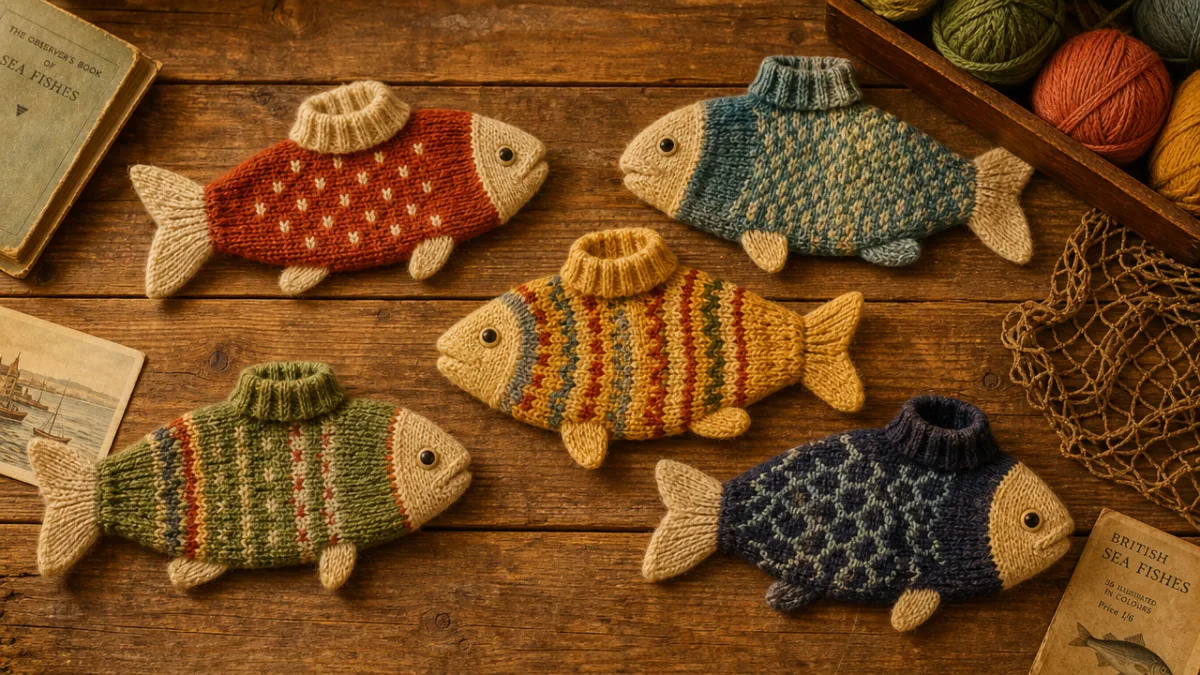
Patterns, Techniques, and the Art of Making a Fish Sweater
If you knit or crochet, fish sweaters are a genuinely exciting project to take on — and they work across a pretty wide range of skill levels. For beginners, duplicate stitch is a great entry point. You knit a plain base, then use a needle and contrasting yarn to trace fish shapes over the existing stitches, creating the look of a knitted-in design without having to manage colorwork in real time. It’s forgiving, it’s accessible, and the results can be really striking for the amount of effort involved.
If you’re more experienced, stranded colorwork — often called Fair Isle knitting — opens up a whole new world of fish sweater possibilities. This is where you work multiple colors simultaneously across each row, carrying the unused yarn across the back of the fabric. It requires a bit of concentration and consistent tension to keep everything flat and neat, but once you settle into the rhythm of a pattern, a lot of knitters describe it as genuinely meditative. The finished result, when it comes together, is dense, visually rich, and very satisfying to pull off.
Intarsia is another technique worth knowing about, especially for designs that feature one large fish or a small cluster of fish against a plain background rather than an all-over repeat. Instead of carrying yarn across the whole row, you work with separate yarn bobbins for each color section — a little more fiddly to set up, but it gives you cleaner, more graphic results. If you want your fish to feel bold and illustrative rather than folk-art and repetitive, intarsia is usually the way to go.
And then there’s texture, which is its own rabbit hole entirely. Cable knitting can be shaped and arranged to suggest the sinuous curve of a fish’s body. Bobbles and raised stitches can mimic the look of scales. Some designers layer all of these approaches to create genuinely three-dimensional effects, where the fish almost appears to swim off the surface of the fabric. Crochet brings its own possibilities too — crocheted fish sweaters tend to feel a little looser and airier than knitted ones, with a handmade quality that’s easy and relaxed in its own distinct way.
Styling a Fish Sweater: How to Wear It with Confidence
The most common worry people have about fish sweaters is whether they can actually pull one off in real life. The short answer is almost always yes — the trick is just to let the sweater be the star and keep everything else relatively calm. When you try to compete with it by adding other loud patterns or heavily embellished pieces, things tend to tip into visual chaos. But when you treat the fish sweater as the statement it is and build something quieter around it, the whole look clicks into place in a way that feels joyful and intentional rather than costumey.
In practice, a few combinations have proven themselves over and over again across different styles and seasons. Slim or straight-leg dark wash jeans are a classic base — clean, simple, and totally unfussy. Wide-leg trousers in a neutral like camel, cream, or charcoal take the look up a notch and work well for creative workplaces or a casual dinner out. A solid-colored midi skirt, especially in a shade that picks up one of the accent colors in the sweater’s pattern, can look surprisingly chic. And layering the sweater over a collared shirt — just the collar visible at the neckline, maybe a button or two — adds a preppy edge that suits the maritime roots of the whole thing beautifully.
Shoes matter more than you might expect here. Chunky loafers or brogues lean into the folk-craft energy of the sweater and give the whole outfit an artsy, bookish feel. White sneakers keep things easy and young. Knee-high boots in leather or suede dress it up for colder months when you’re actually most likely to be reaching for it. And if you want to really lean into the sweater’s personality, there’s a lot of fun to be had with quirky footwear — embroidered mules, novelty flats, or even fisherman sandals when the weather allows. At that point, the whole look becomes a deliberate, joyful expression of who you are, and that’s a great place to be.
- Casual weekend: Fish sweater, straight-leg jeans, white sneakers, and a canvas tote for an effortlessly put-together everyday look that requires almost no effort to assemble.
- Smart casual: Fish sweater over a white Oxford shirt, tailored trousers, and leather loafers for a look that works in creative professional environments or at a relaxed dinner out.
- Layered winter dressing: Fish sweater over a turtleneck, with a long wool coat, wide-leg trousers, and ankle boots for a cozy, sophisticated cold-weather outfit.
- Coastal grandmother chic: Oversized fish sweater, linen trousers, flat sandals, and delicate gold jewelry for a relaxed, sun-bleached aesthetic that feels timeless and utterly appealing.
Shopping for Fish Sweaters: Where to Find the Best Ones
The good news about shopping for fish sweaters is that the market is genuinely wide open. You can find them everywhere from big high street retailers to tiny independent knitwear studios tucked away in coastal towns. Where you look will depend on your budget, how much you care about sustainability, and what kind of sweater you’re actually after. If you just want to try the trend without a big commitment, there are plenty of affordable options out there. If you want something you’ll still be reaching for in ten years, it’s worth taking a bit more time — and spending a bit more money — to find the right one.
Etsy and similar handmade marketplaces are a great place to start. There are independent knitters and small knitwear businesses on these platforms selling everything from finished sweaters in standard sizes to fully custom commissions where you can specify the color, the size, and even which species of fish you want immortalized in yarn. Quality varies, so it pays to read reviews closely and look at photos carefully, but the best sellers on these platforms produce genuinely impressive work that can rival boutique-priced pieces at a fraction of the cost.
Vintage and secondhand markets are another wonderful hunting ground. Fish-patterned knitwear has been made for decades across cultures and price points, which means thrift stores, estate sales, and platforms like Depop and ThredUp regularly turn up extraordinary pieces that you simply cannot find anywhere else. There’s the sustainability angle — keeping a well-made garment in circulation rather than buying something new — and then there’s just the thrill of the hunt, because you genuinely never know what you’re going to come across. A Scandinavian piece from the 1970s and a novelty department store sweater from the 1990s can both be exactly right, just in completely different ways.
The Cultural Moment: Why Fish Sweaters Matter Right Now
The renewed interest in fish sweaters isn’t really happening on its own. It’s part of a bigger shift that’s been building for a while now — a genuine desire for clothing that’s made with care, that has some history to it, and that you actually want to keep wearing for years rather than discarding after a season. As fast fashion has faced more and more scrutiny for its environmental and human costs, a lot of people are looking for something different. The fish sweater, especially in its handmade or artisanal forms, fits that need almost perfectly.
There’s also the ocean connection, which feels particularly relevant right now. For a lot of people, especially younger shoppers who care deeply about environmental issues, wearing a fish sweater can be a small, wearable expression of love for the sea. It doesn’t require an explanation, but it often sparks a conversation. Some designers have taken this further, partnering with ocean conservation organizations or working with yarns made from recycled ocean plastics, turning what started as a charming garment into something that carries real environmental meaning.
On social media, fish sweaters have found a natural home within the aesthetics that have taken off on Pinterest, Instagram, and TikTok in recent years. Cottagecore, dark academia, coastal grandmother — each of these visual worlds has made space for the fish sweater in its own way. Pinterest in particular has been a huge driver of interest, with knitting pattern boards, outfit inspiration collections, and vintage knitwear galleries regularly surfacing fish-themed pieces to enormous audiences. One good image of a beautiful fish sweater can set off a whole chain of searches, purchases, and new knitting projects.
But maybe the most important thing about the fish sweater right now is the simplest: it makes people happy. So much of the conversation around clothing these days is tangled up in anxiety — about sustainability, about fast fashion, about whether what we wear accurately reflects our values. The fish sweater cuts right through all of that and just delights. It makes people smile. It starts conversations. It reminds you, and everyone around you, that clothes can be playful and personal and genuinely fun without being frivolous. That’s something worth holding onto, and it’s exactly why the fish sweater, in all its scaly, stitched, wonderful variety, isn’t going anywhere anytime soon.









What do you think?
It is nice to know your opinion. Leave a comment.