










Amazing DIY Garden Arches: 23 Ways to Highlight Your Garden
The Timeless Appeal of Garden Arches
Garden arches have graced outdoor spaces for centuries, serving as one of the most elegant and versatile structural elements a homeowner can introduce to their landscape. Whether you envision a romantic cottage garden draped in climbing roses or a sleek modern courtyard with clean geometric lines, a well-placed arch can instantly transform an ordinary garden into something truly extraordinary. The beauty of these structures lies not only in their visual impact but in the way they naturally draw the eye and invite exploration throughout the garden.
What makes garden arches particularly special is their ability to create a sense of transition and destination. When you walk beneath an arch, there is an almost subconscious signal that you are moving from one space into another — from the everyday into something more deliberate and curated. This psychological effect is something professional landscape designers use intentionally, and it is entirely achievable in a DIY project at home. Even a simple wooden arch can divide a garden into distinct zones, each with its own character and purpose, making a modest plot feel surprisingly expansive.
The rise of the do-it-yourself movement has made garden arches more accessible than ever before. With a wide range of materials available at local hardware stores and garden centers, and with countless design inspirations available online, there is genuinely no limit to the kind of arch you can create. From rustic willow structures assembled without a single nail to powder-coated metal arches with classical scrollwork, the options span every taste and budget. Understanding your garden’s existing style, the climate you live in, and the plants you hope to grow are the first steps toward choosing the perfect arch design for your outdoor space.
Choosing the Right Materials for Your DIY Arch
Material selection is arguably the most important decision you will make when planning a DIY garden arch, because it determines not only the appearance of the finished structure but also its longevity and the amount of maintenance it will require year after year. Wood is perhaps the most popular choice among DIY enthusiasts, offering warmth, natural beauty, and ease of workability. Cedar and redwood are particularly prized for their natural resistance to rot and insects, meaning a well-constructed wooden arch can last a decade or more with only minimal care such as an annual application of protective oil or stain.
Metal arches, whether fabricated from wrought iron, mild steel, galvanized steel, or aluminum, offer a different set of advantages. Their strength allows for slender, elegant profiles that would be structurally impossible in wood, and a good powder-coat or galvanized finish provides protection against rust that can last many years even in wet climates. Aluminum is particularly worth considering for gardeners in coastal areas, where salt air accelerates corrosion in other metals. While metal arches may require more upfront investment in tools or professional cutting services, their durability and sophisticated appearance make them a worthwhile long-term choice.
For a more naturalistic or budget-conscious approach, organic materials such as willow, bamboo, and hazel offer charming rustic results. Willow in particular is remarkably easy to work with when freshly cut, bending into curves and weaving into complex patterns with great flexibility. Bamboo brings an Asian-inspired aesthetic and is extraordinarily strong relative to its weight. These natural materials do have a shorter lifespan than wood or metal, but many gardeners embrace their gentle weathering as part of the charm. Whichever material you choose, always ensure your posts or footings are securely anchored in the ground to withstand wind and the weight of mature climbing plants.
- Cedar or Redwood: Naturally rot-resistant, beautiful grain, ideal for traditional and cottage garden styles.
- Galvanized Steel: Highly durable, modern aesthetic, suited to contemporary garden designs.
- Wrought Iron: Classic elegance, very strong, requires periodic rust treatment in humid climates.
- Aluminum: Lightweight, rust-proof, excellent for coastal gardens and easy to reposition.
- Bamboo: Affordable, sustainable, fast to assemble, wonderful for tropical or zen-inspired gardens.
- Willow or Hazel: Highly flexible, great for organic freeform shapes, rustic cottage appeal.
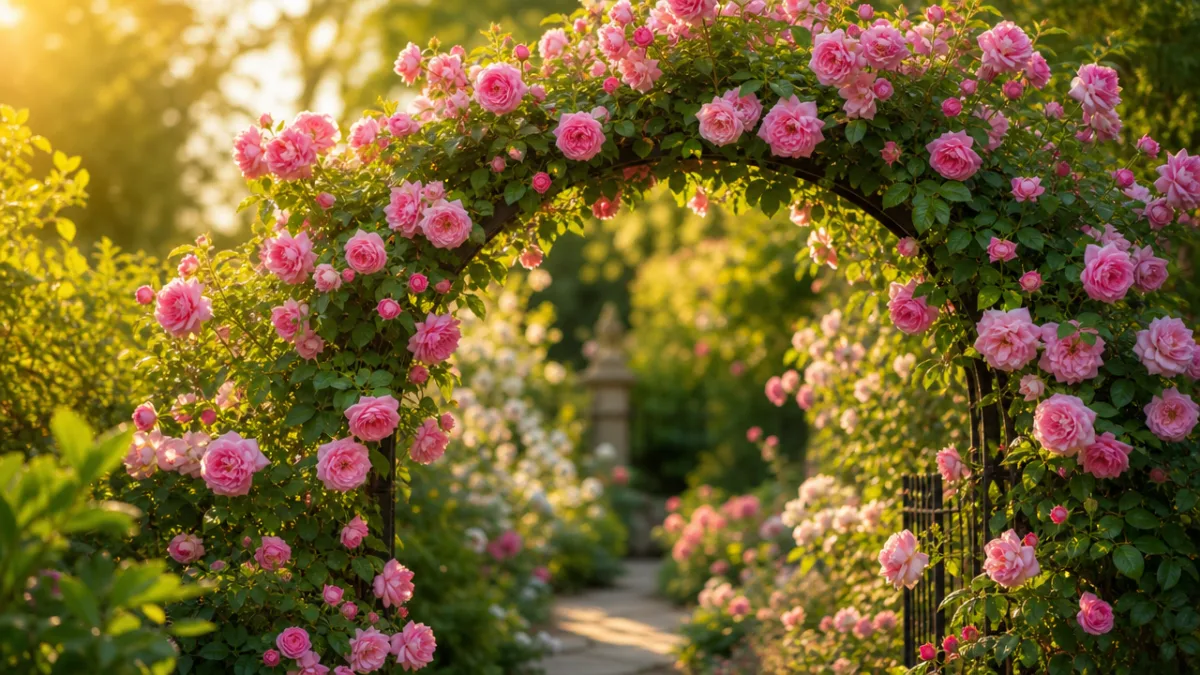
23 Creative DIY Arch Design Ideas for Every Garden Style
One of the most exciting aspects of planning a garden arch is the sheer variety of design directions available to you. A classic tunnel arch, formed by placing multiple arches in a row at regular intervals, creates an enchanting covered walkway that is particularly spectacular when fully clothed in wisteria or clematis. This style works wonderfully as a connecting feature between different garden rooms, giving the garden a sense of coherence and grandeur that feels far more ambitious than the relatively straightforward construction involved. Even four or five arches spaced about 60 centimeters apart can create a genuinely impressive effect within a single growing season.
For smaller gardens or those seeking a more understated impact, a single statement arch positioned at a garden entrance or over a gate can be just as powerful. A moon gate — a circular arch inspired by traditional Chinese garden design — creates a striking focal point and a perfectly framed view of whatever lies beyond it. This shape requires slightly more skill to construct from scratch but is widely available as a prefabricated metal kit that can be assembled in an afternoon. Positioned at the end of a straight path, a moon gate creates an irresistible sense of destination that draws visitors through the garden naturally.
Rustic arch styles using reclaimed timber or driftwood are increasingly popular among gardeners who favor a naturalistic, wildlife-friendly approach to their outdoor spaces. These structures, often irregular in shape and deliberately imperfect in finish, can be woven with withy stems or decorated with hanging lanterns and bird feeders to create something that feels genuinely unique. Other noteworthy design ideas include pergola-style arches that extend into a partial overhead covering, Gothic-pointed arches inspired by ecclesiastical architecture, and minimalist powder-coated steel arches with flat-top profiles that suit contemporary planting schemes beautifully.
Top Arch Styles to Consider
To help narrow down your choices, it is useful to group arch designs into a few broad stylistic categories. Traditional styles lean toward curved tops, decorative scrollwork, and materials like painted wood or wrought iron that evoke a timeless English garden aesthetic. These work best surrounded by informal planting including old-fashioned roses, foxgloves, and sweet peas. Contemporary styles favor angular geometry, clean lines, and neutral powder-coat finishes in shades of black, charcoal, or dark green that recede visually and allow the planting to take center stage.
Rustic and country styles embrace natural materials and handcrafted construction, often celebrating knots, curves, and irregularities that factory-made products deliberately avoid. These arches suit wildflower gardens, kitchen gardens, and allotments perfectly, and they are often the most achievable for complete beginners because their charm actually increases with a degree of imperfection. At the more ambitious end of the design spectrum, architectural statement arches can function as genuine sculpture, combining steel with corten weathering finishes, reclaimed brick piers with steel frameworks, or even living arches formed by training pleached trees over a framework that is eventually removed once the branches fuse.
Whatever style appeals to you most, it is worth spending time viewing your garden from multiple angles and considering where an arch will have the greatest visual impact before committing to a position. Photograph your garden from the main vantage points — from the house, from the main seating area, and from the garden entrance — and use printed photographs or digital tools to sketch in potential arch positions. This simple exercise frequently reveals that the obvious position for an arch is not necessarily the most effective one, and that a slight shift in placement can make a dramatic difference to the overall composition of the space.
Matching Arch Style to Climbing Plants
The relationship between your arch design and your chosen climbing plants is deeply symbiotic. Heavy, vigorous climbers such as wisteria, roses, and large-flowered clematis require robust structures with strong uprights and a secure cross-member at the top, as a mature wisteria in full growth can exert considerable weight and leverage in windy conditions. For these plants, arches constructed from thick timber sections of at least 75mm by 75mm, or from 25mm-diameter steel tube, are strongly advisable. Anchoring the posts in metal post spikes driven at least 600mm into the ground provides the necessary stability.
Lighter climbers such as annual sweet peas, nasturtiums, or small-flowered clematis varieties like Clematis viticella are far less demanding structurally, making them ideal companions for more delicate bamboo or thin timber arches. Annual climbers are also an excellent choice for a brand-new arch because they establish and flower within a single season, providing immediate impact while a perennial climber develops more slowly in its first year or two. Mixing annuals with perennial climbers is a strategy many experienced gardeners use to ensure the arch looks lush and productive from its very first summer rather than looking bare while the permanent planting establishes itself.

Step-by-Step Guide to Building Your First Garden Arch
Building your first garden arch is a deeply satisfying project that most competent DIY enthusiasts can complete comfortably over a weekend. Begin by gathering your materials and tools well in advance, and do not underestimate the importance of preparation. Mark out your arch position with canes and string first, checking that the spacing between uprights is wide enough for comfortable passage — a minimum of 900mm is recommended for single-person access, with 1200mm or more preferable if you plan to pass through with a wheelbarrow or garden tools regularly. The arch should be tall enough to walk beneath comfortably even when the climbing plants reach maturity, with a minimum clear height of around 2100mm.
For a basic timber arch, cut your four upright posts to a length that allows for at least 600mm burial in the ground plus your desired height above ground. Use metal post spikes for a clean, secure installation that avoids direct wood-to-soil contact, which is a primary cause of rot even in naturally resistant timbers. The two side frames can be assembled flat on the ground before raising them into position — each consisting of two uprights connected by horizontal rails at the top and ideally at mid-height for additional rigidity. Once both side frames are plumbed vertical and secure in their post spikes, connect them across the top with your arched or flat-top crossbar sections, using galvanized screws or bolts throughout for longevity.
Finishing your arch properly will significantly extend its lifespan and enhance its appearance. Sand all surfaces smooth, paying particular attention to any end grain cuts, which absorb moisture more readily than face grain and are the most common starting points for decay. Apply a high-quality exterior wood preservative, timber oil, or paint in your chosen color, working it well into all joints and end grain sections. Dark greens, slate blues, and black are currently very fashionable for garden structures as they provide excellent contrast with foliage, but a natural wood finish suits cottages and country gardens beautifully. Allow the finish to cure fully before introducing climbing plants.
- Mark your arch position precisely and check it from all key viewpoints before digging.
- Prepare your post spikes or concrete footings according to the weight of your planned structure.
- Cut and assemble your side frame components flat on the ground for precision and ease.
- Raise, plumb, and secure each side frame before connecting the overhead sections.
- Sand, treat, and finish all timber surfaces before introducing any plants to the structure.
- Install a simple wire or trellis system on the uprights to give climbing plants something to grip from the outset.
- Water in your climbing plants thoroughly and tie in their initial growth loosely to guide them toward the structure.
Decorating and Styling Your Garden Arch
Once your arch is built and your climbing plants are beginning their ascent, the real creative fun begins. Garden arches are wonderfully versatile canvases that can be decorated and styled in ways that go far beyond simply growing plants over them. String lights woven through the structure create magical evening atmosphere, transforming a garden arch into the centerpiece of outdoor entertaining from spring through to autumn. Solar-powered fairy lights require no electrical connections and are now of sufficient quality to provide a genuinely beautiful warm glow that suits garden settings far better than the harsh LED alternatives of a few years ago.
Hanging elements such as lanterns, wind chimes, small trailing planters, and even decorative birdhouses can be attached to the arch framework to add layers of interest and personality. In a kitchen garden, an arch can be hung with bundles of drying herbs, lavender, or seed heads, combining beauty with practicality in a way that is deeply satisfying. For a Mediterranean or Moroccan-inspired garden, colored glass lanterns in jewel tones hanging from the crossbar catch the light beautifully on sunny afternoons. The key to successful decorative additions is restraint — a few carefully chosen pieces will always look more considered than a crowded collection of items competing for attention.
Seasonal decorating is another dimension that arches lend themselves to particularly well. In autumn, your arch can be wound with trails of artificial or real autumn foliage, miniature pumpkins, and warm amber lights for a harvest aesthetic. At Christmas, outdoor-rated fairy lights, pine cone garlands, and simple wreaths at each foot of the arch create a festive garden entrance that delights visitors and passers-by alike. Even in the depths of winter, when climbing plants have died back or gone dormant, a well-decorated arch maintains its presence as a garden focal point and reminds you of the beauty that will return in spring.
Plant Combinations for Maximum Visual Impact
Thoughtful plant selection is what elevates a garden arch from a pleasant structural feature to a truly breathtaking garden highlight. The most celebrated combination in the English gardening tradition is roses and clematis, and for very good reason — they are perfectly matched in terms of vigor, flowering season, and cultural requirements, and they create a layered display that extends the flowering period significantly beyond what either plant could achieve alone. Choosing a late-flowering clematis such as a Viticella type to grow through a summer-flowering rose means the arch continues to perform with abundant color well into late summer and autumn when the rose has finished its main flush.
For spring impact, Japanese wisteria remains one of the most spectacular arch plants available, producing long cascading racemes of fragrant flowers in lilac, purple, white, or pink. It requires patient training in its early years and an annual pruning regime, but the mature display is genuinely unforgettable. Honeysuckle is a more forgiving alternative that produces fragrant tubular flowers beloved by bees and hummingbirds, and varieties are available that flower from late spring right through to autumn. Annual climbers planted at the base of any arch provide instant color during the establishment phase of perennial climbers and can be changed each year to ring the seasonal changes.

Maintenance, Care, and Long-Term Planning
A garden arch, like any garden structure, will reward regular attention with years of beautiful performance. Annual maintenance tasks should become as routine as any other garden care activity, and approached with the right mindset they can be an enjoyable part of the garden’s seasonal rhythm rather than a chore. Each spring, before growth accelerates on your climbing plants, is the ideal time to inspect the entire arch structure carefully. Check all fixings for signs of corrosion or loosening, look carefully at any joints or areas where moisture might collect for early signs of wood decay, and assess whether the structure needs a fresh coat of protective finish.
Climbing plant management is an ongoing responsibility that varies significantly depending on what you have chosen to grow. Wisteria, in particular, requires a disciplined two-part pruning regime — a summer pruning in July or August that cuts back new whippy growth to about five leaves, followed by a winter pruning in January or February that reduces the same shoots further to two or three buds. This regime controls the plant’s considerable vigor and channels its energy into producing the flowering spurs rather than excessive leafy growth. Roses should be tied in regularly throughout the growing season to prevent wind damage and to train their canes in a roughly horizontal direction, which stimulates more lateral flowering shoots and therefore a more generous floral display.
Planning for the long term means thinking about what your arch might look like in five, ten, or twenty years’ time. A modest structure that looks charming with a young plant can become overwhelmed once a vigorous climber reaches maturity, and it is far better to build or buy an arch that is slightly more substantial than you think you need than to have to replace it in five years because it cannot support a well-established plant. Conversely, if you move house frequently or want the flexibility to change your garden layout, choosing a smaller, lighter arch design that can be lifted out and repositioned may serve your needs better than a permanent installation. The best garden arches are those that are built with both the immediate moment and the long-term vision clearly in mind, creating structures that grow more beautiful and more meaningful with every passing season.








What do you think?
It is nice to know your opinion. Leave a comment.