










45 DIY Ideas for the Garden: Transform Your Outdoor Space with Creative Projects
Your garden is so much more than a patch of grass or a row of flower beds. It is an extension of your home, a sanctuary where you can unwind after a long day, entertain friends and family, and express your creativity in ways that a living room simply cannot accommodate. Whether you have a sprawling backyard or a modest balcony, there is always something you can do to make it more beautiful, more functional, and more uniquely yours. DIY garden projects are the perfect way to accomplish exactly that, combining practicality with personal expression and saving you money along the way.
The beauty of DIY gardening is that it is accessible to everyone, regardless of experience level or budget. A beginner can start with something as simple as painting old terracotta pots, while a seasoned crafter might take on building a full pergola or designing an intricate mosaic stepping stone path. The satisfaction of looking out at your garden and knowing that you built, planted, or designed it yourself is something that no store-bought decoration can replicate. That pride of ownership transforms a garden from a background space into a deeply personal retreat.
In this article, we explore 45 incredible DIY garden ideas organized into five major categories, each packed with inspiration, practical tips, and creative approaches that will help you get the most out of your outdoor space. From repurposing old furniture to building raised beds and creating lighting features, there is something here for every kind of gardener, every kind of style, and every kind of budget. Read on to discover how a little creativity, some basic tools, and a free weekend can completely transform the way you feel about your garden.
1. Upcycled and Repurposed Garden Decor
One of the most rewarding trends in DIY gardening is the art of upcycling, taking items that would otherwise end up in a landfill and giving them a beautiful second life in your outdoor space. Old wooden pallets, for instance, are one of the most versatile materials available to a DIY gardener. You can sand them down, treat them with weatherproof stain, and stack them to create vertical planters, herb walls, or even rustic garden furniture. The pallet’s built-in slat structure makes it ideal for weaving in plants or hanging small pots, and the weathered wood adds instant character to any garden corner.
Old ladders are another treasure trove of garden potential. A vintage wooden ladder leaned against a fence or wall becomes an instant tiered display for potted plants, climbing vines, or even a collection of hanging mason jar lanterns. Similarly, worn-out rubber boots, cracked colanders, broken wheelbarrows, and even old bathtubs can be filled with compost and transformed into the most charming and conversation-starting planters you have ever seen. These unconventional containers add personality and whimsy to a garden in a way that uniform store-bought pots simply cannot.
Wine crates, tin cans, old kitchen colanders with drainage holes already built in, and even hollowed-out logs make excellent planters with minimal effort. Paint them in coordinating colors for a polished look, or leave them in their natural, weathered state for a more rustic aesthetic. The key to successful upcycled decor is treating the materials properly: wood should be sealed or painted with outdoor-grade products, metal should be treated against rust, and drainage holes should always be added to anything that will house living plants. With these precautions in place, your upcycled creations will last for seasons to come.
- Transform old wooden pallets into vertical herb gardens with minimal tools required
- Use tin cans as clustered planters along a fence, painted in coordinating shades
- Convert a broken wheelbarrow into a stunning centerpiece planter filled with trailing flowers
- Repurpose vintage ladders as tiered plant display stands
- Turn old rubber boots into quirky container gardens near the front door
2. Raised Garden Beds and Vegetable Patches
Building your own raised garden beds is one of the most practical and rewarding DIY projects a gardener can undertake. Raised beds offer superior drainage, better soil quality control, fewer weeds, and easier access for planting, tending, and harvesting. You can build a basic raised bed from untreated cedar planks in a single afternoon with nothing more than a saw, a drill, and a few screws. Cedar is the preferred choice because it is naturally rot-resistant and does not require chemical treatment, making it safe for growing food. A standard bed measuring four feet wide by eight feet long gives you ample growing space while remaining reachable from both sides.
Once you have your frame in place, the fun really begins with filling it correctly. A popular method is the lasagna or no-dig approach, where you layer cardboard on the bottom to suppress weeds, followed by alternating layers of brown material such as dried leaves or straw and green material such as kitchen scraps or fresh grass clippings. Top this with a rich blend of compost and topsoil, and you will have a fertile growing medium that improves with every season. This method also means you can place a raised bed directly over grass or compacted soil without any digging, making it perfect for gardens where the existing ground is difficult to work with.
For those with limited space, a tiered raised bed or a keyhole garden design maximizes growing area without requiring a large footprint. You can also get creative with the materials: reclaimed railway sleepers, stacked cinder blocks, galvanized metal troughs, and even stacked stone walls all make excellent raised bed frames. Each material brings its own aesthetic to the garden, so choose one that complements the overall style you are going for. A neat row of matching cedar beds gives a kitchen garden a classic, orderly look, while galvanized metal troughs lend a more modern, industrial feel that pairs beautifully with contemporary outdoor furniture.

3. Creative Garden Pathways and Stepping Stones
A well-designed pathway does more than guide visitors through your garden; it gives the entire space a sense of structure, intention, and narrative. DIY garden paths can be made from a huge variety of materials, from simple pea gravel laid between timber edging to elaborate arrangements of reclaimed bricks or hand-cast concrete stepping stones. The simplest approach is to lay a series of flat stones or pavers directly into the ground, spacing them at a natural walking pace and planting low-growing groundcover plants like thyme or chamomile in the gaps. This creates a soft, fragrant pathway that gets more beautiful with every season.
Making your own concrete stepping stones is a particularly satisfying project that allows for incredible personalization. You can pour concrete into a mold and press in decorative elements before it sets: smooth river stones, broken ceramic tiles, glass gems, seashells, or even handprints from children make stunning and deeply personal designs. There are specific stepping stone mold kits available at most garden centers, or you can improvise with old cake tins, plastic trays, or even cardboard boxes lined with plastic wrap. The results are durable, unique, and cost a fraction of what you would pay for commercial decorative pavers.
For a more naturalistic look, a mulched path bordered by rough-hewn timber logs works beautifully in a woodland or cottage-style garden. Wood chip paths feel soft underfoot and help retain moisture in the surrounding planting beds while suppressing weeds. Alternatively, a gravel path with large statement stepping stones placed at intervals creates a clean, modern feel with very little maintenance required. Whatever material you choose, always prepare the ground properly by removing weeds, laying a weed-suppressing membrane, and ensuring adequate drainage so your path remains safe and attractive through all weather conditions.
- Lay flat natural stones in a staggered pattern for an organic, meadow-style path
- Cast personalized concrete stepping stones using plastic molds and decorative inlays
- Create a gravel path with timber edging for a neat, low-maintenance walkway
- Use reclaimed bricks in a herringbone or basketweave pattern for a classic cottage look
- Plant fragrant creeping thyme between pavers for a sensory garden experience
4. DIY Garden Lighting and Ambiance Features
The right lighting can completely transform a garden after dark, turning it from a forgotten space into an enchanting outdoor room that you will want to spend time in long after the sun has set. Solar-powered string lights are perhaps the easiest and most cost-effective way to add magical atmosphere to a garden, and the DIY possibilities for how you hang and display them are virtually endless. Drape them between fence posts, weave them through a pergola, wrap them around tree trunks, or hang them in zigzag patterns above a seating area to create the feeling of dining under the stars. Because they are solar powered, there are no running costs and no need to run cables.
Mason jar lanterns are another beloved DIY lighting project that can be customized in dozens of ways. Fill them with sand and a tea light for a warm, flickering glow, or drill holes in the lids and hang them from tree branches for a rustic chandelier effect. You can paint the glass with translucent paint for a stained-glass appearance, or fill them with water and floating flowers for an elegant daytime water feature that transitions to a lantern at night. Battery-powered LED fairy lights stuffed inside mason jars and sealed with a lid make a mess-free and long-lasting outdoor lantern that requires no maintenance at all.
For more permanent lighting features, consider building a DIY fire pit or a simple torch holder from concrete, stone, or even repurposed materials. A fire pit made from stacked cinder blocks or a ring of large stones can be completed in an afternoon and instantly becomes the focal point of any outdoor gathering. Surrounding the fire pit with comfortable seating, whether that is DIY log benches, painted wooden crates, or simple stone blocks, creates a complete outdoor entertaining space that costs very little to build but adds enormous value to your garden and your quality of life throughout the warmer months.

5. Water Features and Pond Projects
There is something deeply calming about the sound of moving water in a garden, and the good news is that you do not need an enormous budget or professional landscaping skills to incorporate a water feature into your outdoor space. A simple container pond made from a large glazed ceramic pot, a half barrel, or even a repurposed Belfast sink can be up and running in a single afternoon. Line the container if necessary, add a layer of aquatic compost, plant up a water lily or two along with some oxygenating plants, and top up with water. Add a small solar-powered pump for gentle movement and the sound of trickling water, and you have a self-contained aquatic ecosystem that will attract frogs, insects, and birds to your garden.
For those with more space and ambition, digging a wildlife pond is one of the single most impactful things you can do for local biodiversity. A garden pond does not need to be large to be effective; even a small, shallow pond with gently sloping sides will provide a lifeline for frogs, toads, newts, dragonflies, and a whole host of other beneficial creatures. Use a flexible butyl rubber liner rather than a preformed plastic shell, as this gives you complete freedom over the shape and depth of the pond. Plant the margins with native marginal plants like yellow flag iris, marsh marigold, and water mint to provide shelter and food for wildlife.
If a full pond feels too ambitious, a simple rill or recirculating stream can be created with a buried reservoir tank, a submersible pump, and a length of flexible pipe. Water flows up from the reservoir, trickles over a decorative arrangement of stones or through a series of planted containers, and returns to the reservoir to be pumped around again. This closed-loop system uses very little water and requires minimal maintenance, yet it creates the soothing sound and visual interest of a running stream. Combined with moisture-loving plants like hostas, astilbes, and ferns planted along its edges, a rill feature can be the most beautiful and tranquil corner of any garden.
- Create a container pond from a large glazed ceramic pot with aquatic plants and a solar pump
- Dig a small wildlife pond with gently sloping edges to support frogs and dragonflies
- Build a recirculating rill feature using a buried reservoir and submersible pump
- Install a simple wall-mounted fountain using a terracotta pot and a small water pump
- Add a bubble fountain feature using drilled slate or stone stacked over a hidden reservoir
6. Vertical Gardening and Small Space Solutions
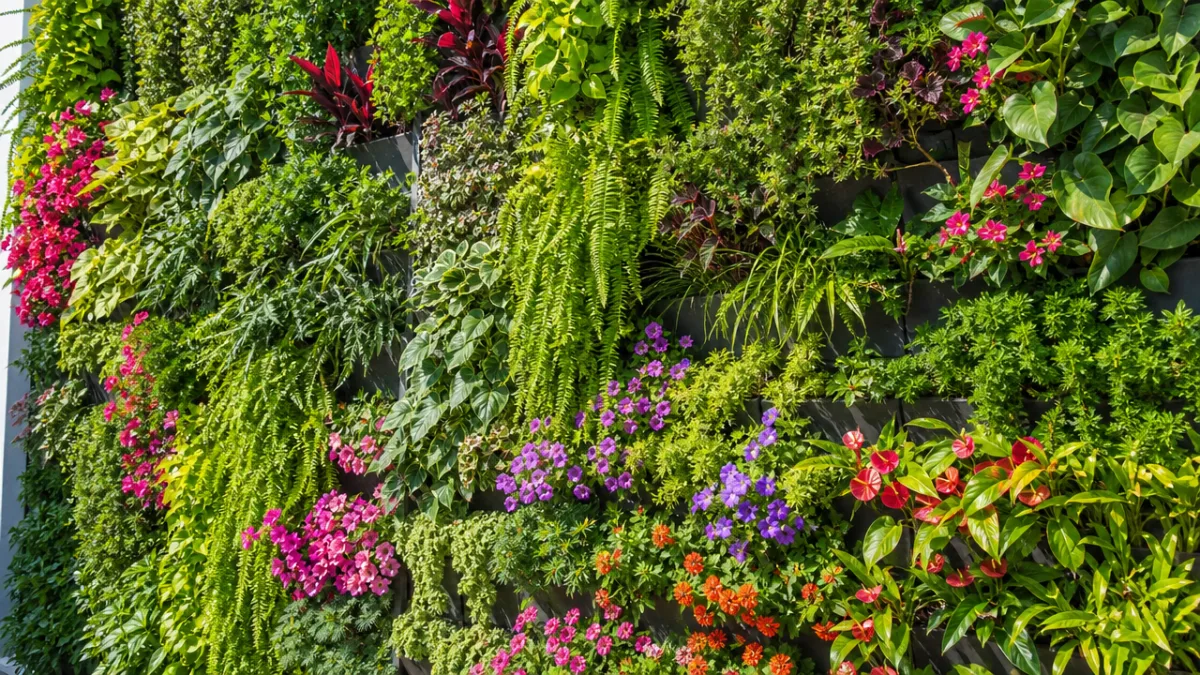
Not every garden has the luxury of horizontal space, but that does not mean you cannot grow abundantly and beautifully. Vertical gardening is the art of growing upward rather than outward, and it is one of the most exciting and rapidly evolving areas of DIY garden design. A simple trellis made from bamboo canes, copper pipe, or timber battens can be fixed to a fence or wall to support climbing plants like roses, clematis, runner beans, or cucumbers. Not only does this maximize your growing area, but the effect of a wall covered in lush foliage and flowers is nothing short of spectacular, turning a bare, utilitarian fence into a living, breathing work of art.
Pallet planters, as mentioned in our upcycling section, are particularly valuable in small garden settings because they can be mounted vertically on walls or fences, transforming a two-dimensional surface into a three-dimensional planting area. You can use them to grow herbs directly outside your kitchen door, create a colorful display of trailing annuals, or even grow strawberries in a compact, accessible way. Gutter gardens, where lengths of recycled plastic guttering are mounted in tiers on a wall or fence and filled with compost, are another brilliantly space-efficient solution. They are perfect for growing salad leaves, radishes, and herbs throughout the growing season.
For balconies and tiny courtyard gardens, railing planters, window boxes, and hanging baskets extend your planting space into areas that would otherwise go unused. DIY versions made from hessian sacks, repurposed colanders, or wire frames lined with moss offer far more character than anything you could buy in a garden center, and they can be made to any size or shape to suit your specific space. The key principle of small-space vertical gardening is to think in layers: ground level, mid-height, and overhead. By filling all three zones with plants, color, and texture, even the tiniest garden can feel lush, layered, and full of life in every direction you look.
7. Garden Furniture and Seating Projects
Building your own garden furniture is one of the most satisfying and practical DIY projects you can take on, and the results are often far more durable, beautiful, and personal than anything available in the shops. A simple garden bench can be made from two large concrete blocks and a length of thick timber, requiring no tools at all beyond a saw to cut the wood to length. Paint the blocks in a bold color and treat the timber with teak oil for a stylish, minimalist bench that will last for decades. For something more elaborate, a classic slatted wooden bench made from pressure-treated pine or hardwood requires basic carpentry skills but is entirely achievable over a weekend for even a relative beginner.
Garden dining tables made from reclaimed timber or scaffolding boards are hugely popular at the moment, and for good reason. They are robust, characterful, and deeply satisfying to build. A basic trestle table using two sawhorses and a wide plank of timber requires minimal carpentry knowledge and can be dressed up with an outdoor tablecloth and a vase of freshly cut garden flowers to create a beautiful al fresco dining setting. More ambitious builds might include a built-in bench seating area around a central table, a swing seat hung from a wooden frame, or a full outdoor kitchen unit built from weatherproof marine ply and fitted with a sink, worktop, and storage.
For relaxed lounging areas, consider building a low platform deck from decking boards, which can serve as the base for a daybed made from outdoor cushions and bolster pillows. Add a simple canopy made from a length of weather-resistant canvas stretched between four timber posts, and you have a shaded, sheltered retreat that feels like a boutique hotel garden feature but costs a fraction of the price. Whatever furniture projects you choose to take on, always invest in quality outdoor hardware: stainless steel screws, galvanized brackets, and good quality exterior wood treatment will ensure that your handmade pieces look beautiful and remain structurally sound for many years to come.
The process of planning, building, and finishing your own garden furniture is also a deeply enjoyable one that encourages you to slow down, develop new skills, and invest real time and attention in your outdoor space. That investment pays dividends every time you step outside and sink into a bench you built with your own hands, set a table you designed yourself, or pull up a chair you rescued from a skip and painted in your favorite color. A garden filled with handmade, personal touches is a garden that tells the story of who you are, and that is worth far more than any catalog purchase could ever be.








What do you think?
It is nice to know your opinion. Leave a comment.