










Unique Seashell Free Crochet Patterns: A Complete Guide to Ocean-Inspired Creations
Introduction to Seashell Crochet: Where Craft Meets the Ocean
Seashell crochet patterns have captivated crafters for generations, offering a beautiful way to bring the tranquility and elegance of the ocean into everyday life. Whether you are a seasoned crocheter looking for your next inspiring project or a beginner eager to explore the world of yarn and hooks, seashell patterns offer something genuinely special. Their flowing, organic shapes translate surprisingly well into fiber art, and the results can be breathtaking in their detail and dimension.
The beauty of seashell crochet lies in the endless variety of forms found in nature. From the gentle spiral of a nautilus to the fan-like sweep of a scallop shell, each design presents its own unique technical challenge and aesthetic reward. Crocheters around the world have developed free patterns that honor these natural shapes, making them accessible to anyone with a hook, some yarn, and a love for the sea. These patterns range from flat, decorative motifs to fully three-dimensional sculptural pieces.
One of the most compelling aspects of seashell crochet is the way it encourages creativity and improvisation. Because shells come in so many shapes, sizes, and colors, crocheters have enormous freedom when it comes to yarn selection, color choices, and finishing techniques. A single shell pattern can look completely different depending on whether you use a soft cotton yarn in sandy beige or a shimmering metallic thread in pearlescent white. This versatility means that no two finished pieces ever look exactly alike, which is part of what makes the craft so endlessly engaging.
Essential Materials and Tools for Seashell Crochet Projects
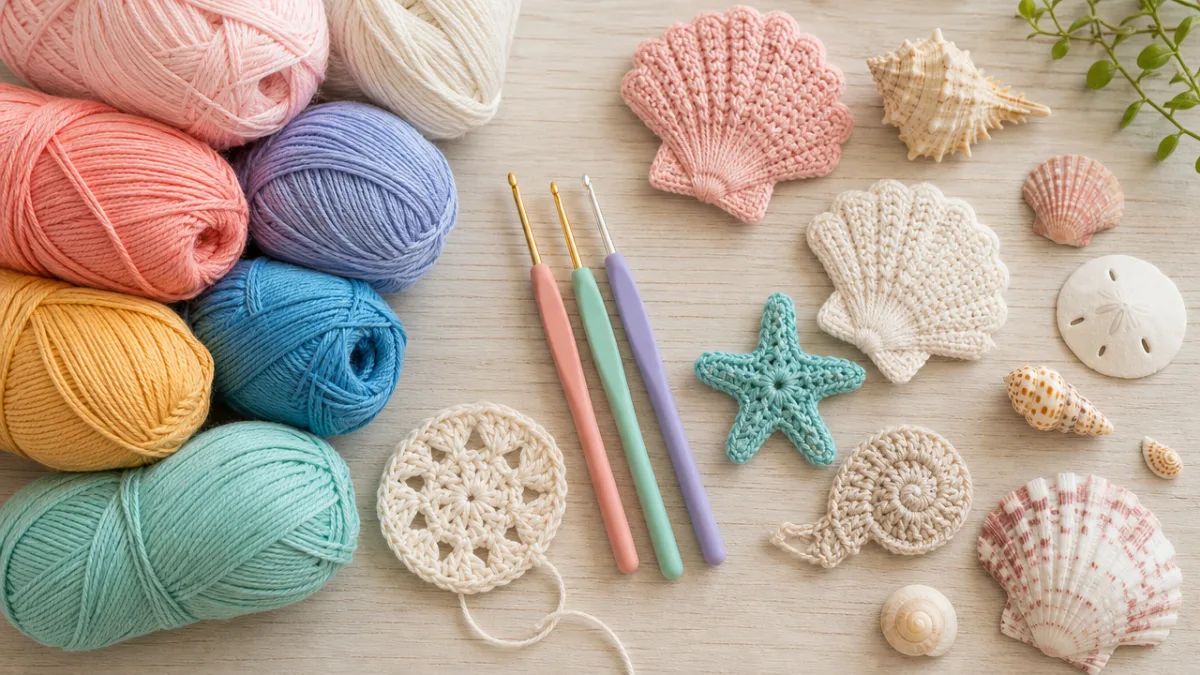
Before diving into your first seashell crochet pattern, it is important to gather the right materials. The type of yarn you choose will have a significant impact on the look and feel of your finished piece. For most seashell projects, cotton yarn is the preferred choice because of its smooth texture, minimal stretch, and excellent stitch definition. Cotton holds its shape well, which is especially important when you are trying to recreate the crisp, architectural lines of a real shell. Fingering weight and sport weight cottons are particularly popular for intricate, detailed work.
Your hook size should always correspond to your yarn weight, but for seashell patterns specifically, many experienced crocheters recommend going down one hook size from what the yarn label suggests. This creates a tighter fabric with better stitch definition, which is crucial for capturing the delicate ridges and curves that make seashell designs so recognizable. Steel crochet hooks work beautifully for thread-weight projects, while standard aluminum or ergonomic hooks are ideal for worsted and bulky yarn projects.
Beyond yarn and hooks, a few additional supplies will make your seashell crochet experience much smoother. Consider investing in the following tools to set yourself up for success:
- Stitch markers to keep track of rounds and pattern repeats in complex shell motifs
- A yarn needle for weaving in ends and joining motifs seamlessly
- Blocking mats and rust-proof pins for shaping and setting finished pieces
- A row counter or notebook for tracking pattern progress
- Scissors with fine tips for precision trimming near delicate lacework
Blocking is a step that many beginners overlook but that experienced crocheters consider essential, particularly for seashell patterns. Wet blocking or steam blocking your finished piece opens up the stitches, evens out tension inconsistencies, and allows the full beauty of the shell shape to emerge. A piece that looks slightly lumpy or misshapen straight off the hook can transform into something truly magnificent after careful blocking. This is especially true for lace-style seashell motifs, where blocking can reveal intricate details that were previously hidden.
Popular Seashell Crochet Stitch Techniques
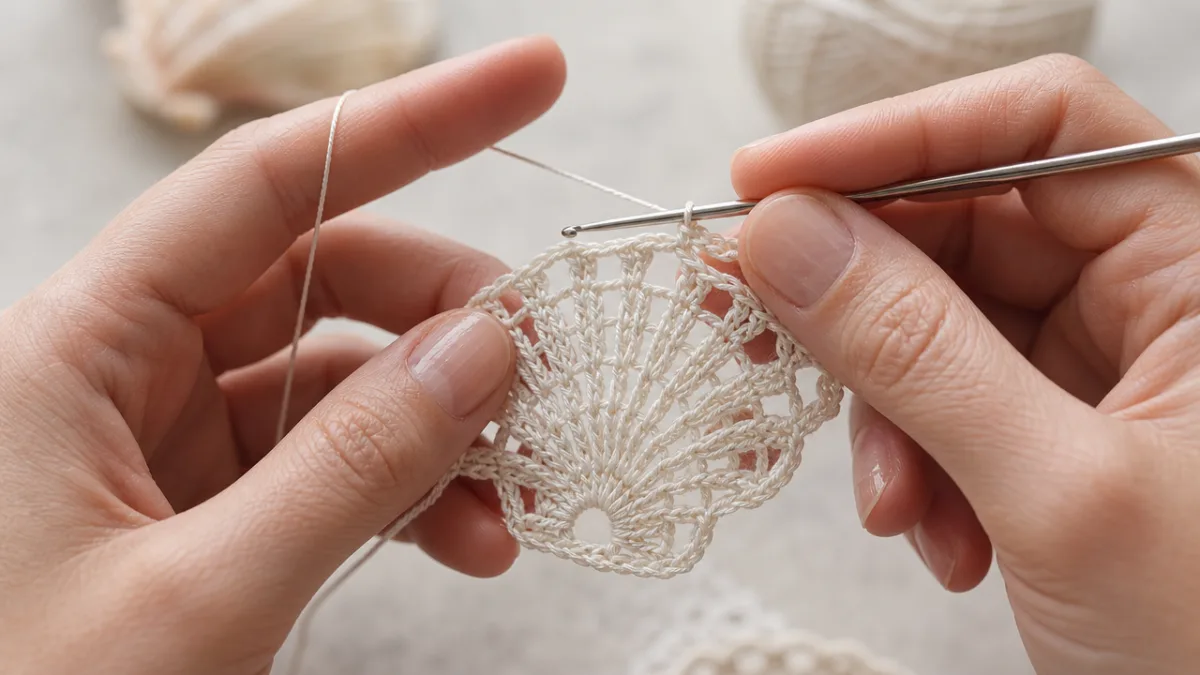
The seashell stitch itself is one of the most beloved and widely used techniques in all of crochet. At its most basic, the seashell stitch involves working a group of double crochet stitches — typically five or more — all into the same stitch or space, which creates a fan-shaped cluster that beautifully mimics the look of a scallop shell. This technique can be used to create everything from decorative edgings and borders to full-scale blankets, shawls, and garments. It is a stitch that rewards both the maker and the viewer with its elegant, rippling appearance.
Beyond the classic shell stitch, crocheters have developed numerous variations that add depth, texture, and complexity to seashell-inspired designs. The puff shell stitch combines the softness of a puff stitch with the fan shape of a shell cluster, creating a raised, three-dimensional effect that is particularly striking in solid colors. The crocodile stitch takes a different approach entirely, layering scales of double crochet in a way that mimics the overlapping panels of certain shell varieties. Each variation offers its own distinct look and requires slightly different tension control and stitch counting skills.
For those interested in creating fully three-dimensional seashell sculptures, the techniques involved become more advanced but also more rewarding. Three-dimensional shells are typically worked in the round using increases and decreases to shape the form, much like amigurumi construction. Some patterns also incorporate wire armatures or stiffening sprays to help the finished shell maintain its shape permanently. These sculptural pieces make stunning home decorations, unique gifts, and impressive additions to any crafter’s portfolio. The satisfaction of holding a crocheted seashell that genuinely resembles the real thing is difficult to overstate.
Free Pattern Spotlight: Fan Shells, Nautilus Spirals, and More
The world of free seashell crochet patterns is wonderfully rich, and a little searching online will reveal dozens of high-quality options for every skill level. Fan shell patterns are among the most popular and widely available. These designs typically use the classic shell stitch in combination with chain spaces to create a lacy, open fabric that suggests the graceful spread of a scallop or clam shell. Many of these free patterns are suitable for beginners, as they rely on just a handful of basic stitches repeated in a consistent pattern. The end result looks far more complex than the pattern itself would suggest.
Nautilus-inspired patterns are another beloved category that appeals to crocheters who enjoy more mathematically satisfying work. The nautilus shell follows a logarithmic spiral, and recreating this spiral in crochet requires careful attention to increase rates and stitch placement. Several talented pattern designers have made free versions of these spiraling shells available online, ranging from simple flat coasters and appliqués to elaborate three-dimensional sculptures that measure several inches across. These patterns are particularly popular among science-minded crafters who appreciate the mathematical precision underlying the organic beauty of the nautilus form.
Beyond fans and nautiluses, free seashell patterns cover an impressive range of shell varieties. Some patterns worth exploring include:
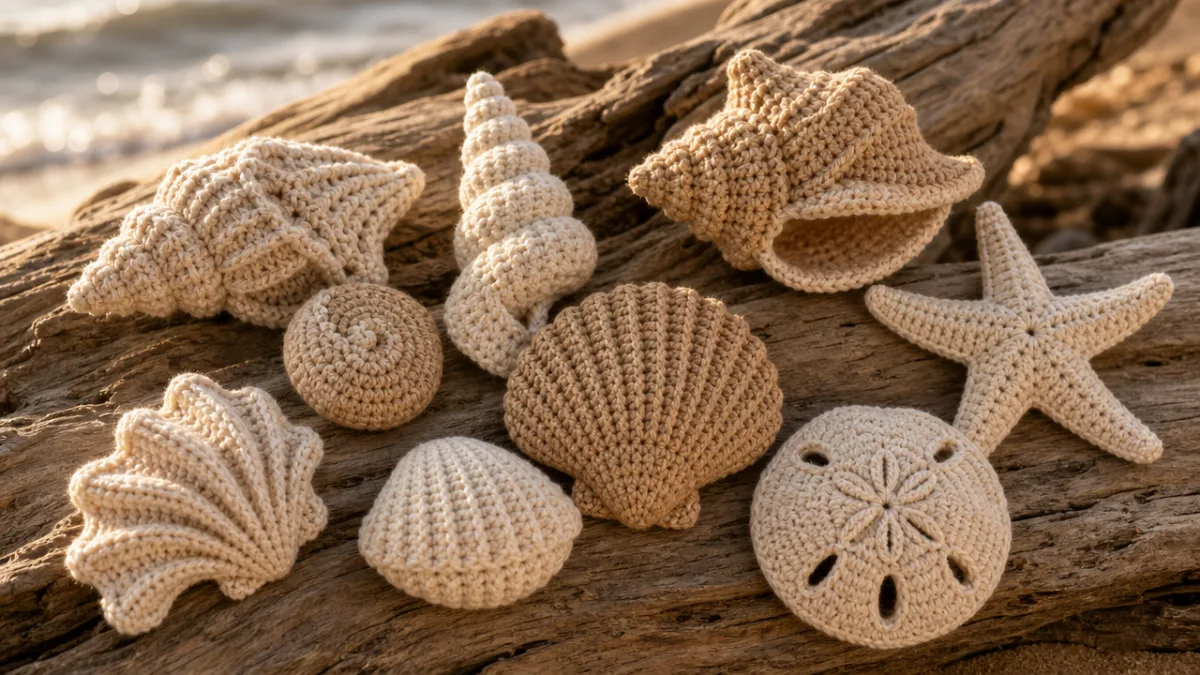
- Conch shell amigurumi patterns that create a realistic, three-dimensional sculptural piece
- Sand dollar motifs perfect for appliqués, garland decorations, and greeting card embellishments
- Starfish and sea urchin patterns that complement shell designs beautifully in ocean-themed arrangements
- Cowrie shell patterns popular for jewelry making, bag embellishments, and hair accessories
- Whelk and cone shell patterns that showcase advanced shaping techniques in the round
When searching for free patterns, some of the best resources include Ravelry, where thousands of user-submitted designs are catalogued and rated by the community. Blogs dedicated to coastal and nature-inspired crochet are also treasure troves of original, well-tested patterns. Pinterest is an especially useful starting point because it aggregates patterns from across the internet in one visually searchable place, making it easy to find inspiration and then follow links to the original free pattern sources. Always read pattern reviews and check that the designer has provided clear instructions before committing your time and materials.
Creative Ways to Use Seashell Crochet in Your Home and Wardrobe
Once you have mastered a few seashell patterns, the question becomes what to make with them. The good news is that seashell crochet translates beautifully into an enormous variety of practical and decorative applications. In home décor, crocheted seashells can be displayed in glass bowls or shadow boxes alongside real shells, dried coral, and sea glass to create a stunning coastal vignette. A collection of shells crocheted in varying sizes and natural tones makes a sophisticated, handmade alternative to the mass-produced coastal décor found in most home goods stores.
Seashell motifs are equally at home in functional textiles. Consider working individual shell motifs into a larger granny-square style throw blanket, alternating shell squares with simple solid squares for a balanced, visually interesting design. Seashell borders and edgings can transform an ordinary towel, pillowcase, or tablecloth into something special and uniquely personal. A set of hand-embellished kitchen towels with a simple shell stitch border makes a thoughtful, handmade gift that the recipient will actually use and appreciate every day.
In the realm of wearable fashion, seashell crochet is experiencing a genuine revival, driven in part by the broader resurgence of interest in handmade and artisanal clothing. Seashell stitch crop tops and halter necks have become summer wardrobe staples, their open, lacy construction making them both beautiful and breathable in warm weather. Shell stitch cardigans and shawls offer a more versatile option that works across seasons. Seashell motifs can also be incorporated into bags, hats, and accessories, adding a touch of coastal charm to any ensemble. Crocheted cowrie shell jewelry, in particular, has become increasingly fashionable, with makers creating everything from earrings and necklaces to anklets and hair clips.
Tips for Adapting and Customizing Free Seashell Patterns
One of the great joys of working with free crochet patterns is the freedom to adapt them to suit your own vision, skill level, and available materials. When it comes to seashell patterns specifically, color choice is often the most impactful customization you can make. Working a shell pattern in the natural colors of real shells — creamy whites, warm tans, soft pinks, and dusty mauves — creates a realistic, naturalistic effect that is beautiful and timeless. However, do not be afraid to experiment with bolder, more unexpected color choices. A seashell motif worked in deep ocean blue or vibrant coral can be just as striking and far more eye-catching as a display piece or wearable accessory.
Scaling patterns up or down is another powerful customization technique. Most seashell patterns can be adjusted simply by changing your yarn weight and hook size. A pattern designed for fingering weight yarn will produce a delicate, miniature shell that is perfect for jewelry or appliqué work. The same pattern worked in bulky yarn will yield a large, textured piece suitable for a pillow cover or wall hanging. If you want to scale more precisely, you can also add or subtract shell repeat units from any pattern, though this requires some understanding of pattern math and stitch counts. Taking notes as you modify a pattern is always a good habit, especially if you plan to replicate your customized version later.
For those who feel confident in their crochet skills and want to take customization even further, designing your own seashell patterns from scratch is an incredibly rewarding challenge. Start by studying real shells closely, noting the direction of the spiral, the number and spacing of ribs or ridges, and the way the shell tapers or widens. Then consider how these physical characteristics might translate into crochet stitches and construction methods. Swatching freely and keeping detailed notes will help you develop an original pattern that reflects your own unique creative vision. Many of the most beloved free seashell patterns available today started exactly this way, with a crafter sitting by the sea, shell in one hand and hook in the other, wondering how to capture something beautiful in yarn.
Caring for Your Finished Seashell Crochet Projects
Proper care and storage will ensure that your seashell crochet creations remain beautiful for years to come. The care requirements for your finished pieces will depend largely on the fiber content of the yarn you used. Cotton yarn, which is the most common choice for seashell projects, is generally machine washable on a gentle cycle, though hand washing is always preferable for delicate or lacy pieces. Always use a mild detergent and avoid wringing or twisting the wet fabric, as this can distort the stitches and ruin the shape of your shell motifs. Instead, gently squeeze out excess water and then lay the piece flat on a clean towel to dry.
If you used specialty yarns such as silk blends, metallics, or novelty fibers in your seashell projects, be sure to check the fiber content and follow the manufacturer’s care instructions carefully. Some specialty yarns are dry clean only, while others may be more heat-sensitive than standard cotton or acrylic. Three-dimensional sculptural seashells that have been stiffened with fabric stiffener or spray starch require particularly gentle handling, as the stiffener can crack or crumble if the piece is crushed or subjected to excessive moisture. Store sculptural pieces in a cool, dry place where they will not be compressed by other objects.
For long-term storage of seashell crochet textiles such as blankets, shawls, or table linens, clean the pieces thoroughly before putting them away, as even invisible stains can set permanently over time and attract pests. Store cotton and plant-fiber pieces in breathable cotton bags or wrapped in acid-free tissue paper rather than plastic bags, which can trap moisture and encourage mildew growth. Cedar blocks or lavender sachets placed near stored woolens will deter moths without the harsh chemical smell of traditional mothballs. Taking these simple care precautions will protect your handmade treasures and ensure that they can be passed down, appreciated, and even used as inspiration for future generations of crocheters who fall in love with the timeless beauty of seashell designs.








What do you think?
It is nice to know your opinion. Leave a comment.