










Unforgettable Easy DIY Farmhouse Wedding Decoration Ideas
The Timeless Appeal of Farmhouse Wedding Aesthetics
There is something undeniably romantic about a farmhouse-style wedding. The combination of weathered wood, soft florals, mason jars, and warm candlelight creates an atmosphere that feels both nostalgic and deeply intimate. Couples across the country are increasingly drawn to this aesthetic because it offers a sense of warmth and authenticity that more formal venues simply cannot replicate. A farmhouse wedding feels like home — and that emotional resonance is exactly what makes it so unforgettable for everyone in attendance.
The beauty of the farmhouse wedding style lies in its accessibility. Unlike elaborate ballroom weddings that require expensive rentals and professional florists, the farmhouse aesthetic actively celebrates the handmade, the repurposed, and the charmingly imperfect. Burlap, lace, wildflowers, and reclaimed wood are not just affordable — they are the very ingredients that give this style its soul. Couples with modest budgets can still create breathtaking celebrations that rival any high-end event simply by leaning into the rustic charm that defines the look.
Another reason this style has endured is its incredible flexibility. Whether you are hosting your reception in an actual barn, a backyard, a vineyard, or even a community hall, farmhouse décor adapts beautifully to nearly any space. The elements are simple enough to transport and set up without professional help, yet visually impactful enough to transform an ordinary venue into something truly magical. This guide will walk you through fifteen achievable, budget-friendly DIY ideas that will help you craft your perfect farmhouse wedding from the ground up.
Setting the Foundation: Tables, Linens, and Centerpieces
Choosing the Right Tablescape Elements
Your tables are the visual heart of your reception, and in farmhouse-style weddings, the tablescape does most of the heavy lifting. Start by selecting linens that anchor the aesthetic — think natural burlap runners layered over simple white or ivory tablecloths. The contrast between the rough texture of burlap and the softness of cotton or linen beneath it is quintessentially farmhouse and immediately sets the tone. You can purchase burlap by the roll at fabric stores for just a few dollars per yard, making this one of the most cost-effective upgrades you can make.
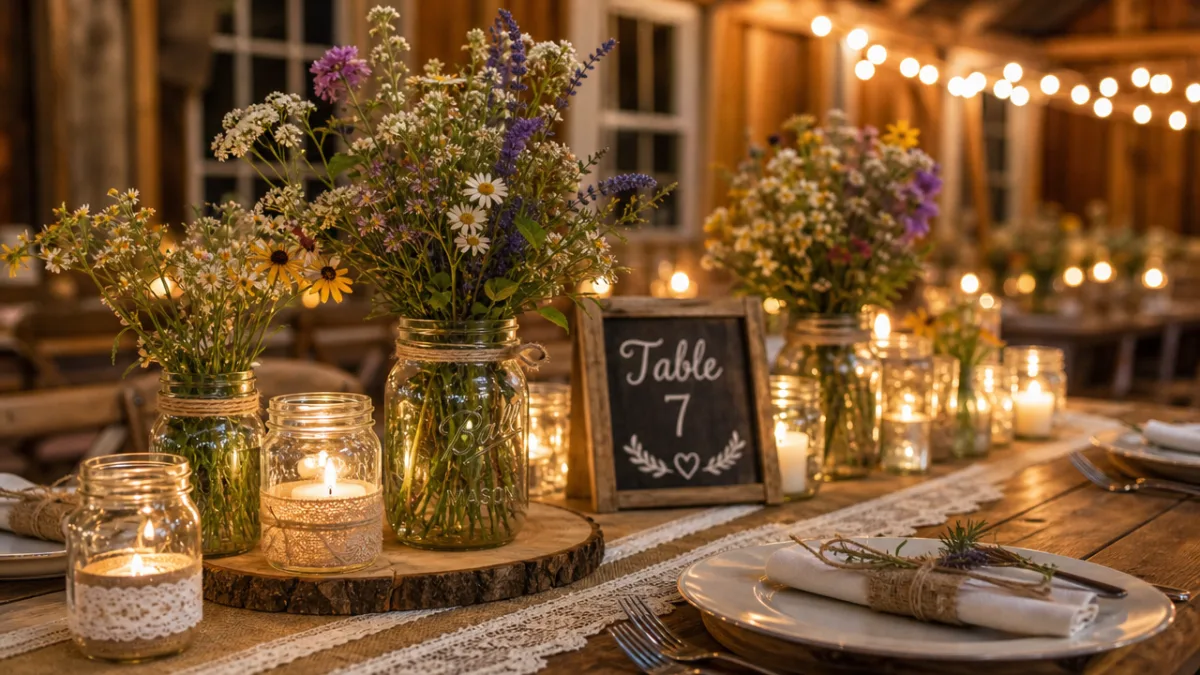
Centerpieces in farmhouse weddings should feel collected rather than constructed. Mix and match vessels — vintage milk bottles, mason jars of varying heights, wooden crates, and antique pitchers — filled with loose arrangements of wildflowers, eucalyptus, baby’s breath, and garden roses. Avoid overly uniform bouquets; the charm is in the asymmetry and variety. Purchase flowers from local farmers’ markets or wholesale flower markets the day before the wedding for the freshest blooms at the lowest possible cost. Supplement with greenery from your own yard or a local nursery to fill gaps and add lush volume.
Wooden elements are essential to grounding the farmhouse tablescape. Consider renting or borrowing wooden farm tables if your venue does not have them, or simply draping standard banquet tables in ways that conceal their less rustic qualities. Small wooden slices used as coasters or candle holders, mini wooden crates filled with succulents, and hand-lettered place cards propped against twigs or small stones all contribute to a cohesive look. The goal is to make every inch of the table feel curated but effortless — as though it came together organically rather than through hours of deliberate planning.
DIY Centerpiece Ideas That Shine
One of the most beloved DIY centerpiece ideas for farmhouse weddings is the lantern cluster. Collect mismatched vintage lanterns in various sizes, place pillar candles or battery-operated candles inside them, and cluster them at different heights on a wooden slice or a bed of greenery. Surrounding the lanterns with small mason jars of flowers, scattered rose petals, and trailing ivy creates a centerpiece that photographs beautifully and requires almost no floral expertise to assemble. Battery-operated candles are a practical choice if your venue has restrictions on open flames.
Another crowd-pleasing option is the wheel barrow or wagon filled with seasonal flowers and greenery used as a statement centerpiece for the head table or sweetheart table. These can often be borrowed from family or neighbors and returned after the event, keeping costs minimal. Fill them generously with a mix of sunflowers, dahlias, peonies, and trailing vines for a look that is abundant and joyful. This kind of unexpected vessel is what gives farmhouse weddings their personality — the willingness to use unconventional objects as décor is the hallmark of the style.
Ceremony Décor: Creating a Magical Aisle Experience
The Ceremony Arch or Backdrop
The ceremony arch is the most photographed element of any wedding, and for a farmhouse celebration, it offers a stunning opportunity to showcase natural materials and DIY creativity. A simple wooden arch — which you can build from two-by-four lumber for under fifty dollars — becomes extraordinary when draped with flowing fabric, eucalyptus garlands, dried pampas grass, and clusters of garden roses. If building feels too ambitious, rent a simple metal or wooden arch from a party rental company and focus your energy on the floral and textile embellishments instead.
For couples who want something even more organic, consider a living arch made entirely from tall branches or bamboo poles lashed together with twine and woven through with climbing vines, wildflowers, and ribbon. This type of structure has a wonderfully whimsical quality that photographs beautifully against nearly any outdoor backdrop. Gather branches from wooded areas on your property or ask a local tree service if they have any suitable material available — often these can be obtained for free or at very low cost.
The backdrop behind the arch matters just as much as the arch itself. A backdrop of hanging fabric panels in ivory or blush, combined with a curtain of dried flowers or cascading greenery, adds depth and dimension to ceremony photos. Alternatively, a wall of white-painted wooden pallets decorated with greenery, framed photos, and hand-lettered signs creates a stunning focal point that also doubles as a photo opportunity for guests. Whatever you choose, ensure it is tall and wide enough to frame the couple generously in photographs taken from various distances.
Aisle Decorations That Guide and Enchant
The aisle itself offers multiple opportunities for farmhouse-style decoration. Line each side with alternating elements — mason jars filled with single blooms, small potted herbs tied with twine, or simple lanterns — to create a visual pathway that draws the eye toward the altar. Spacing these elements evenly every two to three feet creates a polished look without overwhelming the senses. For an especially romantic effect, add a runner of flower petals or eucalyptus leaves down the center of the aisle itself.
Pew or chair markers are another beautiful detail that contributes to the overall ceremony aesthetic. Tie small bundles of lavender, rosemary, or wildflowers to the end chairs using wide burlap ribbon or natural twine. These fragrant little bouquets serve both a decorative and sensory purpose — guests who brush against them as they take their seats will enjoy the subtle scent, creating a multi-sensory experience that lingers in memory long after the day has passed. You can prepare these the night before the ceremony and store them in a cool location to keep the flowers fresh.
For outdoor ceremonies, consider lining the entrance to the ceremony space with shepherd’s hooks holding hanging lanterns or floral arrangements. These hooks are inexpensive to purchase and can be reused for years after the wedding. At the end of the evening, many couples gift these arrangements to guests as living takeaways, which is a thoughtful and sustainable gesture that aligns beautifully with the farmhouse ethos of minimizing waste and celebrating the natural world. It is a small touch that guests genuinely remember and appreciate.

Signage and Personal Touches That Tell Your Story
Hand-Lettered Signs and Chalkboard Displays
Signage is one of the most impactful and affordable DIY elements in farmhouse wedding design. A large chalkboard sign welcoming guests, directing them to the ceremony, or displaying the day’s schedule immediately communicates the aesthetic and sets the tone before anyone even enters the venue. Chalkboard paint can be applied to nearly any flat surface — wood boards, picture frames, old window panes — giving you enormous creative flexibility. If your handwriting is not your strongest skill, consider hiring a local calligrapher or hand-lettering artist for just a few key pieces.
Wooden signs are another signature element of farmhouse wedding décor. Cut or purchase wooden boards and paint or wood-burn meaningful quotes, the couple’s names, or directional information onto them. Lean them against trees, hang them from branches with rope, or prop them on easels at key points throughout the venue. A sign that reads “Better Together” hung above the sweetheart table, or a directional sign post pointing to the “dance floor,” “bar,” and “photo booth” adds both function and personality to the space in a way that feels genuinely personal rather than generic.
Don’t overlook smaller signage opportunities throughout the venue. Label each dish at the buffet with small hand-lettered cards tucked into twine-wrapped picture holders. Use small signs to indicate seating arrangements at a gallery wall instead of a traditional seating chart — attach escort cards to twigs, mini clothespins on a string of twine, or tuck them into a grid of small jars each labeled with a table name. These micro-details collectively create an experience of intentionality and care that guests notice even if they cannot articulate exactly why the wedding felt so warm and personal.
Memory Walls, Photo Displays, and Guest Books
A memory wall or photo display is a beautiful way to honor the couple’s journey and the families who have supported them. String twine or wire between wooden dowels or barn-wood frames and use small clothespins to display vintage or childhood photos of the couple, family milestones, and candid moments from their relationship. This kind of installation invites guests to linger, reminisce, and connect with one another over shared memories, turning a decorative element into a genuine conversation starter and emotional touchpoint during the reception.
The guest book is another opportunity for farmhouse creativity. Rather than a traditional bound book, consider a large flat piece of wood on which guests sign their names with a wood-burning tool or paint pen. Alternatively, collect small smooth river stones and invite guests to write a message on each one, which the couple can display in a glass bowl or wooden crate long after the wedding is over. A Polaroid or instant camera station where guests take photos and attach them to a book with handwritten notes is another perennially popular option that results in a genuinely cherished keepsake.
Lighting and Ambiance: Transforming the Space After Dark
String Lights and Candles as Primary Décor
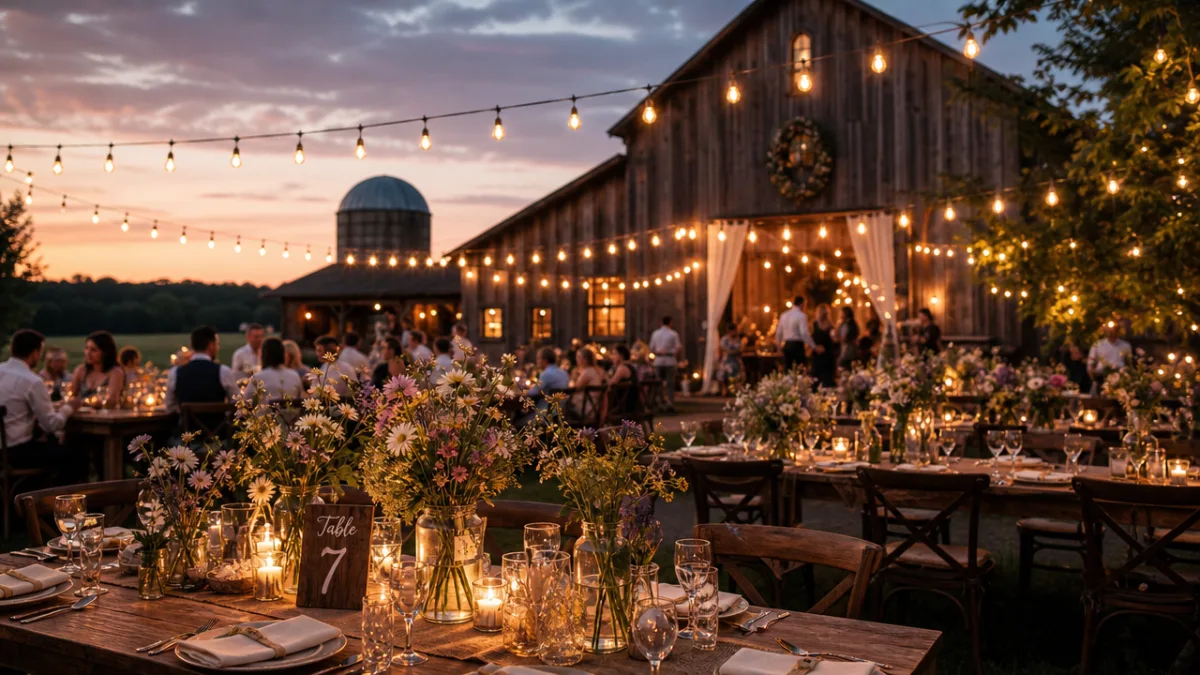
No farmhouse wedding is complete without the warm, dreamy glow of string lights. Draping Edison bulb strands overhead — across the ceiling of a barn, between trees in a garden, or along the perimeter of a tent — instantly transforms any space into something magical. The soft, warm light they emit is universally flattering in photographs and creates an atmosphere that feels simultaneously festive and intimate. Purchase string lights in bulk from warehouse stores or online retailers to keep costs manageable, and use weatherproof outdoor-rated strands if any portion of your event is held outside.
Candles of every variety are equally essential to farmhouse wedding ambiance. Cluster pillar candles of varying heights on wooden slices for an organic, artful look. Float candles in mason jars filled with water and flower petals as table accents. Line pathways and outdoor staircases with small votive candles in glass holders for safety and beauty. Where open flames are not permitted, battery-operated candles have improved dramatically in quality in recent years and now flicker convincingly enough to create the same romantic effect without the fire risk or logistical challenges.
Lanterns deserve special mention as one of the most versatile lighting elements available to the farmhouse-style decorator. Wrought iron, aged brass, and distressed white lanterns all complement the aesthetic beautifully and can be purchased affordably at thrift stores, estate sales, and discount home goods retailers. Hang them from tree branches, shepherd’s hooks, and barn rafters; cluster them on the ground as a pathway guide; or use them as centerpiece anchors surrounded by greenery and flowers. Their warm glow at dusk and into the evening hours creates an atmosphere that is nothing short of enchanting.
Outdoor Lighting and Ambient Touches
If your reception extends into the evening hours outdoors, consider supplementing your string lights with solar-powered path lights tucked along walkways and around the perimeter of the dance floor. Tiki torches or tall pillar candles in hurricane glasses can mark the boundaries of outdoor spaces while adding substantial visual drama. Fire pits or chimineas, if the venue permits them, are a wonderful gathering point during cooler evening hours and create an instinctively communal, cozy atmosphere that guests gravitate toward naturally.
For a truly show-stopping outdoor lighting moment, consider a moongate or circular floral arch illuminated from behind by string lights. When guests walk through this glowing circle as they transition from the ceremony to the reception, it creates a theatrical sense of arrival and celebration that photographs magnificently and leaves a lasting impression. This kind of structural element can be built from flexible PVC pipe bent into a circle, covered with greenery and flowers, and lit from behind for a relatively modest investment of time and materials.
Favors, Food Stations, and Finishing Touches
Thoughtful and Handmade Wedding Favors
Wedding favors in the farmhouse tradition are typically edible, useful, or both. Small mason jars filled with homemade jam, local honey, or a custom spice blend are perennial favorites that guests genuinely take home and use. Attach a small hand-lettered label and tie the lid with a length of twine and a sprig of dried lavender for a finished look that feels both generous and artisan. These favors can be prepared weeks in advance, making them one of the least stressful elements of the DIY wedding preparation process.
Other popular farmhouse favor ideas include small potted succulents or herb plants with a label that says something like “Thyme flies when we’re having fun” or “Mint to be,” packets of wildflower seeds with a custom envelope, or small bottles of locally sourced olive oil or flavored vinegar. These types of favors align beautifully with the farmhouse aesthetic’s emphasis on nature, sustainability, and intentionality. They also tend to have a higher perceived value than more traditional favor options, making guests feel genuinely appreciated rather than receiving an obligatory trinket.
Food and Drink Stations That Double as Décor
Food and drink stations are an area where farmhouse weddings particularly shine because the style lends itself so naturally to abundant, communal displays. A lemonade or sweet tea station featuring large glass dispenser jars on a wooden table, surrounded by sliced citrus, fresh mint, and mason jar glasses, is both visually beautiful and practically inviting. Label each beverage with a hand-lettered sign propped in front of it, and add a small vase of flowers to complete the vignette. This kind of station requires minimal effort to set up but creates a genuinely memorable self-serve experience for guests.
A pie bar, donut wall, or cheese and charcuterie spread presented on a reclaimed wooden board or tiered wooden stand makes for a stunning food display that doubles as a décor element. These alternatives to traditional wedding cakes are not only visually striking but also tend to be more cost-effective when feeding large groups. Surround the display with fresh herbs, flowers, and small handmade labels identifying each item, and you have a food station that guests will photograph and talk about for years. The key is abundance — farmhouse style celebrates generosity, and a beautifully overflowing display communicates that spirit perfectly.
Finally, remember that the finishing touches are what elevate a good farmhouse wedding into a truly great one. Scatter loose flower petals on tables. Hang dream catchers or woven macramé from tree branches. Place small potted herbs at each table setting as a combined favor and décor element. Fold napkins into simple shapes and tuck a sprig of rosemary or a single stem into each one. These small gestures of care and creativity accumulate into an experience that feels deeply considered and genuinely heartfelt — which is, ultimately, the most important thing any wedding décor can achieve. The best farmhouse weddings do not look expensive; they look loved.








What do you think?
It is nice to know your opinion. Leave a comment.